Archery & Bowhunting · Gear type
Bow Case
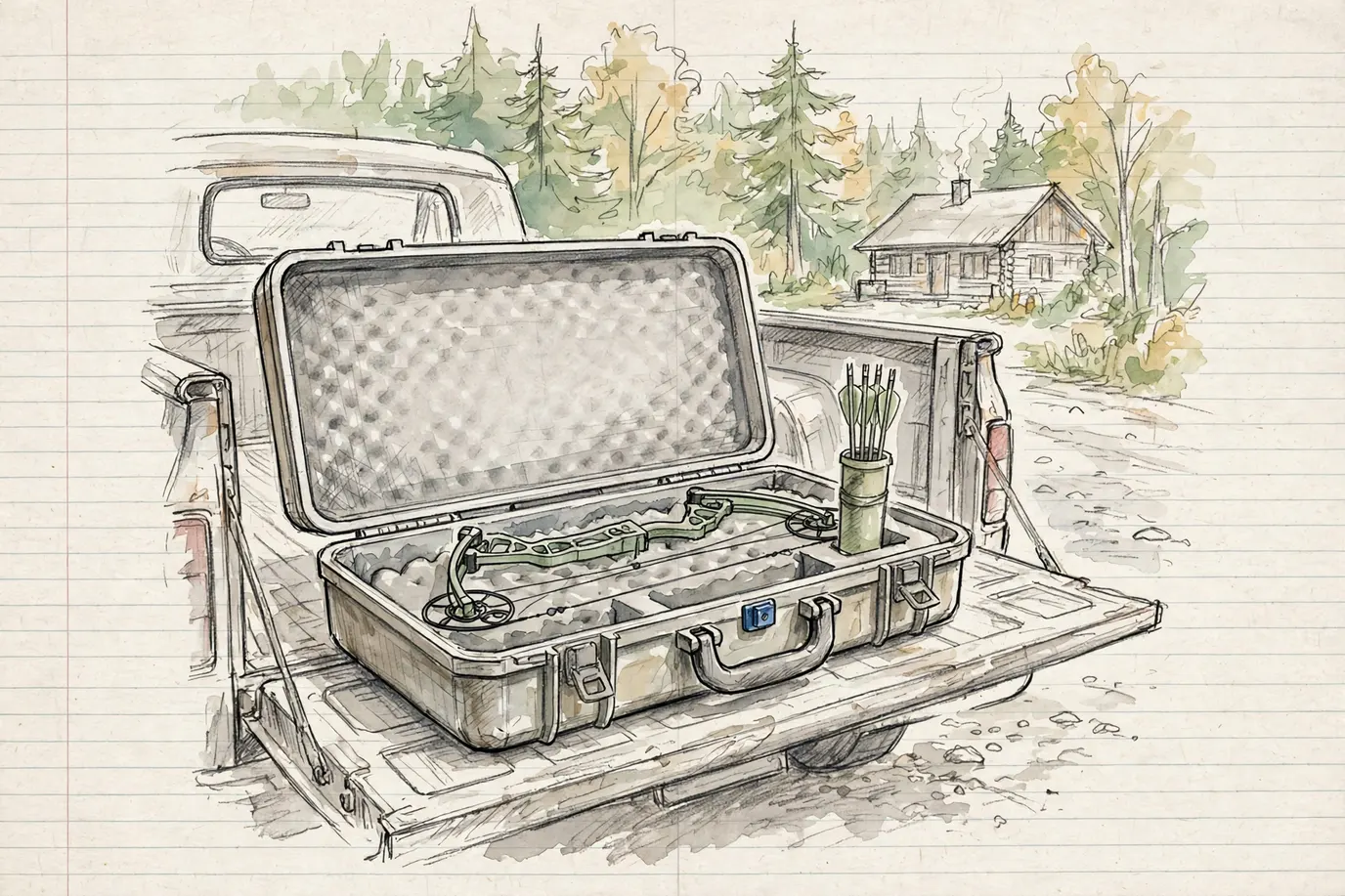
A bow case protects a bow between the house and the hunt, and the main choice is the shell: hard for flying and rough handling, soft for the truck and the range. After that, it's fit. A case has to hold your bow tip to tip with the sight and quiver on, not just its axle-to-axle number. Then weight, locks and water. (Danny has opinions about case weight. They come from his wife.)
We earn a commission if you buy through our links, at no cost to you. Disclosure
| Model | Shell | Fits bows up to | Exterior size | Amazon |
|---|---|---|---|---|
| — | — | — | Check price | |
Ameyxgs 60in Traditional Bow BagBow case More specs
| Softlisting | — | 60.2 x 10listing | Check price |
Ameyxgs Bow Limbs Sleeve and Riser CaseBow case More specs
| Softlisting | — | — | Check price |
Barnett Ballistic Nylon Crossbow Case BAR20055Bow case More specs
| Softlisting | — | — | Check price |
Bear Archery ARC101 Recurve CaseBow case More specs
| — | — | — | Check price |
CenterPoint Wrath and Wrath 430X Crossbow CaseBow case More specs
| — | — | — | Check price |
Easton Genesis 4014 Bow CaseBow case More specs
| Softlisting | — | — | Check price |
Easton Club XT Recurve BackpackBow case More specs
| — | — | — | Check price |
Easton Club XT Recurve BackpackBow case More specs
| — | — | — | Check price |
Easton Club XT Recurve BackpackBow case More specs
| — | — | — | Check price |
Easton Club XT Recurve BackpackBow case More specs
| Softlisting | — | — | Check price |
Easton Deluxe Recurve BackpackBow case More specs
| — | — | — | Check price |
Easton Stay Sharp Broadhead CaseBow case | Hardlisting | — | — | Check price |
Easton Micro Flatline Bow CaseBow case | — | — | — | Check price |
Easton Genesis Max Bow CaseBow case More specs
| Softlisting | 40 inlisting | — | Check price |
Excalibur Ex-Shield Crossbow CaseBow case More specs
| Softlisting | — | — | Check price |
Excalibur Explore Take-Down Crossbow CaseBow case More specs
| Softlisting | — | — | Check price |
Excalibur Tomb 35.43" Crossbow CaseBow case More specs
| Softlisting | — | — | Check price |
Excalibur Hybrid X Crossbow Case (16264)Bow case More specs
| — | — | — | Check price |
G5 Outdoors Broadhead CaseBow case | Hardlisting | — | — | Check price |
G5 Outdoors Alpha Crossbow CaseBow case More specs
| Softlisting | — | — | Check price |
| Softlisting | — | — | Check price | |
| — | — | — | Check price | |
October Mountain Products Mathews ARC Bow CaseBow case More specs
| — | — | — | Check price |
Plano Broadhead BoxBow case | — | — | — | Check price |
Plano Protector PillarLock Bow CaseBow case More specs
| Hardlisting | — | — | Check price |
| Hardlisting | — | 42 x 19 x 8.25listing | Check price | |
Plano Bow Max Arrow CaseBow case | Hardlisting | — | — | Check price |
Plano Bow Max Stealth Vertical Bow CaseBow case More specs
| — | 39 inlisting | — | Check price |
Plano All Weather Series 44 in Compound Bow CaseBow case More specs
| Hardlisting | — | — | Check price |
| — | — | — | Check price | |
SKB Hunter Series 2SKB-4117Bow case | Hardlisting | — | 39 x 15 x 15listing | Check price |
SKB iSeries Small Bow CaseBow case More specs
| Hardlisting | — | — | Check price |
SKB iSeries Medium Bow CaseBow case | Hardlisting | — | — | Check price |
SKB iSeries Large Parallel Limb Bow CaseBow case More specs
| Hardlisting | 41.25 inlisting | — | Check price |
SKB iSeries Mathews Lift Bow CaseBow case More specs
| Hardlisting | — | — | Check price |




What’s in this listEvery bow and crossbow case we track on Amazon US, hard and soft. “—” means neither the maker nor the Amazon listing states it.
What a bow case is for
A case has three jobs: keep the bow from getting hit, keep weather and dirt off it, and keep it still so the sight and rest don't get knocked out of line. The shell decides how well it does the first two. The inside decides the third.
The table on this page lists every bow and crossbow case we track, hard and soft. It shows each case's shell, what it's made for (compound, recurve or crossbow), the longest bow it fits, exterior size and weight, plus whether the maker or the listing says it's airline-rated or lockable, and whether the maker says it's water-resistant. The table marks values that come from the listing. A dash means neither states that value.
Hard vs soft bow case
One case maker sums up the three shells this way:
- Hard: maximum protection against impacts, moisture and dust. Heavier, bulkier and pricier.
- Soft: lightweight and simpler to carry, but not as protective as a hard case.
- Hybrid: a rigid frame with a soft exterior, somewhere in between.
Archery 360 adds the travel angle. Hard cases protect better but weigh more. Some soft cases are rated for airline travel, but many are better suited to road trips. For flying, Archery 360 says hard cases are generally recommended.
So the question isn't which shell is better. It's what happens to the case when you're not holding it. If a baggage handler or a pile of camp gear is going to be on top of it, buy the shell that can take that. If it rides on the back seat from the garage to the range, soft is usually plenty.
The two shells get their own pages: hard bow cases and soft bow cases.
What to look at when you pick a bow case
Here's what actually changes from one case to the next, in the order I'd check it.
"Fits bows up to" is the number that decides fit
This column is the longest bow the maker or the listing says the case holds. It's the most useful number in the table, and many don't state it. When it's missing, you have to measure.
Here's the trap. Axle-to-axle length (ATA) is the distance between the axles that hold the cams, as Archery 360 defines it, and bows run from as short as 20 inches to 35 or more. But the cams stick out past the axles. Archery 360's flying article says the largest target compounds measure 40 inches axle to axle, plus about 5 inches of cam. So a case has to hold your bow's tip-to-tip length, not its ATA.
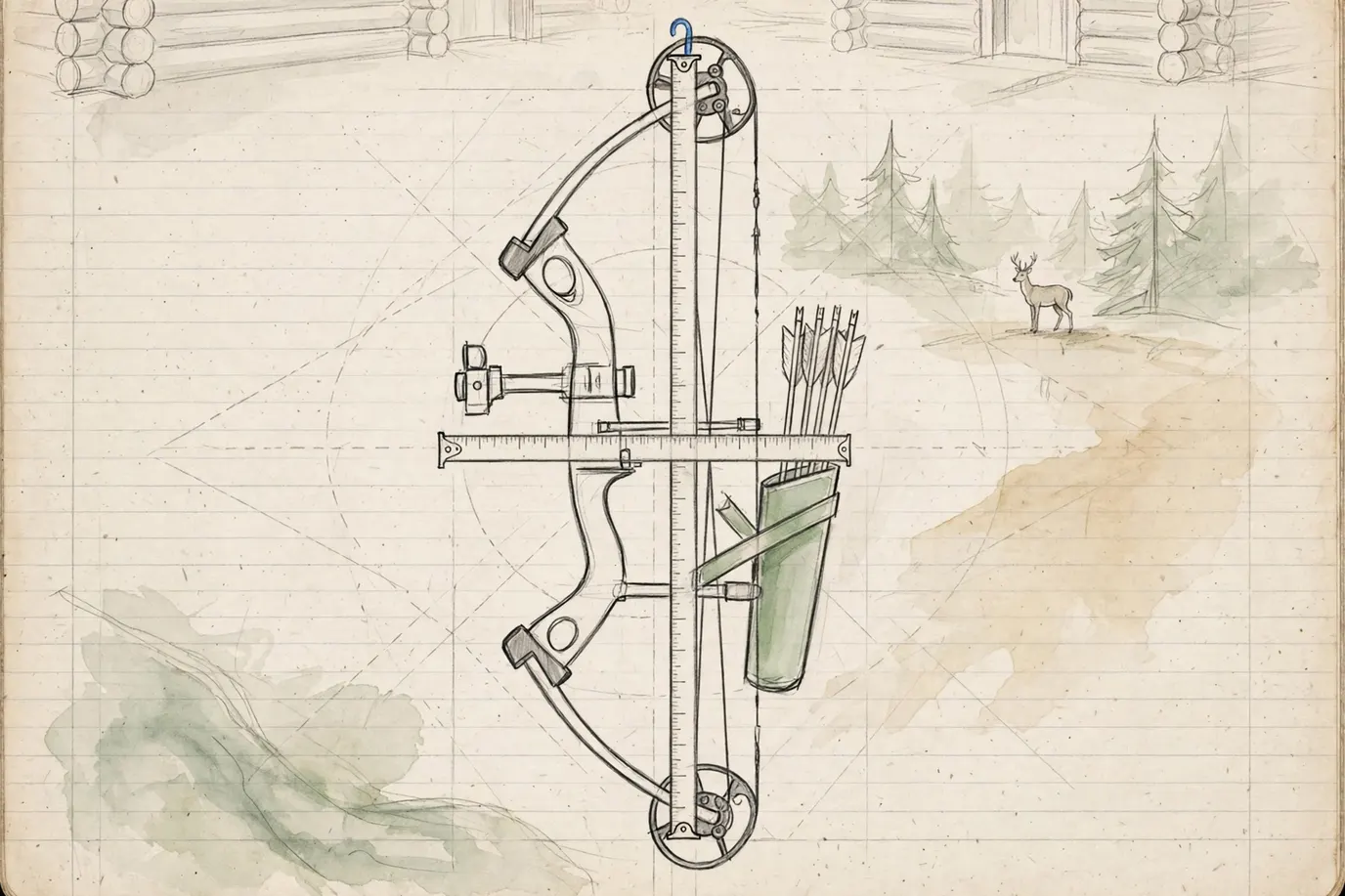
Measure three things with everything mounted:
- Length: outer edge of the top cam to outer edge of the bottom cam
- Width: the widest point, usually from a cam's edge across to the sight
- Depth: front to back, with the sight, rest and stabilizer on
One case maker's sizing advice is to add an extra 0.5 inch to each measurement for clearance. If you're fitting more than one item, leave extra space between them too.
My one opinion on this page: measure the bow with the sight and quiver on before you shop, and trust that number over any "fits most bows" line. The reason is the cam math above. A bow's best-known number is the one a case cares about least.
Exterior size matters for the truck and the airline
The "Exterior size" column is the outside of the case, length by width by height, in inches. Two places care about it.
The truck: a hard case for a long bow may not fit behind the seat. Measure the spot before you buy, not after.
The airline: Archery 360's flying article says bags count as oversize when they measure over 62 linear inches, meaning length plus width plus depth added together. Most bow cases fit under that. The exceptions it names are one-piece recurves, which measure 66 to 72 inches, and cases for the largest target compounds, which come close.
Quick math with a case from one maker's crossbow-case article, which measures 30 by 19 by 8 inches: 30 + 19 + 8 = 57 linear inches. That's under 62, but a wide case eats the margin fast, even when no single side looks big. Add your case's three exterior numbers before you book a flight.
Case weight comes out of your baggage allowance
The "Weight" column is the empty case. Archery 360 says bags over 50 pounds can trigger hefty handling fees, and that overweight bags may be delayed on full flights. It gives one hard case's empty weight as 24 pounds, which leaves 26 pounds for the bow and everything else.
Weight matters off the plane too. On a long walk from the parking lot to a 3D course, every pound of case is a pound you carry out and back. (Physical therapist's note: switch hands halfway. Your lower back will send a thank-you card.)
Airline-rated means rated for checked luggage
The "Airline / TSA" column marks cases the maker or the listing says are built for air travel. Archery 360 says that's mostly hard cases, and that airline-grade cases cost more because they're made of more durable materials. It also notes the interior padding in airline cases is often inadequate on its own, which is why packing matters (see below).
On the rules: TSA lists bows and arrows as not allowed in carry-on bags and allowed in checked bags, and says the final decision rests with the officer. Archery 360 says checking them is the only requirement TSA lists. Bows don't need the special declarations that firearms do. Airlines set their own size limits and fees, and oversized bags may come out at a separate pickup area where you show ID.
Most airline-travel bow cases have built-in wheels, and Archery 360's author advises avoiding the ones that don't. I agree, based purely on the length of the walk to any rental car counter.
Lockable: use TSA-approved locks if you fly
The "Lockable" column says whether the case takes locks. Archery 360 calls TSA-approved locks not mandatory but strongly recommended: if your locks aren't approved, agents may have to cut them, and you may miss your flight. One case maker notes many of its hard cases have TSA-accessible latches, and its lines have padlock loops for a lock you supply.
For the truck, a lock mostly keeps honest people honest. For a flight, it's how the case arrives closed.
Water-resistant: only as good as the seal
The "Water-resistant" column is the maker's own claim, and we list it only when the maker says so. One case maker says its gasket-sealed hard cases keep water out. A soft case with a water-resistant fabric is a different thing from a sealed shell, so read the maker's wording.
Even a sealed case can trap water you put in. Archery 360's maintenance article says to take the bow out of its bag or case after shooting in rain so it can dry, and to make sure the sight is dry too.
Compound bow case, recurve case or crossbow case
The "For" column says what the maker built the case around.
- Compound bow case: shaped or rectangular, sized by length. Some come with foam cut for a specific bow model.
- Recurve case: Archery 360 notes takedown recurves can travel in backpacks with separate compartments and a built-in arrow tube. One-piece recurves are long enough to need oversize handling.
- Crossbow case: wider and deeper. One case maker found tall scopes were the hard part to fit. Crossbow cases have their own page: crossbow cases.
Foam is the other half of fit. One case maker says high-density foam can be shaped or cut to the exact size of your bow. Archery 360's travel guide asks for padding and tie-downs, so the bow can't move inside.
Then think about everything that isn't the bow. The same case maker says soft cases often have outside pockets for arrows, releases and tools, while hard cases can be fitted with foam to hold arrows, a release or a quiver. If the release, the Allen wrenches and the spare nocks live in the case, they're there when the bow is. If they live in "the drawer," they're in the drawer. (Every cabin has the drawer. Ours has a tape measure with no tape and a single glove in it.)
A case that holds the whole kit is a bigger case, so add those pieces to your measurements before you compare sizes.
How to pack a bow case
Archery 360's travel articles agree on the basics:
- Buy a case bigger than the bow, so you can pack clothing around it.
- Stuff clothes around the cams and sight, so nothing shifts.
- Carry arrows in a tube, either a case's built-in holder or a separate arrow tube.
- Keep release aids with the bow. They aren't banned in carry-ons, but they can look like brass knuckles at security.
- Shoot a few arrows when you arrive to make sure the sight is still aligned.
Remove broadheads from arrows before you pack, even if the arrows sit in a quiver, and store them in a hard, covered container. A loose broadhead can cut strings, gear or the person who opens the case.
For international trips, Archery 360 recommends pre-registering your bow with U.S. Customs and Border Protection on Form 4457 so you aren't charged duty when you come home.
Don't store a bow in a hot car, case or not
A case doesn't make a closed truck in the sun safe. Archery 360 says heat or direct sun can affect the epoxies in a bow's limbs and lead to structural failure. One bow maker's owner's manual warns that excessive heat, like a closed vehicle on a sunny day, could cause limb failure, and that long storage in a hot, dry attic or a damp basement could also be damaging.
Store the cased bow somewhere you'd be comfortable yourself. That rules out the attic, the basement and the truck in August.
Who doesn't need a bow case
If your bow lives on a wall hanger at home and rides to the stand on your back, a case may sit unused. A soft case still earns its keep for road trips, and a hard case only pays off when the bow travels with other gear piled on it or goes on a plane. Shopping for the best options? There'll be a list at best bow case.
Measure tip to tip, add half an inch, write it in the logbook. Then go buy the case.
Brands in this list
Questions people ask
Hard vs soft bow case: which should I get?
Get a hard case if you fly or your bow rides under other gear. One case maker says hard cases give maximum protection against impacts, moisture and dust but are heavier and bulkier. Soft cases are lighter and simpler for drives to the range or the woods. Archery 360 notes some soft cases are rated for airline travel, but many are better suited to road trips.
How do I know if a compound bow case will fit my bow?
Measure the bow's longest, widest and deepest points with everything attached, then compare them to the case's interior size or its stated maximum bow length. Axle-to-axle length isn't enough, because the cams stick out past the axles. One case maker suggests adding about 0.5 inch to each measurement for clearance.
Can I take my bow on a plane?
Not in the cabin. TSA lists bows and arrows as not allowed in carry-on bags and allowed in checked bags, and says the final decision rests with the officer at the checkpoint. Archery 360 says checking them as luggage is the only requirement TSA lists. Airline size and weight limits and fees are separate, so check your airline too.
Do I need TSA locks on a bow case?
They aren't required, but Archery 360 strongly recommends them. If your locks aren't TSA-approved, agents may have to cut them, and you may miss your flight. With TSA-approved locks, officers can open and relock the case for inspection. Some hard cases come with TSA-accessible latches or padlock loops built in.
Sources
- Archery 360 (Archery Trade Association): Flying with bows — accessed 2026-10-22
- Archery 360 (Archery Trade Association): Flying with your bow, a traveler's guide — accessed 2026-10-22
- TSA: What can I bring? Bows and arrows — accessed 2026-10-22
- SKB Cases: Why every archer needs a quality bow case — accessed 2026-10-22
- SKB Cases: Selecting the perfect crossbow case — accessed 2026-10-22
- Archery 360 (Archery Trade Association): Making sense of bow specs — accessed 2026-10-22
- Archery 360 (Archery Trade Association): How to maintain your bow — accessed 2026-10-22
- Hoyt: Compound bow owner's manual (safety warnings) — accessed 2026-10-22