Archery & Bowhunting · Gear type
Bow Stabilizer
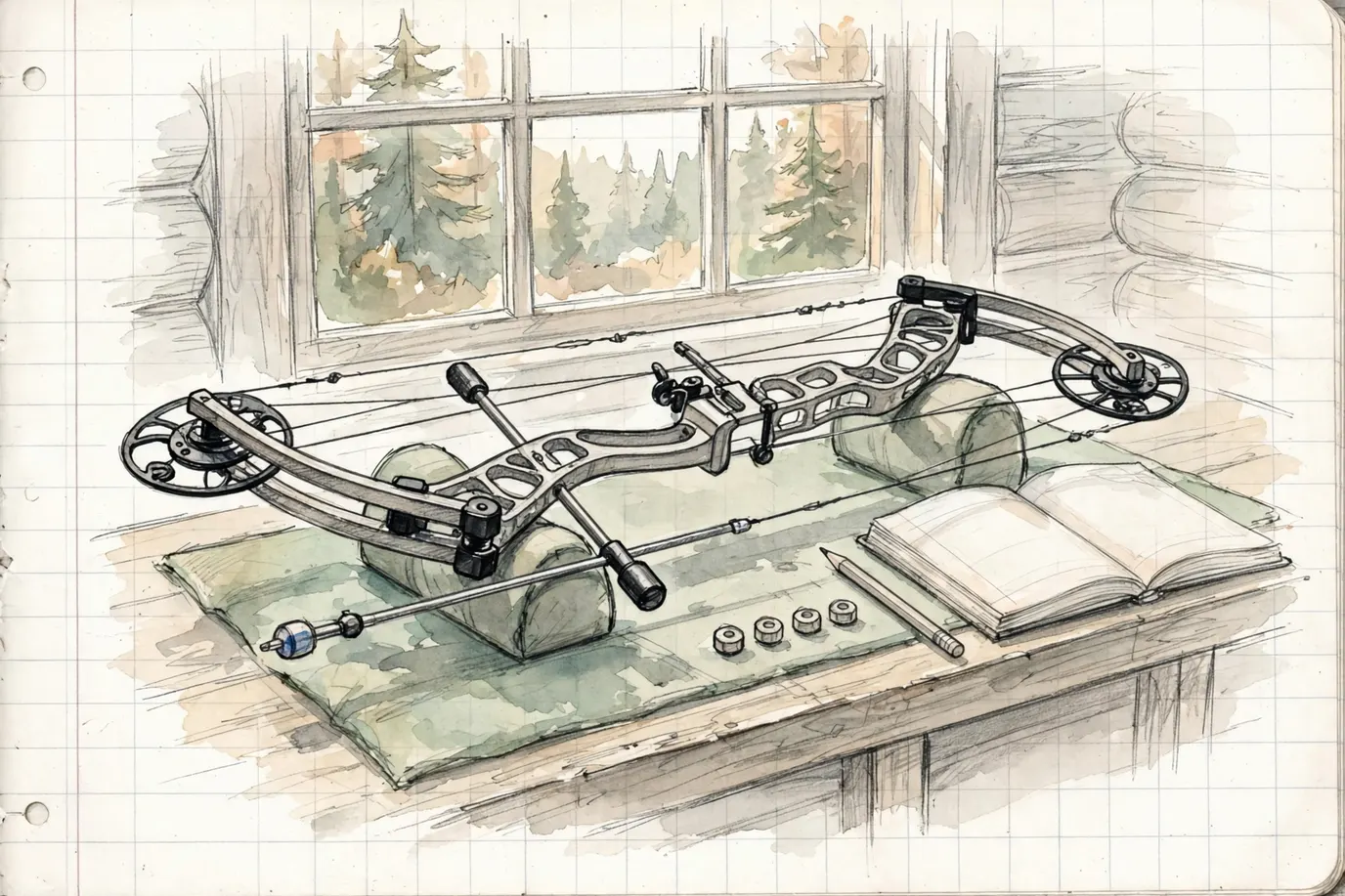
A bow stabilizer is a rod that screws into the front of your riser, below the arrow rest. It does two jobs: it soaks up vibration after the shot, and it adds weight out front so the bow resists wobble while you aim. The choice that matters most is length, because length decides how much each ounce does and whether the bar fits in your stand. (Uncle Walt calls it "the antenna." His truck has one too. Neither picks up much.)
We earn a commission if you buy through our links, at no cost to you. Disclosure


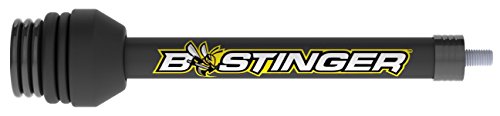


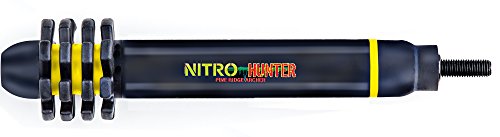


What’s in this listEvery bow stabilizer we track on Amazon US, shortest first. “—” means neither the maker nor the Amazon listing states it.
What a bow stabilizer actually does
Archery 360 describes a stabilizer as a rod that screws into the front of the riser, below the arrow rest. It works two ways at once.
- Vibration: the shot leaves energy in the bow that comes out as noise and buzz. The bar takes some of it.
- Inertia: mass held away from your hand makes the bow harder to move, so the sight pin floats less.
The vibration part isn't just comfort. Archery 360 notes that bow vibration is mostly high-frequency, and that repeated vibration through the wrist and elbow can contribute to tendinitis, tennis elbow and carpal tunnel. (I'm a physical therapist. I see those three every week. Very few of them shoot bows. The bows are not off the hook.)
The inertia part is about holding still. Bowhunter's setup article says a stabilizer increases rotational inertia, which makes the bow harder to twist during the draw and the release. Archery 360 adds that a bow with nothing on the front tilts forward slightly in your hand, and the bar counters that tilt.
Here's the honest limit. Archery 360's line is that shot execution, not stabilizers, makes arrows hit the middle. A stabilizer makes a good shot easier to repeat. It doesn't build one for you.
How to choose a stabilizer for a compound bow
The table on this page lists every bow stabilizer we track, shortest first. It shows each bar's length and weight as the maker states them, the body material, and whether it has removable weights and a dampener, the last three from the maker or the Amazon listing (the table marks values that come from the listing). A dash means neither states that value. Here's what each column changes, in the order I'd read it.
Pick length for the place you hunt, not the range
Length is the first number in the table and the one that decides fit. Archery 360 gives two rough sizes: about 6 inches for short-range shooting and about 12 inches for long-distance work. Indoor target bars, per Bowhunter, can run more than 30 inches.
For hunting, the advice I found lands in the same window:
- 6 inches: a bowhunting shop's guide calls it a good starting spot
- 8 to 12 inches: the range Bowhunter's author uses on his own hunting setup
- 10 to 12 inches: his pick for open Western bowhunting
- Past 12 inches: the shop's guide says that's where a bar gets hard to hunt with
Why not just go long? A goHUNT setup guide says ground-blind hunters benefit most from a shorter front bar, and tree-stand hunters should go shorter if branches could get in the way. Bowhunter adds that length can be a mistake when you're still-hunting in thick cover.
My one opinion on this page: buy the length that clears your blind window and your stand's branches, then add weight, not inches. The reason is the next section. A short bar with the right weight does most of what a long one does, and it doesn't catch on the shooting rail at the worst moment.
Short hunting bars get their own page: hunting bow stabilizers.
Weight on the end does more than weight in the middle
The table's weight column is the bar as the maker lists it. That's only half the story, because where the weight sits matters as much as how much there is.
Bowhunter says bars with a weight fastened at the far end resist rotation better than other styles. The shop's guide says the weight belongs at the very end of the bar, and that a longer bar needs less weight to do the same job.
Think of it like holding a broom straight out in front of you. Grip it near the bristles and it's easy. Grip the far end of the handle and the same broom feels twice as heavy. A stabilizer uses that same lever on purpose.
Quick math with the numbers from the shop's guide: its author runs a 10-inch bar with 4 oz on the end. On paper, the turning force is 10 × 4 = 40 inch-ounces. A 6-inch bar would need about 6.7 oz at the tip to match it (40 ÷ 6). That's why short bars come with heavier end weights, and why your arm notices.
Don't chase mass for its own sake. Archery 360 warns it's possible to add too much weight, which brings on fatigue sooner and makes results worse. Bowhunter adds that most modern hunting bows won't aim well with too much weight at the front of the riser.
Removable weights let you tune without buying a new bar
The "Removable weights" column says whether the end weights unscrew and stack. That's the feature that lets you start light and work up.
The shop's guide suggests starting at 2 oz and adding from there. Archery 360 says stabilizers and their weights are easy to customize, and suggests archers test neutral against front-heavy balance instead of copying someone else's setup. A bar with fixed weight is fine if the maker's number already suits you; a bar with removable weights lets you find that number yourself.
Body material sets stiffness and how much the bar weighs before you add any
The "Body" column is the rod itself. Archery 360's recurve stabilizer guide says most new archers start with fiberglass or aluminum, while stiff high-modulus carbon is usually the more expensive step up. The same guide says that if your rods feel floppy during the shot, it's worth trying a stiffer one.
The shop's guide makes the case for carbon on hunting bars: a carbon rod can be lighter and stiffer than other bars, which leaves more of the total weight for the end, where it works. (A light, stiff bar with a heavy tip. Yes, it's the same lesson as the broom. Physics only has about four jokes and it repeats them.)
A dampener sends vibration out the bar
The "Dampener" column marks bars with a built-in vibration dampener, usually a rubber or flexible section between the rod and the end weight. The shop's guide says that rubber section, set just before the end weight, moves vibration toward the end of the bar and away from your hand. Bowhunter says a quality stabilizer comes with some kind of dampening system or coupler.
Archery 360's recurve guide adds a detail worth checking: heavier end weights need a stiffer dampener. A soft dampener carrying a lot of weight sags and stops working properly. If you plan to stack weights, look for a bar built to carry them.
One more naming trap. The shop's guide says a "stabilizer" shorter than about 5 inches is usually a dampener. Those little stubs quiet the bow; they add very little turning force. Both have their place, but they aren't the same tool.
Front bars, back bars and V-bars
A front bar alone handles front-to-back balance. Side-to-side is a different problem.
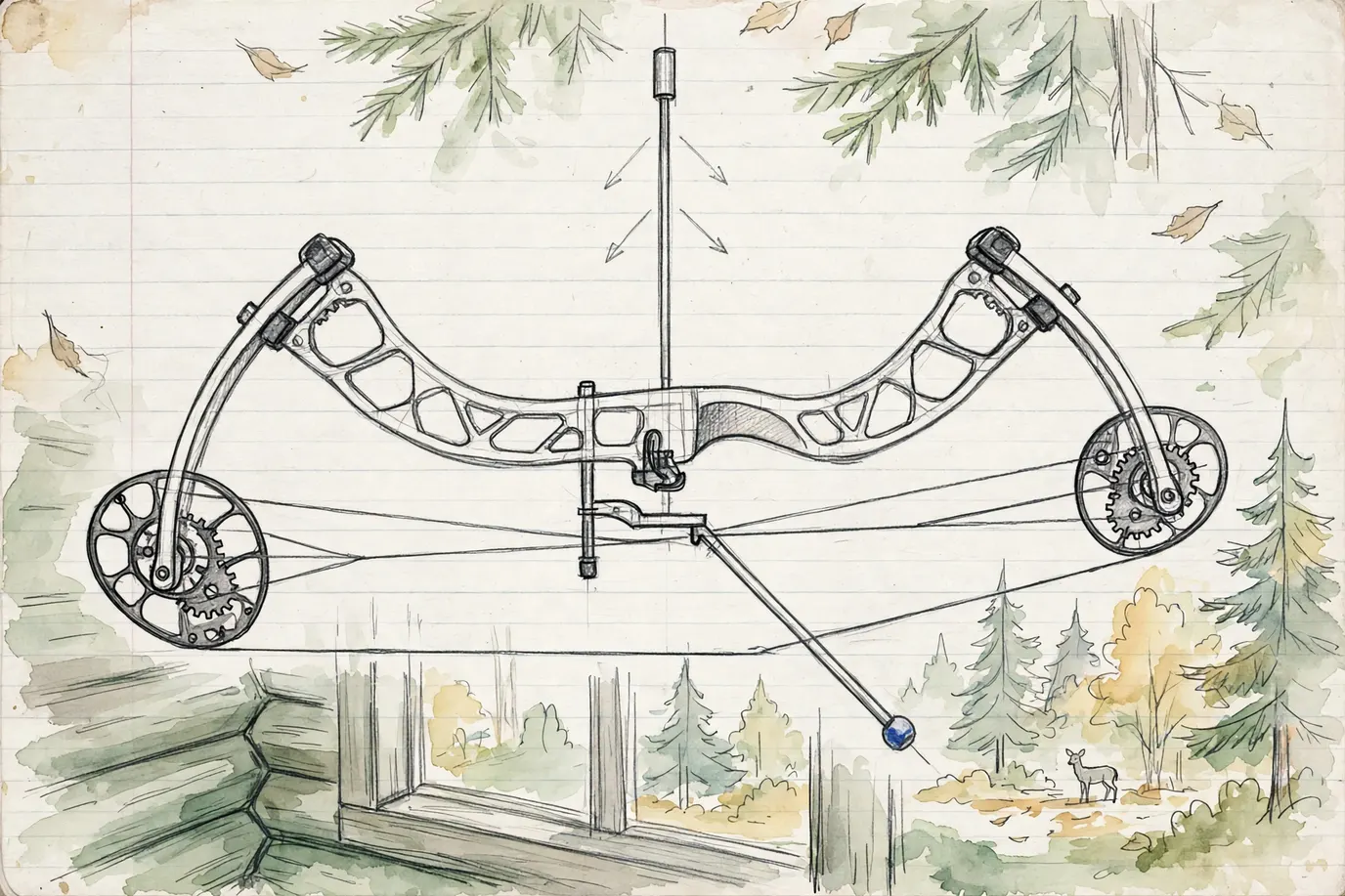
The goHUNT guide explains it: for a right-handed shooter, the rest, sight and quiver usually hang on the right side of the bow, so the bow leans that way at full draw. A back bar points rearward from a bracket under the grip and counters that lean. Archery 360 says that with a sight out front, side rods go on the back to balance it, which gives the setup a tripod effect.
Here's how the setups compare:
- Front bar only: the simplest hunting setup. Many hunters stop here.
- Front bar plus back bar: corrects the lean from a sight and quiver. Bowhunter notes it makes the bow bulkier.
- V-bar bracket: a mount that holds one or two back bars at an adjustable angle.
- Offset mount: shifts the front bar to one side. The shop's guide says moving or offsetting the bar changes where the pin drifts.
- Target long-rod setups: a long front rod with short side rods, per Archery 360, mostly for competition.
How much weight on the back? The shop's guide suggests roughly 3 to 4 times more weight on the back than on the front, while the goHUNT guide says a longer front bar needs less back-bar weight. Treat both as starting points for the bubble check below.
Set up a bow stabilizer at full draw
Bowhunter says most bows have a threaded stabilizer mount on both sides of the riser. Once the bar is on, the bow tells you what it needs. The goHUNT guide's method:
- Mount the bar. If you add a back bar, start it close to the string, angled slightly down.
- Draw, settle into your anchor with your eyes closed, then open them.
- Check the sight's level bubble. If it leans, move the back bar toward the side the bubble leans to. ("Chase the bubble" is how that guide puts it.)
- Watch the pin. Bowhunter says if it keeps dropping, take weight off the front or add it to the back. If it rises, do the opposite.
- Change one thing at a time, then shoot groups.
Two notes from that same guide. Lowering a back bar has a similar effect to adding weight to it. And it's worth watching your sight picture on a target over the following weeks, because a setup that feels fine in the yard can float more after a long sit.
Hunting with the quiver off changes things. Bowhunter's author found the bow balanced side to side with the quiver removed but twisted downward at the grip. His fix was a short stabilizer or a threaded counterweight directly below the grip on the string side. If you hang your quiver in the tree, tune the bow the way you'll actually shoot it.
Expect this to take an evening. Most of it is drawing, squinting at a bubble and moving a bar 2 clicks. It's less exciting than it sounds, and it doesn't sound exciting.
Write your final length, weight and bar angle in the logbook. Brackets slip and memories are worse.
Who should skip a stabilizer
Archery 360 is clear that not every archer needs one. Recreational shooters who shoot for fitness or fun probably don't. It also says a stabilizer matters less at 20 to 40 yards, because shorter distances are more forgiving, and that you can get much of the same steadiness from a firm grip and controlled movement.
Skip it, or keep it minimal, if:
- You shoot barebow or traditional. Archery 360 notes barebow is a separate category in some tournaments.
- You hunt thick cover or a tight blind and every inch of bar catches on something.
- Your bow already balances and holds well and you mostly shoot inside 20 yards.
For a hunting compound, a short front bar with a modest end weight is the usual starting point, and the rest of the bow is on the compound bow page. The longer explanation of the physics will live on the what does a bow stabilizer do guide.
Uncle Walt says the antenna is fine. He still hasn't screwed one into his bow. I've put a sticky note on the case.
Brands in this list
Related
Questions people ask
What does a stabilizer do on a compound bow?
It reduces the vibration that runs through the bow after release, and it adds mass away from your hand so the bow is harder to twist or wobble while you aim. Archery 360 also notes it counters the forward tilt a bow has when you hold it without one. It does not fix form. Archery 360 puts it plainly: shot execution makes arrows hit the middle.
How long should a compound bow stabilizer be for hunting?
Short enough to clear your stand and blind. Bowhunter's setup article uses an 8- to 12-inch bar for hunting and 10 to 12 inches for open Western country. A bowhunting shop's guide calls 6 inches a good starting point and says anything past 12 inches gets hard to hunt with. Target bars can run more than 30 inches.
Do I need a back bar on a hunting bow?
Not always. A back bar counters the lean caused by a sight, rest and quiver on one side of the bow. If your bubble stays level at full draw with a front bar alone, you can skip it. Bowhunter notes a back bar makes the bow bulkier, which is the trade you pay for the balance.
How much weight should I put on a bow stabilizer?
Start light and add in small steps. One bowhunting shop's guide suggests starting at 2 oz on the end of the bar and working up. Archery 360 warns that too much mass tires you out faster and makes results worse. Put the weight at the far end of the bar, where it does the most work.
Can a stabilizer reduce bow noise?
Yes, that's one of its two jobs. Archery 360 says a stabilizer reduces vibration after release, which lessens hand shock and quiets the string's sound. Bars with a dampener, a rubber section between the rod and the end weight, are built to send that vibration out toward the end of the bar and away from your hand.
Sources
- Archery 360 (Archery Trade Association): To stabilize or not to stabilize? — accessed 2026-10-22
- Archery 360 (Archery Trade Association): What do stabilizers do? — accessed 2026-10-22
- Archery 360 (Archery Trade Association): A buyer's guide to recurve stabilizers — accessed 2026-10-22
- Bowhunter: Best stabilizer setups for bowhunting — accessed 2026-10-22
- Mathews (reprinted from goHUNT): The ultimate guide to bow stabilizers — accessed 2026-10-22
- S&S Archery: What's the best stabilizer for your hunting bow? — accessed 2026-10-22