Archery & Bowhunting · Gear type
Youth Compound Bow
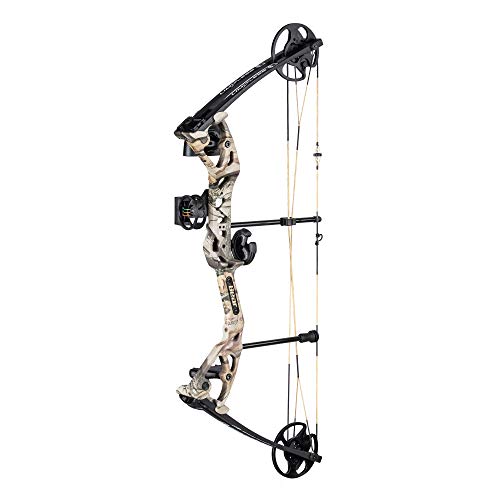
A youth compound bow is a short compound bow, 30 inches or less axle to axle, with a light draw-weight range and room to grow. Pick it by the child's draw length first, then by a draw weight they can pull smoothly, then by how far the bow adjusts as they get taller and stronger. Speed hardly matters at this stage. Fit does. (Kids grow. Bows mostly don't, unless you buy one that adjusts.)
We earn a commission if you buy through our links, at no cost to you. Disclosure
| Model | Draw weight | Draw length | Let-off | Axle-to-axle | Brace height | Amazon |
|---|---|---|---|---|---|---|
Diamond Archery AtomicCompound bow More specs
| 6–29 lblisting | 12–24 inlisting | — | 24 inmaker | 6 inmaker | Check price |
Bear Archery BraveCompound bow More specs
| 5–25 lbmaker | 13.5–19.5 inmaker | 65 %maker | 26 inmaker | 5.5 inmaker | Check price |
Bear Archery RoyaleCompound bow More specs
| 5–50 lblisting | 12–27 inlisting | 75 %maker | 27 inmaker | 6 inmaker | Check price |
Bear Archery RoyaleCompound bow More specs
| 5–50 lblisting | 12–27 inlisting | 75 %maker | 27 inmaker | 6 inmaker | Check price |
Bear Archery RoyaleCompound bow More specs
| 5–50 lblisting | 12–27 inlisting | 75 %maker | 27 inmaker | 6 inmaker | Check price |
Bear Archery LimitlessCompound bow More specs
| 25–50 lblisting | 19–29 inlisting | 65 %maker | 28 inmaker | 7 inmaker | Check price |
Genesis Mini GenesisCompound bow More specs
| 6–12 lblisting | 14–25 inlisting | — | 29.5 inmaker | 6.125 inmaker | Check price |
Genesis Mini GenesisCompound bow More specs
| 6–12 lblisting | 14–25 inlisting | — | 29.5 inmaker | 6.125 inmaker | Check price |




What’s in this listCompound bows 30 inches or shorter axle to axle whose draw-weight range tops out at 50 lb or less, as stated by the maker or the Amazon listing — the build youth bows share. “—” means neither the maker nor the Amazon listing states it.
What makes a youth compound bow different
Mechanically, a youth compound bow is a scaled-down compound, with the same cams, let-off and draw stop. The compound bow page explains those parts and each spec for adult bows.
What changes is the size of the person holding it. A youth bow is built around three things:
- Short draw lengths: a child's draw is shorter than an adult's and gets longer every growth spurt
- Light draw weights: a range that starts low enough for a beginner to pull with good form
- Wide adjustment: cams or modules that let the same bow follow the child for a few years
Our table keeps to bows the maker lists at 30 inches or less axle to axle, with a light draw-weight range. Its columns use the maker's numbers first, and the Amazon listing's where the maker is silent (marked as listing values; length, brace height and weight stay the maker's), for both ranges, let-off, length, brace height, bare weight, cams, press-free adjustment, package and hand. Where neither states a value, the cell shows a dash.
What to look at in a youth compound bow
Here's the order I'd go in with a kid in tow: fit the body, then the strength, then the growth room.
Draw length range: measure the child, not the box
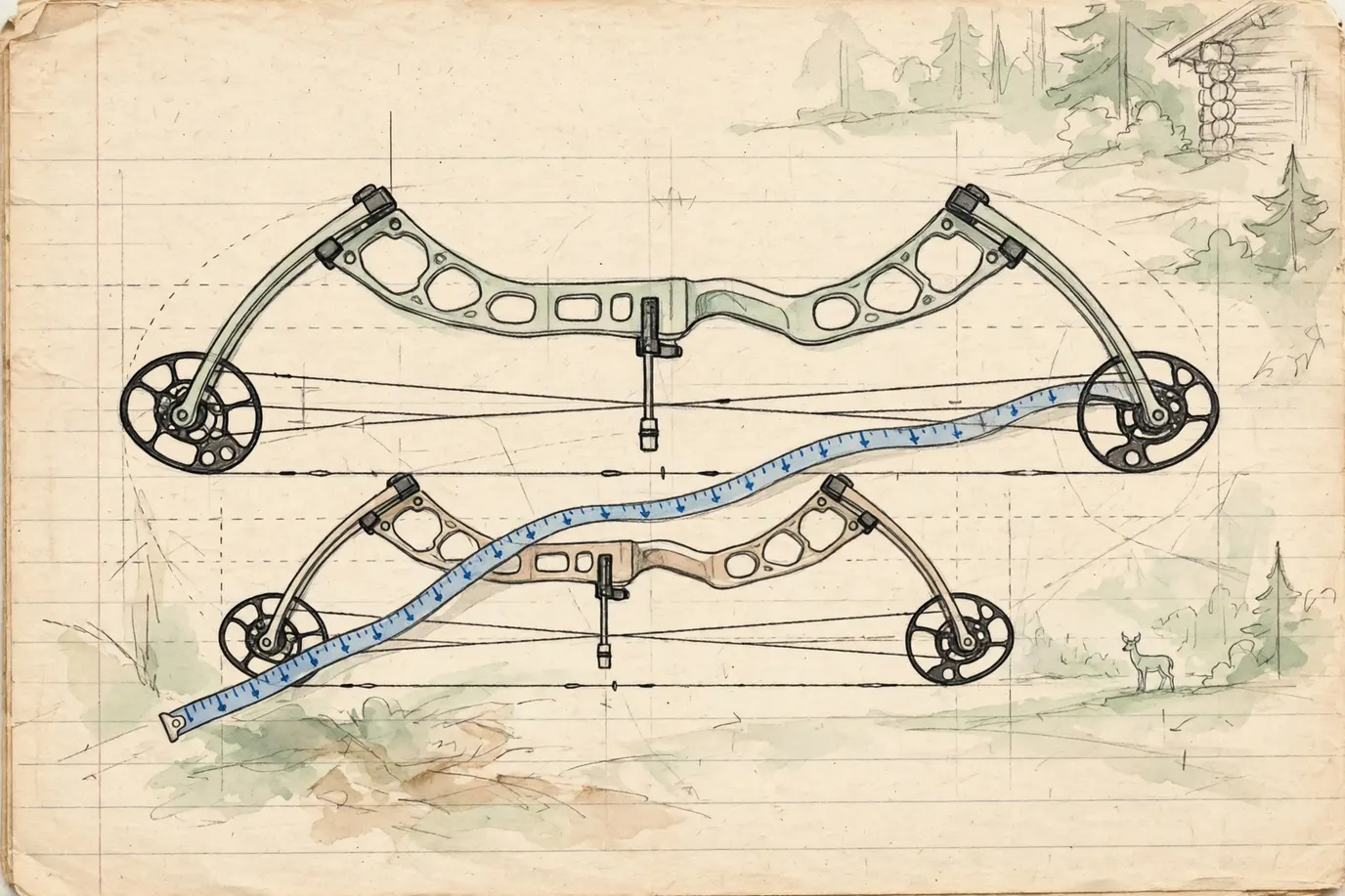
Draw length is how far the string comes back with proper form. Archery 360 gives two estimates. For the first, the child stands with arms straight out to the sides while you measure middle finger to middle finger; divide that by 2.5. A 60-inch wingspan is about a 24-inch draw. The second runs a tape from the nocking point at the face, along the jaw, to the grip's deepest point, then adds 1¾ inches.
Between two settings? Field & Stream says pick the shorter one. Archery 360's advice for beginners is a proper fitting at an archery shop, which beats both estimates.
When you read the table, look at both ends of the draw length range. The bottom has to fit the child today. The top is the growth room. Archery 360 notes that draw length shouldn't change for adults but will increase as youths grow, so plan on re-measuring every year or so. (I measure Walt's grandson every August. He measures me back. Neither of us is allowed to stand on tiptoe.)
Signs the length is wrong, per Archery 360: a bent bow arm at full draw points to a draw length that's too short, and a hyperextended elbow points to one that's too long. At the right length, the string touches the corner of the mouth and the tip of the nose.
Draw weight range: start where the pull is easy
Draw weight is the pull, in pounds, at its heaviest point. Archery 360's common-mistakes guide makes a point that matters most for kids: new archers often have the strength to pull a weight but not the coordination. When it's too heavy, they push through instead of backing off, and they learn to let go of the string as fast as possible.
The signs it's too heavy, from Archery 360:
- Sky drawing: pointing the arrow up at the sky to get it back
- Heavy shaking while aiming
- Only a handful of arrows before they're done
The fix is to start light and go up a pound or two at a time, once shooting at the current weight is easy. That's why the bottom of the draw weight range matters as much as the top on a youth bow.
The one opinion I'll put on this page: set a youth bow to a weight the child can pull smoothly 30 times, not the number a friend's bow says. The reason is in Archery 360's warning signs. Sky drawing, shaking and quitting early all show up long before 30 arrows when the weight is wrong, and the bad habits come with them.
Adjustable without a bow press: how the bow grows
A "yes" in the press-free column means the maker or the listing says the bow changes length or weight with no bow press. Archery 360's draw length guide describes the options:
- Highly adjustable cams: the usual youth setup; the range is built in, so growth needs a wrench, not new parts
- Adjustable modules: a few inches of range per module, moved in small steps by a shop
- Fixed-length cams: found mostly on older bows, and outgrown for good once the child is longer than the cam
Archery 360 is honest about the cost: bows built to adjust that widely usually trail traditional compounds in performance. For a child who'll change size twice before high school, that's a fair trade. Draw weight changes usually happen at the limb bolts; the compound bow page has the steps. A shop technician can make both adjustments and confirm them on a scale.
Let-off: how much they hold while aiming
Let-off is the percentage the cams take off the peak weight at full draw. Quick math: a bow set to 30 lb with 80% let-off holds at about 6 lb. At 65% let-off, the same bow holds at about 10½ lb.
Higher let-off helps a young archer hold steady long enough to aim, which is the whole job of a compound for a beginner. Archery 360's advice fits here too: a draw weight that's easy to draw and easy to hold once at full draw. Where the maker or the listing gives a let-off range, the table shows its top end.
Axle-to-axle and mass weight: a bow that fits small arms
ATA (axle to axle) is the bow's length measured cam axle to cam axle. Every bow in this table is 30 inches or shorter, which is the build youth bows share. Archery 360 points out that longer bows suit taller archers with longer draws because they reduce string angle. A child with a short draw doesn't need that length.
Mass weight is the maker's figure for the bow with nothing bolted on. Lighter is easier for a small archer to hold out at arm's length for a whole practice session. Add the sight, rest and quiver and it climbs, so compare the bare numbers and then picture the finished rig.
Hand: test the dominant eye first
When a child's strong eye and strong hand are on the same side, Archery 360 says buy the bow for that side. For a kid, make it a game: point a thumb at a doorknob across the room with both eyes open, then wink each eye in turn. Whichever eye keeps the thumb on the knob is the dominant one.
Kids sometimes turn out cross-dominant, with eye and hand on opposite sides. Let them shoot both a right and a left setup at a shop first, as Archery 360 suggests. The table's "Hand" column shows right, left, either or ambidextrous, as listed by the maker.
IBO speed: expect much less from a youth setup
IBO speed is a rating taken under fixed conditions. Grand View Outdoors describes them: a 30-inch draw and an arrow of 5 grains per pound of draw weight, with a bare string. Grand View then shows a rated bow losing speed with every inch of draw, every pound of draw weight and every extra grain of arrow.
A child with a 24-inch draw at 30 lb is nowhere near that test. So read a youth bow's speed figure as a comparison between bows, not a promise.
Package type and the arrows that come with it
Youth bows are often sold as packages: ready to hunt, or a kit that adds arrows. Archery 360's budget guide says these accessory kits are common, and often adjust widely enough to follow a growing archer.
If the kit includes arrows, check that they fit the child's draw length and draw weight. Archery 360's dry-fire guide lists arrows that are too light or too short as one cause of dry-fire damage. Its compound arrow guide also pairs lighter points, under 100 grains, with bows of about 50 lb and below. More on matching arrows is on the youth bow arrows page.
Best youth compound bow fit, by stage
First bow, backyard practice
Start at the bottom of the draw weight range and set the draw length to today's measurement. A target the arrows can't pass through matters as much as the bow; the archery target page covers what stops them.
Growing into hunting
Many states set a minimum draw weight for deer; Archery 360 calls about 35 lb typical. Your state's number, plus its hunter education and age rules, comes from your state wildlife agency, so check there before the season. A youth bow whose range tops out below your state's minimum is a practice bow, not a hunting bow.
If a young hunter will sit in a tree stand, the harness goes on before their boots leave the ground. The bow comes up afterward on a haul line, unloaded, which is how Wisconsin's DNR says to raise any bow into a stand.
Small adult hunters
Adults with short draw lengths read this page too. A youth bow can fit, but check that the top of the draw weight range reaches your state's minimum and what you want to hunt with. The best compound bow for women list also starts from short draw lengths.
Hand-me-down and used youth bows
Archery 360's budget guide is clear about used bows: have a bow technician inspect any borrowed or second-hand bow before it's shot. A bow that sat for years may have a worn string or loose parts. It also has to match the child's draw length and a suitable draw weight. If it doesn't, confirm the parts to fix that are still available before you buy it.
Youth archery safety
A child shoots with an adult watching, every time. Store bows and arrows where others can't pick them up, as Archery 360 advises, and don't let anyone draw the bow who doesn't know how; most dry-fires happen with inexperienced hands, and a dry-fire can injure the shooter.
Oregon's wildlife department adds the basics: nock an arrow only when it's safe to shoot, know what's in front of and behind the target, and never shoot an arrow straight up.
Who should skip a youth compound bow
If the child has reached an adult draw length, a standard compound with a low draw-weight range may fit better and keep them through the teen years. If they're just curious and not set on a compound, a light recurve is another starting point; see the youth recurve bow page.
Everyone else: measure the child, start the weight low, and write the date and the draw length in the logbook. Next August, measure again.
Brands in this list
Related
Questions people ask
What draw weight should a youth compound bow be set to?
One the child can draw and hold comfortably, not a target number. Archery 360 says the actual weight is irrelevant as long as it's comfortable, and lists sky drawing, heavy shaking and tiring after a few arrows as signs it's too heavy. Raise it a pound or two at a time. For deer, check your state's minimum draw weight.
What's the best compound bow for short draw length?
Look at the bottom of each bow's draw length range in the table, then make sure the child's measured draw length sits inside it with room above for growth. Archery 360's estimate is wingspan divided by 2.5, so a 60-inch wingspan gives about 24 inches. A shop measurement beats the estimate.
Will a youth compound bow grow with my child?
Many do. Archery 360 says youth and beginner bows often use highly adjustable cams that cover a wide range of draw lengths and weights without new parts or a bow press. The trade-off, per the same guide, is that they generally don't perform as well as traditional compounds. Re-measure draw length as the child grows.
Can kids hunt deer with a youth compound bow?
It depends on the bow's draw weight and your state's rules. Archery 360 says a state's minimum deer draw weight is usually about 35 lb, but each state sets its own, along with hunter education and age requirements. Check your state wildlife agency before planning a first hunt.
Sources
- Archery 360 (Archery Trade Association): Archery Lingo: Draw Length — accessed 2026-10-22
- Archery 360 (Archery Trade Association): Selecting the right bow for you — accessed 2026-10-22
- Archery 360 (Archery Trade Association): The 5 most common archery mistakes — accessed 2026-10-22
- Archery 360 (Archery Trade Association): When to push your shooting abilities — accessed 2026-10-22
- Archery 360 (Archery Trade Association): Getting started on a budget — accessed 2026-10-22
- Archery 360 (Archery Trade Association): Compounds vs. recurve bows — accessed 2026-10-22
- Archery 360 (Archery Trade Association): Choosing your first gear, compound bow — accessed 2026-10-22
- Archery 360 (Archery Trade Association): Should I shoot a right- or left-handed bow? — accessed 2026-10-22
- Archery 360 (Archery Trade Association): Archery Lingo: Dry-Fire — accessed 2026-10-22
- Archery 360 (Archery Trade Association): Compound bow arrows — accessed 2026-10-22
- Grand View Outdoors: The truth behind compound bow speed ratings — accessed 2026-10-22
- Field & Stream: Compound bow maintenance — accessed 2026-10-22
- Wisconsin DNR: Archery and crossbow safety tips — accessed 2026-10-22
- Oregon Department of Fish and Wildlife: Bow shooting safety — accessed 2026-10-22