Brand · Knives & Tools
Rough Rider Knives
Rough Rider knives are mostly traditional patterns: Barlows, trappers, stockmans and lockbacks for the pocket, plus bowies and small fixed blades in a sheath. The short version: with this brand, the pattern and the handle carry most of the information, and the steel is often missing from the listing. Pick fixed or folding first, then the pattern, then the handle. (Amazon spells the name two ways, Rough Rider and Rough Ryder. My handwriting spells it a third way.)
We earn a commission if you buy through our links, at no cost to you. Disclosure
Rough Rider on Amazon US
40 models- Fixed blade knife
Rough Rider RR533 Camp Knife
Check price - Fixed blade knife
Rough Rider Fixed Blade BS013575
- Overall length
- 9.5 in
- Fixed blade knife
Rough Rider Slim Design Fixed Blade
- Blade length
- 3.25 in
- Steel type
- Stainless
- Fixed blade knife
Rough Rider RR1631 Native American
Check price - Fixed blade knife
Rough Rider RR1821
Check price - Fixed blade knife
Rough Rider Cowboy Knife Brass RR1457
Check price - Fixed blade knife
Rough Rider Cowboy Fixed Blade RR1630
Check price - Fixed blade knife
Rough Rider Tanto RR1720
Check price - Fixed blade knife
Rough Rider G10 Pack Knife RR1814
Check price - Fixed blade knife
Rough Rider RR1865
Check price - Fixed blade knife
Rough Rider D Guard Bowie RR1943
Check price - Fixed blade knife
Rough Rider Highland Bowie RR1730
Check price - Fixed blade knife
Rough Rider Spike RR1962
Check price - Fixed blade knife
Rough Rider Hunter RR2109
Check price - Fixed blade knife
Rough Rider Red and Black G10 RR2163
Check price - Fixed blade knife
Rough Rider RR2177
Check price - Fixed blade knife
Rough Rider RR1942 Gold Star Bowie
Check price - Fixed blade knife
Rough Rider Drop Point RR2397
Check price - Fixed blade knife
Rough Rider RR2394
- Blade length
- 3.25 in
- Fixed blade knife
Rough Rider Combat Bowie RR2586
Check price - Fixed blade knife
Rough Rider Crown Stag Bowie RR2590
Check price - Fixed blade knife
Rough Rider RR2601 Micarta
- Blade length
- 3.75 in
- Overall length
- 7.75 in
- Blade steel
- 440
- Folding knife
Rough Rider RR072 Razor Trapper
Check price - Folding knife
Rough Rider RR515-BRK Razor Trapper
Check price - Folding knife
Rough Rider Small Stockman
Check price - Folding knife
Rough Rider RR244-BRK Small Stockman
Check price - Folding knife
Rough Rider Lockback
Check price - Folding knife
Rough Rider RR1672 Black Widow Toothpick
Check price - Folding knife
Rough Rider KB201 Rams Horn Trapper
- Steel type
- Stainless
- Folding knife
Rough Rider Trapper G-10
Check price - Folding knife
Rough Rider Doctors Knife Classic Carbon RR1732
- Steel type
- Carbon
- Blade shape
- Spear point
- Folding knife
Rough Rider RR1738 Lockback Classic Carbon
- Steel type
- Carbon
- Blade shape
- Clip point
- Folding knife
Rough Rider RR1740 Stockman
Check price - Folding knife
Rough Rider RR2041 Barlow Buckshot Bone
- Steel type
- Stainless
- Blade shape
- Tanto
- Folding knife
Rough Rider RR2040 Barlow Classic Carbon
Check price - Folding knife
Rough Rider RR1987 Kamo King
Check price - Folding knife
Rough Rider RR1978 Brass Lockback
Check price - Folding knife
Rough Rider RR2181 Folder
Check price - Folding knife
Rough Rider RR2153 Small Barlow
Check price - Folding knife
Rough Rider RR2446 Barlow Imitation Tortoise
Check price





What Rough Rider makes for hunters and campers
On this site, Rough Rider covers two product types: fixed-blade knives and folding knives. The grid above filters by those two, and inside them the lineup splits into groups:
- Traditional folders: Barlows, trappers, stockmans, a toothpick and a doctor's knife
- Lockbacks: folders that lock open, in bone, brass and carbon-steel versions
- Modern-handled folders: G10 and Micarta handles on traditional shapes
- Bowies: big clip-point fixed blades with names to match
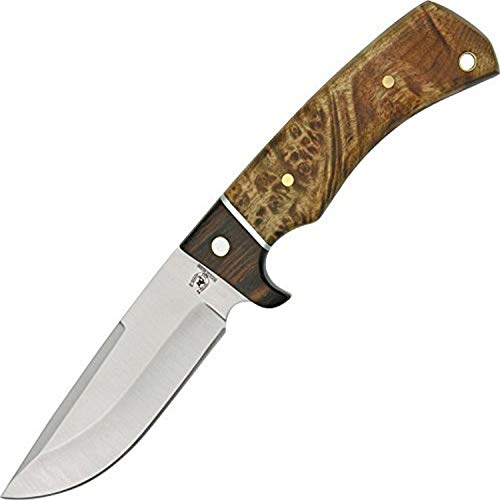
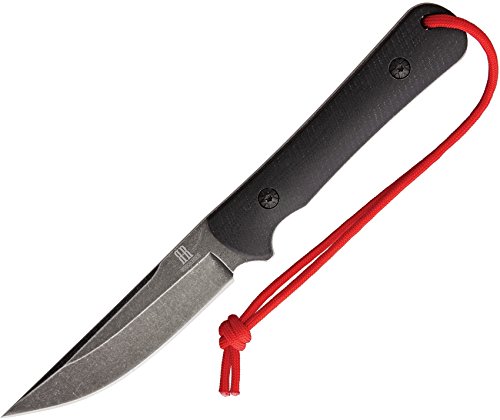
- Small fixed blades: hunters, a drop point, pack and camp knives, a tanto
The grid changes as listings come and go. So I'll write about the groups and what separates them, not about how many are listed this week.
Here's the thing about this brand's data. The listings are generous with handle materials and pattern names, and stingy with steel and blade length. Where the grid shows an empty field, the listing didn't say. I didn't fill it in from a guess, and the knife in your hand will tell you more than a guess in mine.
One more housekeeping note. The listings use both spellings, Rough Rider and Rough Ryder, and model numbers that start with RR. Some also carry a second code. The RR number is the one to match when you're looking for a pattern.
Lineup notes: Rough Rider folding knives
Barlows
The Barlow is one of the oldest pocket patterns around. Wikipedia's pocketknife article describes it as a knife with a long bolster, an elongated oval handle and one or two blades, first made in Sheffield, England, and popular in America by the early 19th century.
The Barlows in the grid, per their listings:
- Barlow Buckshot Bone RR2041: bone handle, stainless blade, 3.25 inches closed
- Barlow Classic Carbon RR2040: the carbon-steel version
- Small Barlow RR2153: a purple swirl handle
- Barlow Imitation Tortoise RR2446: a tortoiseshell-look handle
A Barlow is a knife for small chores: twine, feed sacks, an apple at lunch. The pocket knife page covers the pattern families across brands.
Trappers
Wikipedia describes the trapper as a larger knife with a clip blade and a spey blade, usually hinged at the same end. The clip is the thinner, pointed blade for detail work. The spey is the rounded one.
In the grid:
- RR072 and RR515-BRK Razor Trappers: the RR072 with an amber bone handle
- KB201 Rams Horn Trapper: jigged bone handle, stainless steel and 4 inches closed, per its listing
- Trapper G-10: a G10 handle, and its title says high carbon steel
The trapper is the traditional pattern hunters reach for most, because the clip and spey cover a lot of small jobs between them. It isn't a substitute for a fixed blade on a deer, and I wouldn't ask it to be.
Stockmans
The stockman, per Wikipedia, is a middle-sized knife with three blades: a clip, a sheepsfoot and a spey. The sheepsfoot has a straight edge and a rounded back, so the point is less likely to poke where you don't want it.
The grid has two Small Stockmans, one in amber bone and the RR244-BRK, plus the RR1740 Stockman in carbon steel with a yellow handle. Three blades means you can keep one edge sharp for fine work and let another take the cardboard. It also means three blades to clean.
Toothpick and doctor's knife
The Black Widow Medium Toothpick RR1672 is the slim one in the folding grid. Wikipedia describes the toothpick as an elongated knife with a single narrow clip-point blade.
The Doctors Knife RR1732 is a Classic Carbon model with a spear point blade and a synthetic handle, per its listing. The listing doesn't describe anything beyond that, so neither will I.
Lockbacks
Three lockbacks in the grid, per their listings:
- Lockback with amber bone handle
- RR1738 Lockback Classic Carbon: carbon steel, clip point blade
- RR1978 Brass Lockback
Wikipedia calls the lockback a refinement of the slip joint: a hook on the back spring drops into a notch in the blade when it's fully open. Benchmade's mechanisms guide says the lock keeps the knife from closing until you press the back spring to release it. That's the bar on the back of the handle.
Modern-handled folders
Two folders put newer handle materials on older shapes. The Trapper G-10 is one, covered above. The Folder Denim Micarta RR2181 is the other, with a Micarta handle per its listing. The Kamo King RR1987 rounds out the folding grid, and its listing gives no specs beyond the name. Read the photos.
Lineup notes: Rough Rider fixed-blade knives
Bowies
Wikipedia describes the classic Bowie as a large fixed blade with a crossguard and a clip point, typically with a blade around 8 to 12 inches. Rough Rider names five of them:
- D Guard Bowie RR1943: the D-shaped guard wraps around the fingers
- Highland Bowie RR1730
- Gold Star Bowie RR1942: its title also calls it a survival and hunting knife
- Combat Bowie RR2586: a stacked leather handle
- Crown Stag Bowie RR2590
None of these listings gives a blade length. Measure the photo against the handle if you have to, or read the listing description closely. A Bowie is a big camp knife in practice. For the fine work around a deer, it's more knife than the job needs. The bowie knife page covers the type across brands.
Small hunters and drop points
This is the group a deer hunter should read first:
- Hunter RR2109: stacked leather handle
- Drop Point RR2397: a drop point blade, the all-round hunting shape
- RR2601 Micarta: 440 stainless, a 3.75-inch blade and 7.75 inches overall, per its listing
- RR2394: a 3.25-inch black blade with a black and red handle
- Slim Design fixed blade: 3.25-inch stainless blade, stacked leather handle
A drop point puts the tip in line with the spine, which keeps it controllable. A blade in the 3-to-4-inch range does careful work without much reach to manage. The hunting knife page and the skinning knife page cover blade lengths and shapes across brands.
Camp, pack and cowboy knives
The rest of the fixed-blade grid, per the listings:
- RR533 Camp Knife: amber bone handle
- G10 Pack Knife RR1814 and the Red and Black G10 RR2163: G10 handles
- Cowboy Knife Brass RR1457 and Cowboy Fixed Blade RR1630
- Native American RR1631 and Spike RR1962
- Tanto RR1720: a tanto blade, the angular point
- RR1821: a Kydex or polymer sheath, per its listing
- RR1865, RR2177 and a fixed blade listed at 9.5 inches overall
Several of these listings name the model and the handle and stop there. The grid shows what's known. For camp chores, the camping knife page lays out what length and shape fit which job.
How to choose within the Rough Rider lineup
Fixed or folding first
A fixed blade has no pivot to clean and no lock to trust. A folder fits a pocket. If the knife's main job is field dressing, start with the small fixed blades. If it's a pocket knife for camp chores, start with the folders. The fixed blade knife page lays out that trade across brands.
Then lock or no lock
My one opinion on this page: if it's your first pocket knife for deer camp, get one that locks. AKTI's safety page warns that a folder that doesn't lock open can snap closed on your fingers. Wikipedia's definition of a slip joint says the same thing from the other side: a spring holds the blade open, but enough pressure folds it. A lockback holds until you press the bar. That's easy to check in any listing: look for "lockback" in the lock field or the title.
Traditional slip joints are fine knives for people who know them. They just ask you to cut with the edge and never push on the spine.
Then the pattern
- Barlow: one or two blades, long bolster, small chores
- Trapper: clip and spey, the hunter's traditional pocket pattern
- Stockman: three blades, more choices, more cleaning
- Toothpick: one long narrow blade
- Lockback: locks open, released by the bar on the spine
Then the handle
The handle is where Rough Rider listings say the most: amber bone, jigged bone, stacked leather, G10, Micarta, brass, synthetic. Benchmade's handle materials guide describes G10 as a fiberglass laminate, cloth soaked in resin and cured under pressure, that doesn't absorb water. Bone and stacked leather are natural materials, and natural materials like to be kept reasonably dry. A handle you can grip with cold, wet hands matters more in November than one that looks good on the dresser.
Then the steel, when the listing says
Where a Rough Rider listing names the steel, it's stainless, 440 stainless or carbon, and "Classic Carbon" in a model name means carbon steel. Morakniv's steel guide lays out the split. Carbon steel needs careful drying and oiling after use to prevent rust, is easier to resharpen, and builds a patina over time. Stainless is easier to maintain. If the listing doesn't name the steel, care for it like carbon: dry it and oil it. Extra care on a stainless blade costs a minute. Too little on a carbon blade costs a Saturday with steel wool.
Care and handling for the whole lineup
AKTI's maintenance guide is short, and it covers every knife in this grid:
- Clean dirt from the handle and around the blades; a toothpick works and won't scratch
- Oil the folding joint lightly, with a soft cotton cloth
- Re-oil after cleaning to keep water off the steel
- Store knives in a cool, dry place, not a damp basement or garage
AKTI also notes that stainless steel isn't fully rust-proof. Water and some chemicals can still harm it. Wipe the blade after a wet day, carbon or stainless.
On a stockman or trapper, dirt collects between the blades and the back spring. That's where the toothpick earns its spot in the knife drawer. Mine lives in an old film canister, which my grandson considers a museum piece.
Knife safety
Cut away from your body, on a firm surface, and keep your fingers out of the blade's path when you open or close a folder. AKTI warns that once a lock is released, the spring can snap the blade shut. Don't use a knife as a pry bar or a screwdriver.
For field dressing, Cornell's Wildlife Health Lab recommends gloves and a dedicated set of knives and tools that aren't used for butchering, washed with soap and hot water between deer.
Knife carry rules vary by state, so check your state's rules before you carry a fixed blade or a large folder.
Where to buy Rough Rider knives
The grid on this page links to Rough Rider listings on Amazon US, filtered by fixed blade and folding knife. Since the spelling varies, the listing's RR model number is the reliable way to confirm you've got the pattern you want. Some knives may not ship to every address; Amazon shows that at checkout.
Pick the pattern, oil the joint, and give the toothpick a permanent job. A knife that's cared for in March is ready in November.
Where Rough Rider shows up
Questions about Rough Rider
Are Rough Rider knives good?
What the listings state is checkable: traditional folding patterns with bone, jigged bone, G10 and Micarta handles, some lockbacks, and fixed blades from small 3-inch knives to bowies. Where a listing names the steel, it says stainless, 440 or carbon. Many listings leave the steel and blade length out. Whether one suits you depends on the job, so pick the type and pattern first, then read the exact listing.
Is it Rough Rider or Rough Ryder?
Both spellings show up on the Amazon listings for these knives, sometimes on knives with the same pattern and model style. Model numbers starting with RR appear under both names. Search both spellings if you're looking for a particular pattern, and match the RR number in the listing.
Do Rough Rider pocket knives lock?
Some do. The grid includes lockbacks, among them a brass lockback and a carbon-steel lockback per their listings. The trappers, stockmans, Barlows and toothpick patterns are traditional folders, and traditional patterns are usually slip joints, held open by a spring with no lock. Check the lock type in the listing before you buy.
What steel do Rough Rider knives use?
The listings that name it say stainless, 440 stainless or carbon steel, and several model names add 'Classic Carbon'. Many listings don't say. Morakniv's steel guide says carbon steel needs careful drying and oiling to prevent rust and is easier to resharpen, while stainless is easier to maintain.
Are Rough Rider knives good for hunting?
The grid includes fixed blades a hunter would look at: a drop point, a hunter with a stacked leather handle, small 3-inch-class fixed blades and a Micarta fixed blade with a 3.75-inch blade, per its listing. For field dressing, compare blade length and shape on the hunting knife and skinning knife pages, and check that the knife comes with a sheath.
Sources
- Wikipedia: Pocketknife — accessed 2026-10-28
- Wikipedia: Bowie knife — accessed 2026-10-28
- Benchmade: Knife mechanisms guide — accessed 2026-10-28
- American Knife & Tool Institute: Knife safety, sharpening and maintenance — accessed 2026-10-28
- Benchmade: Knife handle materials guide — accessed 2026-10-28
- Morakniv: Steel types and coatings — accessed 2026-10-28
- Cornell Wildlife Health Lab: Tips for safe handling and processing of venison — accessed 2026-10-28