Archery & Bowhunting · Gear type
Dial Bow Sight
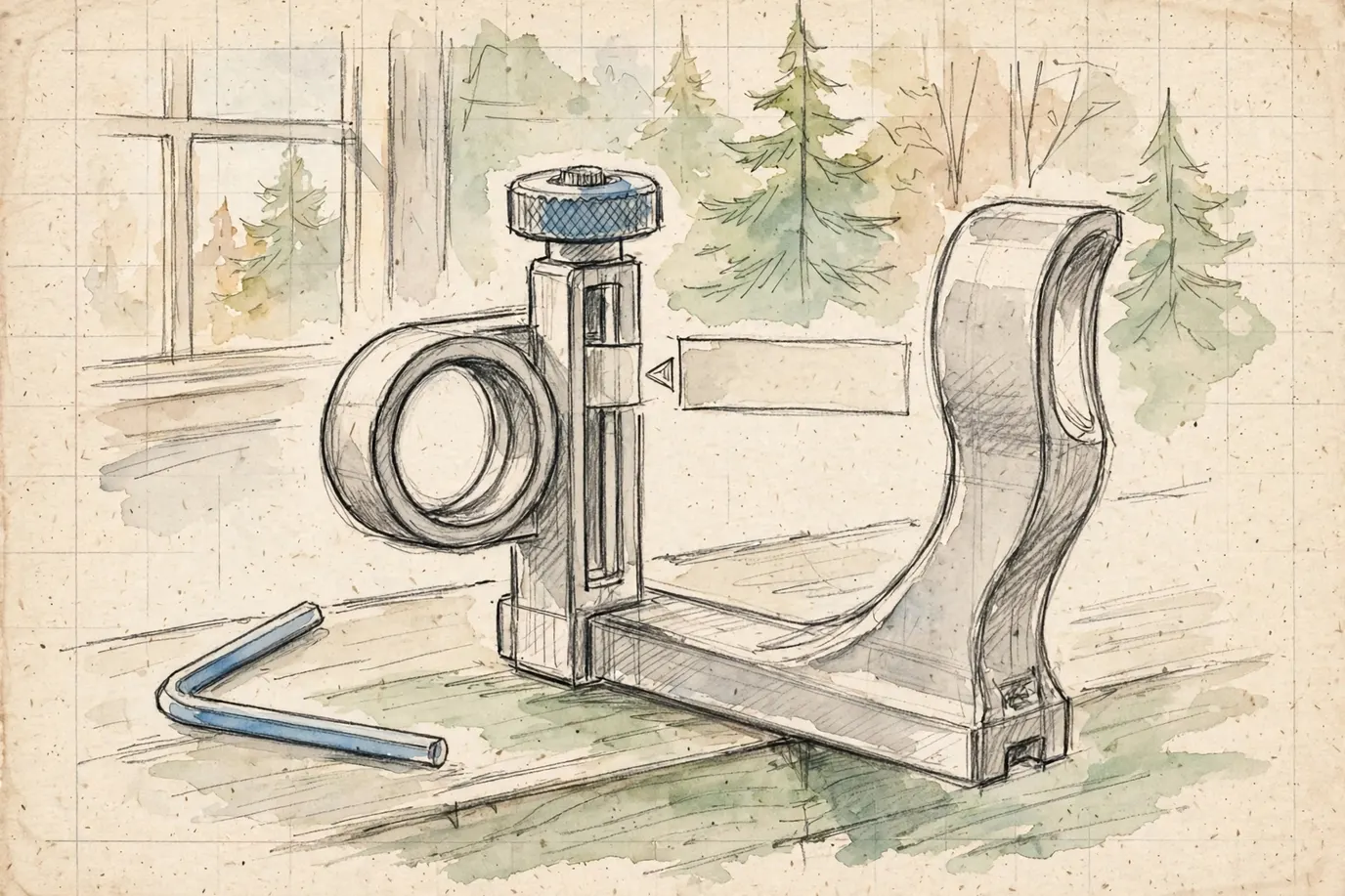
A dial bow sight is an adjustable bow sight: you turn a yardage wheel or slide the housing along a track until a pointer sits on the distance, then lock it and shoot. Some carry one pin; hybrids keep a few fixed pins and let one ride the dial. The deciding parts are the tape system, the lock and how cleanly it dials. Quick math says it earns its keep past your last fixed pin. (Inside 25 yards it's mostly a very nice knob.)
We earn a commission if you buy through our links, at no cost to you. Disclosure
| Model | Hand | Type | Pins | Pin size | Sight light | Mount | Amazon |
|---|---|---|---|---|---|---|---|
Sharrow 1 Pin Micro-AdjustableBow sight | — | Single pin sliderlisting | 1listing | 0.019 inlisting | Yeslisting | — | Check price |
Sharrow Carbon Bar T Shape Single Pin TargetBow sight More specs
| — | Single pin sliderlisting | 1listing | 0.019 inlisting | Yeslisting | — | Check price |
Sharrow Carbon Bar Single Pin TargetBow sight More specs
| Ambidextrouslisting | Single pin sliderlisting | 1listing | 0.019 inlisting | Yeslisting | Dovetaillisting | Check price |
Trophy Ridge Drive 1-Pin SliderBow sight | Rightlisting | Single pin sliderlisting | 1listing | 0.029 inlisting | Yeslisting | — | Check price |
Trophy Ridge React One Pro 1-PinBow sight | Rightlisting | Single pin sliderlisting | 1listing | 0.019 inlisting | — | — | Check price |
Trophy Ridge Alpha React 1-PinBow sight | — | Single pin sliderlisting | 1listing | 0.019 inlisting | — | — | Check price |
Trophy Ridge Hotwire 3-PinBow sight | Rightlisting | Hybridlisting | 3listing | 0.019 inlisting | Yeslisting | — | Check price |
TRUGLO Range-Rover Single-PinBow sight | Rightlisting | Single pin sliderlisting | 1listing | 0.019 inlisting | — | — | Check price |
TRUGLO Covert 4 PinBow sight | Ambidextrouslisting | Hybridlisting | 4listing | 0.019 inlisting | — | — | Check price |
TRUGLO Range-Rover Single-PinBow sight | Leftlisting | Single pin sliderlisting | 1listing | 0.019 inlisting | — | — | Check price |


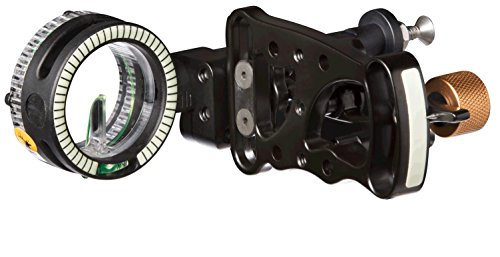


What’s in this listAdjustable bow sights — single-pin sliders and hybrids you set by dial or lever — as stated by the maker or the Amazon listing. “—” means neither the maker nor the Amazon listing states it.
What makes a dial bow sight different
A fixed-pin sight decides your distances in the garage. A dial bow sight decides them at the moment of the shot. The housing rides a vertical track, a pointer reads against a printed yardage tape, and you move the housing until the pointer sits on the number you ranged. Then you lock it.
That moving part is the whole point of this type, and it's also the part that needs the most care. Everything below is about how it moves, how it's marked, and how it stays put. For the basics every bow sight shares (pins, peep, leveling), see the main bow sight page.
Three ways an adjustable bow sight moves
Makers solve the same problem in a few ways. The table's Type column lists them as single-pin slider or hybrid.
Yardage wheel
You turn a knurled wheel and the housing walks up or down its track. The wheel reads at a glance, and it's easy to find with a glove on (think of the volume knob on an old truck radio). Some makers put the wheel forward on the sight to keep it clear of a bow quiver. Check it on your own bow and quiver before you count on it.
Sliding housing with a lock
The housing slides along a track by hand, and a lever or knob locks it in place. It's quick to move a long way, from 20 to 60 in one push. The trade is that the lock does all the holding. A sight that slides easily also slides when it isn't locked.
Floating pin in a fixed housing
Some sights keep the housing still and move one pin inside it. You get the same exact-yardage aim, with a ring that never moves in your peep. It's worth knowing this exists, because the sight picture feels different from a moving housing.
Hybrids: fixed pins plus one that dials
A hybrid is a multi-pin sight on a moving track. It usually carries three to five fixed pins. You sight the fixed pins first, then choose one pin to run the dial for longer shots. The bottom pin is the usual pick. A common hunting layout is three fixed pins covering everything short of 50 yards, with the dial left for the long ones. One writer called hybrids "the cake AND ice cream of bowsights," and the catch is in the name. It's two systems, so there are two ways to set it up wrong.
Who should use a dial bow sight
Dial sights pay off where fixed pins run out: long shots, open country, and practice past 50 yards. They're also for archers who like an exact number. On a hybrid, a hunter gets quick fixed pins for close deer and a dial when a deer hangs up far out.
My one opinion on this page: if every shot you take is from a stand inside 30 yards, a dial is more sight than you need. The reason is on the tape itself. A dial's advantage is precision at distances between and beyond fixed pins, and at 20 to 30 yards a fixed-pin sight already puts a pin on every likely shot without moving anything. Look at your logbook. If the longest entry is 28 yards, buy for 28 yards.
Skip a dial, too, if you know you'll forget to reset it. That's not a joke; hybrids are known for exactly that slip. Fixed-pin sights are covered on the fixed-pin bow sight page, and single-pin setups on the single-pin bow sight page.
What to look at on a dial or slider sight
Columns in the product table are shared by every sight type. Here's how to read them on an adjustable one, plus the parts no column covers.
Pins: 1 for a pure slider, 3 to 5 for a hybrid
The Pins column tells you which family you're looking at. A 1 means a single-pin slider. Three to five means a hybrid. Quick math on a hybrid with a 20-yard top pin and 10-yard gaps: three fixed pins cover 20, 30 and 40, and the dial takes over from there. Five pins push the fixed range to 60, and the dial handles the long shots on the bottom pin.
The tape system: how the sight knows your yardages
The tape is what turns a moving housing into yardages. This is the part to read about on the maker's page before you buy, because systems differ.
- Numbered tape sets: one dial maker includes 52 color-coded tapes in 1-yard steps; you sight in at 20 and 60 yards and the pair picks your tape
- Speed-matched tapes: tapes labeled by arrow speed (FPS, feet per second), chosen from a chronograph reading
- Blank tape: you shoot each distance and mark it yourself
- Custom-printed tapes: archery software prints a tape from your arrow speed, weight and bow measurements
A set of numbered tapes is quickest. Speed-matched tapes land close, though front-of-center balance and vane choice change the drop enough to nudge the long yardages. Swap arrows, points or draw weight and plan on a fresh tape.
Micro-adjust and the lock
Two kinds of adjustment live on a dial sight. The dial moves the housing for distance. Micro-adjust knobs move the whole sight in small, clicked steps for windage and elevation while you sight it in. Look for clicks you can count, a lock on each axis, and a scale you can read.
How fine is fine? One archery writer's example of a good micro-adjust is about .002 inch per click. Plastic parts can bend or creep back toward an earlier setting, so machined aluminum is the usual recommendation for anything that moves. A dial that moves cleanly and locks solid will keep the tape honest for a whole season.
Mount and quiver clearance
Mount tells you the attachment style. On a dial sight, check two more things. The wheel or lever has to clear your bow quiver, and the housing has to clear your arrow at the bottom of its travel. A wheel set forward on the sight is one maker's answer to the quiver problem. If your riser takes a rail-style mount, that removes the separate bracket from the stack of parts that has to stay tight.
Pin size: pick for the far end of the dial
You bought a dial to shoot farther, so pick the pin for the far end. Quick math: a deer at 70 yards looks less than a third as wide as it did at 20, and a thick pin can swallow most of the vitals. The finest .010 pins are the ones usually suggested past 60 yards, while .019 and .029 favor close work and tired eyes. On a hybrid, the dialing pin does the long work, so its size matters most.
Larger pins stay lit longer at dusk. Sight-light rules differ from state to state, so check your state wildlife agency before adding a battery light.
Weight and hand
Weight comes in ounces. A dial sight carries a track, a pointer and a lock, and you'll feel each of them on a long walk in with the bow in hand. Hand has to match your bow's hand.
Sight in a dial bow sight with two marks
Most dial systems use the same idea: shoot two measured distances, and the gap between them picks the tape. You need a range where 20 and 60 yards are actually measured, not paced.
- Set the dial on its starting mark and lock it.
- Zero the pin at 20 yards with the micro-adjust knobs. Take your time.
- Loosen the dial lock and move the housing down, stepping out 10 yards at a time if your target is small.
- Sight in at 60 yards with the dial only, then note the reading.
- Pick the tape the maker's chart gives for that pair of marks.
- Install it, lock it, and check yardages between and past your two marks.
On a hybrid, sight the fixed pins first, top pin at 20 and bottom pin at 60. Then dial the housing down and sight the bottom pin at 100 yards, if your bow clears and your range allows. The farther the second mark, the more accurate the tape.
Don't rush the long mark. Every yardage past it is only as good as that one reading, and one experienced western bowhunter gives the 60-yard mark two full days of shooting before he trusts it.
How far the dial can go
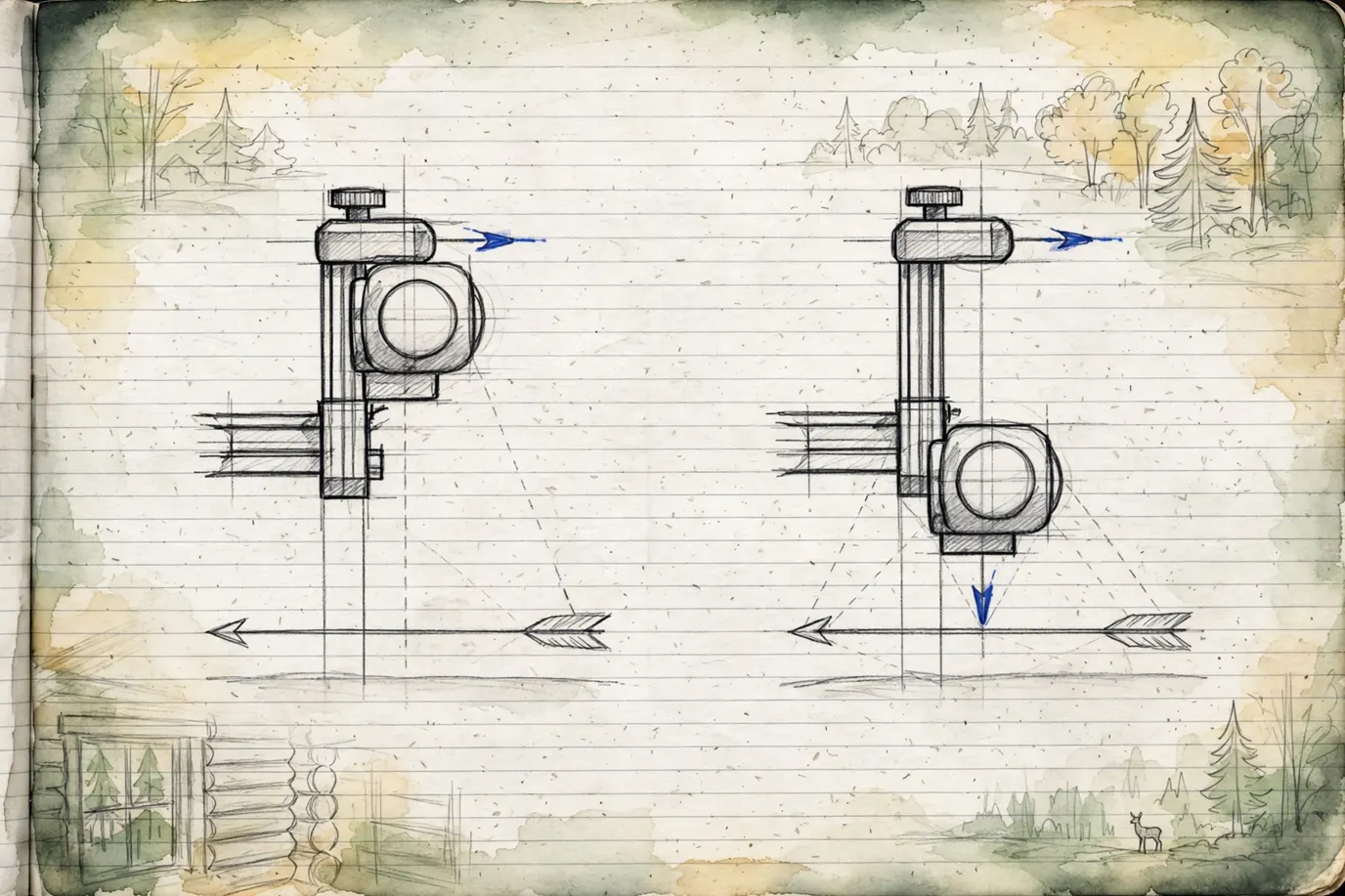
Range claims depend on the sight and on arrow speed. Makers' tape sets often run 20 to 60 or 80 yards, with more claimed for faster bows. The hard limit is your arrow. As you dial out, the housing drops toward the arrow's path, and at some mark the vanes hit it. Most bows don't have clearance past about 110 yards, and some reach 130. Check vane clearance at the bottom of your tape with the bow drawn, before you write that yardage on anything.
Some tapes read top-down and some bottom-up. If yours looks upside down, check the maker's instructions before you decide it's wrong.
Dial discipline in the woods
A dial sight asks for one more habit than a fixed-pin sight: put it back.
The classic hybrid mistake is shooting a 50-yard practice target, forgetting the dial, and then drawing on a 20-yard deer with the bottom pin still set for 50. On a single-pin slider, the same mistake leaves your only pin parked at the wrong number. Pick a home setting and return to it every time you put the bow down.
A dial you forgot to lock changes your yardage without telling anybody. It doesn't rattle and it doesn't warn you. You find out when the arrow lands somewhere you didn't aim.
A few more habits:
- Lock it after every move. Then check that the pointer didn't shift as you tightened.
- Range for horizontal distance from above. On steep shots, the straight-line number makes arrows hit high.
- Check the tape for wear. A scuffed tape can hide the number you need.
- Re-check the zero after travel. A bumped sight moves the whole tape with it.
Level the track and the third axis
A dial sight moves through a long range, so a crooked track shows up as arrows that drift sideways as you dial out. Archery 360 calls this the first axis. Groups that are dead center at 20 and creep sideways at 60 mean the track isn't square to the bow.
The second axis is the bubble level, and the third swings the housing like a door for steep uphill and downhill shots. Long dialed shots on slopes are where a third-axis error shows. To check it, shoot at a steep downhill angle and watch which way your groups land, then adjust the housing. A pro shop can level all three if you'd rather not.
That's the dial bow sight. Move it, lock it, shoot it, put it back. A rangefinder sight that reads the distance for you is the next step up, on the rangefinder bow sight page.
Brands in this list
Related
Questions people ask
What is an adjustable bow sight?
It's a sight whose housing or pin moves up and down to match the distance, instead of having every pin locked at one yardage. You move it with a wheel, a lever or a sliding track, read the yardage off a printed tape, and lock it. Single-pin sliders and hybrids with a dial are both adjustable bow sights.
How do you sight in a slider bow sight?
Most dial systems use two measured distances. Zero the pin at 20 yards with the dial on its starting mark, then dial down and sight in at a long distance, often 60 yards, and note the reading. That pair picks the printed tape that fits your bow. Install it, then check several yardages in between and beyond before you trust it.
Is a hybrid or a single-pin dial sight better for deer hunting?
It depends on how your shots happen. A hybrid keeps fixed pins for quick close shots, often three pins out to 40 or 50 yards, and uses the dial only for longer ones. A single-pin dial gives the cleanest view and an exact yardage every time, but you set it before every shot. Stand hunters with short lanes can use either.
How far can a dial bow sight reach?
It depends on the sight and your arrow speed. Makers' tape sets often cover 20 to 60 or 80 yards, with longer reach claimed for faster bows. The real limit is clearance: the housing drops toward the arrow as you dial out, and past a certain mark your vanes hit it. Most bows run out of clearance somewhere past 100 yards.
Sources
- MeatEater: Archery 101, how to choose a bow sight — accessed 2026-10-22
- Grand View Outdoors: Selecting a bowsight — accessed 2026-10-22
- goHUNT: How to make an archery sight tape — accessed 2026-10-22
- Field & Stream: Set up a perfect sight tape — accessed 2026-10-22
- Grand View Outdoors: New products for HHA Sports (20 and 60 yard sight-in, 52 color-coded tapes) — accessed 2026-10-22
- Bowhunting.com: HHA Tetra Dovetail bow sight review (wheel-forward design) — accessed 2026-10-22
- Nock On Archery: Bow sight mistakes — accessed 2026-10-22
- Bowhunting.com: Single pin vs multi pin bow sight, which works best — accessed 2026-10-22
- goHUNT: Single pin vs multi pin bow sights — accessed 2026-10-22
- goHUNT: The bowsight pin diameter debate, what size is right for you — accessed 2026-10-22
- Archery 360 (Archery Trade Association): Why sight leveling is important and how it's done — accessed 2026-10-22
- Bowhunter: Angle-compensating rangefinders — accessed 2026-10-22
- Huntin' Fool: Common archery regulations for western states — accessed 2026-10-22