Archery & Bowhunting · Gear type
Single Pin Bow Sight
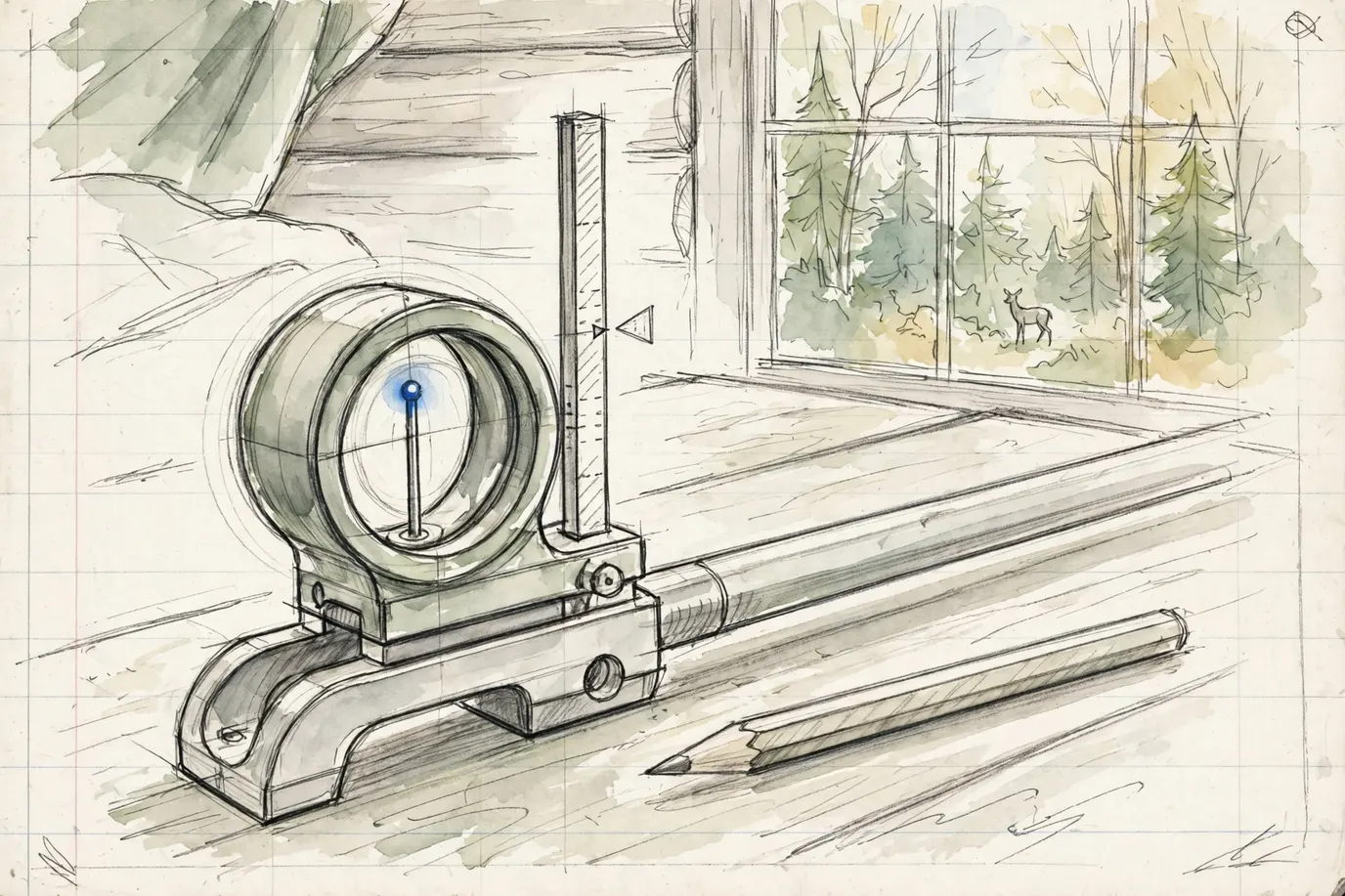
A single pin bow sight gives you one aiming point and moves it for you. You range the deer, slide the housing to that yardage on the sight tape, draw, and aim dead on. No pin gaps, no picking the wrong pin, and a wide-open view of the deer. The cost is one extra step before every shot, so it suits hunters who know the distance before they draw. (Which is most stand hunters, most of the time. Deer don't always read the plan.)
We earn a commission if you buy through our links, at no cost to you. Disclosure
| Model | Hand | Type | Pin size | Sight light | Mount | Amazon |
|---|---|---|---|---|---|---|
Bear Archery Attack 1-PinBow sight More specs
| Ambidextrouslisting | — | 0.019 inlisting | Yesmaker | — | Check price |
SAS CNC Target Sight T ShapeBow sight More specs
| Ambidextrouslisting | — | — | — | — | Check price |
Sharrow Recurve Single Pin SightBow sight More specs
| Ambidextrouslisting | — | — | — | — | Check price |
Sharrow Compound Single Pin 4X LensBow sight More specs
| — | — | — | — | — | Check price |
Sharrow 1 Pin Micro-AdjustableBow sight More specs
| — | Single pin sliderlisting | 0.019 inlisting | Yeslisting | — | Check price |
Sharrow 1 Pin Sight with LensBow sight More specs
| — | — | 0.019 inlisting | Yeslisting | — | Check price |
Sharrow Carbon Bar T Shape Single Pin TargetBow sight More specs
| — | Single pin sliderlisting | 0.019 inlisting | Yeslisting | — | Check price |
Sharrow Carbon Bar Single Pin TargetBow sight More specs
| Ambidextrouslisting | Single pin sliderlisting | 0.019 inlisting | Yeslisting | Dovetaillisting | Check price |
Spot Hogg Fast Eddie XL Single PinBow sight More specs
| Rightlisting | Fixed pinlisting | 0.019 inlisting | — | Dovetaillisting | Check price |
Spot Hogg Fast Eddie MRT Single PinBow sight More specs
| Rightlisting | Fixed pinlisting | 0.01 inlisting | — | — | Check price |
Spot Hogg Fast Eddie PM Single PinBow sight More specs
| Rightlisting | Fixed pinlisting | 0.019 inlisting | — | Picatinnylisting | Check price |
Toparchery Recurve Single Pin SightBow sight More specs
| — | — | — | — | — | Check price |
Trophy Ridge Drive 1-Pin SliderBow sight More specs
| Rightlisting | Single pin sliderlisting | 0.029 inlisting | Yeslisting | — | Check price |
Trophy Ridge React One Pro 1-PinBow sight More specs
| Rightlisting | Single pin sliderlisting | 0.019 inlisting | — | — | Check price |
Trophy Ridge Alpha React 1-PinBow sight More specs
| — | Single pin sliderlisting | 0.019 inlisting | — | — | Check price |
TRUGLO Range-Rover Single-PinBow sight More specs
| Rightlisting | Single pin sliderlisting | 0.019 inlisting | — | — | Check price |
TRUGLO Range-Rover Single-PinBow sight More specs
| Leftlisting | Single pin sliderlisting | 0.019 inlisting | — | — | Check price |


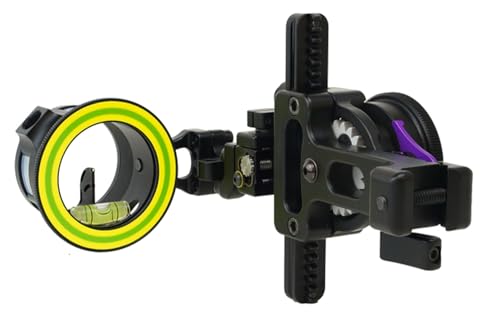

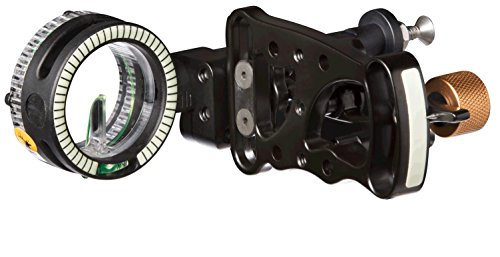


What’s in this listBow sights with a single moving pin, as stated by the maker or the Amazon listing. “—” means neither the maker nor the Amazon listing states it.
What makes a single pin bow sight different
Every other sight type gives you several aiming points and asks you to pick one. A single pin sight gives you one, in the middle of the housing, and moves the whole housing up or down to match the distance. A sight tape on the bar is printed with yardages. You set the pointer on the number, and that one pin is now your 27-yard pin, or your 43-yard pin.
Three things follow from that:
- You always aim dead on. No guessing between a 30 and a 40 pin for a 35-yard deer.
- The view stays open. One pin covers less of the deer than a stack of five.
- You set it before you draw. If the distance changes at full draw, you hold over or let down.
The type is popular. Single-pin sights are often called the second most common sight after fixed multi-pins. The general basics of pins, light and leveling are on the main bow sight page. This page is about living with one pin.
Who a single pin sight suits
The deciding question is whether you usually know the yardage before the deer gives you a shot.
Treestand and ground blind hunters
From a stand or a blind over a trail, shots come at spots you've ranged ahead of time. You can set the pin for the most likely lane and leave it there. If a deer shows up somewhere else, you range it and adjust before it's broadside. Stand and thick-cover hunters are the group makers and guides most often point toward single pins.
Picture a cold morning in a ladder stand over one trail. That's the kind of sit where one pin shines: one tree, one trail, one yardage you can set before daylight and leave alone.
Safety first, every time: wear a full-body harness clipped to the tree from the moment you leave the ground, and raise the bow on a haul line after you're tethered, never on your back.
Hunters who want an exact yardage
If you practice to 50 or 60 yards and want to hit at 47 the same as at 50, the single pin does it without math. It's also why target archers lean this way. You get one pin, one dot, centered in the ring.
Who should pick a multi-pin or hybrid instead
If you stalk deer across open ground and they move at shifting distances, a single pin makes you work at full draw. Letting down to reset can cost the shot. A fixed multi-pin lets you switch pins without moving the sight. A hybrid gives you both: fixed pins for close and a dial for far. Those are on the fixed-pin bow sight and dial bow sight pages.
Beginners can go either way. A single pin removes the wrong-pin mistake, and a multi-pin removes the forgot-to-move-it mistake. Pick the mistake you're less likely to make.
What to look at on a single pin sight
The table shows the fields every bow sight shares. On a single pin sight, a few of them carry more weight than they do on a 5-pin.
Type: check it's a true single-pin slider
The Type column should say single-pin slider. Some sights move one pin but also carry fixed pins; the table lists those as hybrids. If you want a clean one-dot view, stick with the single-pin rows. The Pins column on those should read 1.
Pin size: one pin has to work at every yardage
On a multi-pin sight, you could run a bigger pin for close shots and a thinner one for far. With one pin, a single size does every job.
Here's what actually changes with distance. Back away from a target and the target shrinks, but the pin stays the same size. So the pin that looked tiny on a deer at 20 yards covers more of that deer at 60.
- .010: finest dot at long range, first to go dark at dusk
- .019: the middle size
- .029: brightest in dim timber, covers the most at long range
A whitetail hunter shooting from a stand inside 30 yards gets very little from a .010. A western hunter stretching to 60 gets more. Light matters too: bigger pins carry more light, so they stay easier to see at dawn and dusk. Larger sizes are also easier on eyes that are starting to slip.
Sight light and rheostat: one pin, one glow to manage
The Sight light column tells you if the maker includes a light. With one pin, its brightness is the whole sight picture. Some makers sell a rheostat sight light, one whose brightness you dial up or down, as an add-on for an adapter built into the sight. If the maker lists one, that dial is how you keep your only pin from glaring.
Rules on battery-powered sight lights vary by state, and some states don't allow them at all during archery seasons. Check your state wildlife agency before you count on one.
Housing size and the peep
With one pin in the middle, you aim by centering the round housing in your peep: two rings, nested. Archery 360 describes that as the first step of every shot, before you even look at the pin. The peep has to fit the housing at full draw. Too much ring showing, or too little, and your anchor tends to drift to make it fit.
When you change sights, check the peep fit at full draw before you shoot a single arrow. Peeps and their sizes are on the peep sight page.
Mount and the bar length
The Mount column shows how the sight attaches. On a single pin sight, the mount also sets how far the housing travels and how far it sits from your eye. A pin set farther from your eye looks smaller. More important for a slider: at the long end of the tape the housing sits low, close to the arrow's path. Check that your vanes clear it before you mark any long distance.
Weight and hand
The Weight column is in ounces. Check the number against the rest of your setup if you hike in, because it all rides out front at arm's length. The Hand column has to match your bow, since the housing sits on one side of the riser.
Build the sight tape slowly
A single pin sight is only as good as its tape. Pins can be nudged if they're off. A tape that's off gets peeled and thrown away. So take your time.
One patient approach, the way a western bowhunter lays it out:
- Zero the pin at 20 yards with the tape blank. Spend a full day on it.
- Recheck the 20-yard zero the next day. If it holds, make a light pencil mark.
- Move to 40 yards. Give it a day or more, then recheck 20 and 40.
- Move to 60 yards. Give it at least two days, then mark it.
- Use the sight maker's guide to pick the printed tape that fits your marks.
- Check every 5- and 10-yard mark out to your farthest practice distance.
Why days, not an hour? Your grip, anchor and peep alignment shift a little from one day to the next. A mark made on one good evening can be a mark made on your best evening. (Uncle Walt's position is that he could do it in an afternoon. Uncle Walt also doesn't own a sight tape.)
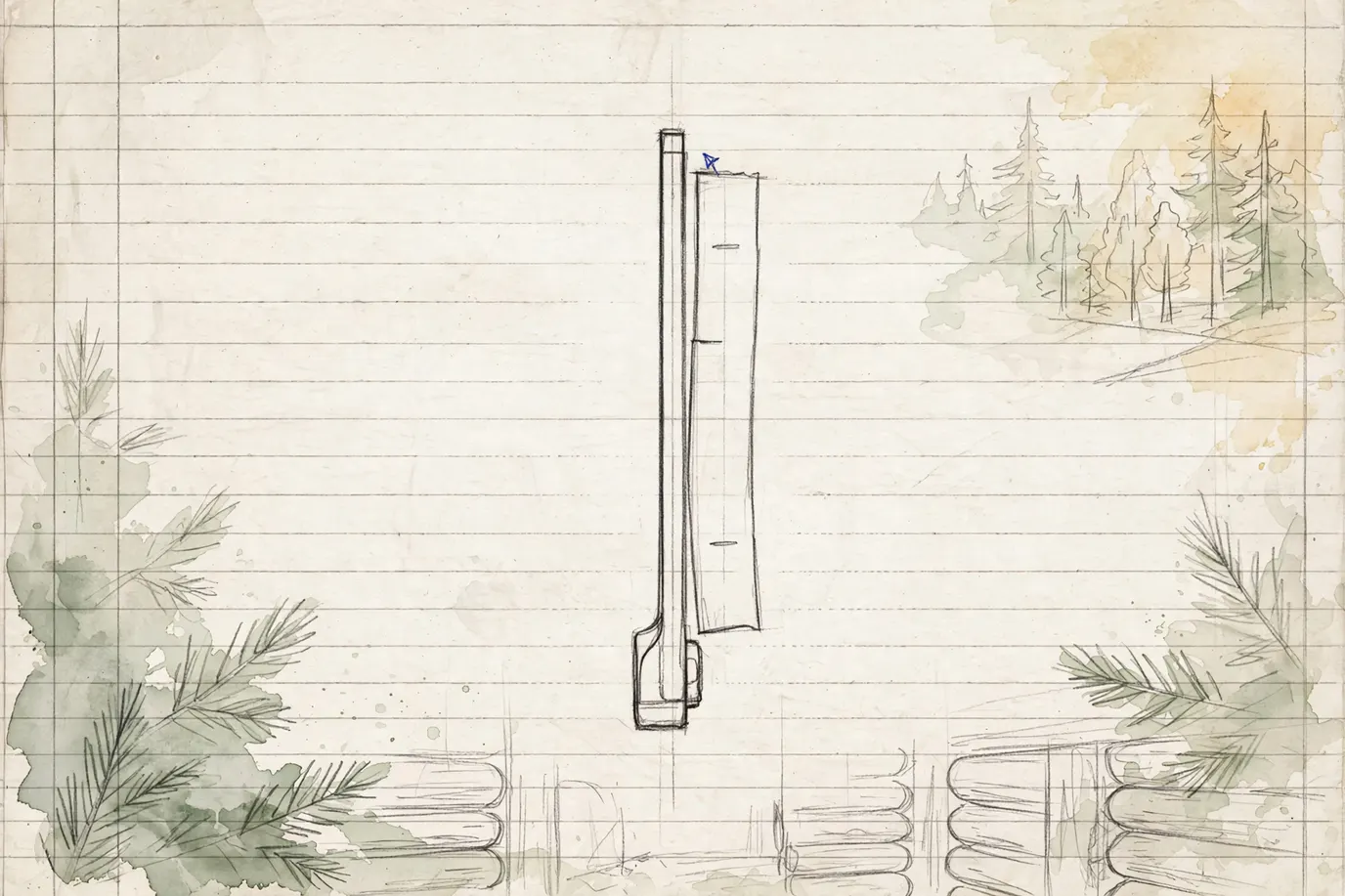
Some notes on the long mark:
- Go as far as your arrow clears the housing. Slide the housing down, and check the vanes still clear it.
- Your long mark sets everything past it. How good your tape is beyond 60 depends on how precise that 60-yard mark is.
- Tapes run in different directions. Some read top-down, some bottom-up. Check the maker's sheet.
- FPS tapes are a shortcut. Some tapes are matched to arrow speed from a chronograph. They're close, but drop also depends on front-of-center weight and vanes, so long marks may miss.
Custom-printed tapes are the other route. Archery software takes your arrow speed, weight, and the distances from peep to pin and peep to arrow, then prints a tape for your setup. You still verify it at the range.
Range first, then set the pin
A single pin sight turns every shot into the same three steps: range, set, shoot. My one opinion on this page: don't buy a single pin sight unless you also carry a rangefinder. On this sight, ranging isn't a nice extra, it's the instructions. Set the pin from a guess and you've thrown away the one thing the sight does better than any other.
From a treestand, the number you set is the horizontal distance, not the straight line from your eye to the deer. On shots of about 40 yards and under, shooting the line-of-sight distance from above makes arrows hit high. An angle-compensating rangefinder does that math for you.
Two habits keep a single pin honest in the woods:
- Park it on your most likely yardage. If a deer appears without warning, the pin's already close.
- Return it after every shot. A pin left at 45 yards from an evening practice session is a miss waiting for a 20-yard deer.
Level it and lock it
With one pin moving up and down a bar, the bar has to be square to the bow. Archery 360 calls this the first axis: moving the sight up or down shouldn't push your arrows left or right. If your 20-yard group is centered and your 50-yard group drifts sideways, the bar isn't level.
Then check the bubble, since tilting the bow also throws arrows left or right. Finally, the third axis, for steep downhill shots from a stand, swings the housing toward you or away. Many sights adjust all three; a pro shop can help if yours doesn't say.
Before every trip, check that the slider lock holds. A housing that creeps during a long walk in reads one yardage and shoots another. The tape takes a beating too, so look it over for scuffs that hide the numbers.
Change the arrow, check the tape
A sight tape matches one setup: one arrow weight, one draw weight, one point. Change any of them and the arrow's drop changes, so the long marks stop lining up. Re-zero at 20, recheck a long mark, and swap tapes if they moved. Arrow weight and point weight are explained on the hunting arrows page.
That's the whole system. One pin, one tape, one number set before you draw. Write the yardage in the logbook after the hunt; set it on the bar before.
Brands in this list
Related
Questions people ask
Is a single pin bow sight good for hunting?
It's good for hunting when you can range and set the pin before you draw: treestands, ground blinds over a known trail, thick cover with short lanes. It's weaker when a deer keeps moving at changing distances, because you either hold over by feel or let down and reset. Open-country stalkers often choose a multi-pin or a hybrid for that reason.
How do I set up the sight tape on a single pin sight?
Zero the pin carefully at 20 yards and mark it. Then sight in at a long distance, often 60 yards, and mark that. Use the sight maker's instructions to pick the printed tape whose spacing matches your marks, then check it at every 5 and 10 yards out to your longest practice distance. Take several days; a rushed tape has to be replaced.
What pin size is best for a single pin bow sight?
The same pin has to work at every distance, so pick for your worst light. A .019 pin is the usual middle ground. A .010 covers less of a far target but goes dark sooner at dusk. A .029 stays visible longest and covers more of the target at long range. Older eyes often do better with the larger pins.
Do I need a new sight tape if I change arrows?
Usually, yes. The tape matches one arrow speed and drop. Changing arrow weight, draw weight or even point weight changes where the arrow lands at long range, so the printed marks stop lining up. Re-check your 20-yard zero and a long mark after any change, and swap the tape if the long marks moved.
Sources
- goHUNT: Single pin vs multi pin bow sights — accessed 2026-10-22
- Bear Archery (Trophy Ridge): Single pin vs multi pin bow sights — accessed 2026-10-22
- Bowhunting.com: Single pin vs multi pin bow sight, which works best — accessed 2026-10-22
- MeatEater: Archery 101, how to choose a bow sight — accessed 2026-10-22
- Grand View Outdoors: Selecting a bowsight — accessed 2026-10-22
- Field & Stream: Set up a perfect sight tape — accessed 2026-10-22
- goHUNT: How to make an archery sight tape — accessed 2026-10-22
- goHUNT: The bowsight pin diameter debate, what size is right for you — accessed 2026-10-22
- Feradyne Outdoors: IQ Micro sight (built-in light adapter, rheostat sight light sold separately) — accessed 2026-10-22
- Archery 360 (Archery Trade Association): Focus on the peep, form tips for beginners part 2 — accessed 2026-10-22
- Archery 360 (Archery Trade Association): Why sight leveling is important and how it's done — accessed 2026-10-22
- Bowhunter: Angle-compensating rangefinders — accessed 2026-10-22
- Wisconsin DNR: Tree stand safety tips — accessed 2026-10-22
- Huntin' Fool: Common archery regulations for western states — accessed 2026-10-22