Archery & Bowhunting · Gear type
Hunting Arrows
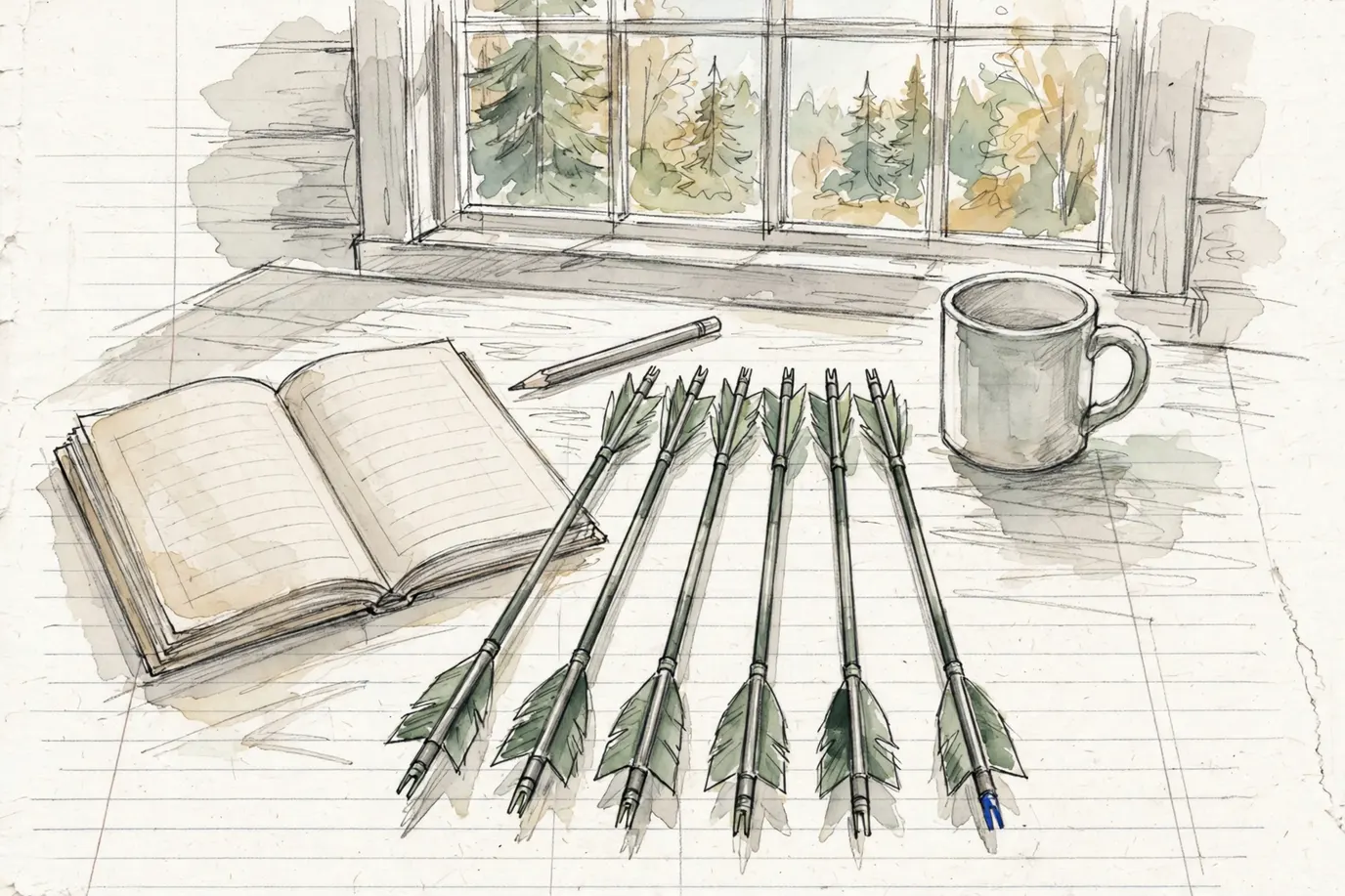
Hunting arrows are the part of a bow setup that actually reaches the deer, so they have to fit three things: your bow's draw weight, your arrow length and the point you screw on the front. Get the spine (stiffness) right first, then total weight, then the details. Quick math comes later; the short version is that a well-matched arrow beats an expensive mismatched one every time. (I have a spreadsheet for this. Uncle Walt has a cardboard tube from 1987.)
We earn a commission if you buy through our links, at no cost to you. Disclosure
| Model | Length | Shaft | Spine | Diameter (ID) | Straightness | Arrows per pack | Amazon |
|---|---|---|---|---|---|---|---|
Barnett Justice Fletched ArrowArrow More specs
| — | Carbonlisting | 350listing | 0.204 inlisting | 0.001 inlisting | 6listing | Check price |
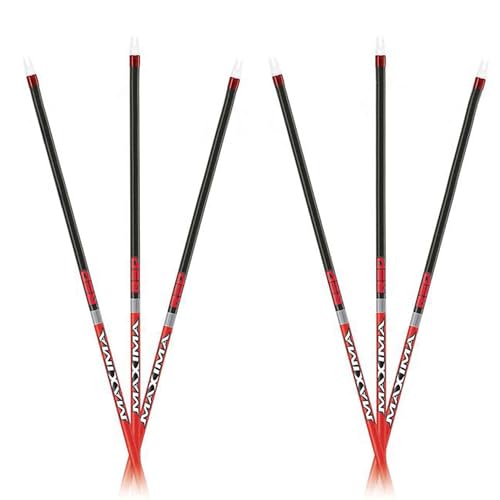
Carbon Express Maxima RED DrabArrow More specs
| — | Carbonmaker | 400maker | — | 0.001 inmaker | 6listing | Check price |
Carbon Express Maxima RED DrabArrow More specs
| — | Carbonmaker | 350maker | — | 0.001 inmaker | 6listing | Check price |
Carbon Express Maxima RED SD DrabArrow More specs
| — | Carbonmaker | 400maker | 0.203 inmaker | 0.001 inmaker | 6listing | Check price |
Carbon Express Maxima RED SD DrabArrow More specs
| — | Carbonmaker | 350maker | 0.203 inmaker | 0.001 inmaker | 6listing | Check price |
Carbon Express Maxima RED StoneArrow More specs
| — | Carbonmaker | 350maker | — | 0.001 inmaker | 6listing | Check price |
Carbon Express Maxima REDArrow More specs
| — | Carbonmaker | 300maker | — | 0.001 inmaker | 6listing | Check price |
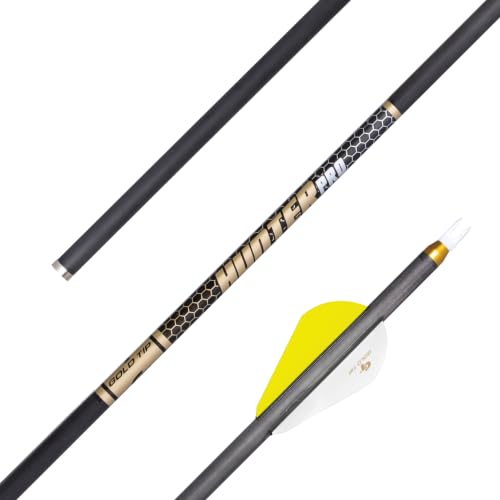
Gold Tip Hunter Pro Shafts 400Arrow More specs
| — | — | 400listing | — | 0.001 inlisting | 12listing | Check price |
Gold Tip Hunter Pro Raptor Vanes 500Arrow More specs
| — | — | 500listing | — | 0.001 inlisting | 12listing | Check price |
Gold Tip Pierce LRT 340Arrow More specs
| — | Carbonlisting | 340listing | — | 0.001 inlisting | 12listing | Check price |
Linkboy Archery 30inch Carbon Arrow 0.001Arrow More specs
| — | Carbonlisting | — | 0.244 inlisting | 0.001 inlisting | 12listing | Check price |
sanlida Dragon 10 300 and 310 SpineArrow More specs
| — | Carbonlisting | — | — | 0.001 inlisting | 48listing | Check price |
sanlida Dragon 10 350 and 360 SpineArrow More specs
| — | Carbonlisting | — | — | 0.001 inlisting | 48listing | Check price |
Victory Archery VAP TKO FletchedArrow More specs
| — | Carbonlisting | 300listing | 0.166 inlisting | 0.001 inlisting | 6listing | Check price |
Victory Archery RIP XV 0.204 Bare ShaftsArrow More specs
| — | Carbonlisting | 300listing | 0.204 inlisting | 0.001 inlisting | 12listing | Check price |
Victory Archery VForce 0.245 EliteArrow More specs
| — | Carbonlisting | 300listing | 0.245 inlisting | 0.001 inlisting | 6listing | Check price |
Carbon Express Maxima REDArrow More specs
| — | Carbonmaker | 400maker | — | 0.002 inmaker | 12listing | Check price |
Carbon Express Maxima REDArrow More specs
| — | Carbonmaker | 350maker | — | 0.002 inmaker | 6listing | Check price |
Carbon Express Maxima RED SDArrow More specs
| — | Carbonmaker | 350maker | 0.203 inmaker | 0.002 inmaker | 12listing | Check price |
Carbon Express D-Stroyer MX HunterArrow More specs
| — | Carbonmaker | 350listing | — | 0.002 inmaker | 12listing | Check price |
Carbon Express Maxima Triad XSDArrow More specs
| — | Carbonmaker | 300maker | 0.166 inmaker | 0.002 inmaker | 6listing | Check price |
Carbon Express Maxima Triad XSDArrow More specs
| — | Carbonmaker | 350maker | 0.166 inmaker | 0.002 inmaker | 6listing | Check price |
Carbon Express Maxima Triad XSDArrow More specs
| — | Carbonmaker | 400maker | 0.166 inmaker | 0.002 inmaker | 6listing | Check price |
Carbon Express D-Stroyer MX HunterArrow More specs
| — | Carbonmaker | 400maker | — | 0.002 inmaker | 6listing | Check price |
Carbon Express D-Stroyer MX HunterArrow More specs
| — | Carbonmaker | 350maker | — | 0.002 inmaker | 6listing | Check price |
Carbon Express Maxima Sable RZArrow More specs
| 32 inmaker | Carbonmaker | 350maker | 0.244 inmaker | 0.002 inmaker | 12listing | Check price |
Carbon Express Maxima Photon SDArrow More specs
| 32 inmaker | Carbonmaker | 350maker | 0.203 inmaker | 0.002 inmaker | 12listing | Check price |
Carbon Express Maxima Photon SDArrow More specs
| 32 inmaker | Carbonmaker | 350maker | 0.203 inmaker | 0.002 inmaker | 6listing | Check price |
Carbon Express Predator AIRArrow More specs
| 32 inmaker | Carbonmaker | 350maker | 0.244 inmaker | 0.002 inmaker | 6listing | Check price |
Carbon Express Maxima RED SDArrow More specs
| — | Carbonmaker | 300maker | 0.203 inmaker | 0.002 inmaker | 6listing | Check price |
Carbon Express Maxima RED SDArrow More specs
| — | Carbonmaker | 300maker | 0.203 inmaker | 0.002 inmaker | 6listing | Check price |
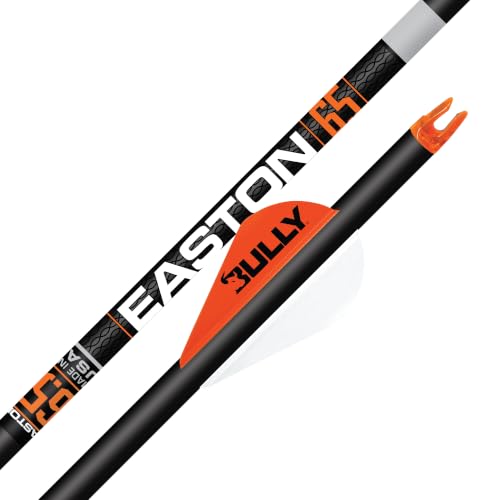
Easton Camo Hunter 2413Arrow More specs
| — | Aluminumlisting | — | — | 0.002 inlisting | 12listing | Check price |
Easton Camo Hunter 2215Arrow More specs
| — | Aluminumlisting | — | — | 0.002 inlisting | 12listing | Check price |
Carbon Express Maxima XRZArrow More specs
| — | Carbonlisting | 250listing | 0.244 inlisting | 0.0025 inlisting | 6listing | Check price |
Accmos 33in Carbon Arrow Shafts 300 SpineArrow More specs
| — | Carbonlisting | 300listing | 0.244 inlisting | 0.003 inlisting | — | Check price |
Carbon Express D-Stroyer PileDriverArrow More specs
| — | Carbonmaker | 400maker | 0.244 inmaker | 0.003 inmaker | 6listing | Check price |
Carbon Express D-Stroyer SDArrow More specs
| — | Carbonlisting | 350listing | — | 0.003 inlisting | 6listing | Check price |
Carbon Express D-StroyerArrow More specs
| — | Carbonmaker | 500maker | — | 0.003 inmaker | 6listing | Check price |
Carbon Express D-StroyerArrow More specs
| — | Carbonmaker | 400maker | — | 0.003 inmaker | 6listing | Check price |
Carbon Express D-StroyerArrow More specs
| — | Carbonmaker | 350maker | — | 0.003 inmaker | 6listing | Check price |






Carbon Express D-Stroyer PileDriverArrow More specs
| — | Carbonmaker | 350listing | 0.244 inmaker | 0.003 inmaker | 12listing | Check price |
|---|---|---|---|---|---|---|---|
Gold Tip Hunter XT Raptor Vane 300Arrow More specs
| — | — | 300listing | — | 0.003 inlisting | 6listing | Check price |
Gold Tip Hunter XT Raptor Vanes 400Arrow More specs
| — | — | 400listing | — | 0.003 inlisting | 12listing | Check price |
Linkboy Archery Fluorescent Carbon Arrows 30 inArrow More specs
| — | Carbonlisting | 300listing | — | 0.003 inlisting | 12listing | Check price |
Linkboy Archery Carbon Arrows Pack of 12Arrow More specs
| — | Carbonlisting | — | — | 0.003 inlisting | 12listing | Check price |
Linkboy Archery Pure Carbon Arrows 5in Turkey VanesArrow More specs
| — | Carbonlisting | 700listing | 0.244 inlisting | 0.003 inlisting | 12listing | Check price |
Linkboy Archery Wood Skin Carbon ArrowsArrow More specs
| — | Carbonlisting | 450listing | 0.244 inlisting | 0.003 inlisting | 12listing | Check price |
Linkboy Archery Fluorescent Carbon Arrows 32 inArrow More specs
| — | Carbonlisting | 340listing | — | 0.003 inlisting | 12listing | Check price |
Linkboy Archery Camo Carbon Hunting ArrowsArrow More specs
| — | Carbonlisting | — | — | 0.003 inlisting | 12listing | Check price |
Linkboy Archery 30inch Carbon Arrow Gradient FeatherArrow More specs
| — | Carbonlisting | — | 0.244 inlisting | 0.003 inlisting | 12listing | Check price |
sanlida Dragon 9 Hunting Carbon ArrowsArrow More specs
| — | Carbonlisting | — | — | 0.003 inlisting | 24listing | Check price |
Toparchery Carbon Arrow Shafts 33inArrow More specs
| — | Carbonlisting | 300listing | 0.244 inlisting | 0.003 inlisting | 12listing | Check price |
Victory Archery RIP TKO FletchedArrow More specs
| — | Carbonlisting | 350listing | 0.204 inlisting | 0.003 inlisting | 6listing | Check price |
Barnett Punisher Fletched ArrowArrow More specs
| — | Carbonlisting | 300listing | 0.244 inlisting | 0.004 inlisting | 6listing | Check price |
Carbon Express PredatorArrow More specs
| 31 inmaker | Carbonmaker | 350maker | — | 0.004 inmaker | 12listing | Check price |
Easton 6.5mm Legacy Carbon 700Arrow More specs
| — | Carbonlisting | 700listing | 0.246 inlisting | 0.005 inlisting | 12listing | Check price |
Gold Tip Hunter Raptor Vane 340Arrow More specs
| — | — | 340listing | — | 0.006 inlisting | 6listing | Check price |
Gold Tip Hunter 4-Inch Vane 400Arrow More specs
| — | — | 400listing | — | 0.006 inlisting | 6listing | Check price |
Pandarus ST0.006 Carbon ArrowsArrow More specs
| — | Carbonlisting | 350listing | 0.244 inlisting | 0.006 inlisting | 12listing | Check price |
Pandarus 31 in Carbon Feather ArrowsArrow More specs
| — | Carbonlisting | 500listing | 0.244 inlisting | 0.006 inlisting | 6listing | Check price |
Pandarus 31 in Carbon Feather ArrowsArrow More specs
| — | Carbonlisting | 500listing | 0.244 inlisting | 0.006 inlisting | — | Check price |
sanlida Dragon 8 420 and 430 SpineArrow More specs
| — | Carbonlisting | — | 0.244 inlisting | 0.006 inlisting | 48listing | Check price |
Sharrow 30in Bamboo Pattern Carbon ArrowsArrow More specs
| — | Carbonlisting | 500listing | — | 0.006 inlisting | 12listing | Check price |
Sharrow 31in Carbon ArrowsArrow More specs
| — | Carbonlisting | 400listing | 0.244 inlisting | 0.006 inlisting | 12listing | Check price |
Sharrow 33in Carbon Hunting Arrows 400 SpineArrow More specs
| — | Carbonlisting | 400listing | — | 0.006 inlisting | 12listing | Check price |
Toparchery 31in Carbon Arrow Shafts 350 SpineArrow More specs
| — | Carbonlisting | 350listing | 0.244 inlisting | 0.006 inlisting | 12listing | Check price |
Victory Archery RIP 0.204 FletchedArrow More specs
| — | Carbonlisting | 300listing | 0.204 inlisting | 0.006 inlisting | 6listing | Check price |
Victory Archery VForce FletchedArrow More specs
| — | Carbonlisting | 300listing | 0.245 inlisting | 0.006 inlisting | 6listing | Check price |
Nika Archery Carbon Feather Arrows SP400Arrow More specs
| — | Carbonlisting | 400listing | 0.244 inlisting | 0.012 inlisting | 12listing | Check price |
Ameyxgs 31in Aluminum Arrow Spine 500Arrow More specs
| — | Aluminumlisting | 500listing | 0.244 inlisting | — | — | Check price |
Ameyxgs 31.5in Carbon Arrows with FeathersArrow More specs
| — | Carbonlisting | 500listing | 0.244 inlisting | — | 12listing | Check price |
Ameyxgs 34in Carbon Arrows 400 SpineArrow More specs
| — | Carbonlisting | 400listing | 0.244 inlisting | — | 12listing | Check price |
Ameyxgs 30in Flu Flu Carbon Arrows 500 SpineArrow More specs
| — | Carbonlisting | 500listing | 0.244 inlisting | — | 12listing | Check price |
Ballista FRACTURA 6mm 400 SpineArrow More specs
| — | Carbonlisting | 400listing | — | — | 6listing | Check price |
Black Eagle Vintage Traditional Feathered 500Arrow More specs
| — | — | 500listing | — | — | 6listing | Check price |
Carbon Express Maxima RED BadlandsArrow More specs
| — | — | 250listing | — | — | 12listing | Check price |
Carbon Express PileDriver DS HunterArrow More specs
| — | Carbonlisting | 450listing | — | — | 12listing | Check price |
Easton FMJ 5mmArrow More specs
| — | Carbon aluminumlisting | 300listing | — | — | 6listing | Check price |
Easton 6.5 Bowhunter 340Arrow More specs
| — | Carbonlisting | 340listing | — | — | 6listing | Check price |
Easton 6.5 Bowhunter Shafts 340Arrow More specs
| — | — | 340listing | — | — | 12listing | Check price |
Easton 6.5 Bowhunter Shafts 400Arrow More specs
| — | — | 400listing | — | — | 12listing | Check price |
Easton 6.5 Hunter Classic 340Arrow More specs
| — | Carbonlisting | 340listing | — | — | 12listing | Check price |
Easton Axis 4mm Long Range 250Arrow More specs
| — | Carbonlisting | 250listing | — | — | 6listing | Check price |
Easton 6.5 Hunter Classic 250Arrow More specs
| — | Carbonlisting | 250listing | — | — | 12listing | Check price |
Easton Sonic 6.0 500Arrow More specs
| — | Carbonlisting | 500listing | — | — | 12listing | Check price |
Easton FMJ Max 5mm 250Arrow More specs
| — | Carbon aluminumlisting | 250listing | — | — | 6listing | Check price |
Gold Tip Hunter Shafts 500Arrow More specs
| — | — | 500listing | — | — | 12listing | Check price |
Linkboy Archery Fluorescent Carbon ArrowsArrow More specs
| — | Carbonlisting | — | — | — | — | Check price |
Linkboy Archery 3 Take Down Carbon ArrowsArrow More specs
| — | Carbonlisting | 500listing | — | — | 6listing | Check price |
Linkboy Archery Carbon Arrow Kit 75gr TipArrow More specs
| — | Carbonlisting | — | — | — | 12listing | Check price |
Linkboy Archery Carbon Arrows Shaft Kit 100gr TipArrow More specs
| — | Carbonlisting | 500listing | — | — | 12listing | Check price |
Lwano 31in Feather Carbon ArrowsArrow More specs
| — | Carbonlisting | — | — | — | — | Check price |
Lwano 32 Inch Carbon Arrows Spine 300Arrow More specs
| — | Carbonlisting | 300listing | — | — | 12listing | Check price |
Pandarus Fiberglass Practice Arrows 30 inArrow More specs
| — | Fiberglasslisting | 500listing | 0.236 inlisting | — | — | Check price |
Sharrow 31 in Aluminum ArrowsArrow More specs
| — | Aluminumlisting | 500listing | 0.256 inlisting | — | 6listing | Check price |
Sharrow Carbon Arrow Shafts SP400Arrow More specs
| — | Carbonlisting | 400listing | 0.244 inlisting | — | 12listing | Check price |
Sharrow Aluminum Arrows 30 inArrow More specs
| — | Aluminumlisting | 500listing | 0.256 inlisting | — | 12listing | Check price |
Sharrow 31in Carbon Arrows 500 SpineArrow More specs
| — | Carbonlisting | 500listing | — | — | 12listing | Check price |
Sharrow Carbon Arrow 34in Turkey FeatherArrow More specs
| — | Carbonlisting | 500listing | — | — | 6listing | Check price |
Sharrow Carbon Arrows 500 Spine Turkey FeatherArrow More specs
| — | Carbonlisting | 500listing | — | — | 12listing | Check price |
Sharrow 30in Pure Carbon ArrowsArrow More specs
| — | Carbonlisting | 400listing | 0.244 inlisting | — | 12listing | Check price |
Sharrow 32in Pure Carbon ArrowsArrow More specs
| — | Carbonlisting | 340listing | 0.244 inlisting | — | 12listing | Check price |
Toparchery Carbon Arrows 32 inArrow More specs
| — | Carbonlisting | 400listing | — | — | 6listing | Check price |
Toparchery 31" Bamboo ArrowsArrow More specs
| — | — | — | — | — | 6listing | Check price |
Toparchery 30in Carbon Hunting ArrowsArrow More specs
| — | Carbonlisting | 500listing | 0.244 inlisting | — | — | Check price |
Toparchery 30in Carbon Hunting Arrows Turkey FeathersArrow More specs
| — | Carbonlisting | 500listing | 0.244 inlisting | — | — | Check price |
Toparchery 31in Pure Carbon Hunting ArrowsArrow More specs
| — | Carbonlisting | 350listing | 0.244 inlisting | — | 12listing | Check price |
Trophy Ridge Wrath 30in 340 SpineArrow More specs
| — | Carbonlisting | 340listing | 0.246 inlisting | — | 6listing | Check price |




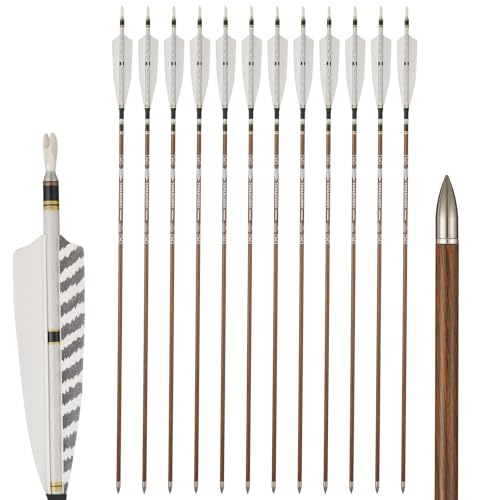

What’s in this listArrows sold for hunting, straightest stated tolerance first. “—” means neither the maker nor the Amazon listing states it.
What a hunting arrow is made of
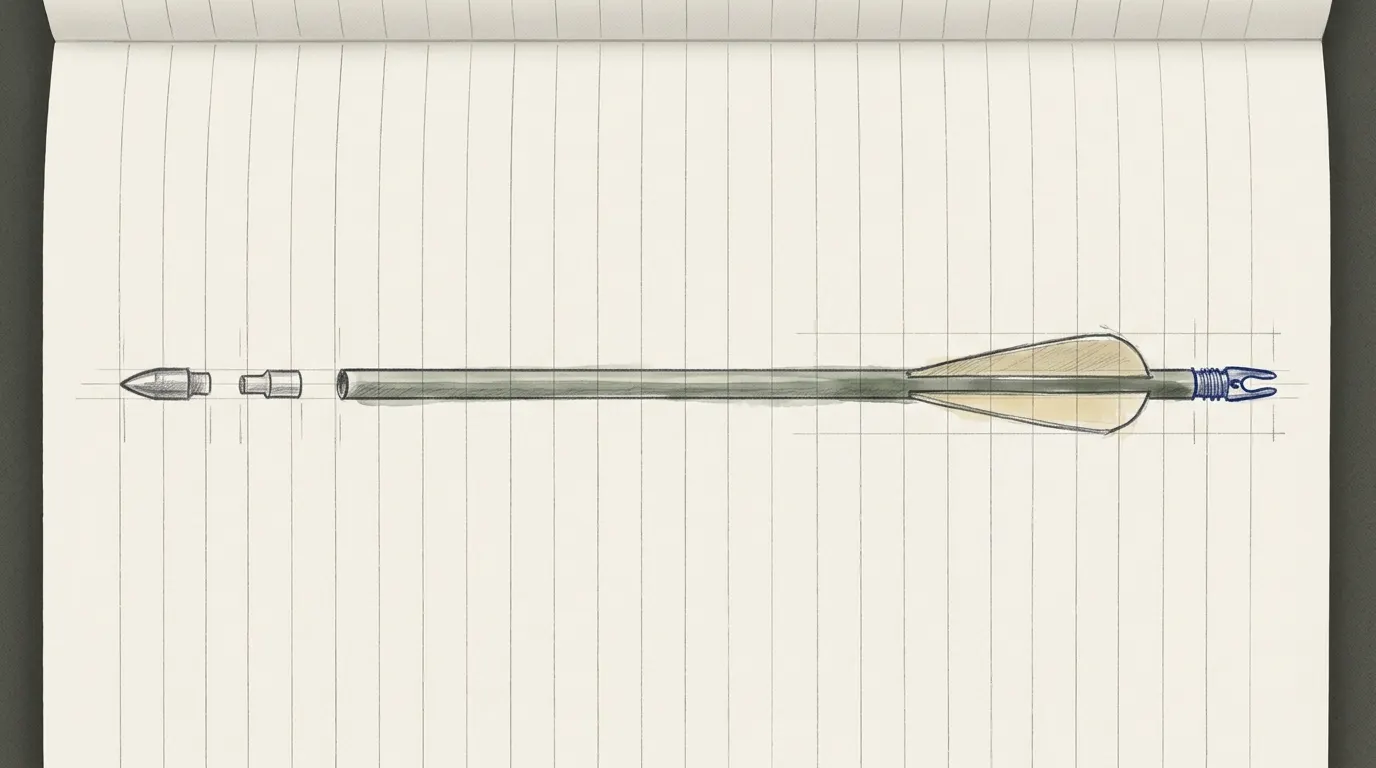
A finished hunting arrow is five parts that have to agree with each other:
- Shaft: the hollow tube, almost always carbon on hunting setups, sometimes aluminum or a carbon-aluminum mix
- Insert: a threaded sleeve glued into the front of the shaft so points and broadheads screw in
- Point: a field point for practice, a broadhead for the hunt
- Nock: the plastic piece on the back that snaps onto the string
- Fletching: three vanes or feathers that steer the arrow
Some shafts use an outsert instead, which fits over the outside of the shaft, per Bowhunter's arrow-building guide. Every shaft line has components sized for it, per Easton's FAQ, so parts don't swap freely between brands or diameters.
The table on this page lists arrows their maker sells for hunting, with the straightest stated tolerance first. It shows spine, straightness and pack size as the makers or the Amazon listings state them (the table marks values that come from the listing), plus whether the pack comes fletched or as bare shafts. When neither states a value, you get a dash, not a guess.
What to look at when you pick hunting arrows
Here's what actually changes from one pack to the next, in the order I'd check it.
Match spine to draw weight, arrow length and point weight
Spine is how stiff the shaft is. Easton measures it the old-fashioned way: support the shaft on two points 28 inches apart, hang 880 grams (1.94 lb) from the middle, and measure the bend in inches. A shaft that bends 0.400 inch is a 400 spine. So the numbers run backward: a 300 is stiffer than a 500.
Think of it like dry spaghetti versus a wooden spoon. Both bend if you push hard enough. Every arrow flexes when the string shoves it from behind, and the job is to get one that flexes the amount your bow expects.
Three numbers pick your spine on any maker's chart:
- Peak draw weight: more pounds needs a stiffer shaft
- Arrow length: a longer shaft acts weaker, so it needs a stiffer spine
- Point weight: Archery 360 notes that adding weight to the front weakens the spine
Archery 360 walks through one published chart. A 50-lb bow with a 27-inch arrow and a 100-grain point calls for a 500 spine. Stretch the arrow to 30 inches and it's a 400. Keep 27 inches but go to 60 lb and it's also 400. A 60-lb bow with a 30-inch arrow wants a 340. Swap that 60-lb, 27-inch setup to a 150-grain point and the chart moves from 400 to 340.
Wrong spine shows up on the target. Easton's tuning guide says a bare shaft that lands left of fletched arrows (for a right-handed archer) reads stiff, and one that lands right reads weak. Charts are a starting point; your bow gets the final vote.
Cut arrow length from your bow, not from a formula
Charts use arrow length, not draw length, and Archery 360 says archers often confuse the two. Easton defines arrow length as the bottom of the nock groove to the end of the shaft. The point isn't counted.
To find it, draw an extra-long arrow and have a friend mark it. For hunting arrows on a bow with a cutout sight window, Easton's guide puts the mark about 1 inch in front of where the arrow touches the most forward part of the rest. That extra inch keeps a broadhead from falling off the rest if your draw varies a little.
Raw shafts ship around 33 inches, per Archery 360, and cutting them shorter makes them stiffer. So pick spine for the length you'll actually shoot, not the length in the box.
Total arrow weight trades speed for quiet and drift
Arrow weight comes in two flavors, and both are in grains (437.5 grains to the ounce).
- GPI, grains per inch: the shaft alone. Archery 360 calls 5 to 6 GPI light, 7 to 9 midweight, 10 and up heavy.
- GPP, grains per pound: the whole finished arrow divided by your draw weight. 5 to 6.5 is light, 6.5 to 8 midweight, over 8 heavy.
Quick math: a 28-inch shaft at 9 GPI is 252 grains. Add a 100-grain point and you're at 352, before the insert, nock and vanes. Divide the finished weight by a 60-lb draw weight and you have your GPP.
Here's the trade. Lighter arrows leave faster (FPS, or feet per second, is how arrow speed is measured) and drop less on long shots. Archery 360 says they're also harder to tune and less forgiving in wind. Heavier arrows are slower, quieter, drift less in wind and penetrate deeper. Easton's FAQ leans medium to heavy for hunting because heavier arrows keep more energy downrange.
My one opinion on this page: arrow weight and broadhead weight have to match your setup; there's no universally "best" grain. The reason is on the chart above. Change the point weight and the spine requirement moves, and change the arrow weight and your sight marks move. A grain number only means something next to your draw weight, your length and your spine.
One hard floor. Easton's guide explains that minimum recommended arrow weights exist because bows broke when people shot arrows that were too light. Archery 360 says each bow maker sets a minimum. Look it up in your bow's manual before you go light.
Straightness tolerance is a promise in thousandths of an inch
Straightness is the most a shaft is allowed to be off true, as the maker or the listing states it. One maker's lineup sells the same shaft in three grades: ±.001, ±.003 and ±.006 inch. Smaller is straighter.
How much does that matter for deer hunting arrows? Easton's tuning guide recommends straightness within 0.004 inch for best grouping. So a .001 or .003 grade sits inside that line and a .006 sits outside it.
A thousandth of an inch is not something you'll see with your eyes. (Uncle Walt claims he can. Uncle Walt also claims his aluminum arrows are "basically new.") Trust the stated grade, then check your own set for fliers.
Diameter decides which inserts and nocks fit
Every shaft has an outside diameter and an inside diameter. Archery 360 lists hunting and target shafts from about .211 to .422 inch outside.
Outside diameter is about wind and penetration. Easton's wind article says small-diameter hunting arrows have better flight and penetration, and its FAQ says that when kinetic energy is held equal, diameter is what decides penetration.
Inside diameter is about parts. It sets which insert, nock and lighted nock will fit, and the maker lists the matching components for each shaft. Buy nocks and inserts by the shaft's size, not by the color.
FOC tells you where the weight sits
FOC (front of center) is how far the balance point sits ahead of the middle of the arrow, as a percent of its length. Balance an arrow on one finger like a butter knife and you'll find it. Heavy point up front, light vanes in back, so the balance point lands forward.
Quick math, using Easton's method: on a 28-inch arrow, half is 14 inches. If it balances 16.8 inches from the nock throat, that's 2.8 inches forward. 2.8 × 100 ÷ 28 = 10% FOC.
Easton's FAQ suggests 10 to 15% for hunting setups. Archery 360's weight article calls 7 to 15% properly balanced. Heavier points and inserts raise FOC; a wrap on the back lowers it.
Vanes or feathers depends on how your bow holds the arrow
Archery 360's fletching guide is plain about it. Vanes are more durable and water-resistant, and their low profile resists wind drift. Feathers don't shed water and can fly inconsistently when soaked, but they flex and lie flat, which is why they're the pick for shooting off a recurve's shelf. (A wet feather has all the stiffness of a wet paper towel. I've checked. Not on purpose.)
Easton's wind article adds a hunting detail: use the shortest vane that still steers your broadhead. Archery 360's compound arrow guide says fixed-blade broadheads may want 2 to 3 inch fletching, while mechanical heads need less steering. More on fletching options is on the fletching page.
Bare shafts are a kit, fletched arrows are ready to tune
The table marks each pack as fletched or bare shaft. A bare shaft here means a shaft without fletching (and often without inserts or points). Bowhunter's arrow-building guide lists what it still needs: cut with an arrow saw, square the ends, glue inserts, check the nocks and glue on vanes in a jig.
Fletched arrows skip most of that. You still cut them to length if they come full length, and you still tune them. Bare shafts make sense if you already own a cut-off saw and a fletching jig, or you want a specific vane.
Carbon hunting arrows, aluminum or wood
Archery 360's material guide splits it like this:
- Carbon: the usual pick for hunting and 3D. Light and stiff.
- Aluminum: mostly beginners who need a tougher arrow and high-level indoor shooters. It bends from a hard hit; Archery 360's inspection guide says bent arrows should be discarded.
- Carbon-aluminum composite: an aluminum core wrapped in carbon, used mostly in thin long-range shafts.
- Wood: for traditional recurves and barebows. Archery 360 says there's no performance edge, because wood varies from shaft to shaft.
Archery 360's compound arrow guide is blunt: wooden arrows are not for compounds. Walt's take: "Aluminum was good enough in 1987." It was. So was the cassette tape.
Which bowhunting arrows fit which bow
Hunting arrows for compound bow setups
Compounds are where carbon and vanes are the default. Archery 360's compound guide calls spine the most important factor and notes that charts assume a 100-grain point. Points under 100 grains suit bows around 50 lb or less; points over 100 add penetration. There's a page just for compound bow arrows, and the bows themselves are on the compound bow page.
Recurve and longbow arrows
My first deer came at 14 yards from Walt's ground blind, with a borrowed recurve and whatever arrows were in its quiver. I wrote the yardage in the logbook. I did not write the spine, because at 15 I didn't know arrows had one.
A recurve isn't forgiving of that. Lower draw weights pull you toward weaker spines on the chart, and if you shoot off the shelf, feathers are the fletching Archery 360 recommends. Wood is fine on a traditional bow; carbon works too if the spine fits. Bows are on the recurve bow page.
Youth and light-draw bows
A light bow needs arrows spined for its actual draw weight and the child's actual arrow length, from the shaft maker's chart. Don't hand down an adult's arrows cut short; shorter shafts get stiffer and may not fly from a light bow. Have the draw length measured, and check your state's minimum draw weight for hunting before the first season.
Crossbows use bolts, not arrows
Crossbows shoot bolts, and Wisconsin DNR's advice is to use the ones the crossbow maker recommends. They're on the crossbow bolts page.
Setting up broadhead arrows for the hunt
Broadhead arrows are your practice arrows with a different tip, if you set them up right.
- Tune your bow with field points first. Easton's guide says broadhead tuning only works after the field points group well.
- Match field point weight to broadhead weight as closely as you can.
- Shoot a group of 3 or 4 field points at 20 to 30 yards, then the same arrows with broadheads at the same aiming spot.
- Adjust, one change at a time, until both groups land together.
- Never put a broadhead on an unfletched shaft. Easton calls that flight extremely erratic and dangerous.
Broadhead types and weights are on the broadheads page. Broadhead rules (minimum width, number of edges, whether broadheads are required for deer) vary by state. Check your state wildlife agency before the season.
Check every arrow before you shoot it
A cracked carbon arrow can break on release and injure you or someone near you. Flex-check every carbon arrow before each session and after any hit on something hard, and keep broadheads in a covered quiver.
Easton's flex test: hold the shaft near the point and below the nock, and bend it 1 to 2 inches away from you and anyone else. Repeat four to six times, turning it a little each time so you cover the whole circle. Then twist it in opposite directions. If it cracks, creaks, feels rubbery or twists easily, discard it. Check the nock too; Archery 360 says to look for dark lines or flaws in the plastic. Damaged nocks are on the nocks page.
When in doubt, don't shoot it. That's Oregon's wildlife department's wording, and it's the right rule.
That's the whole system. Spine first, length second, weight third. Write all three in the logbook, next to the yardage.
Brands in this list
Related
Questions people ask
What spine do I need for deer hunting arrows?
It depends on three numbers: your bow's peak draw weight, your finished arrow length and your point weight. Read them off the maker's spine chart for the shaft you're buying. On one published chart, a 50-lb bow with a 27-inch arrow and a 100-grain point lands at 500 spine.
How heavy should a hunting arrow be?
There's no single right number. The Archery Trade Association's consumer site sorts finished arrows by grains per pound of draw weight: 5 to 6.5 is light, 6.5 to 8 is midweight, and over 8 is heavy. Lighter flies faster and flatter; heavier is quieter, slower and drifts less in wind. Never go under your bow maker's minimum arrow weight.
Are carbon hunting arrows better than aluminum?
Carbon is the usual choice for hunting because it's light, stiff and consistent. Aluminum can be just as straight but bends more easily, and a bent shaft gets retired. Either works if the spine matches your bow. Carbon needs a flex check before every shot session.
Can I shoot broadheads on bare shafts?
No. A bare shaft here means an arrow without fletching, and Easton's tuning guide warns never to shoot unfletched shafts with broadheads because flight is erratic and dangerous. Bare shafts sold in packs are meant to be fletched, fitted with inserts and nocks, and cut to length first.
Sources
- Archery 360 (Archery Trade Association): Archery Lingo: Arrow Spine — accessed 2026-10-21
- Archery 360 (Archery Trade Association): Archery Lingo: Arrow Weight — accessed 2026-10-21
- Archery 360 (Archery Trade Association): What's your arrow's ideal front-of-center weight? — accessed 2026-10-21
- Archery 360 (Archery Trade Association): Should your arrows be carbon, aluminum or wood? — accessed 2026-10-21
- Archery 360 (Archery Trade Association): Understanding arrow fletchings — accessed 2026-10-21
- Archery 360 (Archery Trade Association): Compound bow arrows — accessed 2026-10-21
- Archery 360 (Archery Trade Association): How to inspect your arrows — accessed 2026-10-21
- Easton: Arrow Tuning and Maintenance Guide — accessed 2026-10-21
- Easton: Archery frequently asked questions — accessed 2026-10-21
- Easton: Spine considerations for bowhunters — accessed 2026-10-21
- Easton: Build a hunting arrow to cut through the wind — accessed 2026-10-21
- Easton: Warnings about usage — accessed 2026-10-21
- Victory Archery: VAP (straightness grades V1, V3, V6) — accessed 2026-10-21
- Bowhunter: Bowhunting 101, arrow building in 10 easy steps — accessed 2026-10-21
- Oregon Department of Fish and Wildlife: Bow shooting safety — accessed 2026-10-21
- Wisconsin DNR: Archery and crossbow safety tips — accessed 2026-10-21