Archery & Bowhunting · Gear type
Recurve Bow
A recurve bow is a riser, two limbs whose tips curve away from you, and one string. No cams, no let-off, no draw stop. You hold every pound of draw weight at full draw, so the right recurve bow is the one sized to your draw length at a weight you can actually control. Get those two numbers right first; limbs and looks come after. (I'll walk through the quick math. Uncle Walt will skip it and ask what the thing weighs.)
We earn a commission if you buy through our links, at no cost to you. Disclosure
| Model | Draw weight | Hand | Length (AMO) | Takedown | Limbs | Max draw length | Amazon |
|---|---|---|---|---|---|---|---|
Ameyxgs Youth Recurve Bow 48/54inRecurve bow | 10 lblisting | Rightlisting | 54 inlisting | Yeslisting | — | — | Check price |
Barnett Lil' Buck Recurve Youth BundleRecurve bow More specs
| 12 lblisting | Ambidextrouslisting | — | — | — | — | Check price |
SAS Spirit Jr 54" PackageRecurve bow | 12 lblisting | Leftlisting | 54 inlisting | Yeslisting | — | — | Check price |
Southwest Archery Tiny Tiger 48"Recurve bow | 14 lblisting | Rightlisting | 48 inlisting | Yeslisting | — | — | Check price |
| 15 lblisting | Rightlisting | 48 inlisting | Yeslisting | — | — | Check price | |
| 15 lblisting | Leftlisting | — | Yeslisting | — | — | Check price | |
October Mountain Products Adventure 2.0 48"Recurve bow | 15 lblisting | Rightlisting | 48 inlisting | Yeslisting | — | — | Check price |
Sharrow One-Piece Longbow 54"Recurve bow | 15 lblisting | Rightlisting | 54 inlisting | Nolisting | — | 24 inlisting | Check price |
Sharrow Laminated One-Piece Horse Bow 57"Recurve bow | 15 lblisting | Ambidextrouslisting | 57 inlisting | Nolisting | — | — | Check price |
SAS Junior 58" TakedownRecurve bow | 18 lblisting | Rightlisting | 58 inlisting | Yeslisting | — | — | Check price |
Ameyxgs Mongolian Horsebow 20 lbsRecurve bow | 20 lblisting | — | 49.2 inlisting | Yeslisting | — | — | Check price |
Nika Archery ILF Recurve Bow 60"Recurve bow | 20 lblisting | Ambidextrouslisting | 60 inlisting | — | — | — | Check price |
| 20 lblisting | Rightlisting | 54 inlisting | Yeslisting | — | — | Check price | |
| 20 lblisting | Rightlisting | 54 inlisting | Yeslisting | — | — | Check price | |
PSE Archery Razorback Junior TakedownRecurve bow | 20 lblisting | Leftlisting | 54 inlisting | Yeslisting | — | — | Check price |
SAS Spirit Jr 54"Recurve bow | 20 lblisting | Rightlisting | 54 inlisting | Yeslisting | — | — | Check price |
Sharrow Horsebow 20 lbRecurve bow | 20 lblisting | — | — | — | — | — | Check price |
Southwest Archery Little Tiger 54"Recurve bow More specs
| 20 lblisting | Leftlisting | 54 inlisting | Yeslisting | — | — | Check price |
Toparchery Alloy Riser Recurve SetRecurve bow More specs
| 20 lblisting | Rightlisting | 52 inlisting | — | — | 28 inlisting | Check price |
SAS Explorer Metal RiserRecurve bow | 22 lblisting | Rightlisting | — | Yeslisting | — | — | Check price |
Ameyxgs 59in Traditional Longbow 20-40 lbsRecurve bow | 25 lblisting | Right or leftlisting | 59 inlisting | Yeslisting | — | — | Check price |
Bear Archery Grizzly Recurve SheduaRecurve bow | 25 lblisting | Rightlisting | — | — | — | — | Check price |
Deerseeker Outdoor 52" Tatar HorsebowRecurve bow | 25 lblisting | Ambidextrouslisting | 52 inlisting | — | — | — | Check price |
Glurak Black Hunter Recurve Bow and Arrow Set 60-InchRecurve bow More specs
| 25 lblisting | Rightlisting | 60 inlisting | Yeslisting | Bamboo fiberglass laminatelisting | — | Check price |
October Mountain Products Adventure 2.0 62"Recurve bow | 25 lblisting | Rightlisting | 62 inlisting | Yeslisting | — | — | Check price |
PSE Archery Night Hawk TakedownRecurve bow | 25 lblisting | Rightlisting | 62 inlisting | Yeslisting | — | — | Check price |
sanlida Hermit 10 ILF 60"Recurve bow | 25 lblisting | Rightlisting | 60 inlisting | Yeslisting | Carbonlisting | — | Check price |
Southwest Archery Tigershark PRO V1 62"Recurve bow | 25 lblisting | Rightlisting | 62 inlisting | Yeslisting | — | — | Check price |
sanlida Myth 10 ILF Olympic 66"Recurve bow | 26 lblisting | — | 66 inlisting | — | — | — | Check price |
Southwest Archery Ghost Takedown Longbow 64"Recurve bow | 29 lblisting | Leftlisting | 64 inlisting | Yeslisting | — | — | Check price |
| 30 lblisting | Right or leftlisting | 60 inlisting | — | Bamboo fiberglass laminatelisting | 30 inlisting | Check price | |
| 30 lblisting | Rightlisting | 60 inlisting | Yeslisting | Wood fiberglass laminatelisting | — | Check price | |
| 30 lblisting | Ambidextrouslisting | 56 inlisting | — | Bamboo fiberglass laminatelisting | 34 inlisting | Check price | |
Glurak Black Hunter Takedown Recurve 30 lbRecurve bow | 30 lblisting | Rightlisting | — | Yeslisting | Bamboo fiberglass laminatelisting | — | Check price |
Glurak Black Hunter Takedown Recurve 30 lbRecurve bow | 30 lblisting | Rightlisting | — | Yeslisting | Bamboo fiberglass laminatelisting | — | Check price |
Glurak Black Hunter Takedown Recurve 30 lbRecurve bow | 30 lblisting | Rightlisting | — | Yeslisting | Bamboo fiberglass laminatelisting | — | Check price |
Glurak Black Hunter Takedown Recurve 30 lbRecurve bow | 30 lblisting | Rightlisting | — | Yeslisting | Bamboo fiberglass laminatelisting | — | Check price |
Glurak Black Hunter Takedown Recurve 30 lbRecurve bow | 30 lblisting | Rightlisting | — | Yeslisting | Bamboo fiberglass laminatelisting | — | Check price |
Glurak Black Hunter Takedown Recurve 30 lbRecurve bow | 30 lblisting | Rightlisting | — | Yeslisting | Bamboo fiberglass laminatelisting | — | Check price |
Lwano Takedown Bow and Arrow SetRecurve bow More specs
| 30 lblisting | — | — | — | — | — | Check price |


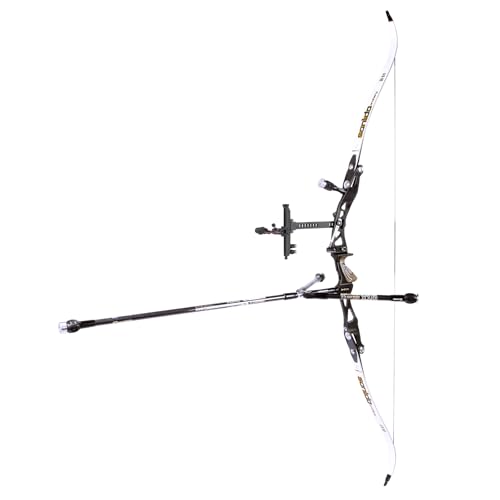


| 30 lblisting | Rightlisting | 62 inlisting | Yeslisting | — | — | Check price | |
PSE Archery Razorback TakedownRecurve bow | 30 lblisting | Rightlisting | 62 inlisting | Yeslisting | — | — | Check price |
Sharrow Takedown English LongbowRecurve bow | 30 lblisting | Ambidextrouslisting | 64.6 inlisting | Yeslisting | — | — | Check price |
Toparchery Horse Bow 53"Recurve bow | 30 lblisting | — | 53 inlisting | — | — | 28 inlisting | Check price |
Toparchery Alloy Riser Takedown RecurveRecurve bow | 30 lblisting | Rightlisting | — | Yeslisting | — | 28 inlisting | Check price |
Toparchery One-Piece Recurve 54"Recurve bow | 30 lblisting | Rightlisting | 54 inlisting | Nolisting | — | 22 inlisting | Check price |
Toparchery Takedown Recurve 60"Recurve bow | 30 lblisting | Rightlisting | 60 inlisting | Yeslisting | — | — | Check price |
Toparchery Wooden Takedown Recurve 62"Recurve bow | 30 lblisting | Rightlisting | 62 inlisting | Yeslisting | Wood fiberglass laminatelisting | — | Check price |
Toparchery Takedown Recurve SetRecurve bow More specs
| 30 lblisting | — | — | Yeslisting | — | — | Check price |
October Mountain Products Adventure 2.0 68"Recurve bow | 34 lblisting | Rightlisting | 68 inlisting | Yeslisting | — | — | Check price |
Ameyxgs 55in Folding Bow and Arrow Set 35 lbsRecurve bow More specs
| 35 lblisting | Right or leftlisting | 55 inlisting | — | — | — | Check price |
| 35 lblisting | Rightlisting | 62 inlisting | Yeslisting | — | — | Check price | |
| 35 lblisting | Rightlisting | 60 inlisting | Yeslisting | Bamboo fiberglass laminatelisting | — | Check price | |
Glurak Black Hunter Takedown Recurve 35 lbRecurve bow | 35 lblisting | Rightlisting | — | Yeslisting | Bamboo fiberglass laminatelisting | — | Check price |
PSE Archery KingFisher Bowfishing PackageRecurve bow More specs
| 35 lblisting | Rightlisting | 56 inlisting | — | — | — | Check price |
sanlida Hermit X8 ILF 60"Recurve bow | 35 lblisting | Rightlisting | 60 inlisting | Yeslisting | — | — | Check price |
Sharrow Horse Bow Take DownRecurve bow | 35 lblisting | Rightlisting | 53.56 inlisting | Yeslisting | — | — | Check price |
Southwest Archery Spyder 62"Recurve bow | 35 lblisting | Rightlisting | 62 inlisting | Yeslisting | Wood fiberglass laminatelisting | — | Check price |
SAS Spirit 62"Recurve bow | 36 lblisting | Rightlisting | 62 inlisting | Yeslisting | — | — | Check price |
Bear Archery G62 RecurveRecurve bow | 40 lblisting | Rightlisting | — | — | — | — | Check price |
Deerseeker Outdoor 52" Recurve Horsebow SetRecurve bow | 40 lblisting | Ambidextrouslisting | 52 inlisting | — | Bamboo fiberglass laminatelisting | — | Check price |
Deerseeker Outdoor 50" HorsebowRecurve bow | 40 lblisting | Ambidextrouslisting | 50 inlisting | — | Bamboo fiberglass laminatelisting | — | Check price |
Glurak Black Hunter Takedown Longbow 60-InchRecurve bow | 40 lblisting | Rightlisting | 60 inlisting | Yeslisting | Bamboo fiberglass laminatelisting | — | Check price |
PSE Archery Terra Longbow 64"Recurve bow | 40 lblisting | Rightlisting | 64 inlisting | — | — | — | Check price |
sanlida Hermit 10 ILF 60"Recurve bow | 40 lblisting | Rightlisting | 60 inlisting | Yeslisting | Carbonlisting | — | Check price |
SAS Gravity 60" One-PieceRecurve bow | 40 lblisting | Rightlisting | 60 inlisting | Nolisting | — | — | Check price |
SAS Voyager 62"Recurve bow | 40 lblisting | Rightlisting | 62 inlisting | Yeslisting | Wood fiberglass laminatelisting | — | Check price |
Sharrow Laminated Horse Bow 58"Recurve bow | 40 lblisting | Ambidextrouslisting | 58 inlisting | — | Wood fiberglass laminatelisting | — | Check price |
Sharrow Takedown Longbow 67"Recurve bow | 40 lblisting | Ambidextrouslisting | 67 inlisting | Yeslisting | — | — | Check price |
Toparchery Alloy Riser Takedown RecurveRecurve bow | 40 lblisting | Rightlisting | — | Yeslisting | — | 28 inlisting | Check price |
Toparchery Recurve Bow Set 62"Recurve bow More specs
| 40 lblisting | — | 62 inlisting | Yeslisting | — | — | Check price |
| 45 lblisting | Rightlisting | — | Yeslisting | — | — | Check price | |
Bear Archery Fred Bear Super Grizzly RecurveRecurve bow | 45 lblisting | Leftlisting | — | — | — | — | Check price |
Bear Archery G62 RecurveRecurve bow | 45 lblisting | Rightlisting | — | — | — | — | Check price |
| 45 lblisting | Rightlisting | 62 inlisting | Yeslisting | Wood fiberglass laminatelisting | — | Check price | |
| 45 lblisting | Leftlisting | 62 inlisting | Yeslisting | Bamboo fiberglass laminatelisting | — | Check price | |
Glurak Black Hunter Takedown Recurve 60-InchRecurve bow | 45 lblisting | Rightlisting | 60 inlisting | Yeslisting | Bamboo fiberglass laminatelisting | — | Check price |
| 45 lblisting | Rightlisting | 62 inlisting | Yeslisting | — | — | Check price | |
October Mountain Products Ascent 58"Recurve bow | 45 lblisting | Rightlisting | 58 inlisting | Yeslisting | — | — | Check price |
| 45 lblisting | Rightlisting | 62 inlisting | — | — | — | Check price | |
Pandarus Wooden Takedown Recurve 62"Recurve bow More specs
| 45 lblisting | — | 62 inlisting | Yeslisting | — | 29 inlisting | Check price |
PSE Archery KingFisher Bowfishing PackageRecurve bow More specs
| 45 lblisting | Rightlisting | 56 inlisting | — | — | — | Check price |
PSE Archery Oryx Longbow 68"Recurve bow | 45 lblisting | Leftlisting | 68 inlisting | — | — | — | Check price |
Sharrow Takedown Recurve 58"Recurve bow | 45 lblisting | Rightlisting | 58 inlisting | Yeslisting | Wood fiberglass laminatelisting | — | Check price |
Toparchery Takedown Recurve 56" Metal RiserRecurve bow | 45 lblisting | Rightlisting | 56 inlisting | Yeslisting | — | 30 inlisting | Check price |
Toparchery Takedown Recurve Set 60"Recurve bow More specs
| 45 lblisting | Rightlisting | 60 inlisting | Yeslisting | — | — | Check price |
| 50 lblisting | Rightlisting | 60 inlisting | Yeslisting | Bamboo fiberglass laminatelisting | — | Check price | |
Bear Archery G62 RecurveRecurve bow | 50 lblisting | Rightlisting | — | — | — | — | Check price |
Deerseeker Outdoor 64" Traditional LongbowRecurve bow | 50 lblisting | Leftlisting | 64 inlisting | Nolisting | Bamboo fiberglass laminatelisting | — | Check price |
| 50 lblisting | Rightlisting | 60 inlisting | Yeslisting | — | — | Check price | |
| 50 lblisting | Rightlisting | 62 inlisting | — | — | — | Check price | |
SAS Courage 60"Recurve bow | 50 lblisting | Rightlisting | 60 inlisting | Yeslisting | — | — | Check price |
SAS Pioneer 68" LongbowRecurve bow | 50 lblisting | Rightlisting | 68 inlisting | — | — | — | Check price |
Bear Archery G62 RecurveRecurve bow | 55 lblisting | Leftlisting | — | — | — | — | Check price |
PSE Archery Mustang 60"Recurve bow | 55 lblisting | Leftlisting | 60 inlisting | — | — | — | Check price |
Samick Sage Sage 62"Recurve bow | 55 lblisting | Rightlisting | 62 inlisting | Yeslisting | — | 28 inlisting | Check price |
SAS Maverick 60"Recurve bow | 55 lblisting | Rightlisting | 60 inlisting | Nolisting | — | — | Check price |
Toparchery Black Hunter ILF Recurve 62"Recurve bow | 55 lblisting | — | 62 inlisting | Yeslisting | — | — | Check price |
Toparchery Recurve Bow Set 60"Recurve bow More specs
| 55 lblisting | Rightlisting | 60 inlisting | Yeslisting | — | — | Check price |
Deerseeker Outdoor 54" Traditional LongbowRecurve bow | 60 lblisting | Rightlisting | 54 inlisting | Nolisting | Bamboo fiberglass laminatelisting | — | Check price |
sanlida Hermit 10 ILF 60"Recurve bow | 60 lblisting | Rightlisting | 60 inlisting | Yeslisting | Carbonlisting | — | Check price |
Ameyxgs 67in English Longbow 25-120 lbsRecurve bow | 80 lblisting | Right or leftlisting | 67 inlisting | — | — | — | Check price |
Ameyxgs 50in Bowfishing Recurve Lever BowRecurve bow | — | Rightlisting | 50 inlisting | Yeslisting | — | — | Check price |
Bear Archery Grizzly RH60 RecurveRecurve bow | — | Right or leftlisting | — | — | Wood fiberglass laminatelisting | — | Check price |
Bear Archery Montana LongbowRecurve bow | — | — | 64 inlisting | — | Wood fiberglass laminatelisting | — | Check price |
Bear Archery 64-Inch Kodiak Super RecurveRecurve bow | — | — | 64 inlisting | — | — | — | Check price |
Bear Archery 64-Inch Super Kodiak RecurveRecurve bow | — | — | 64 inlisting | — | — | — | Check price |
Deerseeker Outdoor 59" Longbow Horsebow SetRecurve bow | — | Ambidextrouslisting | 59 inlisting | — | — | — | Check price |
| — | Right or leftlisting | 60 inlisting | Yeslisting | Bamboo fiberglass laminatelisting | — | Check price | |
Glurak Black Hunter ILF Recurve Kit 62-InchRecurve bow | — | Rightlisting | 62 inlisting | Yeslisting | Carbonlisting | — | Check price |
Glurak Black Hunter Longbow and Arrow Set 62-InchRecurve bow More specs
| — | Rightlisting | 62 inlisting | Yeslisting | Bamboo fiberglass laminatelisting | — | Check price |
Lwano Takedown Recurve 62"Recurve bow | — | Rightlisting | 62 inlisting | Yeslisting | Wood fiberglass laminatelisting | — | Check price |
Lwano Takedown Recurve Bow and Arrow SetRecurve bow More specs
| — | Ambidextrouslisting | — | Yeslisting | — | — | Check price |
Lwano Aluminum Riser Recurve SetRecurve bow More specs
| — | Rightlisting | — | — | — | — | Check price |
Samick Sage Sage Recurve Set 62"Recurve bow More specs
| — | — | 62 inlisting | Yeslisting | — | — | Check price |
sanlida Royal X8 Longbow Kit 68"Recurve bow More specs
| — | Rightlisting | 68 inlisting | — | — | — | Check price |
sanlida Royal X8 One-Piece Kit 60"Recurve bow More specs
| — | Rightlisting | 60 inlisting | Nolisting | — | — | Check price |
sanlida Eagle X9 Kit 58"Recurve bow More specs
| — | Rightlisting | 58 inlisting | Yeslisting | — | — | Check price |
SAS Robinhood 59" Longbow PackageRecurve bow More specs
| — | Ambidextrouslisting | 59 inlisting | — | — | — | Check price |
SAS Premier 62" PackageRecurve bow | — | — | 62 inlisting | Yeslisting | — | — | Check price |
Toparchery Youth Takedown Recurve 57"Recurve bow | — | — | 57 inlisting | Yeslisting | — | — | Check price |
Toparchery 60" Takedown Recurve SetRecurve bow More specs
| — | — | 60 inlisting | Yeslisting | Bamboo fiberglass laminatelisting | — | Check price |
Toparchery Takedown Recurve 60"Recurve bow | — | Rightlisting | 60 inlisting | Yeslisting | — | — | Check price |
Toparchery ILF Takedown Recurve SetRecurve bow More specs
| — | — | — | Yeslisting | — | — | Check price |
Toparchery Entry Level Competition TakedownRecurve bow | — | — | — | Yeslisting | — | — | Check price |
Toparchery Alloy Riser Recurve SetRecurve bow More specs
| — | Rightlisting | 52 inlisting | — | — | 28 inlisting | Check price |


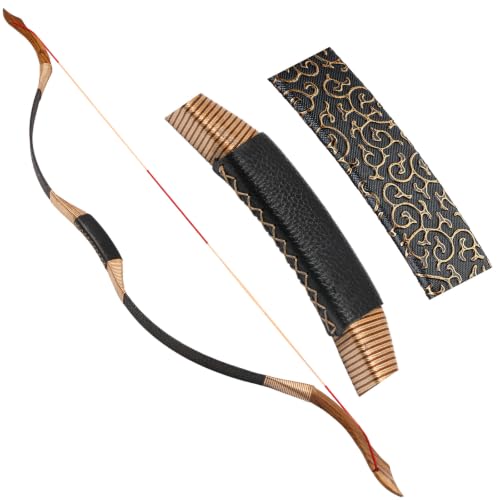


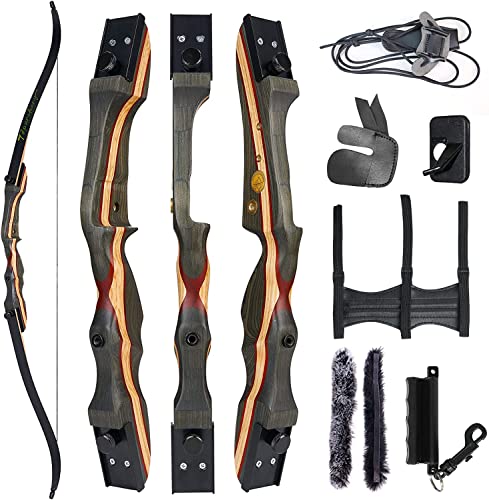


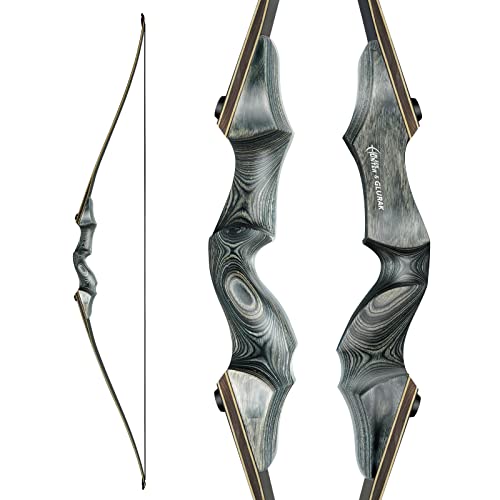


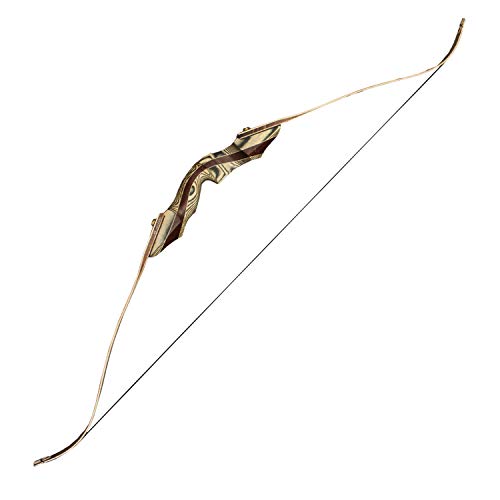


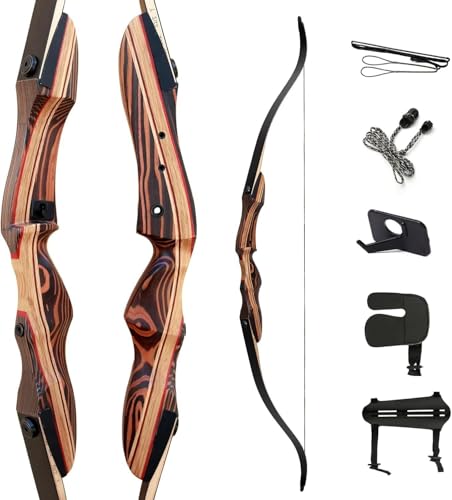


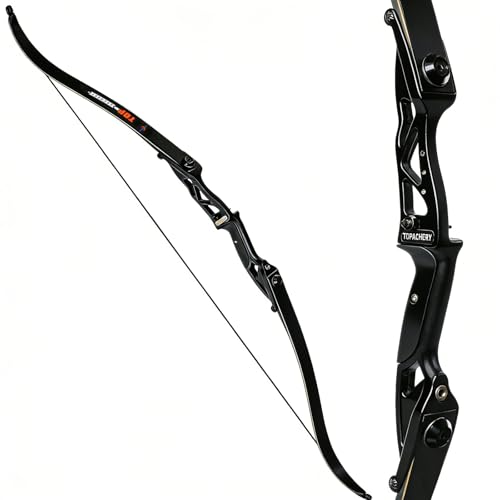


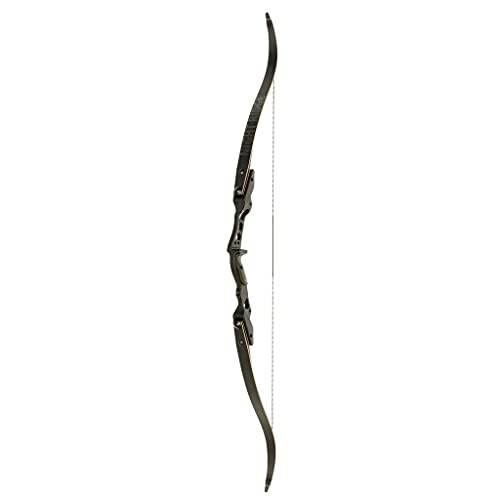

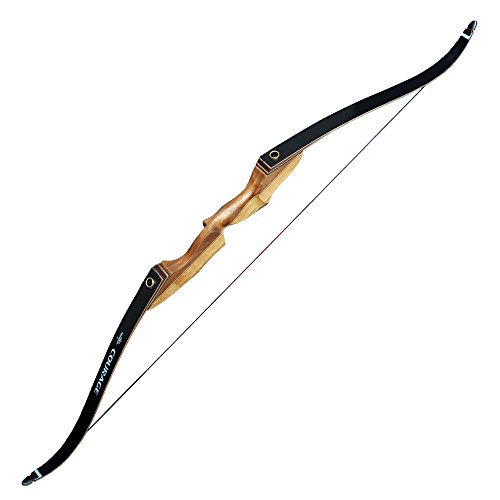
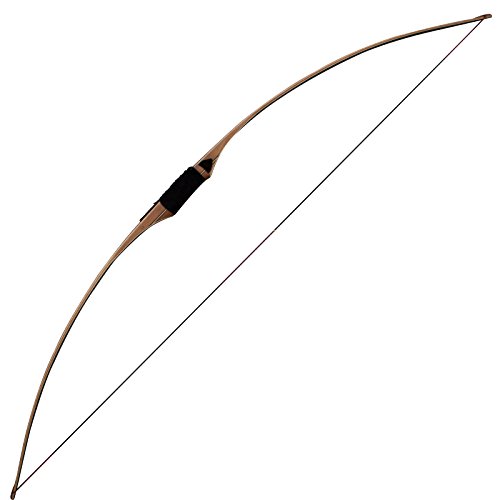


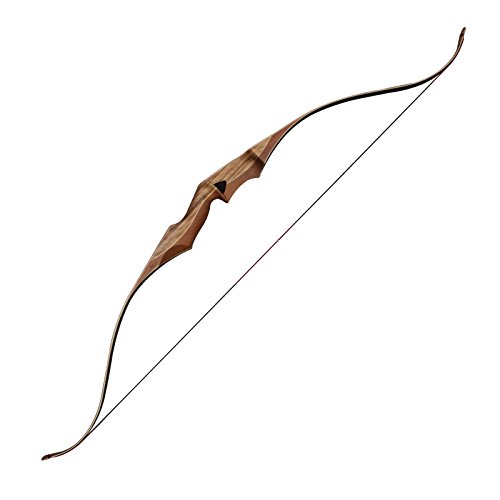

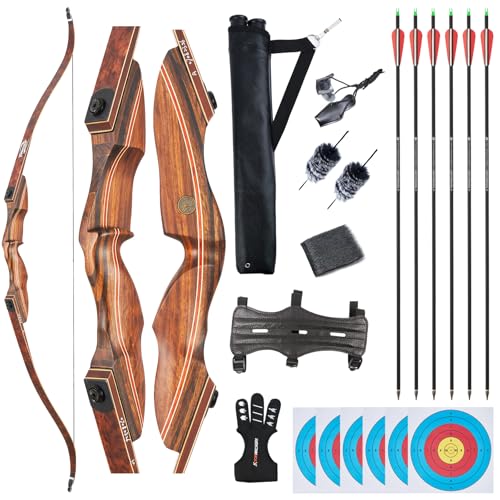


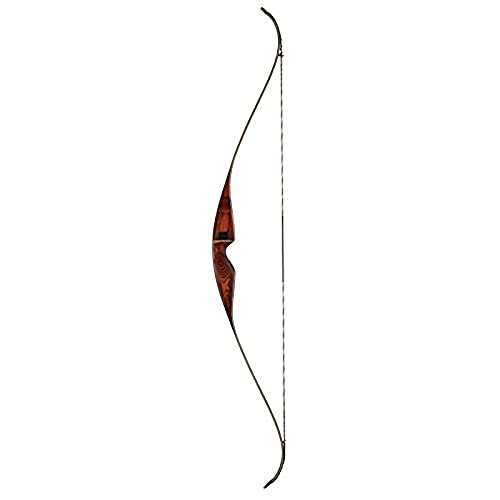


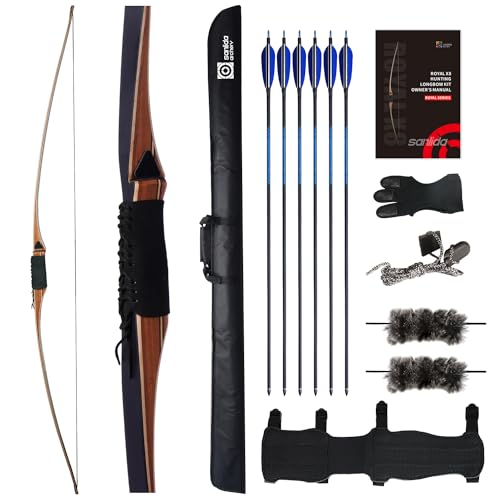


What’s in this listEvery recurve bow we track on Amazon US, from light to heavy draw weight. “—” means neither the maker nor the Amazon listing states it.
What makes a recurve bow different
World Archery's own description is the short version: the top and bottom limbs curve back away from the string, and drawing the bow bends them to store the energy that sends the arrow. Look at a strung recurve from the side and the tips flip forward, away from you. That's the "re" in recurve.
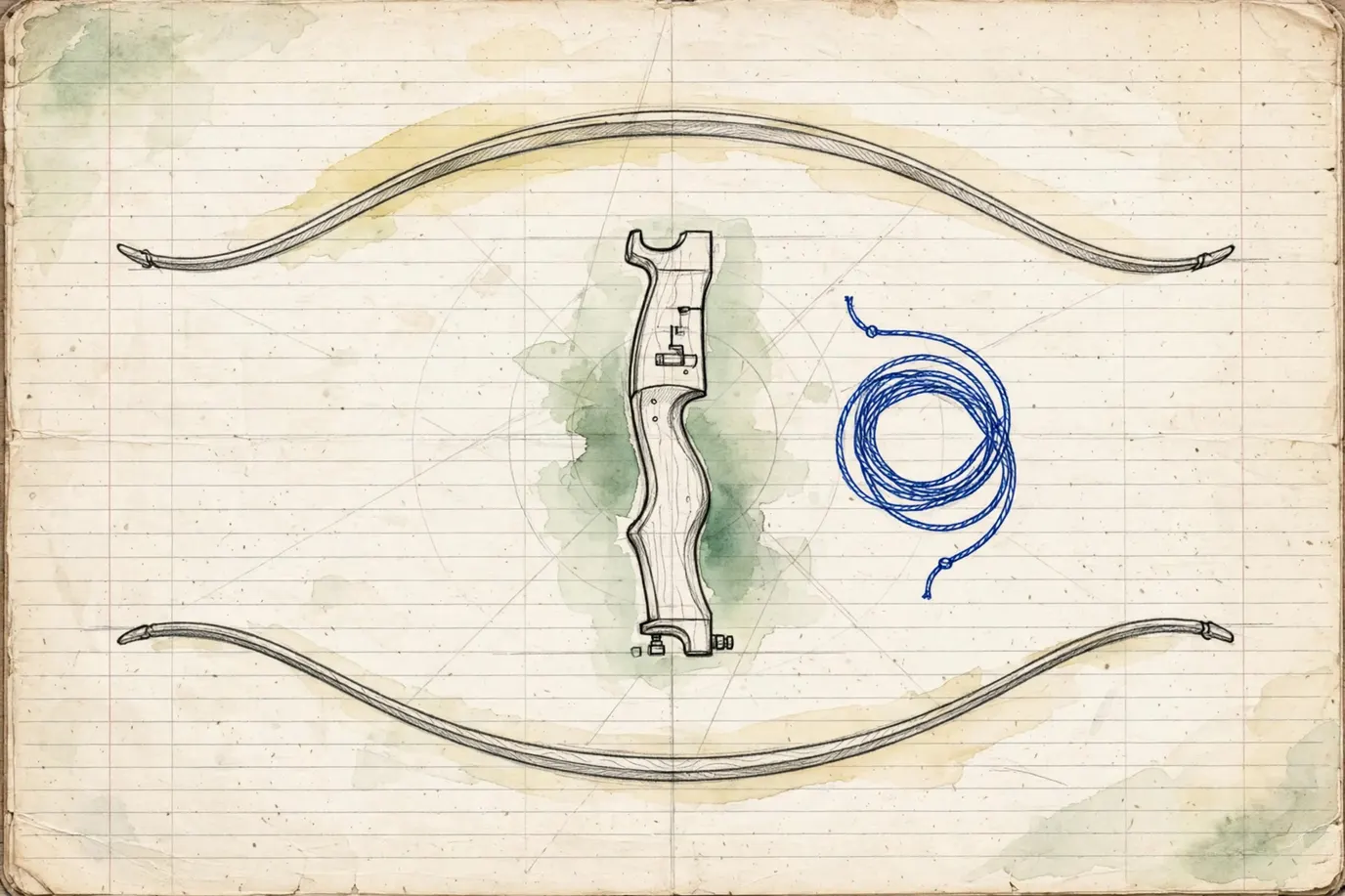
A recurve has three main parts, per Archery 360's anatomy guide:
- Riser: the middle section with the grip, plus mounts for a rest or sight if the bow has them
- Limbs: the two bending arms that make the power
- String: one string, no cables, no cams
What it doesn't have matters just as much. Archery 360's comparison spells it out. A recurve has no mechanical help, so draw weight keeps climbing the farther you pull. There's no let-off and no draw stop, so you have to stop at the same anchor every shot. And you release with three fingers, usually behind a glove or a finger tab, instead of a mechanical release.
Archery 360 calls the design "fairly simple," and that's the appeal. Fewer parts to fail at 6 a.m. in November.
The table under this page lists recurve bows we track, from light to heavy draw weight. It shows the specs below as the maker lists them, or as the Amazon listing does where the maker is silent (marked as listing values; weight stays the maker's); a dash means neither states it.
How to read recurve bow specs
In the order I'd read a listing:
Draw weight is measured at 28 inches, not at your draw
Archery 360 defines a recurve's draw weight as the pounds on the string when the bow is drawn to 28 inches. One bow maker's traditional recurve manual gets more exact: it's the Archery Trade Association standard of 26¼ inches to the throat of the grip, plus 1¾ inches. The number printed on the limb assumes that draw.
Your draw probably isn't exactly 28. Archery 360's ILF guide gives the general rule: about 2 lb gained for each inch past 28, and 2 lb lost for each inch under. Bowhunter's guide to traditional bows puts most stickbows a bit higher, 2½ to 3½ lb an inch, for draws between 25 and 31 inches. The same manual notes actual weight also depends on brace height and riser length.
Quick math: a bow marked 35 lb, drawn to 30 inches, lands somewhere around 39 to 42 lb at your fingers. Drawn to 26 inches, it's lighter than the label.
My one opinion on this page: judge a recurve by the weight at your own draw length, never by the number printed on the limb. The reason is the quick math above. The label is measured at 28 inches, and a couple of inches either way moves it several pounds. Archery 360's beginner advice is to start low enough to draw comfortably and hold at anchor for a few seconds without shaking, so you build strength and form instead of fighting the bow. A recurve gives you nothing back at full draw. Every extra pound is yours to hold.
Max draw length tells you where the bow stops being smooth
The table's max draw length is the longest draw the listing says the bow is built for. Past it, the bow stacks.
Stacking is a sharp jump in draw weight near the end of the draw. Improve Your Archery explains the cause: once the string-to-limb angle passes 90 degrees, the limbs start bending in a way they weren't built for. The bow gets harder to hold, small draw changes swing your arrow height more, and overdrawing can shorten a bow's life, especially wood limbs.
Think of the last half-inch of a stuck jar lid. Lots of effort, very little progress. If your draw is longer than the bow's listed max, look at a longer bow. The maker's manual adds a plain rule: don't draw a bow beyond its maximum draw length.
Length (AMO) should match your draw length
Recurve length is measured tip to tip along the curve of the limbs, with the bow unstrung, per the bow maker's manual. Archery 360 says recurves come in set lengths tied to draw-length ranges. You pick the length that fits your draw.
Archery 360's ILF guide gives a starting chart for a bow built on a standard 25-inch riser, which I'd tape inside the gear closet:
| Your draw length | Bow length |
|---|---|
| 26½ in and shorter | 66 in |
| 26½ to 29 in | 68 in |
| 29 in and longer | 70 in |
On that riser, short limbs make a 66-inch bow, medium limbs a 68 and long limbs a 70, so the chart is really a limb choice. Archery 360 calls these general guidelines, and the coach it quotes runs 68-inch bows up to a 30-inch draw. Bowhunter's traditional bow guide lands in the same place: bow length comes down to personal preference. What doesn't change is the direction of the mistake. Shorter bows stack sooner, per Improve Your Archery, because they reach that 90-degree string angle earlier in the draw.
To find your draw, Archery 360 uses the wingspan method: arms out in a T, middle fingertip to middle fingertip, divided by 2.5. A 60-inch wingspan gives about a 24-inch draw. (Get a helper to hold the tape. Doing it alone against the cabin door is a two-person job done badly by one.)
Takedown or one-piece changes what you can swap later
A takedown recurve comes apart into a riser and two limbs. Archery 360 lists the two reasons: it packs down for travel, and you can switch to heavier or lighter limbs without buying a new bow. Archery 360's beginner guide says the other kind, a bow that can't be adjusted, means buying a whole new bow for a different weight.
A one-piece recurve is a single unit, riser and limbs together. Fewer joints, nothing to lose behind the truck seat. Takedowns get their own page: takedown recurve bow.
Limbs: wood, fiberglass, laminates or carbon
The table's limb column uses four values: wood and fiberglass laminate, fiberglass, bamboo and fiberglass laminate, and carbon. A laminate is layers of different materials glued into one limb.
Archery 360's limb guide sorts them by feel:
- Fiberglass: the budget-friendly entry point, good for archers who will change weights as they get stronger; tends to stack more and "hit a wall" late in the draw
- Wood core: absorbs shock a little better, so the shot feels more damped; found in both budget and top-tier limbs
- Carbon with foam core: smooth draw and a snappy release, more consistent across weather, a bit more vibration after the shot
Wood needs a little care. The bow maker's manual warns that wood-core limbs can take on moisture if the finish gets a deep scratch, and suggests resealing it with clear nail polish. Carbon recurves get their own page: carbon fiber recurve bow.
Hand: the bow is named for your drawing hand
A right-handed recurve is held in the left hand and drawn with the right. Archery 360's handedness guide says to start with eye dominance, not just hand. The thumbs-up test: cover a distant object with your thumb, both eyes open, then close one eye at a time. The eye that keeps the thumb on the object is dominant.
If your dominant eye and hand don't match, you're cross-dominant. Archery 360 says to shoot both setups at a shop and pick by trial. The table shows right, left, or both versions sold. The full rundown is on the left-handed recurve bow page.
Arrows included means a set, not a finished hunting setup
Some recurves ship as a set with arrows, a stringer or a rest. The table flags it. Check the arrows against the bow's draw weight and your arrow length on a spine chart before you trust them. The bow maker's manual sets a floor: never shoot an arrow under 5 grains per pound of peak draw weight. On a 40-lb bow that's 200 grains. Sets have their own page: recurve bow and arrow.
Traditional recurve bow or target-style recurve
Same shape, two very different setups.
A traditional recurve bow is shot off the fingers, usually with no sight and no stabilizers. The arrow often rides on the riser's shelf, a padded ledge, instead of on a mechanical rest. The maker's manual describes a crowned shelf built for "off the shelf" shooting. Archery 360's fletching guide says feathers are the pick for shelf shooting, because they flex and lie flat as they pass the riser.
A target-style recurve is what you see at the Olympics. World Archery's diagram lists the add-ons: a sight pin, a clicker that clicks when the arrow reaches full draw, a rest and plunger button, and long stabilizer rods that balance the bow and soak up vibration. Archery 360 notes some recurves are built to take these accessories and some are meant to be shot without them.
Most hunting recurves sit on the traditional end. More on that on the recurve bow hunting page.
Which recurve bow fits which archer
- New adult archer: a takedown at a light draw weight, sized to your draw, so you can buy heavier limbs later
- Kids: short bows at light weights sized to the child's real draw; see youth recurve bow
- Deer hunter: enough weight for your state's minimum, a length that fits the blind; see recurve bow hunting
- Backyard and 3D shooter: Archery 360 says recurve archers often use one bow for indoor, 3D and hunting
Recurve vs compound bow, in plain numbers
Archery 360's comparison gives the clearest numbers. A compound can let off as much as 90%, so a 70-lb compound holds about 7 lb at full draw. A 50-lb recurve drawn to 28 inches holds all 50.
That's the whole trade. The compound has cams, a draw stop and usually a release aid. Most archers find accuracy easier and faster there, Archery 360 says. The recurve is lighter on parts and asks you to be the draw stop. (Walt says a recurve is "a compound with the shortcuts taken out." He means it as a compliment, mostly.)
Neither is wrong for hunting. Archery 360 says archers fill freezers every season with both. Compounds live on the compound bow page, and crossbows, which hold the string cocked for you, are on the crossbow page.
How to string a recurve bow without bending it wrong
Archery 360 calls the bow stringer "the safest and only method bow manufacturers recommend." The bow maker's manual says the same in a warning box. Here's the sequence:
- Attach the limbs first if it's a takedown, per the maker's instructions.
- Slide the larger top loop down the top limb; seat the smaller bottom loop in the bottom tip's groove.
- Put the stringer's pouch over the bottom tip and its saddle on the top limb, just behind the loop.
- Stand on the cord, feet about shoulder-width apart, and pull the grip straight up.
- Slide the top loop up into the top groove. Don't flex the limbs more than you need to.
- Turn the limbs away from you, check both loops sit in their grooves, then remove the stringer.
Last step: measure brace height, the gap from the deepest part of the grip to the string. Archery 360 says to add twists to the string if it's too low and remove them if it's too high. One maker's traditional recurves run 7½ to 8½ inches, and its manual says to aim for the setting with the least noise and arm slap.
Care: keep it cool, waxed and unstrung between seasons
The bow maker's manual boils care down to a short list:
- Never dry-fire it. Releasing the string with no arrow can wreck the bow and hurt you.
- Don't leave it strung in a hot vehicle. Heat can cause component failure.
- Don't store a strung bow resting on one limb for long; it can pull the limb out of alignment.
- Wax the string about every two weeks in heavy use; replace it when it shows wear.
- When you unstring it, clip the string's loops together so it keeps its twists.
- Towel it dry after rain. No heat source.
Inspect the string, limbs and riser before every session. A frayed string gets replaced, and a cracked limb goes to a shop, not back on the line. Wear an armguard and a finger tab or glove, and never point a drawn bow at anyone.
Who should skip a recurve bow
If you want to hunt this fall and can only practice a few weekends before opening day, a recurve is a hard road. Archery 360 says compounds have a shorter learning curve and are more forgiving. If an injury makes holding full draw weight painful, a recurve isn't the fix either; it holds nothing for you.
If you like the idea of a bow with one string and no batteries, that's the recurve's whole pitch. Write your draw length down first. Then go shopping.
Brands in this list
Related
Questions people ask
Is a recurve or a compound bow better for hunting?
Both put deer in the freezer, per the Archery Trade Association's Archery 360. A compound's cams let it hold about 5 to 10 lb at full draw on a 50 to 70 lb bow, and it usually shoots with a release aid. A recurve holds its full 40 to 50 lb and shoots off the fingers. Archery 360 says recurves generally have a shorter effective hunting range and most archers reach accuracy faster on a compound.
How do you string a recurve bow?
Use a bow stringer. Slide the big top loop down the top limb, seat the bottom loop in the bottom tip's groove, fit the stringer's pouch over the bottom tip and its saddle behind the top loop. Stand on the cord, pull the grip straight up, slide the top loop into its groove, then check both loops before you remove the stringer.
How do I choose a recurve bow?
Measure draw length first: wingspan in inches divided by 2.5 is a close start. Pick the bow length that matches it on a sizing chart, then a draw weight you can pull and hold at anchor for a few seconds without shaking. Marked weight is at 28 inches, so adjust for your draw. A pro shop can confirm all three.
What's the difference between a crossbow and a recurve bow?
A crossbow holds the string cocked for you and fires with a trigger and a safety, and it shoots bolts, not arrows. A recurve is a vertical bow you draw and hold with your own arm until you release with your fingers. Crossbow seasons and rules differ from vertical-bow rules in many states, so check your state wildlife agency.
Sources
- World Archery: Press sheet 2, The recurve bow — accessed 2026-10-22
- Archery 360 (Archery Trade Association): Olympic recurve bow anatomy — accessed 2026-10-22
- Archery 360 (Archery Trade Association): Compounds vs. recurve bows — accessed 2026-10-22
- Archery 360 (Archery Trade Association): Compound and recurve bows offer the ultimate archery experience — accessed 2026-10-22
- Archery 360 (Archery Trade Association): Start shooting archery this spring — accessed 2026-10-22
- Archery 360 (Archery Trade Association): Selecting the right bow for you — accessed 2026-10-22
- Archery 360 (Archery Trade Association): Should I shoot a right- or left-handed bow? — accessed 2026-10-22
- Archery 360 (Archery Trade Association): Choosing the right recurve limbs — accessed 2026-10-22
- Archery 360 (Archery Trade Association): How to string a bow — accessed 2026-10-22
- Archery 360 (Archery Trade Association): Understanding arrow fletchings — accessed 2026-10-22
- Archery 360 (Archery Trade Association): All about ILF bows — accessed 2026-10-22
- Bowhunter: How to buy a new traditional bow — accessed 2026-10-22
- Improve Your Archery: Stacking, what it is and why it's bad — accessed 2026-10-22
- Hoyt: Traditional recurve owner's manual — accessed 2026-10-22
- Wisconsin DNR: Archery and crossbow safety tips — accessed 2026-10-22