Archery & Bowhunting · Gear type
Recurve Bow Hunting
Recurve bow hunting comes down to three numbers: draw weight at your real draw length, bow length, and the yardage you can keep every arrow inside a small circle. A hunting recurve bow needs enough weight for deer, a length that swings in a blind, and a setup quiet enough that the deer is still standing there when the arrow arrives. The bows on this page are offered at 40 lb or heavier, as the maker or the listing states it. (Yes, I know. Forty pounds sounds light until you hold it for six seconds in November gloves.)
We earn a commission if you buy through our links, at no cost to you. Disclosure
| Model | Draw weight | Hand | Length (AMO) | Takedown | Limbs | Max draw length | Amazon |
|---|---|---|---|---|---|---|---|
Bear Archery G62 RecurveRecurve bow | 40 lblisting | Rightlisting | — | — | — | — | Check price |
Deerseeker Outdoor 52" Recurve Horsebow SetRecurve bow | 40 lblisting | Ambidextrouslisting | 52 inlisting | — | Bamboo fiberglass laminatelisting | — | Check price |
Deerseeker Outdoor 50" HorsebowRecurve bow | 40 lblisting | Ambidextrouslisting | 50 inlisting | — | Bamboo fiberglass laminatelisting | — | Check price |
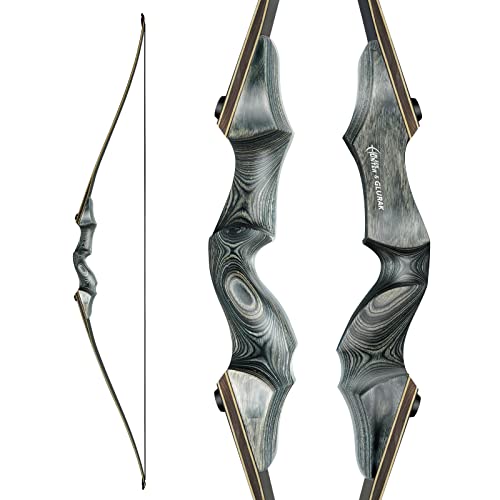
Glurak Black Hunter Takedown Longbow 60-InchRecurve bow | 40 lblisting | Rightlisting | 60 inlisting | Yeslisting | Bamboo fiberglass laminatelisting | — | Check price |
PSE Archery Terra Longbow 64"Recurve bow | 40 lblisting | Rightlisting | 64 inlisting | — | — | — | Check price |
sanlida Hermit 10 ILF 60"Recurve bow | 40 lblisting | Rightlisting | 60 inlisting | Yeslisting | Carbonlisting | — | Check price |
SAS Gravity 60" One-PieceRecurve bow | 40 lblisting | Rightlisting | 60 inlisting | Nolisting | — | — | Check price |
SAS Voyager 62"Recurve bow | 40 lblisting | Rightlisting | 62 inlisting | Yeslisting | Wood fiberglass laminatelisting | — | Check price |
Sharrow Laminated Horse Bow 58"Recurve bow | 40 lblisting | Ambidextrouslisting | 58 inlisting | — | Wood fiberglass laminatelisting | — | Check price |
Sharrow Takedown Longbow 67"Recurve bow | 40 lblisting | Ambidextrouslisting | 67 inlisting | Yeslisting | — | — | Check price |
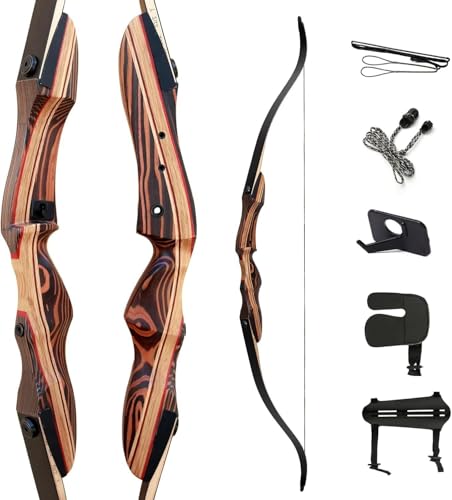
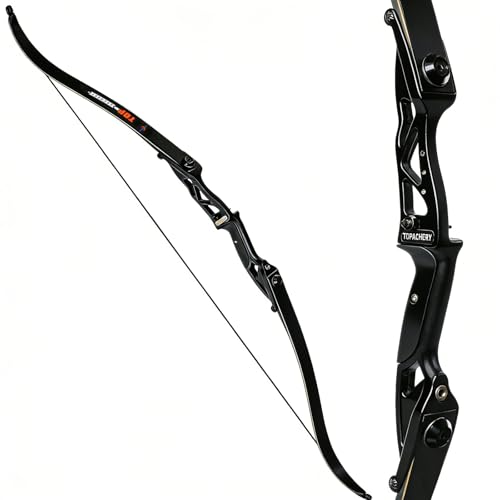
Toparchery Alloy Riser Takedown RecurveRecurve bow | 40 lblisting | Rightlisting | — | Yeslisting | — | 28 inlisting | Check price |
Toparchery Recurve Bow Set 62"Recurve bow More specs
| 40 lblisting | — | 62 inlisting | Yeslisting | — | — | Check price |
| 45 lblisting | Rightlisting | — | Yeslisting | — | — | Check price | |
Bear Archery Fred Bear Super Grizzly RecurveRecurve bow | 45 lblisting | Leftlisting | — | — | — | — | Check price |
Bear Archery G62 RecurveRecurve bow | 45 lblisting | Rightlisting | — | — | — | — | Check price |
| 45 lblisting | Rightlisting | 62 inlisting | Yeslisting | Wood fiberglass laminatelisting | — | Check price | |
| 45 lblisting | Leftlisting | 62 inlisting | Yeslisting | Bamboo fiberglass laminatelisting | — | Check price | |
Glurak Black Hunter Takedown Recurve 60-InchRecurve bow | 45 lblisting | Rightlisting | 60 inlisting | Yeslisting | Bamboo fiberglass laminatelisting | — | Check price |
| 45 lblisting | Rightlisting | 62 inlisting | Yeslisting | — | — | Check price | |
October Mountain Products Ascent 58"Recurve bow | 45 lblisting | Rightlisting | 58 inlisting | Yeslisting | — | — | Check price |
| 45 lblisting | Rightlisting | 62 inlisting | — | — | — | Check price | |
Pandarus Wooden Takedown Recurve 62"Recurve bow More specs
| 45 lblisting | — | 62 inlisting | Yeslisting | — | 29 inlisting | Check price |
PSE Archery KingFisher Bowfishing PackageRecurve bow More specs
| 45 lblisting | Rightlisting | 56 inlisting | — | — | — | Check price |
PSE Archery Oryx Longbow 68"Recurve bow | 45 lblisting | Leftlisting | 68 inlisting | — | — | — | Check price |
Sharrow Takedown Recurve 58"Recurve bow | 45 lblisting | Rightlisting | 58 inlisting | Yeslisting | Wood fiberglass laminatelisting | — | Check price |
Toparchery Takedown Recurve 56" Metal RiserRecurve bow | 45 lblisting | Rightlisting | 56 inlisting | Yeslisting | — | 30 inlisting | Check price |
Toparchery Takedown Recurve Set 60"Recurve bow More specs
| 45 lblisting | Rightlisting | 60 inlisting | Yeslisting | — | — | Check price |
| 50 lblisting | Rightlisting | 60 inlisting | Yeslisting | Bamboo fiberglass laminatelisting | — | Check price | |
Bear Archery G62 RecurveRecurve bow | 50 lblisting | Rightlisting | — | — | — | — | Check price |
Deerseeker Outdoor 64" Traditional LongbowRecurve bow | 50 lblisting | Leftlisting | 64 inlisting | Nolisting | Bamboo fiberglass laminatelisting | — | Check price |
| 50 lblisting | Rightlisting | 60 inlisting | Yeslisting | — | — | Check price | |
| 50 lblisting | Rightlisting | 62 inlisting | — | — | — | Check price | |
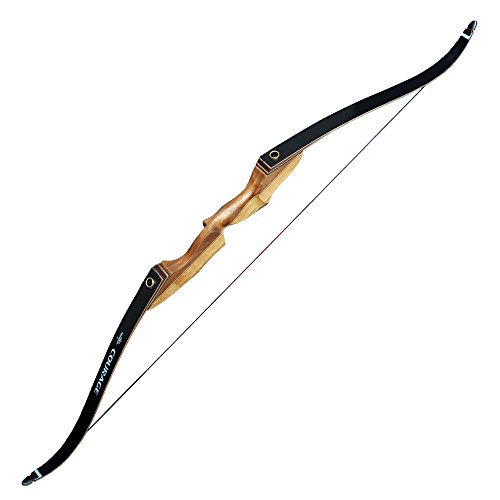
SAS Courage 60"Recurve bow | 50 lblisting | Rightlisting | 60 inlisting | Yeslisting | — | — | Check price |
SAS Pioneer 68" LongbowRecurve bow | 50 lblisting | Rightlisting | 68 inlisting | — | — | — | Check price |
Bear Archery G62 RecurveRecurve bow | 55 lblisting | Leftlisting | — | — | — | — | Check price |
PSE Archery Mustang 60"Recurve bow | 55 lblisting | Leftlisting | 60 inlisting | — | — | — | Check price |
Samick Sage Sage 62"Recurve bow | 55 lblisting | Rightlisting | 62 inlisting | Yeslisting | — | 28 inlisting | Check price |
SAS Maverick 60"Recurve bow | 55 lblisting | Rightlisting | 60 inlisting | Nolisting | — | — | Check price |
Toparchery Black Hunter ILF Recurve 62"Recurve bow | 55 lblisting | — | 62 inlisting | Yeslisting | — | — | Check price |
Toparchery Recurve Bow Set 60"Recurve bow More specs
| 55 lblisting | Rightlisting | 60 inlisting | Yeslisting | — | — | Check price |




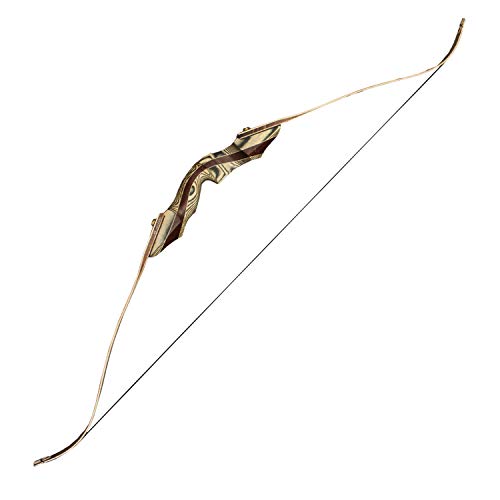






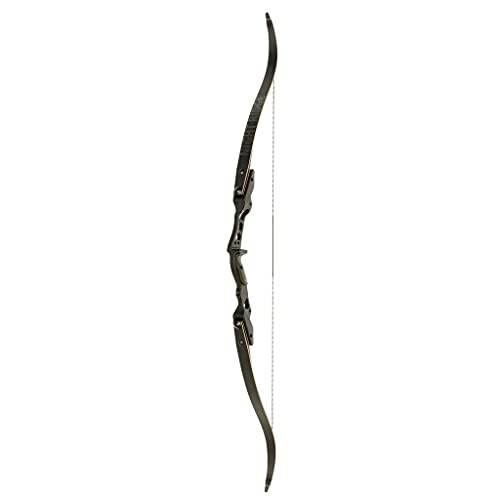

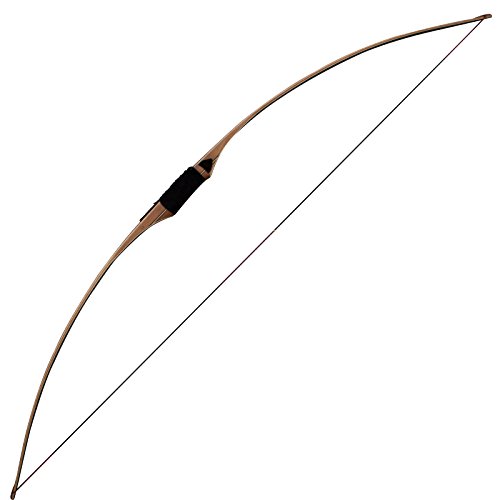


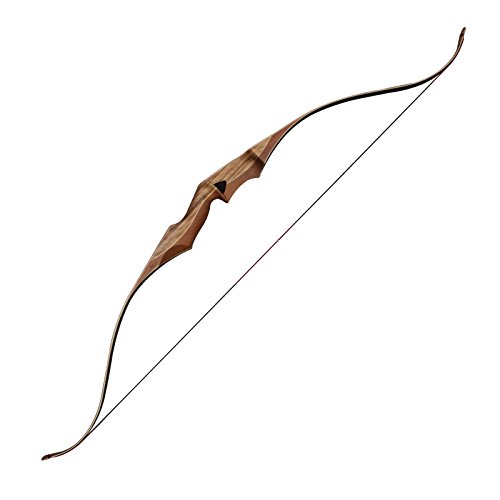

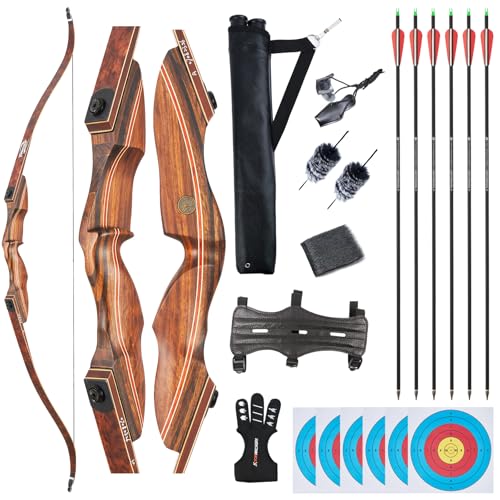
Deerseeker Outdoor 54" Traditional LongbowRecurve bow | 60 lblisting | Rightlisting | 54 inlisting | Nolisting | Bamboo fiberglass laminatelisting | — | Check price |
|---|---|---|---|---|---|---|---|
sanlida Hermit 10 ILF 60"Recurve bow | 60 lblisting | Rightlisting | 60 inlisting | Yeslisting | Carbonlisting | — | Check price |
Ameyxgs 67in English Longbow 25-120 lbsRecurve bow | 80 lblisting | Right or leftlisting | 67 inlisting | — | — | — | Check price |


What’s in this listRecurve bows offered at a 40 lb draw or heavier, as stated by the maker or the Amazon listing — the range most states set as the floor for deer. Check your state's rules. “—” means neither the maker nor the Amazon listing states it.
What changes when a recurve bow goes hunting
A recurve that's great for backyard targets can be the wrong bow in a deer woods. Hunting adds four things a target session doesn't ask for: enough weight for an ethical shot, a bow that fits where you sit, silence, and a heavier arrow with a broadhead on the front.
The bow itself is the same simple tool. Riser, two limbs whose tips curve away from you, one string, no let-off. If you need the basics first (how the specs are measured, how to string one, how to size it), they're on the main recurve bow page. This page is about what a hunting recurve bow needs on top of that.
The table under this page only shows recurves offered at 40 lb or heavier, as the maker or the listing states it. That's above the usual state floor for deer, and in the range Archery 360 says recurve bowhunters commonly shoot. Your state may differ, and the table can't check your draw length, so read the next section before you trust a number on a label.
The specs that decide a recurve bow for hunting
Hunting draw weight is the number at your anchor
Archery 360's comparison gives the two benchmarks. A state's minimum draw weight for deer is usually about 35 lb, considered the least force that drives an arrow through a deer. Recurve bowhunters commonly use 40 to 50 lb. And unlike a compound, you hold all of it at full draw.
The label is measured at 28 inches. Every inch you pull past that adds weight: about 2 lb an inch by Archery 360's rule of thumb, and 2½ to 3½ lb on most stickbows, per Bowhunter's guide to buying a traditional bow. So the bow you hunt with is the bow at your anchor, not on the limb sticker.
Quick math, the other direction: a 40-lb bow drawn to 26 inches gives up roughly 4 to 7 lb. That can put a short-draw hunter close to the floor without knowing it. A shop with a bow scale can tell you in about a minute. ("It felt like about 40" is not a measurement. no matter how confidently it's said at the cabin table.)
Archery 360's test for beginners holds up for hunters: a steady hold at anchor, no shaking, for a few seconds. On a hunt, those seconds stretch. The deer steps behind a tree, you wait, you hold. Practice the hold, not just the shot.
Bow length is a trade between the blind and your draw
Shorter bows are easier to swing in tight places, like a ground blind or a stand with branches close. But short bows pay for it. Improve Your Archery explains that shorter bows stack sooner, because they hit the steep part of the draw earlier. That's stacking: the last inches of the draw get heavy fast, and a heavy end is a shaky hold.
Archery 360's ILF guide gives a starting point for bows on a standard 25-inch riser: a 66-inch bow for a draw of 26½ inches or shorter, 68 inches for 26½ to 29, and 70 inches past 29. Hunting risers run shorter, and Bowhunter's traditional bow guide notes some hunters prefer super-short recurves for blinds, then calls bow length a personal preference. Fine, as long as the preference fits your draw.
So size the bow to your draw first, using the maker's chart and the table's max draw length. Then, if two lengths fit, the shorter one is the hunting pick. Don't go shorter than your draw allows to save a few inches of clearance. You'll get them back as a harsh, inconsistent shot.
Takedown helps on the walk in and with limb swaps
A takedown recurve comes apart into a riser and two limbs. For a hunter, the Archery 360 anatomy guide's two reasons both count: a smaller package for the pack or the plane, and limbs you can trade up in weight while the riser stays. The limb trade matters most. Start at a weight you can control, move up a step once your form holds.
Assembly is simple but not optional. One bow maker's traditional recurve manual says to snug the limb bolts until the limb bottoms out on the riser, not overtighten them, and never string or shoot the bow with a bolt backed off. Check the limbs before every hunt, not just when you build it.
Limbs, weather and a hot truck
The limbs column uses the same four materials explained on the main recurve page. Hunting adds rain, cold and the cab of a truck to the list of things the limbs have to put up with.
- Wood-core limbs: the bow maker's manual says moisture can get in where the finish is deeply scratched; reseal the scratch and towel the bow dry after rain, no heat source
- Carbon and foam-core limbs: Archery 360's limb guide calls them more consistent across weather
- Fiberglass: the budget entry point; Archery 360 says it tends to stack more late in the draw
The same manual warns that excess heat, like a sunny day inside a closed vehicle, can cause component failure. So the bow comes inside with you at lunch.
Max draw length, hand and arrows in the box
Three smaller columns that still decide a fit:
- Max draw length: the longest draw the listing says the bow handles. Draw past it and the end of the draw turns into a wall.
- Hand: named for your drawing hand. Archery 360 says to check eye dominance with the thumbs-up test before you buy.
- Arrows included: boxed arrows are for the target bale until a spine chart says they suit your bow and draw.
Building the arrow end of a hunting recurve
The bow gets the attention, but the arrow does the work. Three rules, all from sources you can check.
Respect the minimum arrow weight. The bow maker's manual sets 5 grains per pound of peak draw weight as the floor. A 45-lb bow means no arrow under 225 grains. Below that, the bow can be damaged and the shooter hurt.
Heavier is quieter. Archery 360's arrow weight guide says heavier arrows are slower but quieter, drift less in wind and penetrate deeper. Recurves don't win on speed anyway. A heavier arrow plays to what the bow does well.
Feathers off the shelf. Archery 360's fletching guide says feathers flex and lie flat, which is why they're the pick for shooting off a recurve's shelf. Spine, weight and the rest are on the hunting arrows page and the recurve arrows page.
Fixed-blade broadheads suit recurve energy
Bowhunter's broadhead guide names traditional bows as low kinetic energy setups and says true knife-blade, cut-on-contact heads are the choice for them. It adds that an aggressive mechanical belongs on small animals or on a setup with above-average energy, which a recurve isn't. Most of those knife-blade heads can be resharpened by hand, too.
Tune before you hunt. A major arrow maker's tuning guide says broadhead tuning only works after your field points group well, and it warns never to shoot a broadhead on an unfletched shaft. Shoot your broadheads and field points at the same spot and adjust until they land together. More on head types is on the broadheads page and fixed blade broadheads.
Keep broadheads in a covered quiver, and keep fingers away from the edges when you thread them on or off.
Quiet it down before the season
A recurve is a simple bow, which also means there's nothing hiding its noise. Two fixes do most of the work.
Brace height. Measured grip to string, it's the first noise knob. The bow maker's manual says to brace its traditional recurves to the height with the lowest sound on release and the least arm slap, somewhere between 7½ and 8½ inches on its own bows. Change it a few twists at a time; the manual warns you can skip right past the sweet spot.
String silencers. Small fuzzy pads tied on the string soak up vibration. The manual has one caution: don't draw or shoot a bow without string parts like silencers and the nocking point properly installed and secured, and it recommends a pro shop install them.
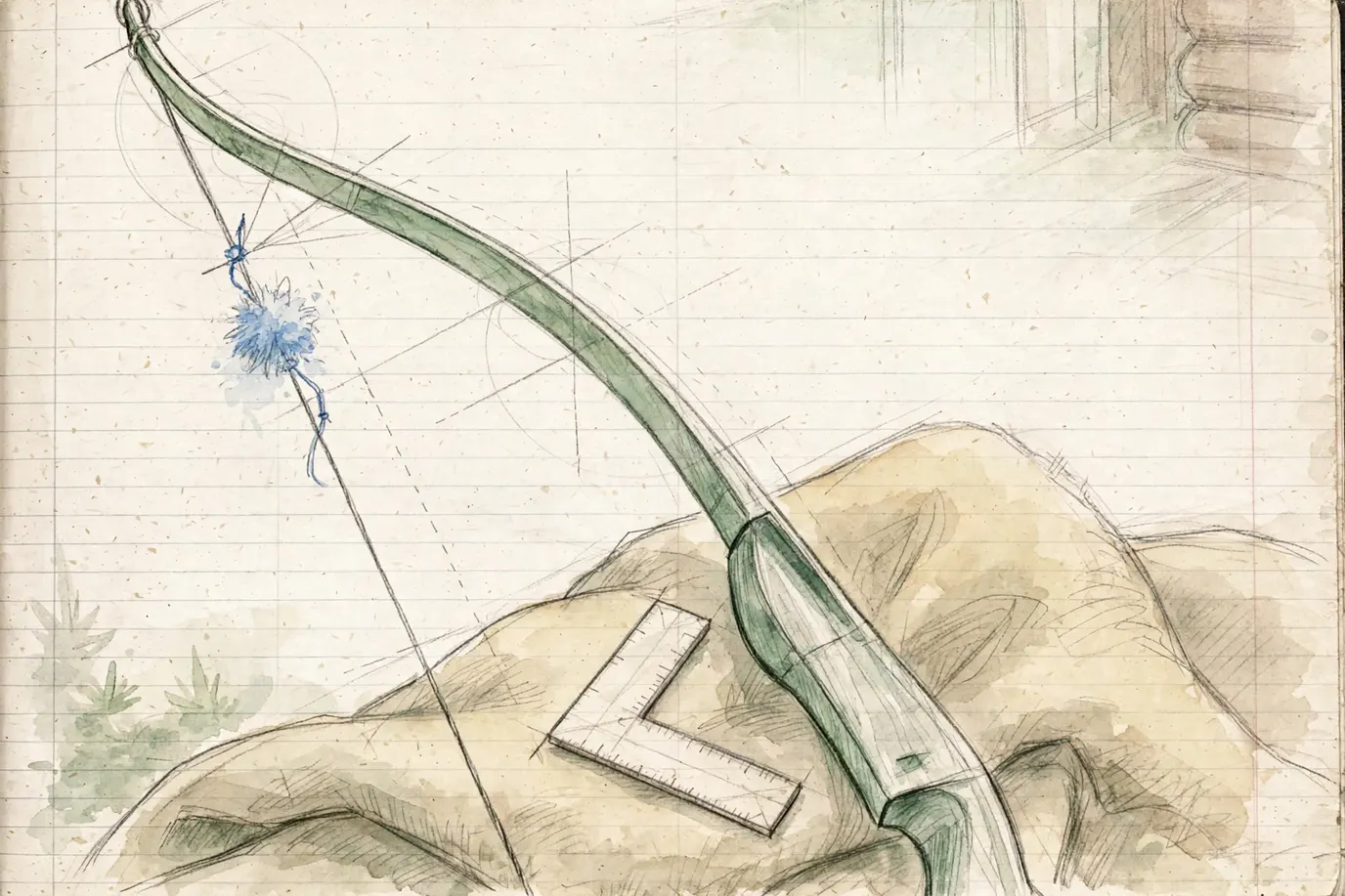
One more, from Archery 360: practice in your hunting clothes. Bulky sleeves can catch the string, and you'd rather learn that on a target bale than on opening morning.
Know your range, then shoot inside it
Here's where recurve bow hunting is honest with you. Archery 360 says recurves generally have a shorter effective hunting range than compounds, and that effective range depends more on the archer than on the bow. New Jersey's wildlife division puts a number on it for every kind of bow: you may be proficient at 40 yards in practice, but keep shots within 20 yards in the field.
My one opinion on this page: with a recurve, the 20-yard line is the whole plan, not a suggestion. The reason is in those two sources together. You can't hold yourself to a yardage you're guessing at, and a traditional bow without sights leaves no room for guessing. Range your landmarks when you sit down: the fence post, the big oak, the corner of the field. Rangefinders are on the hunting rangefinder page.
Hunting a recurve from a ground blind or a stand
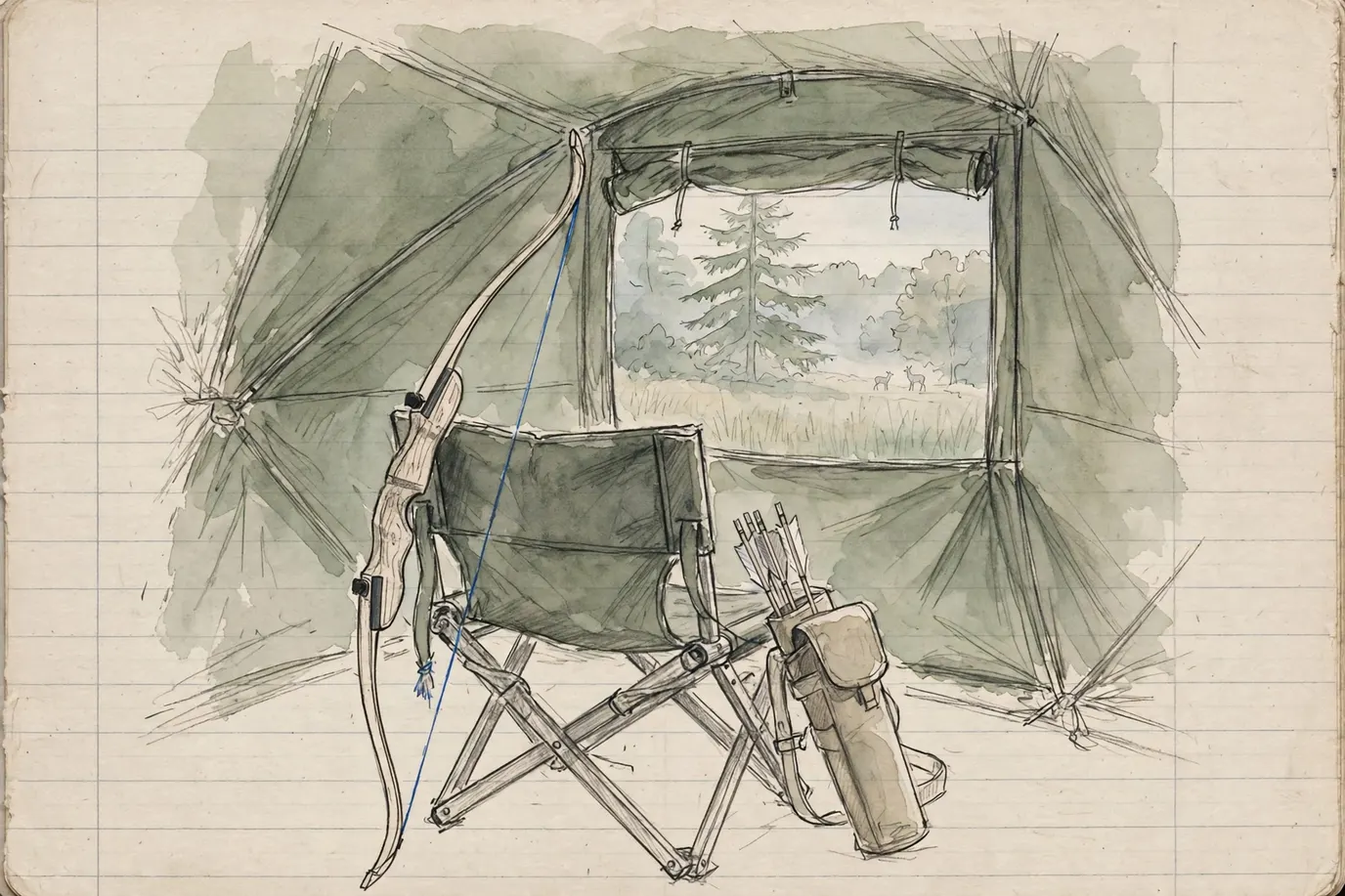
Ground blinds are where bow length shows. Sit in the blind with the bow before the season and draw it toward every window. If a limb tip hits the roof or the wall, that's your answer on length, or on chair height.
Stake the blind, every corner, and tie the wind ropes. The one time Hemlock Run skipped that, a pop-up blind ended up 40 yards downhill against a hemlock with nobody in it. Walt still points at the tree when he drives past. A recurve hunter who shoots from a blind wants it exactly where it was set, because every shooting lane was ranged from that spot. Blinds are on the ground blind page.
Tree stands and saddles give the limbs more room. Wisconsin DNR's safety advice applies to every bow: wear a safety harness, keep three points of contact when you climb, and raise and lower your bow on a haul line. Stands are on the tree stand page.
Who should skip recurve bow hunting this season
If you can't practice through the summer, wait a year or hunt with a compound this fall. In Archery 360's comparison, the compound is the bow most people get accurate with sooner, because its cams and draw stop do part of the work. That's not a knock on the recurve. It's a schedule problem.
Skip it too if you can't hold the weight your state requires at your draw for several seconds without shaking. A shaky hold at full draw is how good animals get wounded. Build up on lighter limbs and come back.
Draw weight and broadhead rules vary by state. Check your state wildlife agency before the season.
The rest is practice. Lots of it, at the yardages you'll actually shoot, in the coat you'll actually wear.
Brands in this list
Related
Questions people ask
What draw weight do I need for deer hunting with a recurve?
Archery 360 says a state's minimum draw weight for deer is usually about 35 lb, and recurve bowhunters commonly shoot 40 to 50 lb. The number that counts is the weight at your own draw length, since the marked weight is measured at 28 inches. Your state's rule is the floor; check your state wildlife agency before the season.
How far can you shoot a deer with a recurve bow?
Only as far as you can keep every arrow in a small group, and closer in the field than at the range. New Jersey's wildlife division puts it plainly: you may be good at 40 yards in practice, but keep hunting shots within 20 yards. Archery 360 adds that recurves generally have a shorter effective hunting range than compounds.
Is a recurve bow good for hunting?
Yes, if you practice enough. Archery 360 says archers fill freezers every season with recurves, and that effective range depends more on the archer than on the bow. The trade is a longer learning curve: you hold the full weight at full draw, release with your fingers and have no draw stop to make each shot the same.
What length recurve bow is best for hunting?
The one that fits your draw length first, then your hunting spot. Shorter bows are easier to handle inside a blind but stack sooner, so a short bow with a long draw feels harsh and loses consistency. Size it to your draw on the maker's chart, then pick the shortest option that stays smooth at your draw.
Can I hunt with a takedown recurve?
Yes. A takedown breaks down into a riser and two limbs, so it rides in a pack on the walk in, and moving up in weight means new limbs, not a new bow. Seat each limb fully and snug the bolts the way the maker's manual says, and never shoot it with a limb bolt backed off.
Sources
- Archery 360 (Archery Trade Association): Compounds vs. recurve bows — accessed 2026-10-22
- Archery 360 (Archery Trade Association): Compound and recurve bows offer the ultimate archery experience — accessed 2026-10-22
- Archery 360 (Archery Trade Association): Selecting the right bow for you — accessed 2026-10-22
- Archery 360 (Archery Trade Association): Start shooting archery this spring — accessed 2026-10-22
- Archery 360 (Archery Trade Association): Olympic recurve bow anatomy — accessed 2026-10-22
- Archery 360 (Archery Trade Association): Choosing the right recurve limbs — accessed 2026-10-22
- Archery 360 (Archery Trade Association): Archery Lingo: Arrow Weight — accessed 2026-10-22
- Archery 360 (Archery Trade Association): Understanding arrow fletchings — accessed 2026-10-22
- Archery 360 (Archery Trade Association): Should I shoot a right- or left-handed bow? — accessed 2026-10-22
- Hoyt: Traditional recurve owner's manual — accessed 2026-10-22
- Archery 360 (Archery Trade Association): All about ILF bows — accessed 2026-10-22
- Bowhunter: How to buy a new traditional bow — accessed 2026-10-22
- Bowhunter: Broadhead form and function — accessed 2026-10-22
- Improve Your Archery: Stacking, what it is and why it's bad — accessed 2026-10-22
- New Jersey Division of Fish and Wildlife: Uncertain of shot, use a deer tracker — accessed 2026-10-22
- Wisconsin DNR: Archery and crossbow safety tips — accessed 2026-10-22
- Easton: Arrow Tuning and Maintenance Guide — accessed 2026-10-22