Archery & Bowhunting · Gear type
Broadheads
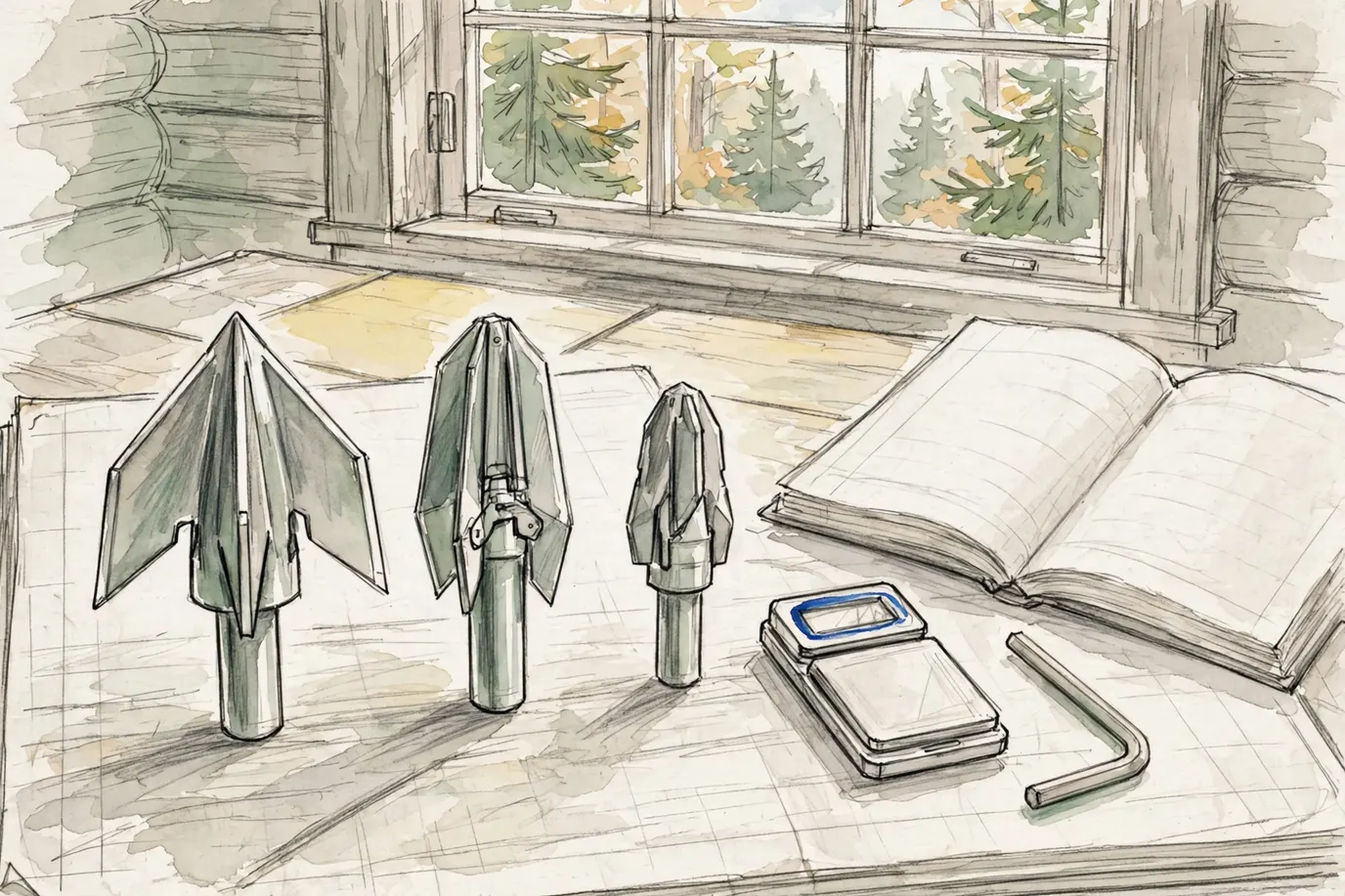
Broadheads are the sharp hunting points that screw onto the front of your arrow in place of a field point. You pick three things: the type (fixed blades, blades that open on impact, or a mix), the weight in grains your arrow was built around, and a cut size your bow can push through a deer. Get those right and tune with them. (I keep the grain weights in a spreadsheet. Uncle Walt keeps his in a coffee can labeled HEADS.)
We earn a commission if you buy through our links, at no cost to you. Disclosure
| Model | Weight | Type | Cutting diameter | Blades | Blade thickness | Heads per pack | Amazon |
|---|---|---|---|---|---|---|---|
Innerloc Blood Bug Air Bow BroadheadBroadhead | 50 grlisting | Fixedlisting | — | — | — | 3listing | Check price |
| 75 grlisting | — | 1.125 inlisting | — | — | 3listing | Check price | |
Muzzy 207Broadhead | 75 grlisting | Fixedlisting | 1 inlisting | 3listing | 0.02 inlisting | 6listing | Check price |
| 75 grlisting | Mechanicallisting | 1.25 inlisting | — | 0.036 inlisting | 3listing | Check price | |
Wasp Archery Products Bullet 75Broadhead | 75 grlisting | Fixedlisting | 1 inlisting | — | 0.027 inlisting | 3listing | Check price |
Wasp Archery Products Hammer SST 85Broadhead | 85 grlisting | — | 1.1875 inlisting | — | 0.027 inlisting | 3listing | Check price |
AC Allen Stryke IonBroadhead | 100 grlisting | Fixedlisting | 1 inlisting | — | — | 3listing | Check price |
| 100 grlisting | Fixedlisting | 1.125 inlisting | 3listing | 0.032 inlisting | 3listing | Check price | |
AC Allen Velox CX Terminus Crossbow BroadheadBroadhead More specs
| 100 grlisting | — | 1.375 inlisting | 3listing | 0.032 inlisting | 3listing | Check price |
AC Allen Stryke Therm-X 2 BladeBroadhead | 100 grlisting | Mechanicallisting | 2 inlisting | 2listing | 0.032 inlisting | 3listing | Check price |
Ballista 100 Grain Mechanical BroadheadsBroadhead More specs
| 100 grlisting | Mechanicallisting | — | 2listing | — | 3listing | Check price |
Barnett Gravedigger 4-Blade HybridBroadhead | 100 grlisting | Hybridlisting | 1.75 inlisting | 4listing | — | 3listing | Check price |
| 100 grlisting | Mechanicallisting | — | — | — | — | Check price | |
Barnett Gamecrusher Hybrid 100 GrainBroadhead More specs
| 100 grlisting | Hybridlisting | 2.5 inlisting | 4listing | — | — | Check price |
Bowmar Archery Beast BroadheadsBroadhead More specs
| 100 grlisting | Mechanicallisting | 2 inlisting | — | — | — | Check price |
| 100 grlisting | Mechanicallisting | 2.3 inlisting | — | — | 3listing | Check price | |
Carbon Express F-15Broadhead | 100 grlisting | Mechanicallisting | 1.375 inlisting | 2listing | 0.03 inlisting | 3listing | Check price |
CenterPoint Deadpoint Broadheads 3-PackBroadhead More specs
| 100 grlisting | Mechanicallisting | 2 inlisting | 2listing | 0.035 inlisting | 3listing | Check price |
Dead Ringer 100 Grain BroadheadsBroadhead | 100 grlisting | Mechanicallisting | 2.25 inlisting | 2listing | — | 3listing | Check price |
Dead Ringer Super Freak Extreme X Bow SeriesBroadhead More specs
| 100 grlisting | Mechanicallisting | 2.75 inlisting | 2listing | 0.032 inlisting | — | Check price |
Dead Ringer The SurgeonBroadhead | 100 grlisting | Fixedlisting | — | 3listing | 0.06 inlisting | 3listing | Check price |
Dead Ringer The ButcherBroadhead | 100 grlisting | — | 1.0625 inlisting | — | — | 3listing | Check price |
Dead Ringer Jiujitsu Point Small Game BroadheadBroadhead More specs
| 100 grlisting | — | — | — | — | 3listing | Check price |
Dead Ringer Just Nasty 2.0Broadhead More specs
| 100 grlisting | Hybridlisting | 2 inlisting | 2listing | — | — | Check price |
Dead Ringer Great WhiteBroadhead More specs
| 100 grlisting | Hybridlisting | 2.5 inlisting | 2listing | — | 3listing | Check price |
Excalibur X-Act 100 GrainBroadhead More specs
| 100 grlisting | Mechanicallisting | 1.4375 inlisting | 3listing | — | 3listing | Check price |
| 100 grlisting | — | 1.0625 inlisting | — | — | 3listing | Check price | |
| 100 grlisting | — | 1.0625 inlisting | — | — | 3listing | Check price | |
G5 Outdoors Deadmeat Expandable Crossbow 100 GrainBroadhead More specs
| 100 grlisting | Mechanicallisting | 1.5 inlisting | 3listing | — | — | Check price |
G5 Outdoors Montec M3 100 GrainBroadhead | 100 grlisting | — | — | — | — | 3listing | Check price |
G5 Outdoors Megameat Crossbow 100 GrainBroadhead More specs
| 100 grlisting | Mechanicallisting | 2 inlisting | 3listing | — | 3listing | Check price |
G5 Outdoors Striker X 100 GrainBroadhead | 100 grlisting | Fixedlisting | 1.25 inlisting | 4listing | — | 3listing | Check price |
| 100 grlisting | Fixedlisting | 1.375 inlisting | 3listing | — | — | Check price | |
| 100 grlisting | — | 2 inlisting | 3listing | 0.035 inlisting | — | Check price | |
| 100 grlisting | Fixedlisting | 1.1875 inlisting | — | — | 3listing | Check price | |
Grim Reaper Broadheads Pro Series Crossbow 100 GrainBroadhead More specs
| 100 grlisting | — | 1.5 inlisting | 3listing | — | — | Check price |
| 100 grlisting | — | — | — | — | — | Check price | |
Innerloc EXP 3 Blade 100 GrainBroadhead | 100 grlisting | — | 1.4375 inlisting | 3listing | — | 3listing | Check price |
Innerloc Stainless Extreme 100 gr.Broadhead | 100 grlisting | — | — | — | — | 3listing | Check price |
Innerloc Falcon 3 Blade 100 gr.Broadhead | 100 grlisting | — | 1 inlisting | 3listing | 0.027 inlisting | 3listing | Check price |






Innerloc Carbon Tuner 100 GrainBroadhead | 100 grlisting | Fixedlisting | 1.0625 inlisting | — | 0.027 inlisting | 3listing | Check price |
|---|---|---|---|---|---|---|---|
Innerloc 100/LT 100 GrBroadhead | 100 grlisting | — | — | — | — | 3listing | Check price |
Innerloc Slice 100 GrainBroadhead | 100 grlisting | — | 1.0625 inlisting | — | 0.027 inlisting | 3listing | Check price |
Innerloc Carnage 100 GrainBroadhead | 100 grlisting | Mechanicallisting | 1.5 inlisting | — | 0.04 inlisting | — | Check price |
| 100 grlisting | Mechanicallisting | 2 inlisting | 3listing | — | 3listing | Check price | |
Lwano 6PK 2 Blade MechanicalBroadhead More specs
| 100 grlisting | Mechanicallisting | 2 inlisting | 2listing | 0.035 inlisting | 6listing | Check price |
Lwano 3-Blade Fixed 6 PackBroadhead More specs
| 100 grlisting | Fixedlisting | — | 3listing | — | 6listing | Check price |
Lwano 3 Blade Fixed RedBroadhead More specs
| 100 grlisting | Fixedlisting | — | 3listing | — | — | Check price |
Lwano Crossbow Fixed 3 BladeBroadhead More specs
| 100 grlisting | Fixedlisting | 1.15 inlisting | 3listing | — | 6listing | Check price |
Lwano 2-Blade Rear-DeployingBroadhead More specs
| 100 grlisting | Mechanicallisting | 2.0625 inlisting | 2listing | — | — | Check price |
Magnus Stinger Buzzcut 2-BladeBroadhead | 100 grlisting | Fixedlisting | — | 2listing | — | 3listing | Check price |
Magnus 4 Blade Hornet Ser-RazorBroadhead | 100 grlisting | Fixedlisting | — | 4listing | 0.059 inlisting | 3listing | Check price |
Muzzy 209Broadhead | 100 grlisting | — | 1 inlisting | 4listing | 0.02 inlisting | 6listing | Check price |
Muzzy Trocar 3-BladeBroadhead | 100 grlisting | — | 1.1875 inlisting | 3listing | — | 3listing | Check price |
Muzzy Trocar CrossbowBroadhead More specs
| 100 grlisting | — | — | — | — | — | Check price |
Muzzy 225-MX3-3Broadhead | 100 grlisting | — | 1.25 inlisting | 3listing | 0.025 inlisting | 3listing | Check price |
Muzzy 3 Blade CrossbowBroadhead More specs
| 100 grlisting | — | 1.1875 inlisting | 3listing | 0.02 inlisting | 6listing | Check price |
Muzzy Trocar HBX HybridBroadhead More specs
| 100 grlisting | Hybridlisting | — | 4listing | — | — | Check price |
Muzzy Trocar HBX HybridBroadhead More specs
| 100 grlisting | Hybridlisting | — | 4listing | — | — | Check price |
Muzzy Trocar HB HybridBroadhead | 100 grlisting | Hybridlisting | — | 4listing | — | — | Check price |
Muzzy Trocar TI 100 Vertical BowBroadhead | 100 grlisting | — | — | — | 0.039 inlisting | 3listing | Check price |
New Archery Products ShockwaveBroadhead | 100 grlisting | Mechanicallisting | 1.25 inlisting | — | 0.03 inlisting | 3listing | Check price |
New Archery Products SpitfireBroadhead | 100 grlisting | Mechanicallisting | 1.5 inlisting | 3listing | — | 3listing | Check price |
New Archery Products HellrazorBroadhead More specs
| 100 grlisting | Fixedlisting | 1.125 inlisting | — | — | 3listing | Check price |
New Archery Products Spitfire MaxxBroadhead | 100 grlisting | Mechanicallisting | 1.75 inlisting | 3listing | — | 3listing | Check price |
New Archery Products Spitfire CrossbowBroadhead More specs
| 100 grlisting | Mechanicallisting | 1.5 inlisting | — | — | — | Check price |
New Archery Products Thunderhead CrossbowBroadhead More specs
| 100 grlisting | Fixedlisting | 1.1875 inlisting | 3listing | — | — | Check price |
New Archery Products KillzoneBroadhead | 100 grlisting | Mechanicallisting | 2 inlisting | — | — | — | Check price |
New Archery Products Killzone MaxxBroadhead | 100 grlisting | Mechanicallisting | 2.375 inlisting | 2listing | — | 3listing | Check price |
New Archery Products Killzone CrossbowBroadhead More specs
| 100 grlisting | Mechanicallisting | 2 inlisting | 2listing | — | 3listing | Check price |
New Archery Products Spitfire XXXBroadhead | 100 grlisting | Mechanicallisting | 2 inlisting | 3listing | — | 3listing | Check price |
New Archery Products Spitfire XXX CrossbowBroadhead More specs
| 100 grlisting | Mechanicallisting | 2 inlisting | 3listing | — | 3listing | Check price |
New Archery Products Slingblade CrossbowBroadhead More specs
| 100 grlisting | Mechanicallisting | 1.875 inlisting | 2listing | — | 3listing | Check price |
New Archery Products Spitfire Double CrossBroadhead More specs
| 100 grlisting | Mechanicallisting | 2 inlisting | — | — | — | Check price |
New Archery Products Thunderhead NitroBroadhead More specs
| 100 grlisting | Fixedlisting | 1.0625 inlisting | — | — | 3listing | Check price |
New Archery Products Spitfire EdgeBroadhead | 100 grlisting | — | 1.75 inlisting | 3listing | — | 3listing | Check price |
New Archery Products Spitfire MaxxBroadhead | 100 grlisting | — | — | — | — | 4listing | Check price |
| 100 grlisting | Hybridlisting | 1.75 inlisting | — | — | 3listing | Check price | |
New Archery Products Endgame 2-BladeBroadhead | 100 grlisting | Fixedlisting | 1.1875 inlisting | 2listing | 0.031 inlisting | 3listing | Check price |
New Archery Products Slingblade 4 Ti CrossbowBroadhead More specs
| 100 grlisting | Mechanicallisting | — | 4listing | 0.031 inlisting | 3listing | Check price |
Nika Archery 3-Blade 100 GrainBroadhead | 100 grlisting | — | 1.125 inlisting | 3listing | — | 6listing | Check price |
QAD Exodus Swept BladeBroadhead | 100 grlisting | — | — | — | — | — | Check price |
QAD Exodus Deep SixBroadhead | 100 grlisting | — | 1.25 inlisting | — | — | 3listing | Check price |
QAD Exodus Crossbow Swept BladeBroadhead More specs
| 100 grlisting | — | — | — | — | — | Check price |
Rage Crossbow X 2-BladeBroadhead More specs
| 100 grlisting | Mechanicallisting | 2 inlisting | 2listing | 0.035 inlisting | 3listing | Check price |
Rage Hypodermic 2-BladeBroadhead | 100 grlisting | Mechanicallisting | 2 inlisting | 2listing | 0.035 inlisting | 3listing | Check price |
Rage Xtreme TurkeyBroadhead More specs
| 100 grlisting | — | — | 2listing | — | 2listing | Check price |
Rage 3 Blade Chisel Tip SCBroadhead | 100 grlisting | Mechanicallisting | 1.6 inlisting | 3listing | — | 3listing | Check price |
Rage Chisel 3 Blade SCBroadhead | 100 grlisting | Mechanicallisting | 1.6 inlisting | 3listing | 0.035 inlisting | 3listing | Check price |
Rage Hypodermic Trypan NC CrossbowBroadhead More specs
| 100 grlisting | — | — | — | 0.039 inlisting | 3listing | Check price |
Ramcat Hydroshock-X CrossbowBroadhead More specs
| 100 grlisting | Fixedlisting | — | — | 0.032 inlisting | 3listing | Check price |
Ramcat DiamondbackBroadhead | 100 grlisting | Fixedlisting | — | — | 0.032 inlisting | 3listing | Check price |
Ravin R100 TitaniumBroadhead More specs
| 100 grlisting | Mechanicallisting | 2 inlisting | — | — | 3listing | Check price |
Ravin 100 Grain SteelBroadhead More specs
| 100 grlisting | Mechanicallisting | 2 inlisting | — | — | 3listing | Check price |
Ravin Steel Broadheads BundleBroadhead More specs
| 100 grlisting | Mechanicallisting | 2 inlisting | — | — | 6listing | Check price |
Slick Trick GrizzTrick Magnum ProBroadhead | 100 grlisting | — | 2.5 inlisting | — | 0.035 inlisting | — | Check price |
Slick Trick ViperTrick 1 1/16Broadhead | 100 grlisting | — | 1.9375 inlisting | — | 0.035 inlisting | 4listing | Check price |
Slick Trick 1 1/8 CrossbowBroadhead More specs
| 100 grlisting | — | 2.25 inlisting | — | 0.035 inlisting | 4listing | Check price |
Slick Trick Standard 1 InchBroadhead | 100 grlisting | — | 1 inlisting | — | — | 4listing | Check price |
Slick Trick Viper Trick 1 1/16Broadhead | 100 grlisting | — | 1.9375 inlisting | — | — | 3listing | Check price |
Slick Trick AssailantBroadhead | 100 grlisting | Hybridlisting | 2.625 inlisting | — | — | 3listing | Check price |
Steel Force Sabertooth HPBroadhead | 100 grlisting | — | — | 4listing | — | 3listing | Check price |
Swhacker #219 CrossbowBroadhead More specs
| 100 grlisting | Mechanicallisting | 1.75 inlisting | 2listing | — | 3listing | Check price |
Swhacker #207 Two-SliceBroadhead More specs
| 100 grlisting | Mechanicallisting | 2 inlisting | 2listing | — | 3listing | Check price |
Swhacker 100 Grain 1.75 CutBroadhead | 100 grlisting | Mechanicallisting | 1.75 inlisting | 2listing | 0.032 inlisting | 3listing | Check price |
Swhacker #253 Razor SeriesBroadhead | 100 grlisting | Fixedlisting | 1 inlisting | 4listing | — | 3listing | Check price |
Swhacker #262 Levi MorganBroadhead More specs
| 100 grlisting | Fixedlisting | 1.25 inlisting | 3listing | — | 3listing | Check price |
Swhacker #261 Levi MorganBroadhead | 100 grlisting | Mechanicallisting | 2 inlisting | 2listing | — | — | Check price |
Swhacker #254 Razor SeriesBroadhead | 100 grlisting | Fixedlisting | 1 inlisting | 4listing | — | 3listing | Check price |
Swhacker #307 Blade-LockBroadhead More specs
| 100 grlisting | Mechanicallisting | 2 inlisting | 2listing | 0.031 inlisting | 3listing | Check price |
Swhacker #311 Single-BevelBroadhead More specs
| 100 grlisting | Fixedlisting | 1.2 inlisting | 3listing | 0.031 inlisting | 3listing | Check price |
TenPoint Evo-X CenterpunchBroadhead More specs
| 100 grlisting | Mechanicallisting | 1.875 inlisting | 2listing | — | 3listing | Check price |
TenPoint Evo-X MontecBroadhead More specs
| 100 grlisting | Fixedlisting | 1.125 inlisting | 3listing | — | 3listing | Check price |
TenPoint NemesisBroadhead More specs
| 100 grlisting | Mechanicallisting | 3.75 inlisting | 4listing | — | 3listing | Check price |
TenPoint Wicked Ridge DemiseBroadhead More specs
| 100 grlisting | Mechanicallisting | 2 inlisting | 2listing | 0.032 inlisting | 3listing | Check price |
TenPoint Nemesis TitaniumBroadhead More specs
| 100 grlisting | Mechanicallisting | 3.75 inlisting | 4listing | 0.036 inlisting | 3listing | Check price |
TRUGLO Titanium X 4-BladeBroadhead | 100 grlisting | Fixedlisting | 1.1875 inlisting | 4listing | 0.031 inlisting | 3listing | Check price |
TRUGLO Titanium X CrossbowBroadhead More specs
| 100 grlisting | Fixedlisting | 1.1875 inlisting | 4listing | 0.031 inlisting | 3listing | Check price |
Wasp Archery Products Jak-KnifeBroadhead | 100 grlisting | Mechanicallisting | 2 inlisting | — | 0.036 inlisting | 3listing | Check price |
Wasp Archery Products SharpShooterBroadhead | 100 grlisting | Fixedlisting | 1 inlisting | — | — | 3listing | Check price |
Wasp Archery Products Jak-Hammer SSTBroadhead | 100 grlisting | Mechanicallisting | 1.75 inlisting | — | — | — | Check price |
| 100 grlisting | Fixedlisting | 1.125 inlisting | 3listing | 0.027 inlisting | 3listing | Check price | |
| 100 grlisting | Fixedlisting | 1.0625 inlisting | 4listing | 0.027 inlisting | 3listing | Check price | |
Wasp Archery Products Bullet 100Broadhead | 100 grlisting | Fixedlisting | 1 inlisting | — | 0.027 inlisting | 3listing | Check price |
Wasp Archery Products Hammer SST 100Broadhead | 100 grlisting | — | 1.1875 inlisting | — | 0.027 inlisting | 3listing | Check price |
| 100 grlisting | Mechanicallisting | 1.75 inlisting | — | 0.036 inlisting | 3listing | Check price | |
Wasp Archery Products Jak X CrossbowBroadhead More specs
| 100 grlisting | Mechanicallisting | 1.75 inlisting | — | 0.027 inlisting | 3listing | Check price |
Wasp Archery Products Crossbow Boss 100Broadhead More specs
| 100 grlisting | Fixedlisting | 1.125 inlisting | — | 0.027 inlisting | 3listing | Check price |
Wasp Archery Products Drone Deep 6Broadhead | 100 grlisting | Fixedlisting | 1.125 inlisting | — | 0.027 inlisting | 3listing | Check price |
AC Allen Velox Photon 125 GrainBroadhead | 125 grlisting | — | 1.25 inlisting | 3listing | 0.032 inlisting | 3listing | Check price |
| 125 grlisting | Mechanicallisting | 2 inlisting | — | — | 3listing | Check price | |
| 125 grlisting | Mechanicallisting | 2.3 inlisting | — | — | 3listing | Check price | |
G5 Outdoors Megameat 125 Grain MM101Broadhead | 125 grlisting | Mechanicallisting | 2 inlisting | 3listing | — | 3listing | Check price |
| 125 grlisting | — | 1.375 inlisting | 3listing | 0.035 inlisting | — | Check price | |
| 125 grlisting | — | 1.75 inlisting | — | — | — | Check price | |
Grim Reaper Broadheads Razorcut 125 GrainBroadhead More specs
| 125 grlisting | — | 1.375 inlisting | 3listing | — | — | Check price |
| 125 grlisting | — | 1.75 inlisting | — | — | — | Check price | |
| 125 grlisting | — | — | — | — | 3listing | Check price | |
| 125 grlisting | — | 1.5 inlisting | — | — | 3listing | Check price | |
| 125 grlisting | Mechanicallisting | 1.25 inlisting | — | — | 3listing | Check price | |
| 125 grlisting | Mechanicallisting | 1.25 inlisting | — | — | 3listing | Check price | |
Grim Reaper Broadheads PRO Series X Bow 2-Inch 125 GrainBroadhead More specs
| 125 grlisting | Mechanicallisting | 2 inlisting | 2listing | — | — | Check price |
| 125 grlisting | — | — | — | — | 3listing | Check price | |
Magnus Stinger 4 BladeBroadhead | 125 grlisting | — | — | 4listing | — | 3listing | Check price |
Magnus Stinger Buzzcut 4-BladeBroadhead | 125 grlisting | Fixedlisting | — | 4listing | — | 3listing | Check price |
Magnus 4 Blade Hornet Ser-RazorBroadhead | 125 grlisting | Fixedlisting | — | 4listing | 0.059 inlisting | 3listing | Check price |
Magnus SB125 Single BevelBroadhead More specs
| 125 grlisting | Fixedlisting | 1.0625 inlisting | 2listing | 0.047 inlisting | 3listing | Check price |
Muzzy Muzzy One 125 grBroadhead More specs
| 125 grlisting | — | — | — | — | — | Check price |
Muzzy Trocar TI CrossbowBroadhead More specs
| 125 grlisting | — | — | — | 0.039 inlisting | 3listing | Check price |
New Archery Products Thunderhead 125Broadhead | 125 grlisting | Fixedlisting | — | — | — | — | Check price |
New Archery Products Thunderhead Crossbow 125 grBroadhead More specs
| 125 grlisting | Fixedlisting | — | — | — | 5listing | Check price |
New Archery Products Hellrazor CrossbowBroadhead More specs
| 125 grlisting | Fixedlisting | 1.125 inlisting | — | — | 3listing | Check price |
QAD Exodus Crossbow Full BladeBroadhead More specs
| 125 grlisting | — | 1.25 inlisting | — | — | — | Check price |
QAD Exodus BC125-S CrossbowBroadhead More specs
| 125 grlisting | Fixedlisting | — | — | — | — | Check price |
QAD Exodus Full BladeBroadhead | 125 grlisting | Fixedlisting | — | — | — | — | Check price |
Rage Hypodermic NC +PBroadhead | 125 grlisting | — | 1.75 inlisting | 2listing | 0.035 inlisting | 3listing | Check price |
Rage Crossbow X NCBroadhead More specs
| 125 grlisting | — | — | — | — | — | Check price |
Slick Trick Magnum 1 1/8Broadhead More specs
| 125 grlisting | — | 2.25 inlisting | — | 0.035 inlisting | 4listing | Check price |
Steel Force Phat HeadBroadhead | 125 grlisting | Fixedlisting | 1.125 inlisting | — | 0.08 inlisting | — | Check price |
Steel Force Sabertooth HPBroadhead | 125 grlisting | — | 1.1875 inlisting | — | 0.048 inlisting | 3listing | Check price |
Steel Force Premium 4 BladeBroadhead | 125 grlisting | — | — | 4listing | — | 3listing | Check price |
Swhacker #202 Two-SliceBroadhead More specs
| 125 grlisting | Mechanicallisting | 2.25 inlisting | 2listing | — | 3listing | Check price |
Swhacker Crossbow Steel 2 inBroadhead More specs
| 125 grlisting | Mechanicallisting | 2 inlisting | — | — | 3listing | Check price |
Swhacker #263 Levi MorganBroadhead | 125 grlisting | Mechanicallisting | 1.75 inlisting | 2listing | — | 3listing | Check price |
Swhacker #264 Levi MorganBroadhead | 125 grlisting | Mechanicallisting | 1.75 inlisting | 2listing | — | 3listing | Check price |
Swhacker #269 Levi MorganBroadhead | 125 grlisting | Mechanicallisting | 2.5 inlisting | 2listing | — | 3listing | Check price |
Swhacker #282 Hank ParkerBroadhead More specs
| 125 grlisting | Mechanicallisting | 2.25 inlisting | 2listing | — | 3listing | Check price |
| 125 grlisting | Mechanicallisting | 1.75 inlisting | — | 0.036 inlisting | 3listing | Check price | |
| 125 grlisting | Fixedlisting | 1.375 inlisting | 3listing | 0.027 inlisting | 3listing | Check price | |
Wasp Archery Products Havalon HV 125Broadhead | 125 grlisting | — | — | — | — | 3listing | Check price |
Excalibur Boltcutter 150 GrainBroadhead More specs
| 150 grlisting | Fixedlisting | 1.0625 inlisting | — | — | 3listing | Check price |
Excalibur Boltcutter B.A.T. 150 GrainBroadhead More specs
| 150 grlisting | — | 1.0625 inlisting | — | — | 1listing | Check price |
Excalibur Trailblazer 150 GrainBroadhead More specs
| 150 grlisting | Mechanicallisting | 2 inlisting | 3listing | — | 3listing | Check price |
Killer Instinct Killertech 150Broadhead More specs
| 150 grlisting | Fixedlisting | 1.75 inlisting | — | 0.07 inlisting | 3listing | Check price |
Magnus Stinger 2 BladeBroadhead | 150 grlisting | Fixedlisting | — | 2listing | — | 3listing | Check price |
Magnus SB150 Single BevelBroadhead More specs
| 150 grlisting | Fixedlisting | 1.0313 inlisting | — | 0.059 inlisting | 3listing | Check price |
| 150 grlisting | Fixedlisting | 1 inlisting | — | — | 3listing | Check price | |
Barnett Demun Helical BroadheadBroadhead More specs
| — | — | — | — | — | 12listing | Check price |
Bowmar Archery Beast Broadheads Trump EditionBroadhead More specs
| — | — | — | — | — | — | Check price |
Bowmar Archery Beast Broadheads Trump EditionBroadhead More specs
| — | — | — | — | — | — | Check price |
Bowmar Archery Beast Broadheads Trump EditionBroadhead More specs
| — | — | — | — | — | — | Check price |
Bowmar Archery Beast Broadheads Trump EditionBroadhead More specs
| — | — | — | — | — | — | Check price |
| — | Mechanicallisting | — | — | — | 3listing | Check price | |
| — | Mechanicallisting | 1.5 inlisting | 3listing | — | 3listing | Check price | |
Magnus 4 Blade HornetBroadhead More specs
| — | Fixedlisting | — | 4listing | 0.059 inlisting | 3listing | Check price |
Muzzy 281 MERCBroadhead | — | — | 1.125 inlisting | 3listing | 0.03 inlisting | — | Check price |
New Archery Products HellrazorBroadhead | — | Fixedlisting | 1.125 inlisting | — | — | 3listing | Check price |
QAD Exodus QBE100SBroadhead | — | — | — | — | — | — | Check price |
Rage 2 Blade Chisel Tip NCBroadhead | — | Mechanicallisting | 2 inlisting | 2listing | 0.035 inlisting | — | Check price |
Rage Hypo 2 CrossbowBroadhead More specs
| — | — | 2 inlisting | 2listing | — | 4listing | Check price |
Ravin Aluminum Broadheads BundleBroadhead | — | — | — | — | — | 6listing | Check price |
| — | — | — | — | — | 15listing | Check price | |
| — | — | — | — | — | 15listing | Check price | |
| — | — | — | — | — | 6listing | Check price | |
| — | — | — | — | — | 12listing | Check price | |
| — | — | — | — | — | 12listing | Check price | |
Slick Trick Mag Blades 1-1/8Broadhead | — | — | 1.125 inlisting | — | 0.035 inlisting | 4listing | Check price |
Slick Trick 1-1/4 GT 2 BladeBroadhead | — | — | 1.25 inlisting | 2listing | 0.035 inlisting | 4listing | Check price |
Slick Trick 1-1/8 XbowBroadhead More specs
| — | — | 1.125 inlisting | — | 0.035 inlisting | 4listing | Check price |
Slick Trick Torch Rear DeployBroadhead More specs
| — | Mechanicallisting | — | 2listing | — | — | Check price |
Steambow AR-Series BroadheadsBroadhead | — | — | — | — | — | 3listing | Check price |
Swhacker #261 Levi Morgan BundleBroadhead | — | Mechanicallisting | — | — | — | 4listing | Check price |
| — | — | — | — | — | 6listing | Check price | |
Wasp Archery Products MortemBroadhead | — | — | — | 3listing | — | — | Check price |


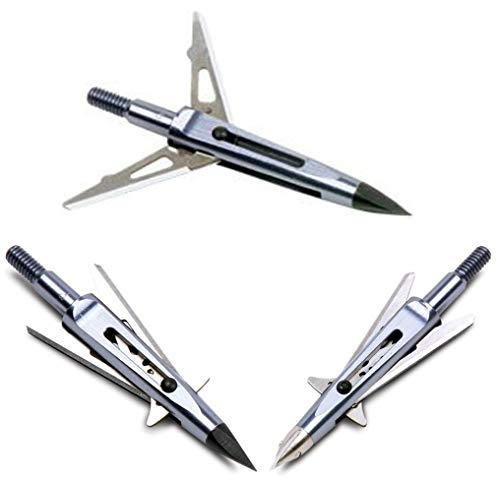


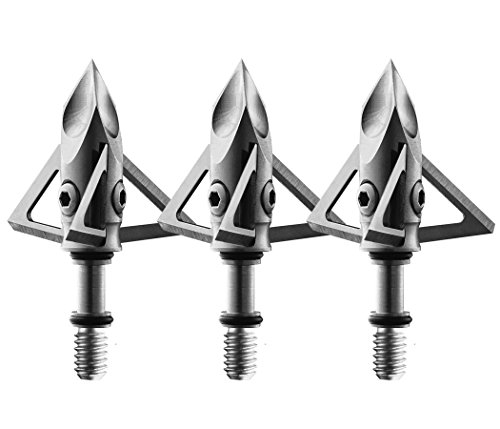


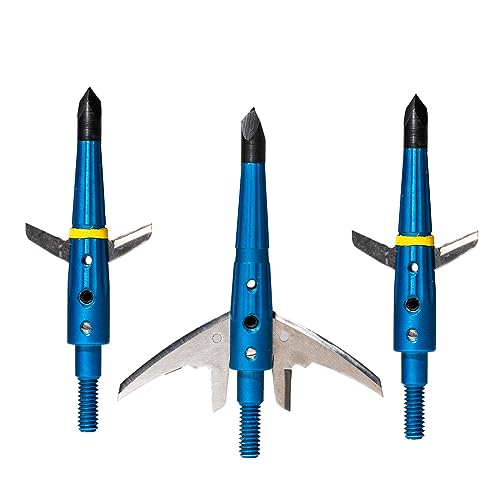


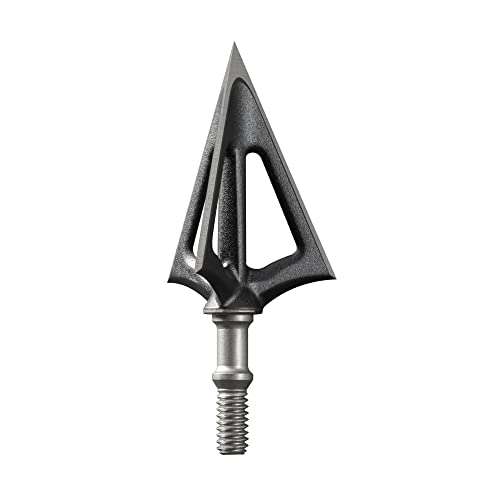


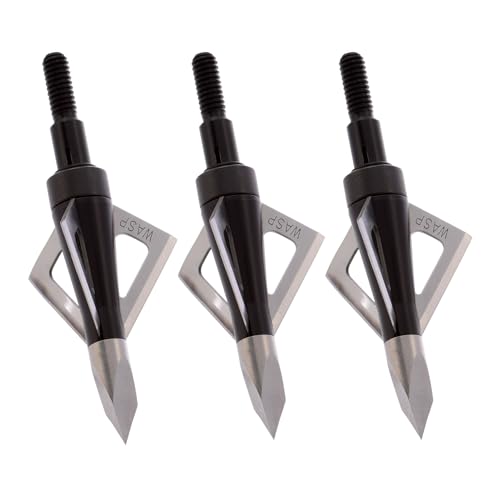


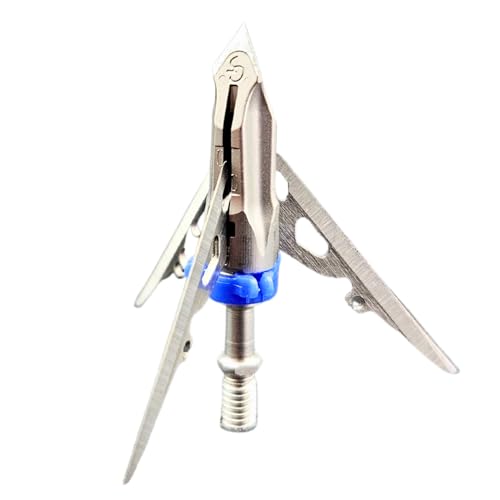


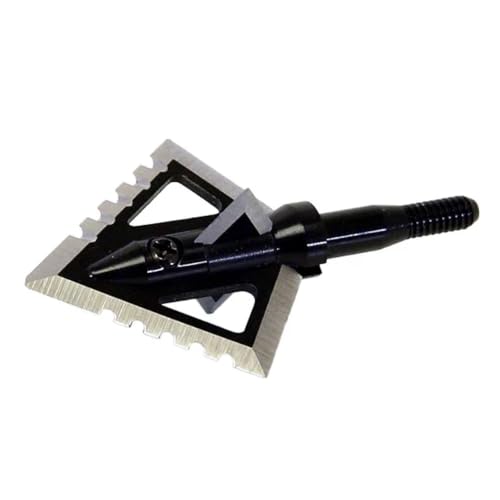


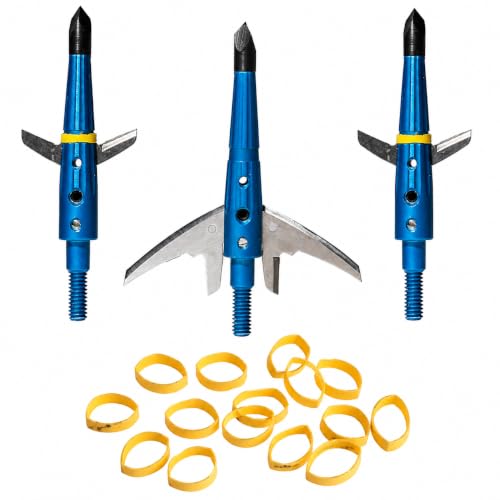


What’s in this listEvery broadhead we track on Amazon US — fixed, mechanical and hybrid — by grain weight. “—” means neither the maker nor the Amazon listing states it.
What a broadhead does that a field point doesn't
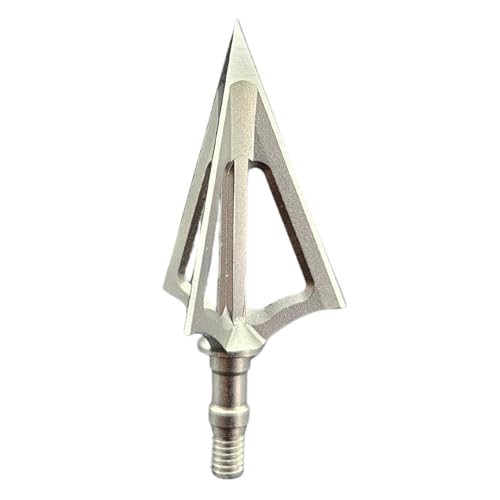
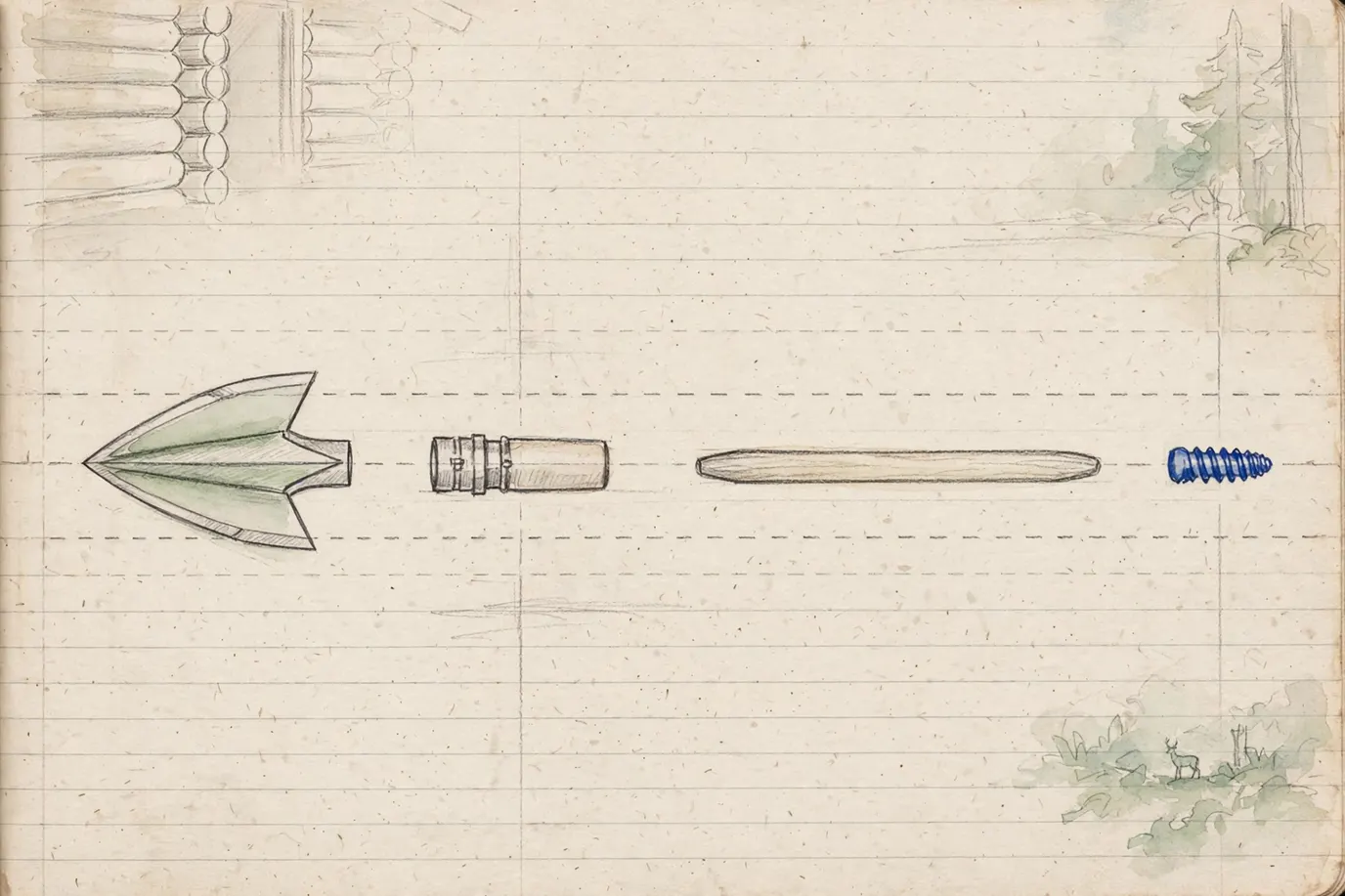
A field point is a blunt practice tip. A broadhead is the hunting point: two or more sharpened blades around a center body called the ferrule, with a threaded stud on the back. Archery 360 puts it simply: broadheads are for hunting. Screw-in inserts glued into the shaft are what let you swap between practice points and broadheads on the same arrow.
That swap is the whole system. You practice all summer with field points, then thread on broadheads of the same weight and confirm they hit the same spot. If they don't, you tune until they do (more on that below). The arrows themselves are on the hunting arrows page.
The table on this page lists every broadhead we track, fixed, mechanical and hybrid, sorted by grain weight. It shows type, weight, cutting diameter, blade count, blade thickness and pack count as the maker or the Amazon listing states them (the table marks values that come from the listing). A dash means neither states it.
The three broadhead types and when each one fits
Here's what actually changes between the three. Each type has its own page with the deciding specs worked out in detail.
- Fixed blade: blades never move. GOHUNT describes them staying put before, during and after impact. More on the fixed blade broadheads page.
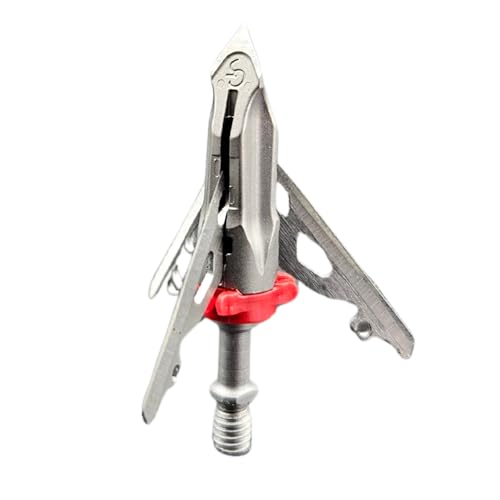
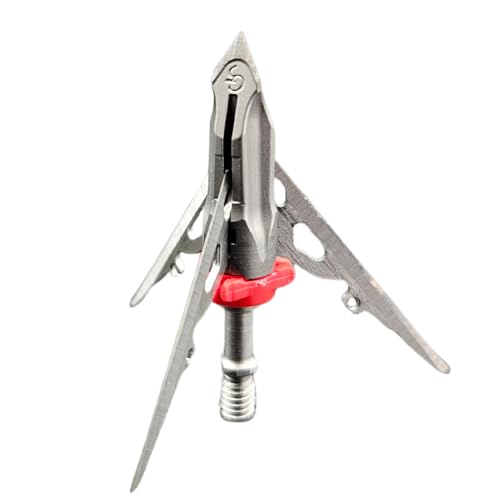
- Mechanical: blades ride folded close to the ferrule in flight and open on impact. They're also called expandable. More on the mechanical broadheads page.
- Hybrid: a set of fixed blades plus a set that opens. One pair of hybrid heads in Archery Business carried two fixed and two expandable blades each.
The short version of the trade, from GOHUNT's breakdown: fixed heads are less forgiving and will show you every tuning or form problem you have. Mechanicals are more forgiving and often hit with field points out of the box. Deploying blades costs some energy, which is why they're usually not recommended for light setups.
(Uncle Walt's position on mechanical broadheads is that he doesn't trust anything with a hinge he can't see. He says this while sitting on a folding chair.)
Hybrids list two cut sizes, so read both
A hybrid is a small fixed head with a second set of blades that open behind it. The pair in Archery Business list two numbers each: 1-1/8 inches for the fixed blades and 1-5/8 inches with the expandable blades open. Our table stores the larger number, so check the maker's page for the fixed cut too.
Retention differs by version. The bow model in that article holds its folding blades with an O-ring, and the crossbow model uses a friction washer. That's a good reminder that a hybrid still has moving parts, and those parts need the same checks as any mechanical.
Which type for which hunt
GOHUNT's author reaches for mechanicals on longer shots or in higher wind, and fixed heads on heavy-boned, tough animals where penetration comes first. The Union Sportsmen's Alliance adds that large heads can plane (veer off line) at long range, so Western hunters shooting 50 yards or more often go compact. Pick the one your bow tunes best with.
What to look at when you pick broadheads
The table shows six fields. Here's how to read each one, in the order I check them.
Match grain weight to the arrow you already tuned
Weight is listed in grains, the small unit arrow people use (437.5 grains to the ounce). Archery 360 calls 100 grains par for compound arrows. Points under 100 suit bows at about 50 lb and lighter. Points over 100 add weight for penetration.
Weight isn't a free choice, though. Most spine charts assume a 100-grain point, and Archery 360 notes that adding weight up front makes the shaft act weaker. Easton's tuning guide treats broadhead weight as a tuning lever: heavier heads correct arrows that act stiff, lighter heads correct ones that act weak.
My one opinion on this page: there's no universally "best" broadhead grain, only the one that matches your setup. The checkable reason is in Easton's guide. A heavier head moves where the broadhead group lands, so the right weight is whichever one groups with your tuned field points.
Cutting diameter is the widest cut the blades make
Cutting diameter is how wide the blades cut, in inches, as the maker or the listing states it. For a mechanical head that's the opened width. Petersen's Hunting says most fixed heads cut about 1-1/4 inches, while mechanicals commonly cut 1-1/2 to 2 inches, with some going past 2.
Bigger isn't automatically better. Wider blades on a fixed head catch more air, and wider blades on a mechanical take more energy to push through. The two sub-type pages cover how to size each one.
Blade count changes the cut, not just the look
The "Blades" column counts cutting blades. GOHUNT lists fixed heads in 2, 3 and 4-blade versions, with mechanicals most often 2 or 3. Its rule of thumb: fewer blades generally penetrate better, more blades generally cut more tissue. Blade design can shift that either way.
Blade thickness is the maker's stated steel stock
Blade thickness is given in thousandths of an inch. Not every maker or listing states it, so expect dashes. When it's there, it's the one field in the table that tells you how much steel each blade carries. Read it next to the type: a thin blade that folds into a ferrule and a thick blade bolted to one are built for different jobs.
Pack count tells you how many you can practice with
Most broadheads come in packs of three. That number matters more than it looks. Bowhunter's prep guide suggests shooting only broadheads for the last two weeks before the season, with three arrows tipped with your hunting head, and keeping heads just for practice. Count on a pack for practice and a pack for the hunt.
Crossbow-rated means the maker says so
Some heads come in a crossbow version or carry a speed rating. G5 says fixed heads work the same from a compound or a crossbow, but it recommends only the crossbow version of its expandable heads on a crossbow. Our crossbow list includes a head only when its maker states crossbow use. Details are on the crossbow broadheads page.
Broadheads for compound bow setups
Compound bow broadheads are where all three types are common, because a modern compound usually has the energy to open a mechanical. Makers of expandable heads publish kinetic energy floors, and G5 and New Archery Products both list theirs in the 40 to 50 ft-lb range for deer-size game.
Fletching matters here too. Archery 360's compound arrow guide says fixed heads need more steering and recommends 2 to 3-inch fletching, while mechanicals get by with less. If you shoot feathers off a shelf, the recurve bow page is the better start.
Other broadhead types worth knowing
A few narrower jobs get their own pages:
- Crossbow broadheads: heads sold in a crossbow version or rated for crossbow speeds
- Turkey broadheads: heads sold for turkey and head shots
- Single bevel broadheads: fixed heads sharpened on one side of each blade
- 100 grain broadheads: the par weight, all types together
The head-to-head on the two big types is in the mechanical vs fixed broadheads guide.
How to set up and tune broadheads before the season
Bowhunter's prep guide and Easton's tuning guide line up into one routine:
- Spin-test. Thread each head onto its arrow and spin it. Wobble at the tip means a bad head or a shaft end that isn't square.
- Weigh. Put each head on a scale that reads grains and compare it to the stated weight.
- Tune with field points first. Easton says broadhead tuning only works after field points group well.
- Shoot both groups. From 20 to 30 yards, shoot 3 or 4 field points, then 3 or 4 broadheads at the same aiming spot.
- Fix height first. Broadheads high means move the nocking point up; low means move it down.
- Then left and right. For a right-handed archer, broadheads left act stiff and broadheads right act weak.
- One change at a time. Easton moves rests in 1/32-inch steps.
Easton's caution goes on its own line: never shoot a broadhead on an unfletched shaft, because flight is extremely erratic and dangerous.
Quick math on those energy floors. Kinetic energy grows with arrow weight and with the square of speed; New Archery Products divides grains × speed² by 450,240. So 425 grains at 280 FPS (feet per second) works out to about 74 ft-lb. (I did that on the back of a Wawa receipt. Walt checked it on a calculator older than me.)
Keep broadheads sharp and covered
A broadhead can cut you through a glove, so handle it like a knife. Keep heads in a covered quiver or case, thread them on with a broadhead wrench instead of your fingers, and point the blades away from yourself and others.
Oregon's wildlife department says to make sure broadheads are safely covered, and Wisconsin DNR recommends a covered quiver to protect you and the points.
Sharpness is checkable. Bowhunter's guide gives two tests: a sharp edge grabs and holds on a thumbnail, and it slices paper with an even stroke. Heads that fail either test stay home. Sharpening steps are in the how to sharpen broadheads guide.
Practice into a target built for broadheads; field-point bags aren't made for blades. Those are on the broadhead target page.
Broadhead rules depend on where you hunt
States set their own minimums. Minnesota, for one, requires big-game arrowheads to be sharp, barbless, at least 7/8 inch wide, with two or more metal cutting edges. Broadhead rules vary by state, so check your state wildlife agency before the season.
Who can skip this page
If you only shoot targets or 3D, you don't need broadheads at all. Field points are cheaper to lose and kinder to your target. And if your bow isn't tuned with field points yet, broadheads won't fix it. Tune first, then come back with a pack and the logbook.
Brands in this list
Related
Questions people ask
What is a broadhead?
A broadhead is the hunting point on an arrow or crossbow bolt. It has two or more sharp blades instead of the blunt tip of a field point. Most screw into a threaded insert in the shaft, so you can practice with field points and swap to broadheads of the same weight for the hunt. Blades are either fixed in place or fold in flight and open on impact.
What grain broadhead for deer?
Use the weight your arrows were spined for. Archery 360 treats 100 grains as the par weight and notes that most spine charts assume a 100-grain point. Heads over 100 grains add weight for penetration, and a heavier point makes the shaft act weaker, so a jump to 125 may call for a stiffer spine. Match your field points to the broadhead weight.
What grain broadhead for crossbow?
Start with what the crossbow maker built its bolts around. One maker designs its arrows for a 100-grain point and says 125 or 150-grain heads can work but need shoot-testing. Grand View Outdoors notes crossbow heads come in 85, 100 and 125 grains, with 100 the most common. Check the bolt's minimum weight in the manual first.
Do broadheads fly like field points?
Not exactly, even at the same weight. A broadhead's blades act like small wings, so it can hit a different spot than a field point. Easton's tuning guide says to tune with field points first, then shoot a group of 3 or 4 broadheads at the same aiming spot from 20 to 30 yards and adjust until the groups land together.
Can I reuse a broadhead?
Sometimes. Fixed heads with exposed edges can be resharpened, and heads with replaceable blades take fresh blades. Bowhunter's prep guide treats mechanicals as one head per animal, and retires any head that shows wear or a blade problem in practice. Spin-test any reused head on its arrow before you trust it again.
Sources
- Archery 360 (Archery Trade Association): Compound bow arrows — accessed 2026-10-21
- Easton: Arrow Tuning and Maintenance Guide — accessed 2026-10-21
- Bowhunter: Get broadheads ready for opening day — accessed 2026-10-21
- GOHUNT: Broadhead breakdown, the pros and cons of fixed blade and mechanical broadheads — accessed 2026-10-21
- Petersen's Hunting: Fixed vs. mechanical broadheads — accessed 2026-10-21
- Archery Business: Two new-for-2019 hybrid broadheads — accessed 2026-10-21
- G5 Outdoors: Frequently asked questions — accessed 2026-10-21
- New Archery Products: FAQ — accessed 2026-10-21
- TenPoint: What broadhead and broadhead weight do you recommend? — accessed 2026-10-21
- Grand View Outdoors: Choosing a crossbow broadhead — accessed 2026-10-21
- Union Sportsmen's Alliance: Choosing the perfect broadhead — accessed 2026-10-21
- Oregon Department of Fish and Wildlife: Bow shooting safety — accessed 2026-10-21
- Wisconsin DNR: Archery and crossbow safety tips — accessed 2026-10-21
- Minnesota Statutes 97B.211: Possession and use of archery equipment — accessed 2026-10-21