Archery & Bowhunting · Gear type
Fixed Blade Broadheads
Fixed blade broadheads have blades that never move: what you see in the package is what hits the deer. No bands, no hinges, nothing to open, so none of the arrow's energy goes into deployment. The price is tuning. Fixed blades sit out in the air the whole flight, so your bow has to be set up well for them to group with field points. Pick the cut and the blade design first, then plan a weekend at the target. (Walt calls that weekend "the good part." Walt also enjoys raking leaves.)
We earn a commission if you buy through our links, at no cost to you. Disclosure
| Model | Weight | Cutting diameter | Blades | Blade thickness | Heads per pack | Amazon |
|---|---|---|---|---|---|---|
Killer Instinct Killertech 150Broadhead More specs
| 150 grlisting | 1.75 inlisting | — | 0.07 inlisting | 3listing | Check price |
Grim Reaper Broadheads Razorcut 100 GrainBroadhead More specs
| 100 grlisting | 1.375 inlisting | 3listing | — | — | Check price |
Wasp Archery Products Boss SST 3-Blade 125Broadhead More specs
| 125 grlisting | 1.375 inlisting | 3listing | 0.027 inlisting | 3listing | Check price |
G5 Outdoors Striker X 100 GrainBroadhead More specs
| 100 grlisting | 1.25 inlisting | 4listing | — | 3listing | Check price |
Swhacker #262 Levi MorganBroadhead More specs
| 100 grlisting | 1.25 inlisting | 3listing | — | 3listing | Check price |
Swhacker #311 Single-BevelBroadhead More specs
| 100 grlisting | 1.2 inlisting | 3listing | 0.031 inlisting | 3listing | Check price |
Grim Reaper Broadheads Hades 100 GrainBroadhead More specs
| 100 grlisting | 1.1875 inlisting | — | — | 3listing | Check price |
New Archery Products Thunderhead CrossbowBroadhead More specs
| 100 grlisting | 1.1875 inlisting | 3listing | — | — | Check price |
New Archery Products Endgame 2-BladeBroadhead More specs
| 100 grlisting | 1.1875 inlisting | 2listing | 0.031 inlisting | 3listing | Check price |
TRUGLO Titanium X 4-BladeBroadhead More specs
| 100 grlisting | 1.1875 inlisting | 4listing | 0.031 inlisting | 3listing | Check price |
TRUGLO Titanium X CrossbowBroadhead More specs
| 100 grlisting | 1.1875 inlisting | 4listing | 0.031 inlisting | 3listing | Check price |
Lwano Crossbow Fixed 3 BladeBroadhead More specs
| 100 grlisting | 1.15 inlisting | 3listing | — | 6listing | Check price |
AC Allen Velox Stainless-Steel Ballistic 100 GrainBroadhead More specs
| 100 grlisting | 1.125 inlisting | 3listing | 0.032 inlisting | 3listing | Check price |
New Archery Products HellrazorBroadhead More specs
| — | 1.125 inlisting | — | — | 3listing | Check price |
New Archery Products HellrazorBroadhead More specs
| 100 grlisting | 1.125 inlisting | — | — | 3listing | Check price |
New Archery Products Hellrazor CrossbowBroadhead More specs
| 125 grlisting | 1.125 inlisting | — | — | 3listing | Check price |
Steel Force Phat HeadBroadhead More specs
| 125 grlisting | 1.125 inlisting | — | 0.08 inlisting | — | Check price |
TenPoint Evo-X MontecBroadhead More specs
| 100 grlisting | 1.125 inlisting | 3listing | — | 3listing | Check price |
Wasp Archery Products Boss SST 3 BladeBroadhead More specs
| 100 grlisting | 1.125 inlisting | 3listing | 0.027 inlisting | 3listing | Check price |
Wasp Archery Products Crossbow Boss 100Broadhead More specs
| 100 grlisting | 1.125 inlisting | — | 0.027 inlisting | 3listing | Check price |
Wasp Archery Products Drone Deep 6Broadhead More specs
| 100 grlisting | 1.125 inlisting | — | 0.027 inlisting | 3listing | Check price |
Excalibur Boltcutter 150 GrainBroadhead More specs
| 150 grlisting | 1.0625 inlisting | — | — | 3listing | Check price |
Innerloc Carbon Tuner 100 GrainBroadhead More specs
| 100 grlisting | 1.0625 inlisting | — | 0.027 inlisting | 3listing | Check price |
Magnus SB125 Single BevelBroadhead More specs
| 125 grlisting | 1.0625 inlisting | 2listing | 0.047 inlisting | 3listing | Check price |
New Archery Products Thunderhead NitroBroadhead More specs
| 100 grlisting | 1.0625 inlisting | — | — | 3listing | Check price |
Wasp Archery Products Boss SST 4 BladeBroadhead More specs
| 100 grlisting | 1.0625 inlisting | 4listing | 0.027 inlisting | 3listing | Check price |
Magnus SB150 Single BevelBroadhead More specs
| 150 grlisting | 1.0313 inlisting | — | 0.059 inlisting | 3listing | Check price |
AC Allen Stryke IonBroadhead More specs
| 100 grlisting | 1 inlisting | — | — | 3listing | Check price |
Muzzy 207Broadhead More specs
| 75 grlisting | 1 inlisting | 3listing | 0.02 inlisting | 6listing | Check price |
Swhacker #253 Razor SeriesBroadhead More specs
| 100 grlisting | 1 inlisting | 4listing | — | 3listing | Check price |
Swhacker #254 Razor SeriesBroadhead More specs
| 100 grlisting | 1 inlisting | 4listing | — | 3listing | Check price |
Wasp Archery Products SharpShooterBroadhead More specs
| 100 grlisting | 1 inlisting | — | — | 3listing | Check price |
Wasp Archery Products Bullet 100Broadhead More specs
| 100 grlisting | 1 inlisting | — | 0.027 inlisting | 3listing | Check price |
Wasp Archery Products Bullet 75Broadhead More specs
| 75 grlisting | 1 inlisting | — | 0.027 inlisting | 3listing | Check price |
Wasp Archery Products SharpShooter TraditionalBroadhead More specs
| 150 grlisting | 1 inlisting | — | — | 3listing | Check price |
Dead Ringer The SurgeonBroadhead More specs
| 100 grlisting | — | 3listing | 0.06 inlisting | 3listing | Check price |
Innerloc Blood Bug Air Bow BroadheadBroadhead More specs
| 50 grlisting | — | — | — | 3listing | Check price |
Lwano 3-Blade Fixed 6 PackBroadhead More specs
| 100 grlisting | — | 3listing | — | 6listing | Check price |
Lwano 3 Blade Fixed RedBroadhead More specs
| 100 grlisting | — | 3listing | — | — | Check price |
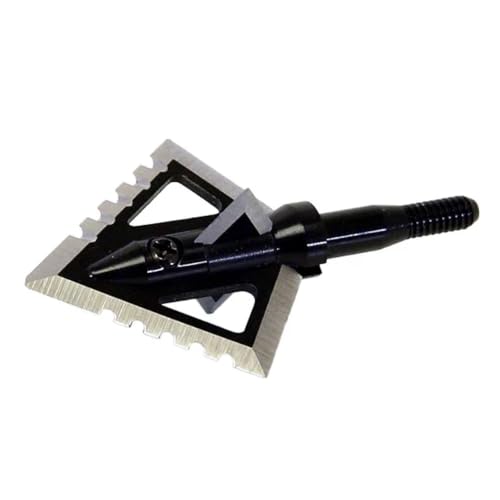
Magnus Stinger Buzzcut 2-BladeBroadhead More specs
| 100 grlisting | — | 2listing | — | 3listing | Check price |


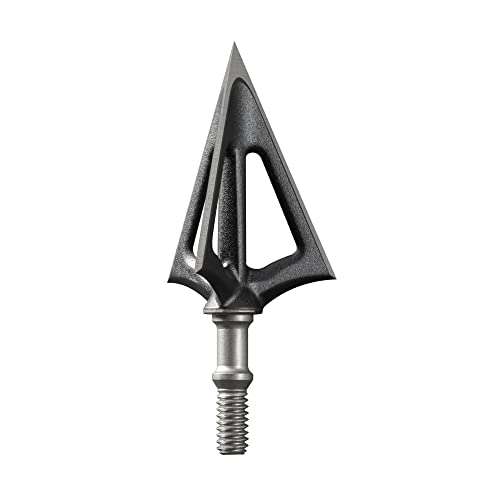
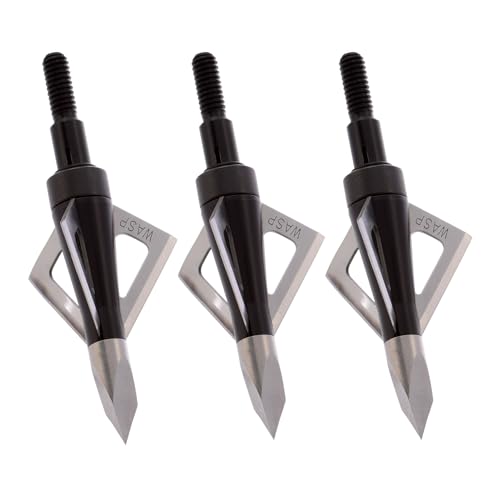


Magnus Stinger Buzzcut 4-BladeBroadhead More specs
| 125 grlisting | — | 4listing | — | 3listing | Check price |
|---|---|---|---|---|---|---|
Magnus Stinger 2 BladeBroadhead More specs
| 150 grlisting | — | 2listing | — | 3listing | Check price |
Magnus 4 Blade HornetBroadhead More specs
| — | — | 4listing | 0.059 inlisting | 3listing | Check price |
Magnus 4 Blade Hornet Ser-RazorBroadhead More specs
| 100 grlisting | — | 4listing | 0.059 inlisting | 3listing | Check price |
Magnus 4 Blade Hornet Ser-RazorBroadhead More specs
| 125 grlisting | — | 4listing | 0.059 inlisting | 3listing | Check price |
New Archery Products Thunderhead 125Broadhead More specs
| 125 grlisting | — | — | — | — | Check price |
New Archery Products Thunderhead Crossbow 125 grBroadhead More specs
| 125 grlisting | — | — | — | 5listing | Check price |
QAD Exodus BC125-S CrossbowBroadhead More specs
| 125 grlisting | — | — | — | — | Check price |
QAD Exodus Full BladeBroadhead More specs
| 125 grlisting | — | — | — | — | Check price |
Ramcat Hydroshock-X CrossbowBroadhead More specs
| 100 grlisting | — | — | 0.032 inlisting | 3listing | Check price |
Ramcat DiamondbackBroadhead More specs
| 100 grlisting | — | — | 0.032 inlisting | 3listing | Check price |




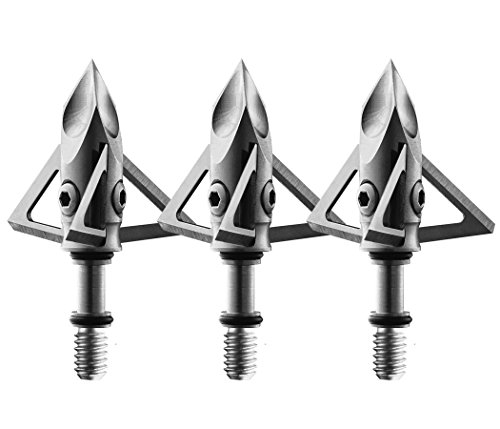
What’s in this listFixed-blade broadheads, as stated by the maker or the Amazon listing, widest cut first. “—” means neither the maker nor the Amazon listing states it.
What makes fixed blade broadheads different
Nothing moves. Once a fixed head is threaded onto the arrow, the blades are at full width from the quiver to the target. That one fact explains both halves of the type: fixed heads don't spend energy opening, and they ask more of your tuning because the blades are out in the air the whole time. Threads, ferrules, grain weights and matching field points work the same on every broadhead; the main broadheads page covers them.
The list below the text holds heads their makers call fixed-blade, sorted with the widest cut on top. Blanks mean the maker leaves that value out.
Walt's take: "If it doesn't fold, it can't forget to unfold." He means it as a compliment. He says the same about his tent.
What to look at when you pick fixed blade broadheads
Here's what actually changes between fixed heads, in the order I'd check it.
Cutting diameter: most sit near 1-1/4 inches
Cutting diameter is the full width of the blades, in inches. On a fixed head that number never changes. Petersen's Hunting says most fixed heads cut about 1-1/4 inches, and that makers can't go past about 1-1/2 inches without hurting accuracy. Compact replaceable-blade designs cut about 1 inch, per the Union Sportsmen's Alliance.
So the fixed range is narrow on purpose. Every extra fraction of an inch is more steel steering the front of your arrow. If you're choosing between two heads that are otherwise alike, try the wider one only if your setup still holds a group with it.
Blade count: two, three or four, all at full width
GOHUNT lists fixed heads in 2, 3 and 4-blade versions. On a fixed head every blade is open all the time, so the count changes both the cut and how much blade surface rides in the wind. A 2-blade head is the flattest profile. A 3 or 4-blade head cuts in more directions at once. Read the "Blades" column next to the cut, not instead of it.
One-piece or replaceable blades
Fixed heads come in two builds, and the difference shows up in care more than in the hunt.
- One-piece (solid): blades and body are one unit. The Union Sportsmen's Alliance calls fixed heads the simplest broadheads on the market and notes they can be resharpened and reused.
- Replaceable blades: thin blades slide into slots in the body, under a sharp tip. When they dull, you swap in fresh blades or resharpen them.
Bowhunter's prep guide adds a useful split for testing. With a resharpened solid head, test it through 1/4-inch plywood before hunting with it. With a replaceable-blade head, the blades get thrown away, so judge it on how well the ferrule (the body) holds up.
Vented blades are louder
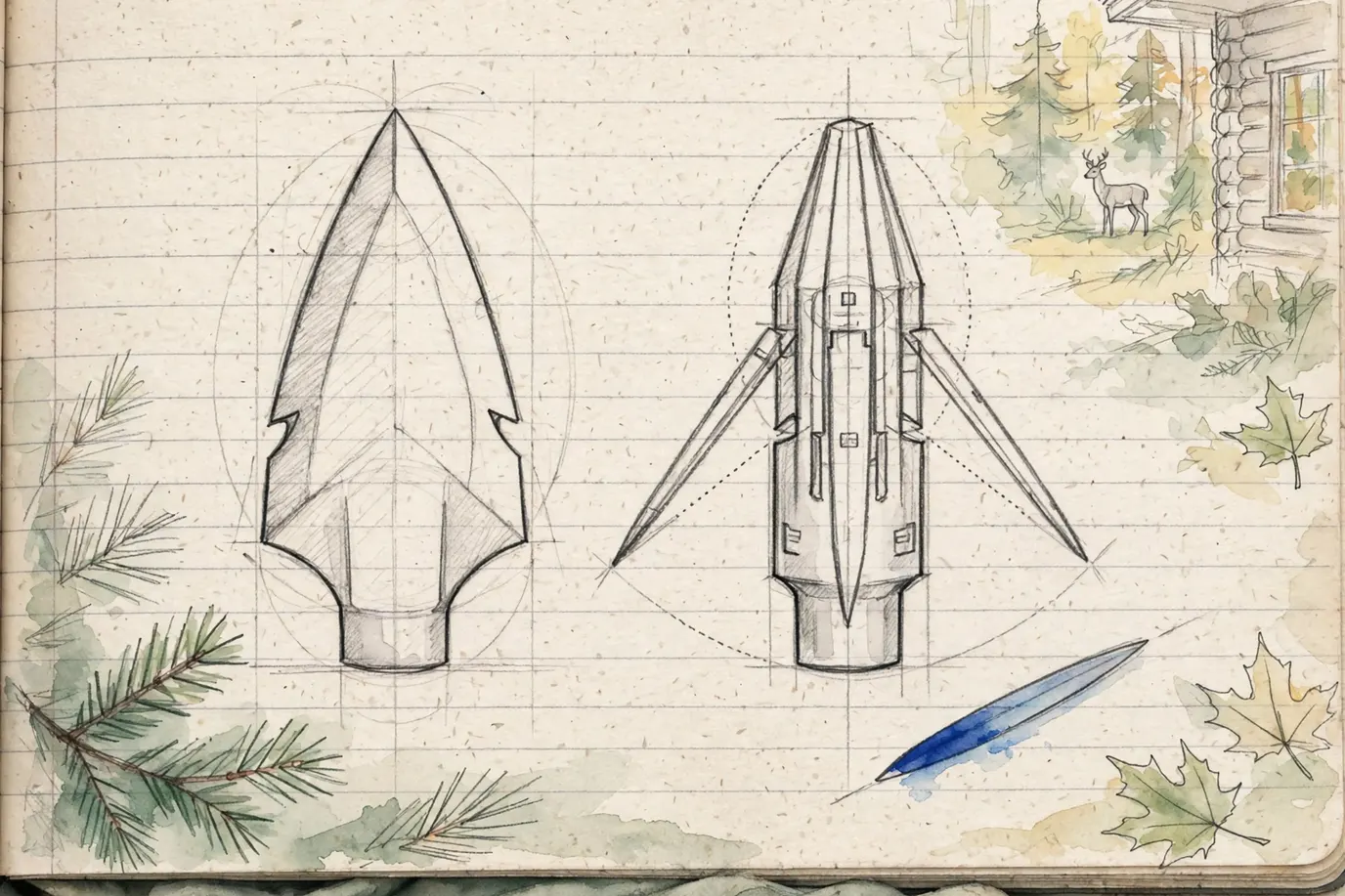
Some fixed blades have holes or cutouts in them, called vents. Petersen's Hunting notes that vented fixed blades are loud in flight. If you've ever heard a broadhead whistle past the target, that's the sound. Solid blades are quieter. Whether you care depends on how close your deer are and how much you trust your own nerves at full draw.
Weight: 100 and 125 grains, with heavier for big game
Weight is in grains. Archery 360's compound guide uses 100 grains as its baseline. The Union Sportsmen's Alliance notes some bowhunters go to 125 or 150 grains for moose and elk.
On a fixed head, weight is also a tuning tool. Easton's guide lists heavier broadheads as one fix when broadhead arrows act stiff, and lighter ones when they act weak. So the right weight is partly the one that makes your groups meet. A jump in weight moves your spine needs too; the hunting arrows page has that math.
Blade thickness tells you the steel stock
Blade thickness is listed in thousandths of an inch, when the maker gives it. For a fixed head it's the stock of the blades that ride at full width the whole flight. A blank is common. If two heads match on cut and weight, this is the column that separates them.
Single bevel is a fixed head with one sharpened side
A single-bevel blade is sharpened on one side only. Petersen's Hunting describes single-bevel heads sold in right or left versions to match the arrow's rotation and fletching. They're all fixed heads, and they have their own page: single bevel broadheads.
Pack count and practice heads
Most fixed heads come in threes. Bowhunter's guide warns against shooting fixed heads in tight groups at practice, because broadheads that hit each other damage arrows and heads. Shoot each one at its own spot. That habit uses up target faces, not broadheads, which is the better trade.
Who fixed blade broadheads suit
Fixed heads fit the hunter who wants nothing to go wrong after the release. With no blades to open, none of the arrow's energy goes into deployment; Grand View Outdoors credits fixed heads with better penetration for exactly that reason. GOHUNT's author reaches for them on heavy-boned, tough animals where penetration comes first.
They also suit setups without much energy to spare. Mechanical makers set kinetic energy floors for their heads. A fixed head doesn't have a deployment cost to cover. If your quick math on the mechanical broadheads page lands below the floor, a fixed head is the simple answer.
And they suit crossbow shooters as well as compound shooters. G5 says fixed heads perform the same whether shot from a compound or a crossbow, and that a compound version of a fixed head can be shot from a crossbow. Crossbow ratings are on the crossbow broadheads page.
How far fixed heads stay with field points
Even a well-tuned fixed head eventually parts ways with a field point downrange. Petersen's Hunting puts the usual split at about 55 yards, with some heads holding field-point impact out to 50. Inside that, the job is tuning. Past it, the blades start to show.
That's a long way for a deer stand. GOHUNT notes typical treestand whitetail shots happen within 40 yards. The Union Sportsmen's Alliance makes the matching point from the other direction: for Western shots at 50 yards and beyond, it suggests compact, short heads, because big ones can plane off line.
So if your longest planned shot is 30 yards, your fixed heads should still be grouping a good bit past 30 before opening day. Bowhunter's prep guide makes the same push, telling readers to practice past their longest hunting distance, not just at 20 and 30. (My PT patients hear the same thing about stairs. Practice a few more than you'll need.)
Tuning fixed broadheads so they hit with field points
GOHUNT is blunt about it: fixed heads are less forgiving and will show tuning and form problems. Expect to spend time here.
Start with the arrow. Archery 360 puts it in steering terms: a fixed head wants 2 to 3-inch fletching to keep it from veering. Short, low vanes that work fine for a mechanical may not hold a fixed head on line.
Then read the groups. Easton's tuning guide compares a group of field points with a group of broadheads at the same aiming spot. Once they're level with each other, look left and right. For a right-handed archer:
- Broadheads left of field points: acting stiff. Easton's options include more bow poundage, a heavier broadhead, or moving the rest in toward the bow 1/32 inch at a time.
- Broadheads right of field points: acting weak. The options flip: less poundage, a lighter head, or the rest moved out 1/32 inch.
Change one thing per round. (I keep a sticky note on the bow case with the last change I made. Without it, by the third round I'm tuning from memory, and my memory is not a calibrated instrument.)
Blade alignment and tightening
Here the advice splits. Bowhunter's prep guide describes threading a broadhead into an insert with glue and twisting the insert until the blades line up with the vanes. New Archery Products says its fixed heads don't need to be aligned with the vanes, and puts the emphasis on tightening each head fully with a broadhead wrench so the blades can't loosen.
The practical answer: tighten every head fully with the wrench. Then shoot your heads aligned and unaligned and keep whatever groups. Spin each finished arrow before it goes in the quiver; a wobble at the tip means a bent head or a shaft end that isn't square.
Keeping fixed blades sharp
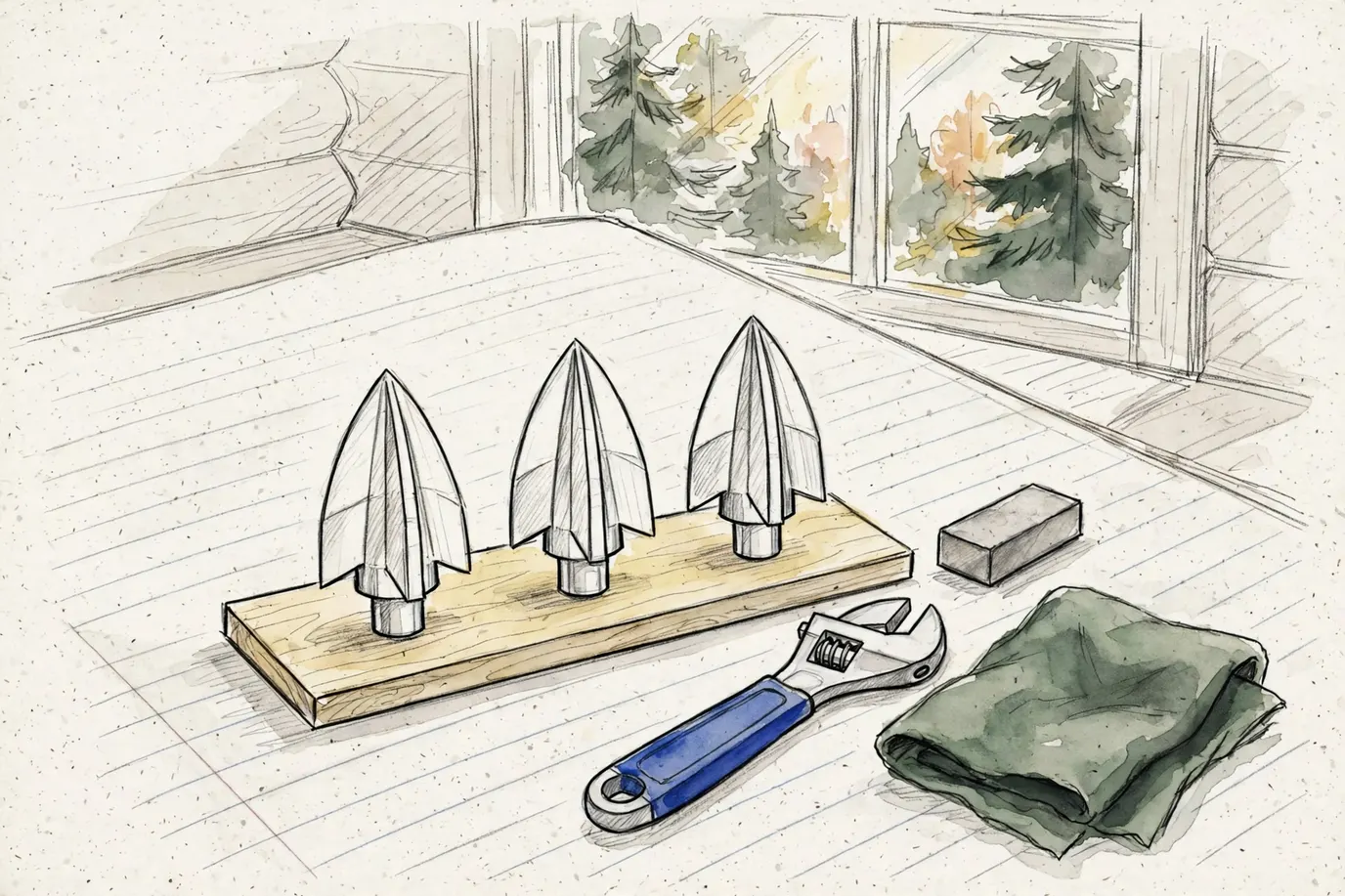
Fixed heads are the type you can maintain at the cabin table. The Union Sportsmen's Alliance notes they can be resharpened and reused; replaceable-blade heads take new blades instead. Bowhunter's guide gives the bench tests: a sharp edge grabs a thumbnail and slices paper evenly, and a head that fails stays out of the quiver. The full how-to lives in the how to sharpen broadheads guide.
Fixed blades are always open
Every edge on a fixed head is exposed all the time, in the quiver, in the truck and on the bench. Keep them in a covered quiver, as Wisconsin DNR recommends, thread them on with a broadhead wrench, and sharpen with strokes moving away from your hands.
States set their own broadhead rules; Illinois, for one, lists what materials fixed heads may be made of. Check your state wildlife agency before the season.
Who should skip fixed blade broadheads
Skip them if you won't tune. A fixed head on an untuned bow will tell you so at 30 yards, and no head choice fixes that. Skip them if your hunting means long shots in wind and you'd rather not fight drift; GOHUNT's author prefers mechanicals in that spot. Everyone else, buy a pack for practice and a pack for the hunt, and log the groups.
Brands in this list
Related
Questions people ask
Are fixed broadheads better than mechanical?
Neither wins everywhere. Fixed heads keep all the arrow's energy for penetration because nothing has to open, and GOHUNT favors them for heavy-boned, tough animals. They're less forgiving, though, and show tuning and form problems. Mechanicals usually fly closer to field points with less work. Petersen's Hunting concludes that confidence and practice with your exact head matter more than the type.
Do fixed blade broadheads need to line up with the vanes?
Makers and writers disagree. Bowhunter's prep guide describes twisting a glued insert so the blades line up with the vanes. New Archery Products says its fixed heads don't need to be aligned with the vanes, and stresses tightening each head fully with a broadhead wrench. Try aligned and not aligned, and keep whichever groups better.
Can you resharpen fixed blade broadheads?
Usually, yes. The Union Sportsmen's Alliance notes that fixed heads can be resharpened and reused, and replaceable-blade designs take fresh blades instead. Bowhunter's guide suggests testing a resharpened head by shooting it through 1/4-inch plywood before you trust it, and checking every edge with a thumbnail or paper test.
What cutting diameter should a fixed blade broadhead have?
Most sit near 1-1/4 inches. Petersen's Hunting says that's the usual fixed cut and that heads wider than about 1-1/2 inches start to hurt accuracy. Compact designs run about 1 inch. Check your state's minimum width too; many states set one, and the head must meet it.
Can I shoot fixed blade broadheads from a crossbow?
Yes. G5 treats a fixed head as the same head on either launcher. Match the weight to your bolts, then expect some tuning work: Grand View Outdoors says fixed heads need more of it, especially on crossbows. Confirm the broadhead group after you sight in with field points, and adjust the scope if the two groups split.
Sources
- Petersen's Hunting: Fixed vs. mechanical broadheads — accessed 2026-10-21
- GOHUNT: Broadhead breakdown, the pros and cons of fixed blade and mechanical broadheads — accessed 2026-10-21
- Union Sportsmen's Alliance: Choosing the perfect broadhead — accessed 2026-10-21
- Bowhunter: Get broadheads ready for opening day — accessed 2026-10-21
- New Archery Products: FAQ — accessed 2026-10-21
- G5 Outdoors: Frequently asked questions — accessed 2026-10-21
- Archery 360 (Archery Trade Association): Compound bow arrows — accessed 2026-10-21
- Easton: Arrow Tuning and Maintenance Guide — accessed 2026-10-21
- Grand View Outdoors: Choosing a crossbow broadhead — accessed 2026-10-21
- Illinois Administrative Code tit. 17, § 670.30: Statewide legal bow and arrow — accessed 2026-10-21
- Wisconsin DNR: Archery and crossbow safety tips — accessed 2026-10-21