Brand · Archery & Bowhunting
Wasp Broadheads: Fixed, Mechanical and Crossbow Heads
Wasp broadheads come in two builds: mechanical heads that open on impact (the Jak-Hammer, Jak-Knife and Jak X) and fixed-blade heads that are open the whole flight (the Boss, Bullet, Hammer, Drone, SharpShooter and a few more). The short version: pick fixed or mechanical first, then the grain weight your arrows were tuned for, then the cutting diameter. Crossbow shooters get two heads of their own. (Uncle Walt calls the Jak-Hammer "the one with the rubber band." On paper, close. In practice it's an O-ring.)
We earn a commission if you buy through our links, at no cost to you. Disclosure
Wasp Archery Products on Amazon US
19 models- Broadhead
Wasp Archery Products Jak-Hammer 125 SST
- Weight
- 125 gr
- Type
- Mechanical
- Cutting diameter
- 1.75 in
- Broadhead
Wasp Archery Products Jak-Hammer 75 SST
- Weight
- 75 gr
- Type
- Mechanical
- Cutting diameter
- 1.25 in
- Broadhead
Wasp Archery Products Jak-Knife
- Weight
- 100 gr
- Type
- Mechanical
- Cutting diameter
- 2 in
- Broadhead
Wasp Archery Products SharpShooter
- Weight
- 100 gr
- Type
- Fixed
- Cutting diameter
- 1 in
- Broadhead
Wasp Archery Products Jak-Hammer SST
- Weight
- 100 gr
- Type
- Mechanical
- Cutting diameter
- 1.75 in
- Broadhead
Wasp Archery Products Boss SST 3 Blade
- Weight
- 100 gr
- Type
- Fixed
- Cutting diameter
- 1.125 in
- Broadhead
Wasp Archery Products Boss SST 4 Blade
- Weight
- 100 gr
- Type
- Fixed
- Cutting diameter
- 1.0625 in
- Broadhead
Wasp Archery Products Bullet 100
- Weight
- 100 gr
- Type
- Fixed
- Cutting diameter
- 1 in
- Broadhead
Wasp Archery Products Boss SST 3-Blade 125
- Weight
- 125 gr
- Type
- Fixed
- Cutting diameter
- 1.375 in
- Broadhead
Wasp Archery Products Hammer SST 100
- Weight
- 100 gr
- Cutting diameter
- 1.1875 in
- Blade thickness
- 0.027 in
- Broadhead
Wasp Archery Products Hammer SST 85
- Weight
- 85 gr
- Cutting diameter
- 1.1875 in
- Blade thickness
- 0.027 in
- Broadhead
Wasp Archery Products Bullet 75
- Weight
- 75 gr
- Type
- Fixed
- Cutting diameter
- 1 in
- Broadhead
Wasp Archery Products Jak-Hammer 100 SST
- Weight
- 100 gr
- Type
- Mechanical
- Cutting diameter
- 1.75 in
- Broadhead
Wasp Archery Products Jak X Crossbow
- Weight
- 100 gr
- Type
- Mechanical
- Cutting diameter
- 1.75 in
- Broadhead
Wasp Archery Products Crossbow Boss 100
- Weight
- 100 gr
- Type
- Fixed
- Cutting diameter
- 1.125 in
- Broadhead
Wasp Archery Products Drone Deep 6
- Weight
- 100 gr
- Type
- Fixed
- Cutting diameter
- 1.125 in
- Broadhead
Wasp Archery Products SharpShooter Traditional
- Weight
- 150 gr
- Type
- Fixed
- Cutting diameter
- 1 in
- Broadhead
Wasp Archery Products Havalon HV 125
- Weight
- 125 gr
- Heads per pack
- 3
- Broadhead
Wasp Archery Products Mortem
- Blades
- 3


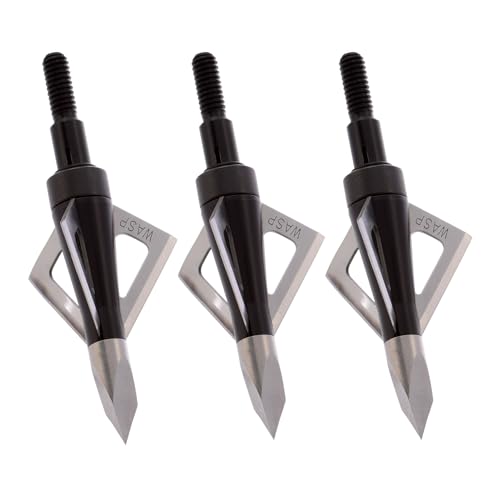


What Wasp makes for bowhunters
On this site, Wasp Archery Products covers one product type: broadheads. That's the whole grid, and it's a deep one. The heads split into three groups:
- Mechanical heads for bows: the Jak-Hammer and the Jak-Knife
- Fixed-blade heads for bows: the Boss, Bullet, Hammer, Drone, SharpShooter, Havalon HV and Mortem
- Crossbow heads: the Jak X Crossbow (mechanical) and the Crossbow Boss (fixed)
Most of the specs here come from the Amazon listings, and the grid marks those values. Where a listing leaves a field empty, I left it empty too. A head I can't place as fixed or mechanical from its listing stays unplaced in my notes.
The grid filters by type and changes as packs come and go. So I'll write about the lines and what separates them, not about how many are listed this week. Most packs in the grid are 3-packs.
How Wasp broadhead names work
Wasp names stack two ways. The family name tells you the design (Jak-Hammer, Boss, Bullet and so on). The number after it is the grain weight. "SST" shows up on many heads and travels across both fixed and mechanical lines, so it doesn't tell you which build you're holding.
Quick math for anyone new to grains: a grain is a tiny weight unit, 437.5 to the ounce. A 100-grain head weighs less than a quarter of an ounce. Your arrow cares about that quarter ounce more than you'd think, which we'll get to.
Lineup notes: Wasp mechanical broadheads
A mechanical (or expandable) head keeps its blades tucked against the ferrule in flight and opens them on impact. Petersen's Hunting describes the blades as held shut by an O-ring, a collar or a tension device until they hit.
Jak-Hammer: three weights, one idea
The Jak-Hammer is the Wasp mechanical you'll see most in the grid. The listings give three weights:
- 75 grains: 1-1/4 inch cutting diameter
- 100 grains: 1-3/4 inch cutting diameter
- 125 grains: 1-3/4 inch cutting diameter
Blade thickness on the Jak-Hammer listings is .036 inch, which is the thicker of the two blade gauges you'll see across the Wasp grid. One more Jak-Hammer pack lists the same 100-grain weight and 1-3/4 inch cut with fewer details.
Here's what actually changes across the three: weight first. A 75-grain head is unusual for a deer setup and makes sense mainly when your arrows were tuned around a light point. The 100 and 125 share the cut.
Jak-Knife: the widest cut in the lineup
The Jak-Knife lists 100 grains and a 2-inch cutting diameter, the widest in the Wasp grid, with .036-inch blades. goHUNT puts typical mechanical cuts at 1.5 to 2.25 inches, so the Jak-Knife sits toward the wide end of that range.
A wider cut asks for more energy to push through. goHUNT's rule of thumb is that mechanicals do best on bows pulling above roughly 55 pounds. (The number your shoulder can hold at full draw in November is the number that counts, not the one you hit in August.)
What mechanicals trade
Both goHUNT and Petersen's say the same thing in different words. Mechanicals tend to fly close to field points and forgive small tuning problems. In exchange, opening the blades spends some of the arrow's energy, which can cut penetration. Petersen's adds that bowhunters pulling under 50 pounds should test that their mechanical heads actually open.
More on how mechanicals compare across brands is on the mechanical broadheads page.
Lineup notes: Wasp fixed-blade broadheads
A fixed-blade head is open the whole time. No moving parts, nothing to deploy. goHUNT calls them simple and reliable, and also less forgiving of a bow that isn't tuned.
Boss: three or four blades
The Boss line is the one with a blade count on the label. The listings give:
- Boss SST 3 Blade, 100 grains: 1-1/8 inch cut
- Boss SST 3-Blade, 125 grains: 1-3/8 inch cut
- Boss SST 4 Blade, 100 grains: 1-1/16 inch cut
All three list .027-inch blades. goHUNT's general note is that fewer blades tend to penetrate better and more blades tend to bleed more, with the design able to shift that either way. The Boss gives you both choices in one family.
Bullet: small and compact
The Bullet lists as a fixed head in 75 and 100 grains, both with a 1-inch cut and .027-inch blades. That's the narrowest cut in the Wasp grid, shared with the SharpShooter. The 75-grain Bullet is the fixed-blade match for anyone running a light point.
Hammer SST: 85 or 100 grains
The Hammer SST comes in 85 and 100 grains, both with a 1-3/16 inch cut and .027-inch blades. Its listings don't say fixed or mechanical, so check the package before you file it in your head next to the Jak-Hammer. The names are close; the listings aren't the same. The 85-grain option is the only one at that weight in the grid.
Drone Deep 6
The Drone Deep 6 lists as a 100-grain fixed head with a 1-1/8 inch cut and .027-inch blades; its listing title calls it 100% steel. The name matters for setup. Deep Six is a thread system with its own inserts, and American Hunter explains that Deep Six heads need Deep Six inserts and pair with small-diameter shafts. Check the thread on the package against the inserts in your arrows before you buy a pack.
SharpShooter: cut on contact, including a traditional weight
The SharpShooter lists as a fixed head with a 1-inch cut. The listing titles call it cut on contact, which means the blade edges run all the way to the front, with no separate point ahead of them. It comes in two weights:
- SharpShooter, 100 grains: for compound setups tuned around a 100-grain point
- SharpShooter Traditional, 150 grains: the heaviest head in the Wasp grid
That 150-grain head is the one traditional archers will look at first. Heavier points slow the arrow and weaken its spine, per Archery 360, so a recurve setup has to be built for it.
Havalon HV and Mortem
The Havalon HV 125 lists 125 grains in a 3-pack, and its listing doesn't add a cut or a build. The Mortem listing gives three blades and little else. Treat both as "read the package" heads; the grid shows what each listing states.
The rest of the fixed-blade field is on the fixed blade broadheads page.
Wasp crossbow broadheads
Two heads in the grid are listed as crossbow rated:
- Jak X Crossbow: mechanical, 100 grains, 1-3/4 inch cut, .027-inch blades
- Crossbow Boss 100: fixed, 100 grains, 1-1/8 inch cut, .027-inch blades
Here's the thing with crossbows: the bow maker sets the rules, not the head maker. TenPoint, for one, says it designs its arrows around a 100-grain tip and that heavier heads need testing on its arrows. Both Wasp crossbow heads are 100 grains, which fits that kind of setup.
Grand View Outdoors notes that fixed heads need more tuning on a crossbow, because a short bolt lets the head take over the flight more easily. Mechanicals tend to group with field points; Grand View's advice is to shoot a broadhead before you shoot at a deer, whichever you pick. Crossbow heads from every brand are on the crossbow broadheads page.
How to choose within the Wasp lineup
Start with fixed or mechanical
My one opinion on this page: decide fixed or mechanical before you look at anything else, and decide it by your bow's energy, not by the cut on the package. The reason is checkable. A mechanical spends some energy opening its blades, and both goHUNT and Petersen's tie that to draw weight. A light bow and a wide mechanical are a poor match no matter which brand made the head.
If your bow is on the lighter side, the Wasp fixed heads (Boss, Bullet, SharpShooter, Drone) are where to look. If your setup has energy to spare and you want a wide cut with field-point flight, look at the Jak-Hammer and Jak-Knife.
Then match the grain weight
Match the head's weight to the field points your arrows were tuned with. Archery 360 notes that spine charts assume a 100-grain point and that a heavier point makes the arrow act weaker. Most Wasp heads in the grid are 100 grains, so most compound shooters can stay put.
Changing weight is a bigger job than it looks. If you're moving to the 125-grain Jak-Hammer or Boss, or to the 150-grain SharpShooter Traditional, check the spine chart for your shaft first. The hunting arrows page covers spine.
Then the cutting diameter
Across the Wasp grid, cuts run from 1 inch (Bullet, SharpShooter) to 2 inches (Jak-Knife). Fixed heads sit at the narrow end, mechanicals at the wide end. That's the trade in one line: fixed heads keep their energy, mechanicals open a bigger hole. goHUNT's advice is to match the diameter to the animal you're hunting. For whitetail, nearly every head in the grid is in the usual range.
Then the blade gauge
The grid shows two blade thicknesses on most Wasp heads: .027 inch on the fixed heads and the crossbow heads, .036 inch on the Jak-Hammer and Jak-Knife. Thicker steel is stiffer. Kitchen version: it's a chef's knife next to a paring knife. Both cut onions. One bends less when you lean on it.
Setup, practice and care
Bowhunter's opening-day checklist works for any Wasp head:
- Spin each head on the arrow and watch for wobble at the tip
- Weigh each head on a grain scale and compare it to the package
- Align fixed blades with your vanes when you glue the inserts
- Check sharpness on paper; a sharp head slices cleanly
- Shoot practice heads at your longest shot distance, not just 20 yards
- Replace worn mechanicals; Bowhunter calls most of them single-use
Bowhunter also warns against shooting fixed heads into a tight group. A head that hits another head damages both. Shoot one, pull it, shoot the next. (I learned this in August, one very expensive arrow at a time. Uncle Walt keeps the pair I welded together as a paperweight.)
With replaceable-blade fixed heads, Bowhunter's advice is to judge the ferrule rather than the blades, and to swap spent blades instead of trusting them for another season.
Broadhead safety is short and plain. Keep heads covered in storage and in transport, as Oregon's wildlife agency advises, and carry arrows in a covered quiver, per Wisconsin DNR. On a crossbow, check the safety right after cocking and keep your fingers out of the string path.
Where Wasp fits on this site
Wasp is a broadhead-only brand here, so the useful neighbors are the type pages: broadheads for the overview, then the mechanical, fixed blade and crossbow pages for heads from every maker. Arrows for those heads are on the best hunting arrows list, and bolts are on best crossbow bolts.
Broadhead rules (cutting diameter, crossbow seasons) still vary by state. Check your state wildlife agency before the season.
Fixed or mechanical, then grain weight, then cut. Write the grain weight on the broadhead case lid in marker, because your future self at 5 a.m. will not remember it.
Where Wasp Archery Products shows up
Questions about Wasp Archery Products
Are Wasp broadheads good?
What can be checked is in the specs. The Wasp listings in the grid give weights from 75 to 150 grains, blade thickness of .027 or .036 inch on most heads, and cutting diameters from 1 inch on the Bullet and SharpShooter up to 2 inches on the Jak-Knife. Whether one suits you depends on your bow's energy, the weight your arrows were tuned for and whether you want a fixed or mechanical head.
Are Wasp Jak-Hammer broadheads fixed or mechanical?
Mechanical. The Jak-Hammer listings call them mechanical heads, in 75, 100 and 125 grains. The 75-grain head lists a 1-1/4 inch cutting diameter, and the 100 and 125 list 1-3/4 inch, with .036-inch blades. Mechanical heads use some arrow energy to open, so check your draw weight and arrow setup before you pick one.
Which Wasp broadheads are made for crossbows?
Two heads in the grid are listed as crossbow rated: the Jak X Crossbow, a 100-grain mechanical with a 1-3/4 inch cut, and the Crossbow Boss 100, a 100-grain fixed head with a 1-1/8 inch cut. Your crossbow maker's manual decides the head weight; TenPoint, for one, says its arrows are designed around a 100-grain tip.
What grain Wasp broadhead should I use?
The one that matches the field points your arrows were tuned with. Spine charts assume a 100-grain point, and heavier points weaken the spine, so a jump to 125 or 150 grains can change how your arrow flies. Most Wasp heads in the grid are 100 grains, with 75, 85, 125 and 150-grain options in some lines.
Can I use Wasp mechanical broadheads where I hunt?
Mechanical broadheads are legal for bowhunting in every state now; the Archery Trade Association reported that Idaho was the last state to allow them. Other details, like minimum cutting diameter or crossbow rules, still differ by state. Check your state wildlife agency before the season.
Sources
- goHUNT: Broadhead breakdown, the pros and cons of fixed blade and mechanical broadheads — accessed 2026-10-28
- Petersen's Hunting: Fixed vs. mechanical broadheads — accessed 2026-10-28
- Bowhunter: Get broadheads ready for opening day — accessed 2026-10-28
- Grand View Outdoors: Choosing a crossbow broadhead — accessed 2026-10-28
- TenPoint: What broadhead and broadhead weight do you recommend? — accessed 2026-10-28
- Archery 360 (Archery Trade Association): Why do your arrow points matter? — accessed 2026-10-28
- American Hunter: Deep Six technology — accessed 2026-10-28
- Archery Trade Association: Idaho becomes 50th state to allow lighted nocks and mechanical broadheads — accessed 2026-10-28
- Oregon Department of Fish and Wildlife: Bow shooting safety — accessed 2026-10-28
- Wisconsin DNR: Archery and crossbow safety tips — accessed 2026-10-28