Archery & Bowhunting · Gear type
Fletching Arrows
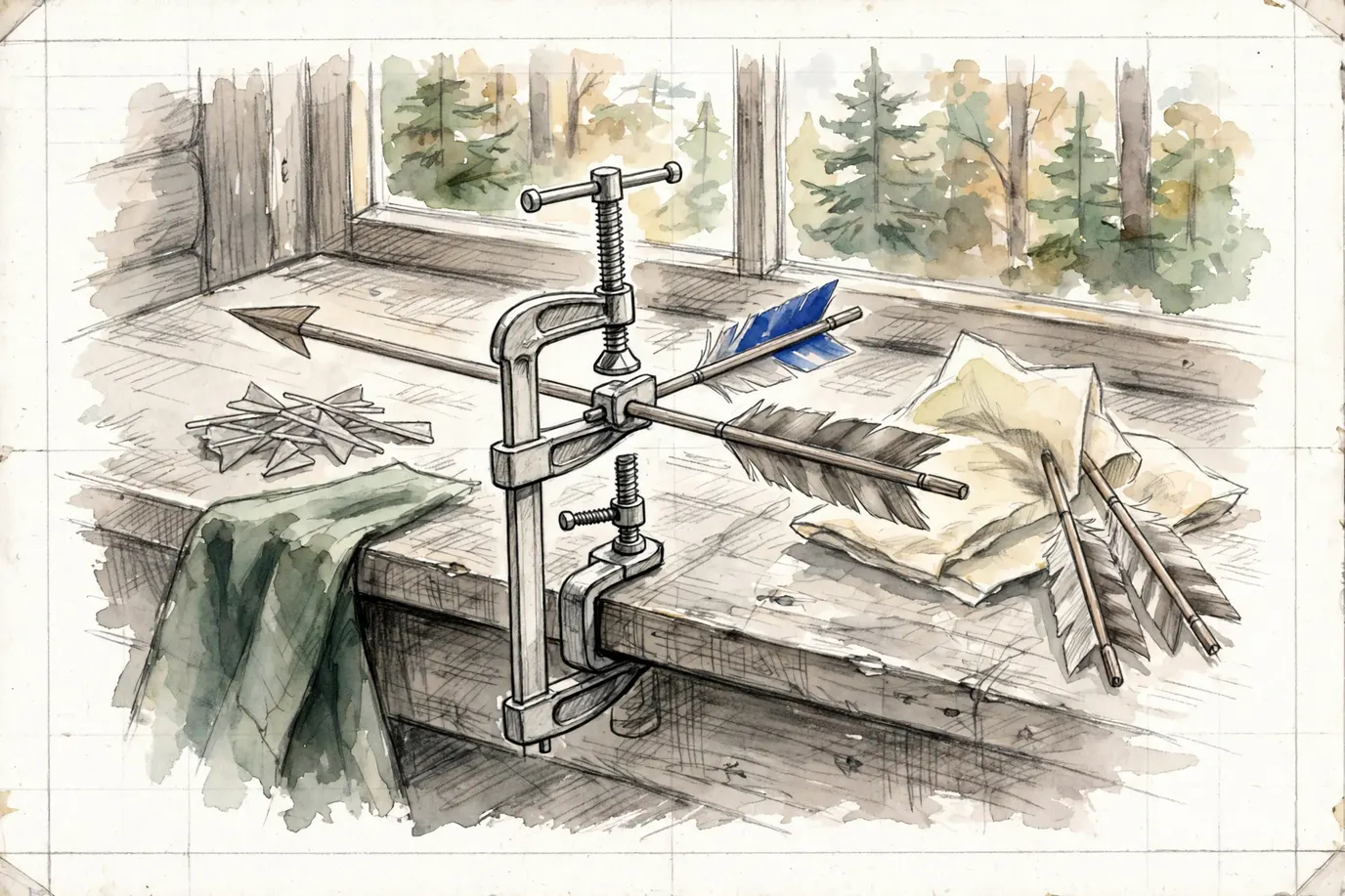
Fletching arrows means picking and gluing the vanes or feathers that steer the back of the arrow. Three choices do most of the work: vanes or feathers (your arrow rest decides), how big (your broadhead decides), and how much turn they're set at (your jig decides). Get those right and the arrow flies straight behind the point. Get them wrong and a perfect shaft wobbles like a shopping cart with one bad wheel. (I rate shopping carts in my head. Nobody asked.)
We earn a commission if you buy through our links, at no cost to you. Disclosure
| Model | Weight | Type | Material | Pack | Amazon |
|---|---|---|---|---|---|
| — | Featherlisting | turkey featherlisting | 50listing | Check price | |
Bohning Blazer Vane 2-InchFletching | 6 grlisting | Vanelisting | AR1000listing | 36listing | Check price |
Bohning Blazer Vane 2-InchFletching | — | Vanelisting | — | 36listing | Check price |
Bohning Blazer QuickfletchFletching | — | Vanelisting | — | 6listing | Check price |
Bohning Blazer Quik FletchFletching | 27 grlisting | Vanelisting | — | 6listing | Check price |
Bohning X Vane 2.25-InchFletching | — | Vanelisting | AR1000listing | 36listing | Check price |
Bohning Heat Vanes 2.5-InchFletching | — | Vanelisting | — | 100listing | Check price |
| — | Vanelisting | — | 6listing | Check price | |
| — | Vanelisting | AR1250listing | 36listing | Check price | |
Bohning X Vane 3.5-Inch CrossbowFletching | — | Vanelisting | AR1000listing | 36listing | Check price |
Bohning X Vane 3-Inch CrossbowFletching | — | Vanelisting | AR1000listing | 100listing | Check price |
| — | Vanelisting | — | 36listing | Check price | |
| — | Vanelisting | AR1250listing | 36listing | Check price | |
| — | Vanelisting | AR1250listing | 100listing | Check price | |
| — | Vanelisting | AR1250listing | 36listing | Check price | |
| — | Vanelisting | AR1000listing | 36listing | Check price | |
| — | Vanelisting | AR1000listing | 100listing | Check price | |
Easton Diamond Vanes 280Fletching | — | Vanelisting | — | 100listing | Check price |
Linkboy Archery Spin Vanes 1.8 inFletching | — | Vanelisting | — | 50listing | Check price |
| — | Vanelisting | — | — | Check price | |
New Archery Products QuikSpin 2 inFletching | — | Vanelisting | toughened plasticlisting | 36listing | Check price |
| — | Vanelisting | — | — | Check price | |
| — | Vanelisting | — | 6listing | Check price | |
| — | Vanelisting | — | 6listing | Check price | |
| — | Vanelisting | — | — | Check price | |
| — | Vanelisting | — | 6listing | Check price | |
| — | Vanelisting | — | — | Check price |


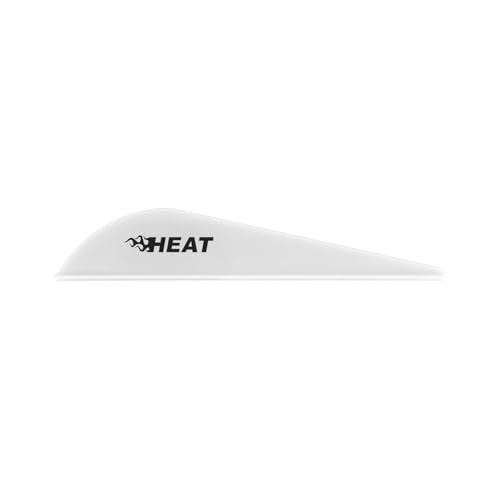


What’s in this listEvery vane and feather fletching we track on Amazon US. “—” means neither the maker nor the Amazon listing states it.
What fletching does, and what this page covers
Fletching is the set of vanes or feathers glued near the back of an arrow. goHUNT's guide says its job is to keep the back of the arrow lined up behind the front in flight. Bowhunter calls it the steering wheel, which is about right.
This page is about the fletching itself. Spine, arrow length and total weight belong to the shaft, and they're on the hunting arrows page. If the shaft is wrong for your bow, no vane fixes it.
The table on this page lists vanes and feathers sold as fletching: type, material, length, weight per piece in grains (437.5 to the ounce) when the maker or the Amazon listing states it, and pack count (the table marks values that come from the listing). A missing value shows as a dash, not a guess.
What to look at when you pick fletching for arrows
Here's what actually changes from one pack to the next, in the order I'd check it.
Let your arrow rest pick vanes or feathers
Archery 360's fletching guide says most traditional archers shoot off the shelf of a recurve or longbow. Feathers suit that because they flex and lie flat as they pass the shelf. Vanes are stiff, so off a shelf they can bounce and fly inconsistently.
On a compound with a mechanical rest, it flips. The same guide says vanes are more durable, water-resistant and consistent in size and weight.
Feathers have one more trade: water. Archery 360 says soaked feathers don't shed water and can fly inconsistently. Its compound arrow guide adds that feathers can fold flat in rain. If you sit in a saddle through November drizzle, as I do most weekends, weigh that one.
Pick length for the job: longer steers, shorter drags less
Length is measured along the base of the vane or feather. Archery 360's compound arrow guide sums up the rule: the bigger the vane, the greater the drag. It gives starting sizes by use:
- Indoor target, about 20 yards, no wind: a large vane, around 4 inches
- Outdoor target out to 100 yards: a small vane, around 1.75 inches
- Fixed-blade broadheads: 2 to 3 inch vanes for steering
- Mechanical broadheads: less steering needed, so smaller vanes can work
Easton's wind article gives the hunting version: use the shortest vane that still steers your broadhead. Enough for your head, and no more.
Profile height is the trade you can't see in a photo
Height is how tall the vane stands off the shaft. Two vanes of the same length can stand very differently.
Bowhunter says high-profile vanes stabilize an arrow quickly but cost a few FPS (feet per second, the unit for arrow speed) because of the extra surface area. Low-profile vanes steady the arrow more slowly, but they're quieter and a bit faster. goHUNT adds that bigger, taller vanes correct flight better and can help cover a release that wasn't perfect.
Makers don't always print height, so check the maker's spec page. Easton's tuning guide lists a lower-profile fletching as one fix when vanes hit the rest.
Weight per vane moves your balance point
The table's weight column is grains per vane or feather, from the maker. It looks tiny. It adds up.
Quick math, using one maker's published spec: a 2-inch vane listed at 4 grains, times three vanes, is 12 grains on the back end. The same maker's 1.75-inch vane is listed at 3 grains, so a set of three is 9 grains. That matters for FOC (front of center), the percentage the balance point sits ahead of the arrow's middle. Easton's guide says heavier vanes add weight to the rear, and swapping vanes for feathers lightens it. Change the fletching on a tuned arrow and your balance point moves with it. (The arrow does not care that it was "only a few grains." Neither does my bathroom scale.)
Material and stiffness decide how vanes age
Easton's wind article says to use stiffer vanes, because flexible vanes flap in the wind and create more drag. Bowhunter makes the same point and ties stiffness to steering broadheads. Think of a metal spatula against a dish towel. Both are flat. Only one holds its shape when you wave it.
Stiff has a cost. Easton's tuning guide says a bent back edge on a hard vane acts like a rudder and throws the arrow way off, so check hard vanes every time you shoot.
Feathers come in left wing and right wing
Feathers have a natural curve, and they come from either a left or a right wing. All the feathers on one arrow must be from the same wing. Bow International says mixing wings on one arrow slows the spin and makes flight unstable. It also says to match the clamp to the feather, so a right-wing clamp doesn't get left-wing feathers.
The old rule that right-handers need a certain wing? Bow International says spin starts only after release, and its experiments found no difference. Pick a wing, match your clamp, stick with it.
Pack count tells you how many arrows you can do
Pack count is pieces, not arrows. Divide by three for three-fletch, or four for four-fletch, and buy enough for the whole dozen plus spares. Mixed vanes make mixed flight.
Danny's take: "Get a color you can find in the leaves." He fletches in hot pink. He says it's for recovery. Walt says it's so nobody borrows them. Both are right.
Straight, offset or helical: how fletching sits on the shaft
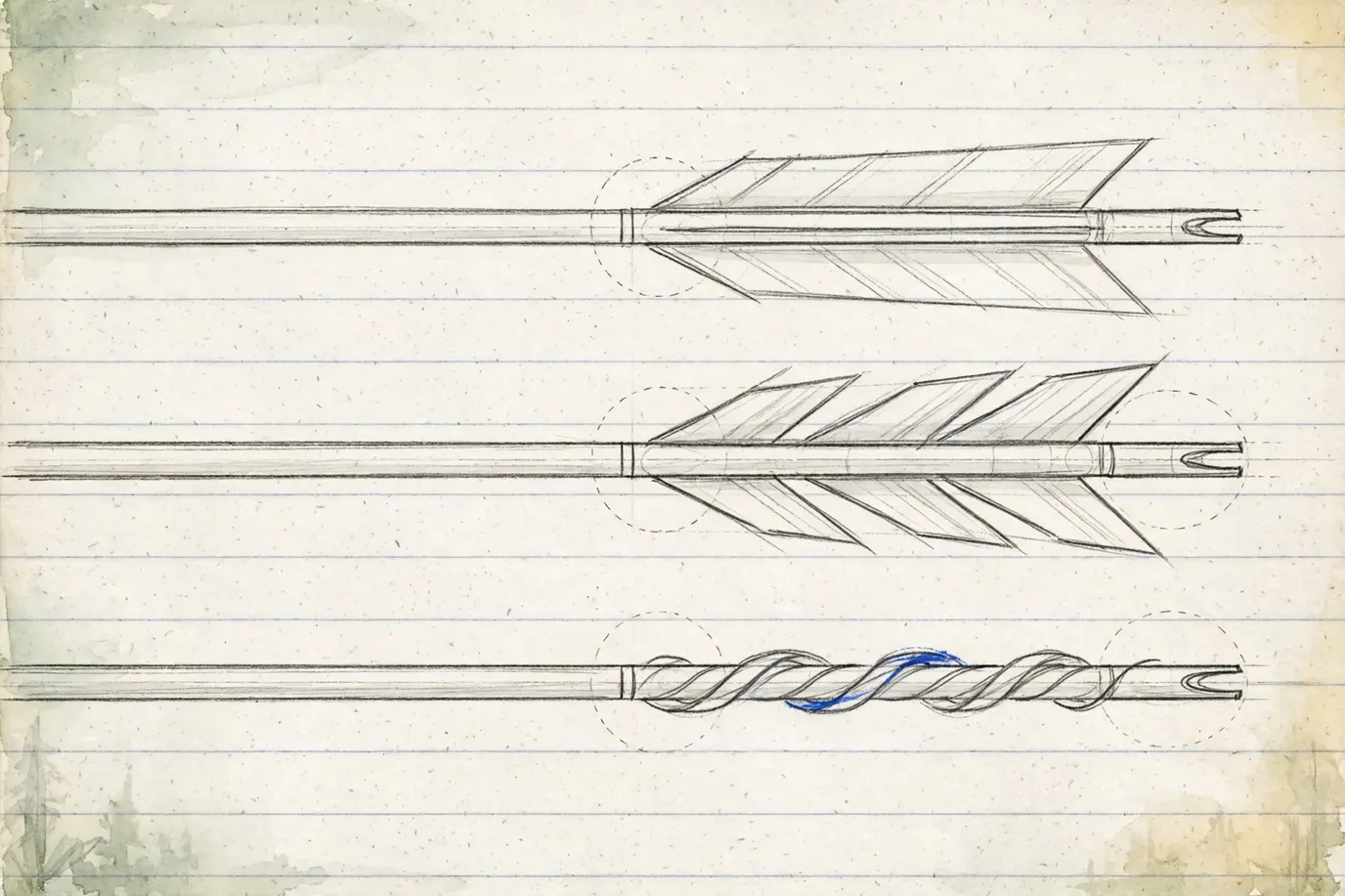
Orientation is about the jig, not the vane. Archery 360 notes that vanes come out of the mold straight, and the jig sets them straight, offset or with a left or right helical.
- Straight: the vane runs in line with the shaft. Bowhunter says it makes no meaningful spin, gives a little extra speed and gets pushed by wind more.
- Offset: the vane is set at a slight angle but stays flat. It adds spin for a small speed cost, per Bowhunter.
- Helical: the vane is curved around the shaft. Bowhunter says it spins the arrow the most and costs more FPS than offset.
Field & Stream says a straight-fletched arrow works for a whitetail hunter shooting expandable broadheads at 40 yards and in. Fixed blades catch air like small sails, so that article suggests helical, or at least offset. Helical can take more tuning for rest and cable contact, per Bowhunter. Bohning's fletching instructions recommend a 3-degree helical for one of its vane lines.
Easton's guide sets a limit for offset: no angle so steep that a corner of the vane base lifts off the shaft.
Three fletch or four fletch
Three is the default. Four is what people argue about at the range. Bowhunter says many archers use four low-profile vanes to boost broadhead steering and help in wind. Field & Stream's author shot both and found his three-fletch and four-fletch arrows grouped together out to 100 yards, his longest test distance. His advice: test before you switch, and whitetail hunters at 40 yards and in don't need four.
Four vanes on a thin shaft leave less room between them, so check rest clearance, covered below.
Match the fletching to your broadhead
Fixed-blade broadheads are harder to steady than field points or mechanicals, per goHUNT. That's why they keep landing on longer, taller vanes with offset or helical.
Easton's wind article adds a detail most people skip: with fixed blades, set the blades to the same offset as the fletching, to cut turbulence. Archery 360's fletching guide says to test fletching setups side by side, with broadheads, at real hunting distances. Bowhunter's author has long used a 3-degree right helical, three-fletch.
Never shoot broadheads on unfletched shafts. Easton's tuning guide warns that flight is extremely erratic and dangerous. Broadhead types are on the broadheads page, and the deeper argument is in the mechanical vs fixed broadheads guide.
Index the cock vane so your fletching clears the rest
On a three-fletch arrow, one vane sits apart from the other two. World Archery calls it the cock vane. It points away from the riser when the arrow is nocked, and it's often a different color. The other two are hen vanes. Lined up right, the nock's groove sets that position every time you nock.
How you index it depends on the rest:
- Launcher rests on compound bows: Easton says the support arm must be narrow enough for the two lower vanes to pass over without touching.
- Shoot-through rests: Easton says you may need to adjust the arm width so the fletching passes cleanly.
- Shoot-around rests: vane-to-nock indexing matters most, per Easton, and should be set for maximum clearance.
To check, Easton's powder test: spray dry foot powder on the back quarter of the arrow, the fletching, the rest and the nearby sight window. Shoot, then look where the powder got wiped off. Easton also warns that one nock turned farther than the rest can push the fletching into the rest. Rest styles are on the compound bow arrow rest page, and nock fit is on the nocks page.
Fletching arrows at home, step by step
You need a jig (a clamp that holds each vane at the same angle and spacing every time), fletching glue, a cleaner and patience.
- Clean the work area. Bohning lists oils, food, silicone sprays, aerosol lubricants and dust as things that ruin adhesion.
- Prep the shaft. New shafts get cut to length first. Easton says to wipe just the fletching area with solvent until a clean white paper towel shows no residue, then follow with 91% isopropyl alcohol. Keep strong solvents away from installed nocks and use 91% alcohol instead.
- Dry-fit in the jig. Bohning says to set the vane and shaft in the jig with no glue and adjust until the vane base sits flush with the shaft.
- Set the position. Easton's guide puts the rear of the vane 1 to 1¼ inches from the bottom of the nock groove.
- Glue and clamp. Seat the vane at the bottom of the clamp, run a thin bead of glue on the base, and clamp for the time the glue calls for.
- Turn and repeat. World Archery's guide rotates the shaft 120 degrees per vane for three-fletch.
- Dot and cure. Bohning says to dot the tip and tail of each vane with a little glue, then wait the full cure time before shooting.
Two weather notes. Easton says to clean again if shafts sat unfletched for more than 8 hours, and not to fletch on very humid days. Bohning recommends 30 to 50% relative humidity for one of its solvent glues, and an instant glue if the room runs above 70%.
Walt's logbook has a wind column going back to 1991. It does not have a humidity column. I added one in pencil, at the bottom of the page, small. He hasn't noticed. He will.
Use gloves and good ventilation with these solvents, as Easton directs.
Re-fletching and care
Easton's guide says an arrow with even slightly loose fletching won't group with the others, and may not hit the target past 30 yards if the back of a vane is loose.
To strip old fletching, Easton says to scrape vanes and glue off with a dull knife, then wipe with solvent. Bohning says never to soak carbon shafts. Then restart from step 2. Easton also warns some instant glues bond so well to carbon that removal can damage the shaft, so test one arrow first.
Before every session, run a thumb along each vane. Anything loose gets pulled and redone, not shot.
Who should skip DIY fletching
If you don't own a jig and you shoot a dozen arrows a season, buy fletched arrows. Field & Stream's author recommends pre-fletched arrows with three offset vanes, 2 to 2.5 inches long and at least 0.5 inch tall, for dependable 40-yard accuracy with any broadhead. That covers most stand and saddle hunters.
DIY fletching earns its keep when you build from bare shafts, want a specific vane or feather, or repair arrows often. It's also how you test straight against helical yourself.
The short version: rest picks the material, broadhead picks the size, jig picks the turn. Then go find where the powder rubbed off.
Brands in this list
Related
Questions people ask
Are vanes or feathers better for fletching hunting arrows?
For most compound bowhunters, vanes. Archery 360 says vanes are more durable and water-resistant, and they're consistent in size and weight. Feathers are the pick when you shoot off the shelf of a recurve or longbow, because they flex and lie flat. The catch is rain: soaked feathers don't shed water and can fly inconsistently.
How long should fletching be for broadheads?
Archery 360's compound arrow guide suggests 2 to 3 inch vanes for fixed-blade broadheads, because those heads need more steering. Mechanical broadheads need less, so smaller vanes can work. Easton's advice for wind is the shortest vane that still steers your broadhead. Test with your actual broadheads before the season.
Is helical fletching better than offset for hunting?
Helical spins the arrow the most and steadies fixed blades best, but it adds the most drag and can take more tuning for rest and cable contact, per Bowhunter. Offset adds spin with a smaller speed cost and works with field points, mechanicals and fixed blades, per Field & Stream. Many hunters start with offset.
Do I need four fletch instead of three?
Not for typical whitetail distances. Field & Stream's author found his three-fletch and four-fletch arrows grouped together out to 100 yards, and said hunters shooting 40 yards and in don't need four vanes. Bowhunter notes some archers use four low-profile vanes for broadhead steering and wind. Test before you switch a whole dozen.
How long does fletching glue need before I can shoot?
Follow the glue maker's instructions, which set both clamp time and cure time. Bohning says to leave the vane in the clamp for the time the glue calls for, dot the tip and tail with glue after you remove it, and wait the full cure time before shooting. Easton says to let cement fully harden first.
Sources
- Archery 360 (Archery Trade Association): Understanding arrow fletchings — accessed 2026-10-22
- Archery 360 (Archery Trade Association): Compound bow arrows — accessed 2026-10-22
- Easton: Arrow Tuning and Maintenance Guide — accessed 2026-10-22
- Easton: Build a hunting arrow to cut through the wind — accessed 2026-10-22
- Easton: Tite-Flight vanes (stated length, height and grain weight per size) — accessed 2026-10-22
- Bohning: Fletching Instructions — accessed 2026-10-22
- Bowhunter: Arrow fletching options and why they're important — accessed 2026-10-22
- Field & Stream: Pick the best arrow fletching for killer accuracy — accessed 2026-10-22
- goHUNT: The archer's guide to fletchings — accessed 2026-10-22
- World Archery: Archery 101, how to fletch an arrow (with plastic vanes) — accessed 2026-10-22
- Bow International: Ask the experts, fletching wings — accessed 2026-10-22