Brand · Archery & Bowhunting
Black Eagle Arrows and Crossbow Bolts
Black Eagle arrows are carbon hunting shafts in three inside diameters (4 mm, 5 mm and the standard .245), plus the Executioner and Zombie Slayer crossbow bolts. The short version: the line name tells you the diameter, and the diameter decides every insert and nock you'll buy after it. Pick the diameter, then the spine, then the straightness grade. (Uncle Walt's method is to buy whatever matches the arrows he already owns. He has been running that method since 1987.)
We earn a commission if you buy through our links, at no cost to you. Disclosure
Black Eagle on Amazon US
40 models- Arrow
Black Eagle Outlaw Shafts 600
- Spine
- 600
- Straightness
- 0.005 in
- Arrows per pack
- 12
- Arrow
Black Eagle Rampage Shafts 350
- Spine
- 350
- Straightness
- 0.001 in
- Arrows per pack
- 12
- Arrow
Black Eagle Outlaw Fletched 400
- Spine
- 400
- Straightness
- 0.005 in
- Arrows per pack
- 6
- Arrow
Black Eagle Outlaw Fletched 300
- Spine
- 300
- Straightness
- 0.005 in
- Arrows per pack
- 6
- Arrow
Black Eagle Outlaw Fletched 350
- Spine
- 350
- Straightness
- 0.005 in
- Arrows per pack
- 6
- Arrow
Black Eagle Renegade Fletched 300
- Spine
- 300
- Straightness
- 0.005 in
- Arrows per pack
- 6
- Arrow
Black Eagle Deep Impact Fletched 350
- Spine
- 350
- Straightness
- 0.001 in
- Arrows per pack
- 6
- Arrow
Black Eagle Renegade Fletched 350
- Spine
- 350
- Straightness
- 0.005 in
- Arrows per pack
- 6
- Arrow
Black Eagle Rampage Fletched 300
- Spine
- 300
- Straightness
- 0.003 in
- Arrows per pack
- 6
- Arrow
Black Eagle Outlaw Fletched Crested 350
- Spine
- 350
- Straightness
- 0.005 in
- Arrows per pack
- 6
- Arrow
Black Eagle Renegade Fletched 250
- Spine
- 250
- Straightness
- 0.005 in
- Arrows per pack
- 6
- Arrow
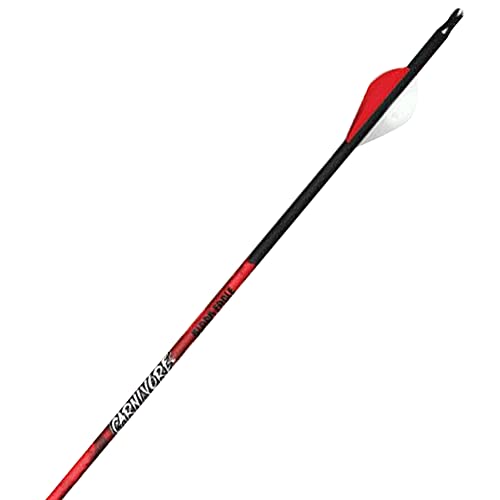
Black Eagle New Carnivore Carbon 300
- Shaft
- Carbon
- Spine
- 300
- Straightness
- 0.003 in
- Arrow
Black Eagle Outlaw Fletched Crested 300
- Spine
- 300
- Straightness
- 0.005 in
- Arrows per pack
- 6
- Arrow
Black Eagle Vintage Traditional Feathered 500
- Spine
- 500
- Arrows per pack
- 6
- Arrow
Black Eagle Carnivore Fletched 350
- Spine
- 350
- Straightness
- 0.001 in
- Arrows per pack
- 6
- Arrow
Black Eagle Outlaw Fletched Crested 300
- Spine
- 300
- Straightness
- 0.005 in
- Arrows per pack
- 6
- Arrow
Black Eagle Carnivore Shafts 300
- Spine
- 300
- Straightness
- 0.003 in
- Arrows per pack
- 12
- Arrow
Black Eagle Rampage Shafts 300
- Shaft
- Carbon
- Spine
- 300
- Diameter (ID)
- 0.204 in
- Arrow
Black Eagle Outlaw Midwest Archery 350
- Spine
- 350
- Diameter (ID)
- 0.2445 in
- Arrows per pack
- 12
- Arrow
Black Eagle Talon Carbon 350 .001
- Shaft
- Carbon
- Spine
- 350
- Straightness
- 0.001 in
- Arrow
Black Eagle Talon Carbon 350 .003
- Shaft
- Carbon
- Spine
- 350
- Straightness
- 0.003 in
- Arrow
Black Eagle Carnivore Carbon 350 .003
- Shaft
- Carbon
- Spine
- 350
- Straightness
- 0.003 in
- Arrow
Black Eagle Carnivore Fletched 2.5-Inch Shield 300
- Spine
- 300
- Straightness
- 0.003 in
- Arrows per pack
- 6
- Crossbow bolt
Black Eagle Executioner
- Length
- 20 in
- Straightness
- 0.001 in
- Nock
- Half moon
- Crossbow bolt
Black Eagle Executioner
- Length
- 20 in
- Straightness
- 0.003 in
- Nock
- Half moon
- Crossbow bolt
Black Eagle Executioner
- Length
- 18 in
- Straightness
- 0.001 in
- Nock
- Half moon
- Crossbow bolt
Black Eagle Executioner
- Length
- 20 in
- Straightness
- 0.003 in
- Nock
- Half moon
- Crossbow bolt
Black Eagle Executioner
- Length
- 16 in
- Straightness
- 0.003 in
- Nock
- Half moon
- Crossbow bolt
Black Eagle Executioner
- Length
- 22 in
- Shaft
- Carbon
- Straightness
- 0.001 in
- Crossbow bolt
Black Eagle Executioner
- Length
- 20 in
- Straightness
- 0.003 in
- Nock
- Half moon
- Crossbow bolt
Black Eagle X-Impact 300
- Shaft
- Carbon
- Straightness
- 0.001 in
- Crossbow bolt
Black Eagle Executioner
- Length
- 16 in
- Shaft
- Carbon
- Straightness
- 0.003 in
- Crossbow bolt
Black Eagle Zombie Slayer
- Length
- 20 in
- Shaft
- Carbon
- Straightness
- 0.003 in
- Crossbow bolt
Black Eagle Zombie Slayer
- Length
- 18 in
- Shaft
- Carbon
- Straightness
- 0.003 in
- Crossbow bolt
Black Eagle Zombie Slayer
- Length
- 22 in
- Straightness
- 0.001 in
- Nock
- Half moon
- Crossbow bolt
Black Eagle Executioner
- Length
- 22 in
- Straightness
- 0.001 in
- Nock
- Half moon
- Crossbow bolt
Black Eagle Zombie Slayer
- Length
- 22 in
- Shaft
- Carbon
- Straightness
- 0.003 in
- Crossbow bolt
Black Eagle Zombie Slayer
- Length
- 20 in
- Straightness
- 0.001 in
- Nock
- Half moon
- Crossbow bolt
Black Eagle Executioner Crossbow Shafts .001-22
- Straightness
- 0.001 in
- Nock
Black Eagle Capture Nock
- Kind
- Standard
- Crossbow nock end
- Capture




What Black Eagle makes for bowhunters
On this site, Black Eagle covers two product types: arrows for compound and traditional bows, and crossbow bolts. Around them sits one part, a capture nock for the brand's own bolts.
The maker's site lists more than that: target shafts, a youth target arrow, and apparel. This site doesn't list those, so they aren't in the grid.
Every arrow and bolt in the grid is carbon. Most hunting listings come two ways: fletched 6-packs with vanes or feathers already on, and 12-packs of bare shafts that you cut and build yourself.
The grid shows what's on Amazon right now, filtered by type. It changes as packs come and go. So I'll write about the lines and what separates them, not about how many of each are listed this week. Most specs in the grid come from Amazon listings, and the grid marks those values. Where the maker publishes a number, I use the maker's.
How Black Eagle arrows are organized
Here's what actually changes from one Black Eagle arrow to the next. The maker sorts its hunting arrows by inside diameter, and the name tells you which one you have:
- 4 mm (.165 inch): Deep Impact and X Impact
- 5 mm (.204 inch): Rampage and Renegade
- Standard (.245 inch): Outlaw, Carnivore and Talon, plus the traditional Vintage at .244
Think spaghetti versus bucatini. Same pasta, different hole, and the hole decides which sauce fits. For arrows, the sauce is inserts, outserts and nocks, and they're sold per diameter.
The maker says every Black Eagle arrow is "Super Sorted" for spine, straightness and weight. Each product page then states its own numbers: a straightness grade, a weight tolerance in grains, and a grains-per-inch (GPI) figure for each spine. GPI is the weight of the bare shaft per inch of length. It's the column I'd add to your spreadsheet first. (Yes, I assume you have one.)
Lineup notes: standard-diameter Black Eagle arrows
Outlaw: the plain hunting shaft
The Outlaw is the line most people search for by name. The maker lists it at .245 inch inside diameter, ±.005 inch straightness, ±2 grain weight tolerance and a 32-inch shaft. Spines run from a stiff 300 to a light 700, so it covers a wide range of draw weights.
Fletched Outlaw 6-packs come with 2-inch vanes or 3-inch shield-cut feathers, installed nocks and inserts. The 12-pack shafts come with nocks installed. The grid also shows crested Outlaw packs and one sold under a Midwest Archery name; their specs come from the listings.
Carnivore: the speed pitch
The maker pitches the Carnivore for speed. Its page lists .245 inch inside diameter, a choice of ±.001 or ±.003 inch straightness, ±1 grain weight tolerance and a 32-inch shaft. Spines run from 250 to 400, plus one labeled for 30 to 50-pound bows.
Compare the GPI figures with the Outlaw at the same spine and the Carnivore comes in lighter. That's where the speed claim comes from: less shaft weight per inch. The grid shows fletched packs, bare shafts and a shield-cut vane version.
Talon: tighter grades, bright cresting
The Talon sits on the same .245 diameter. The maker lists ±.001 or ±.003 inch straightness, ±1 grain tolerance, a 32-inch shaft and spines from 300 to 500. Yellow cresting is the visible difference. The maker says it's there to make arrows easier to find after the shot, and notes the cresting adds .01 GPI.
Vintage: the traditional look
The Vintage is for traditional shooters who want carbon under a wood-grain finish and hand-painted cresting. The maker lists .244 inch inside diameter, ±.005 inch straightness, ±2 grain tolerance and a longer 34-inch shaft, with spines from 350 to 600. The grid listing comes feathered. Traditional setups across brands are on the recurve arrows page.
Lineup notes: small-diameter Black Eagle arrows
Rampage and Renegade: the 5 mm pair
Both use a .204 inch inside diameter. The maker calls the Rampage "the benchmark" 5 mm hunting arrow. Renegade it describes as a heavy 5 mm arrow built for durability.
What separates them, per the maker:
- Rampage: ±.001 or ±.003 straightness, ±1 grain, 32-inch shaft, spines from a very stiff 150 to 400
- Renegade: ±.005 straightness, ±1 grain, 32.5-inch shaft, spines 250 to 400
Both ship with 50-grain stainless half-outs, which the maker calls Bone Crusher half-outs. A half-out is a part that sits half inside and half outside the shaft. It adds weight up front and guards the shaft's front edge.
Deep Impact and X Impact: the 4 mm pair
Both use a .165 inch micro-diameter shaft and the maker's patented FOCOS 2.0 system, a 58-grain outsert setup for adjusting front weight. Both list ±.001 inch straightness and ±1 grain.
- Deep Impact: pitched as a heavyweight micro-diameter arrow, spines 300 to 400
- X Impact: pitched for speed, spines from 200 to 500 (plus a 600 sold as shafts only)
Quick math on the weight difference: a 28-inch Deep Impact 300 shaft at the maker's 11 GPI is about 308 grains bare. An X Impact 300 at 8.1 GPI is about 227. Same spine number, roughly 80 grains apart before you add a point. The grid files one X-Impact listing under bolts; the maker's site describes X Impact as a hunting arrow, so read that listing carefully.
Black Eagle crossbow bolts
The bolt lineup is two lines on the same shaft size. The maker lists both at .300 inch inside diameter and .346 outside, ±1 grain weight tolerance, and a choice of ±.001 or ±.003 inch straightness.
- Executioner: 16, 18, 20 and 22-inch lengths, 9.0 GPI, brass inserts installed (92 or 110 grains depending on length), 2-inch vanes or 3-inch vanes on the 20 and 22-inch versions
- Zombie Slayer: 18, 20 and 22-inch lengths, 9.1 GPI, the same insert weights, bright yellow and orange vanes and nocks
The maker gives the 20-inch Executioner at a little over 320 grains without a field point or broadhead. Both lines come with half-moon nocks installed, and the maker says all its crossbow nocks are press-fit, not glued. Flat nocks come in the box on some lengths. The grid also shows a Capture Nock 12-pack that the maker says fits Executioner and Zombie Slayer bolts.
The Zombie Slayer name is the maker's joke, and its safety page gets the same joke in. The bolts themselves are real crossbow bolts, built and sorted like the Executioner.
Here's the thing with bolts: your crossbow maker decides the length, the nock and the minimum arrow weight, not the bolt brand. Black Eagle's own pages say to check your crossbow manual for minimum arrow weight. Wisconsin DNR's safety advice is to use the bolts or arrows the manufacturer recommends. Read the manual first, then shop. Lengths and nock types across brands are on the crossbow bolts page, and best crossbow bolts has a ranked list.
How to choose within the Black Eagle lineup
Pick the diameter first
The diameter decides your parts for years. Standard .245 shafts take the most common inserts and nocks. The 5 mm and 4 mm lines use their own half-outs, outserts and nocks, sold per line on the maker's site. If you already own a box of parts, start there.
Then match the spine to your bow
Spine is how much the shaft bends. Archery 360 explains that higher numbers mean weaker spines (a 300 is stiffer than a 500), and that draw weight, arrow length and point weight all change the spine you need. Its advice is to stick with the maker's chart for the shaft you're buying.
Black Eagle's spine chart asks for three things: your draw weight, your total weight up front (insert or outsert, point and any added weights), and your arrow length measured from the throat of the nock to the end of the tip. It has tabs for compound and traditional bows. The maker says it's a general recommendation and suggests a dealer if your setup falls outside it. Background is on the hunting arrows page and the compound bow arrows page.
Then decide how straight you need
Across the lines, the maker's straightness grades run from ±.001 inch (Rampage, Carnivore and Talon in their tighter grades, Deep Impact, X Impact) to ±.005 (Outlaw, Renegade, Vintage). Smaller is straighter. A straighter shaft doesn't fix a wrong spine, though. Settle the spine, then pick the grade.
Weigh the whole arrow, not just the shaft
My one opinion on this page: there's no universally best arrow weight. It has to match your bow and your broadhead. The reason is in Archery 360's spine piece: front weight weakens the spine, so a heavier point or a heavier half-out can change which spine you need. Black Eagle's chart builds that in by asking for total front weight. Use it. More on matching heads is on the broadheads page.
Fletched packs or bare shafts
Fletched 6-packs come ready to shoot once you add points. Bare 12-packs need cutting, and the maker's safety page says to use a cutter designed for carbon. If you don't own one, or a fletching jig, start with fletched. Vanes and feathers are on the fletching page.
Care, inspection and the maker's warnings
Two notes appear on nearly every Black Eagle product page. The maker doesn't recommend hot melt glue on its shafts. And it doesn't recommend any cleaner on the outside or inside of the shaft.
Inspect every carbon arrow before you shoot it. The maker's safety page says to check the whole arrow for carbon damage, nicks or nock damage, with eye protection on. Then flex it into a gentle arch of no more than 1 to 2 inches, rotate and repeat along its length, and listen for cracking. If you suspect damage, discard the shaft. Don't shoot it. Never shoot an arrow that's under-spined for your bow, and never dry-fire a bow or crossbow.
Nocks and lit nocks across brands are on the nocks page and the lighted nocks page.
Who's behind Black Eagle
Black Eagle Arrows lists its address in Canton, Georgia, on its contact page. Its site presents Darton (bows) and Conquest (stabilizers) as sister brands. A USA Archery release from February 2024 describes Randy Kitts as the man behind Black Eagle Arrows, Conquest Archery and Darton Archery. I couldn't verify a founding year, where the shafts are made, or a warranty policy on the maker's site, so those are left out.
Diameter, spine, straightness. Write all three on the arrow tube, and the next time somebody borrows "just one" arrow, you'll at least know which one to ask about.
Where Black Eagle shows up
Often compared
Questions about Black Eagle
Are Black Eagle arrows good?
What the maker states is checkable. Its product pages list straightness from ±.001 to ±.005 inch depending on the line, weight tolerance of ±1 or ±2 grains, and say every arrow is sorted for spine, straightness and weight. Whether a shaft suits you depends on the spine your bow needs and the diameter you want. The grid on this page shows those values per listing.
What is the Black Eagle Outlaw arrow?
The Outlaw is the maker's standard-diameter hunting shaft: .245-inch inside diameter, ±.005 inch straightness, ±2 grain weight tolerance and a 32-inch shaft. Spines run from a stiff 300 to a light 700. It comes fletched in 6-packs with 2-inch vanes or 3-inch feathers, or as bare shafts in 12-packs with nocks installed.
Which Black Eagle crossbow bolts are there?
Two lines: Executioner and Zombie Slayer. Both use a .300-inch inside diameter shaft, ±1 grain weight tolerance and a choice of ±.001 or ±.003 inch straightness, with half-moon nocks installed. Executioner comes in 16 to 22-inch lengths, Zombie Slayer in 18 to 22 inches with bright yellow and orange parts. Check your crossbow manual for length and minimum arrow weight first.
Who makes Black Eagle arrows?
Black Eagle Arrows lists its address in Canton, Georgia, and its site presents Darton (bows) and Conquest (stabilizers) as sister brands. A February 2024 USA Archery release describes Randy Kitts as the man behind Black Eagle Arrows, Conquest Archery and Darton Archery. I couldn't verify a founding year or where the shafts are made.
Where can I buy Black Eagle arrows?
The product grid on this page links to Black Eagle listings on Amazon US, filtered by type. Black Eagle also sells arrows, shafts and components on its own site. Check that a listing names the exact spine, straightness grade, length and pack count you want before you order.
Sources
- Black Eagle Arrows: Home page (arrow lines and sister brands) — accessed 2026-10-23
- Black Eagle Arrows: Outlaw 6pk arrows, vanes or feathers — accessed 2026-10-23
- Black Eagle Arrows: Outlaw carbon arrow hunting shafts — accessed 2026-10-23
- Black Eagle Arrows: Talon Crested hunting arrows and shafts — accessed 2026-10-23
- Black Eagle Arrows: Carnivore hunting arrows and shafts — accessed 2026-10-23
- Black Eagle Arrows: Rampage .204 ID (5mm) carbon hunting arrows and shafts — accessed 2026-10-23
- Black Eagle Arrows: Renegade fletched arrows — accessed 2026-10-23
- Black Eagle Arrows: Deep Impact arrows and shafts — accessed 2026-10-23
- Black Eagle Arrows: X Impact arrows and shafts — accessed 2026-10-23
- Black Eagle Arrows: Vintage traditional arrow shafts — accessed 2026-10-23
- Black Eagle Arrows: Executioner crossbow fletched arrows, 2-inch vanes — accessed 2026-10-23
- Black Eagle Arrows: Executioner crossbow fletched 20 and 22-inch arrows, 3-inch vanes — accessed 2026-10-23
- Black Eagle Arrows: Executioner crossbow shafts — accessed 2026-10-23
- Black Eagle Arrows: Zombie Slayer crossbow fletched arrows — accessed 2026-10-23
- Black Eagle Arrows: Crossbow Capture Nock — accessed 2026-10-23
- Black Eagle Arrows: Arrow sizing spine chart — accessed 2026-10-23
- Black Eagle Arrows: Safe arrow use — accessed 2026-10-23
- Black Eagle Arrows: Contact — accessed 2026-10-23
- USA Archery: Black Eagle Arrows, Conquest Archery and Darton Archery back compound at the Indoor Nationals Final (2024) — accessed 2026-10-23
- Archery 360 (Archery Trade Association): Archery Lingo: Arrow Spine — accessed 2026-10-23
- Wisconsin DNR: Archery and crossbow safety tips — accessed 2026-10-23