Blinds & Tree Stands · Gear type
Hang-On Tree Stands
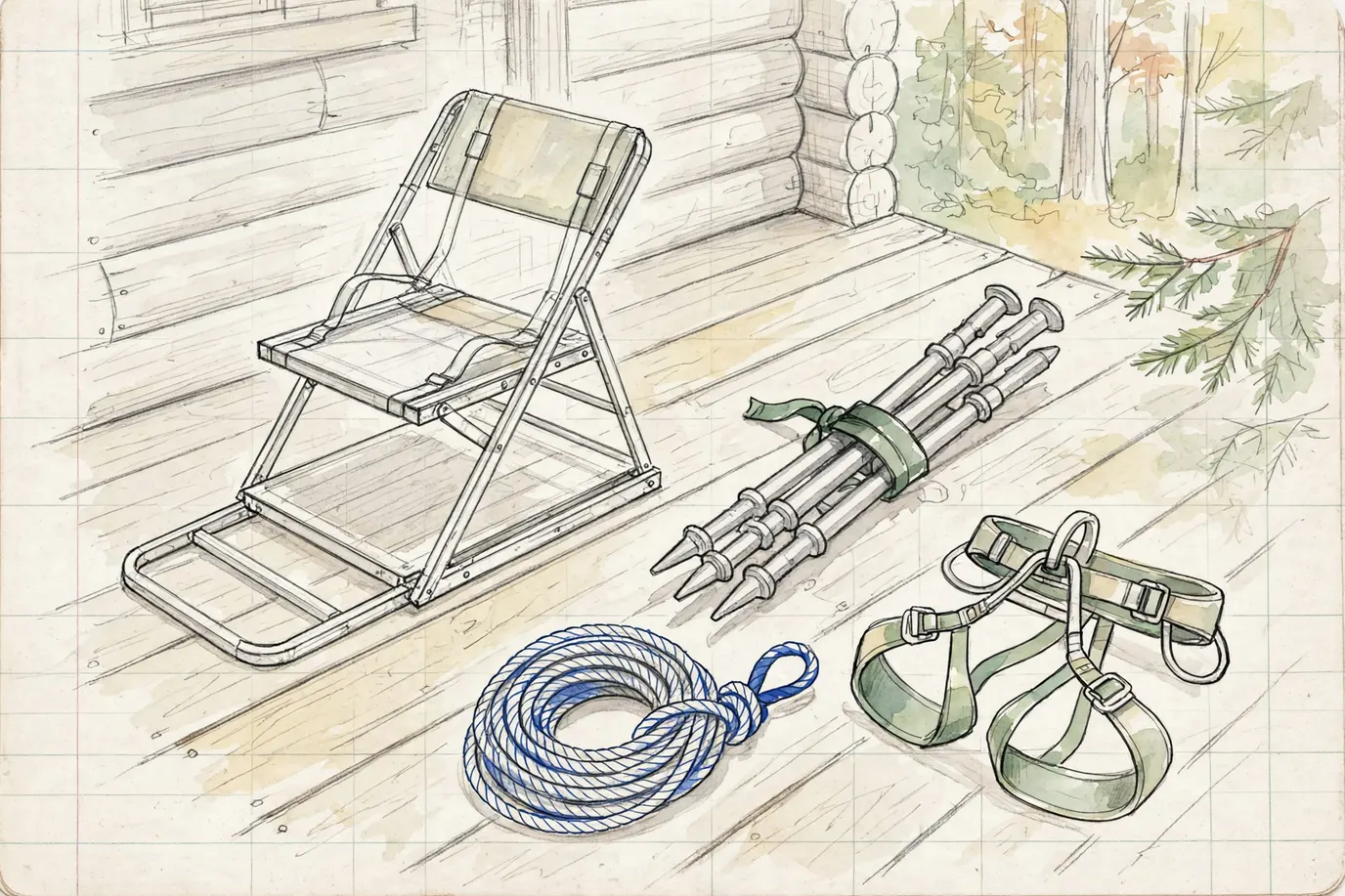
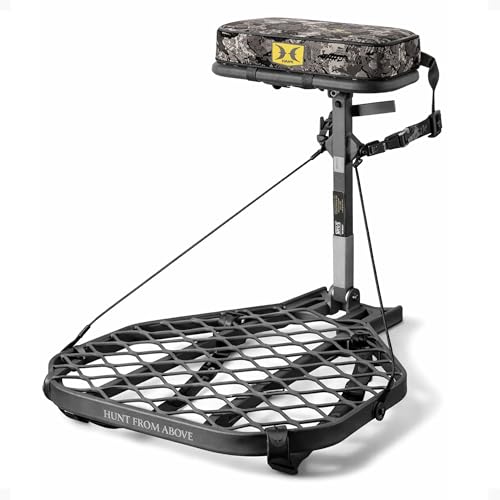
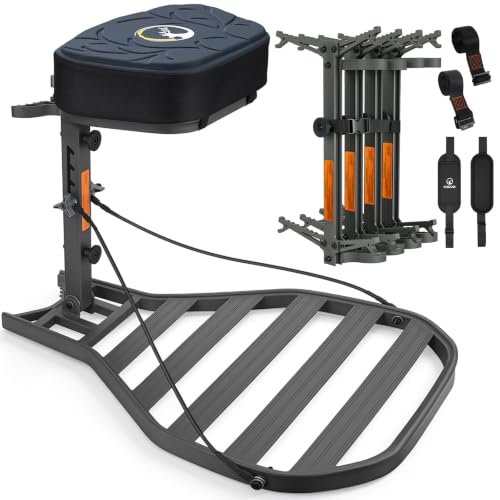
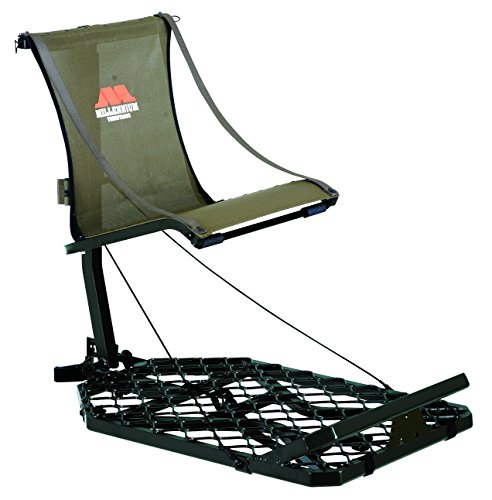
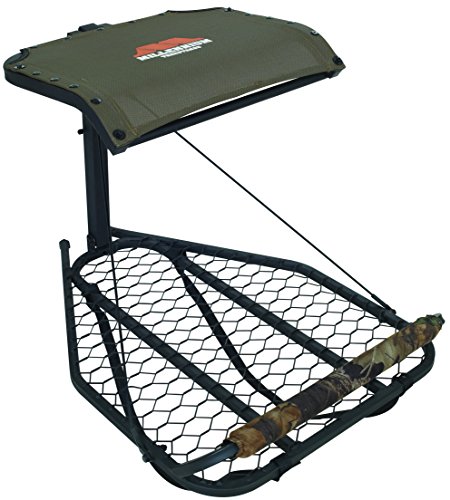
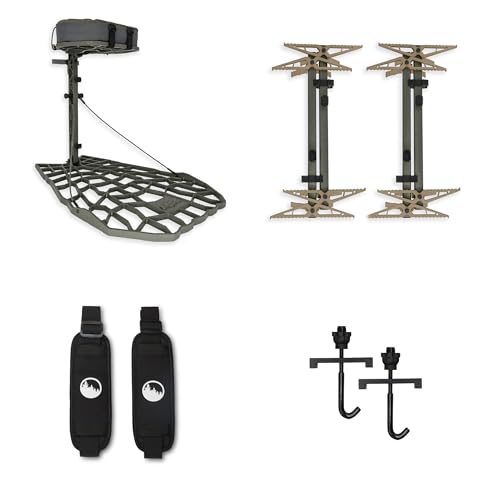
A hang-on tree stand is a platform and seat with no way up of its own: you strap it to the trunk at hunting height and reach it on climbing sticks, steps or a ladder section. That makes it the stand that goes on crooked, limby, fork-topped trees a climber can't use. The trade is setup. You hang it, you climb to it, and you need to stay connected to the tree the whole way. Rule of thumb: buy the stand and the way up as one system.
We earn a commission if you buy through our links, at no cost to you. Disclosure
| Model | Material | Weight capacity | Platform | Amazon |
|---|---|---|---|---|
Big Game Captain XC Hang-On StandTree stand More specs
| Steellisting | 300 lblisting | — | Check price |
Big Game Captain XC Steel Hang-On 20x30Tree stand More specs
| Steellisting | 300 lblisting | — | Check price |
Big Game Captain XC Steel Hang-On 14x8Tree stand More specs
| Steellisting | 300 lblisting | — | Check price |
Bolderton Deluxe Hang-On Tree StandTree stand More specs
| Steellisting | 300 lblisting | — | Check price |
Funhorun Hang On Tree Stand with Chair SeatTree stand More specs
| Steellisting | — | — | Check price |
Guide Gear Deluxe Hang-On Tree Stand ChairTree stand More specs
| Steellisting | 300 lblisting | 24 x 29.5listing | Check price |
Hawk Helium XL Hang-OnTree stand More specs
| Aluminumlisting | — | 24 x 30listing | Check price |
Hawk CRUZR Hang-OnTree stand More specs
| Steellisting | 300 lblisting | 34 x 24listing | Check price |
Hawk Helium Kickback LVL XLTree stand More specs
| Aluminumlisting | 300 lblisting | 26 x 31.5listing | Check price |
Hawk Combat Steel Tree Stand with HarnessTree stand More specs
| Steellisting | — | — | Check price |
Hawk Helium Pro Hang-OnTree stand More specs
| Aluminumlisting | — | 24 x 30listing | Check price |
Hawk Ranger 3-Pack Climbing Sticks and StandTree stand More specs
| Steellisting | 300 lblisting | — | Check price |
Hawk Rival Lite Hang-OnTree stand More specs
| Aluminumlisting | 300 lblisting | 29 x 20.5listing | Check price |
Kalkal Aluminum Hang-On with HarnessTree stand More specs
| Aluminumlisting | — | 29.92 x 16.69listing | Check price |
Kalkal Aluminum Hang-On with Climbing Sticks KitTree stand More specs
| Aluminumlisting | — | — | Check price |
Millennium Treestands M150 Monster Hang-OnTree stand More specs
| Aluminumlisting | — | — | Check price |
Millennium Treestands M50 Hang-OnTree stand More specs
| Steellisting | — | — | Check price |
Millennium Treestands M100U UltraliteTree stand More specs
| Aluminumlisting | 300 lblisting | — | Check price |
Millennium Treestands M50 Steel Hang-OnTree stand More specs
| Steellisting | 300 lblisting | 24 x 32.5listing | Check price |
Millennium Treestands M350 Tree SeatTree stand More specs
| Aluminumlisting | 300 lblisting | — | Check price |
Millennium Treestands Pro-Lite Hang-OnTree stand More specs
| Aluminumlisting | 300 lblisting | 20.5 x 20listing | Check price |
Millennium Treestands Run & Gun Hang-On ComboTree stand More specs
| — | — | — | Check price |
Muddy Ultra Tree SeatTree stand More specs
| Steellisting | 300 lblisting | — | Check price |
Muddy 1-Person XL Hang-OnTree stand More specs
| Aluminumlisting | — | 25 x 34listing | Check price |
Muddy 1-Person Hang-On FlexTekTree stand More specs
| Steellisting | 300 lblisting | 24 x 30listing | Check price |
Muddy Ultra Tree Seat MTS500 2-PackTree stand More specs
| — | 300 lblisting | — | Check price |
Muddy Wide Stance Hang-On with 3 SticksTree stand More specs
| Aluminumlisting | 300 lblisting | 24 x 30listing | Check price |
Muddy XL Hang-On with 3 SticksTree stand More specs
| Aluminumlisting | 300 lblisting | 25 x 34listing | Check price |
OL'MAN Steel Hang-OnTree stand More specs
| Steellisting | 300 lblisting | 20.5 x 26listing | Check price |
Rivers Edge Ardisam Lounger RE521Tree stand More specs
| — | — | 24 x 36listing | Check price |
Summit Treestands Ledge XTTree stand More specs
| — | — | — | Check price |
Summit Treestands Dual Axis Hang-OnTree stand More specs
| — | — | — | Check price |
XOP-Xtreme Outdoor Products Vanish EvolutionTree stand More specs
| Cast aluminumlisting | — | — | Check price |
XOP-Xtreme Outdoor Products IONTree stand More specs
| Cast aluminumlisting | 350 lblisting | 31 x 22listing | Check price |
XOP-Xtreme Outdoor Products Air Raid EvolutionTree stand More specs
| Cast aluminumlisting | 350 lblisting | 21.5 x 31listing | Check price |
XOP-Xtreme Outdoor Products RubiconTree stand More specs
| Cast aluminumlisting | 350 lblisting | 27 x 19listing | Check price |
XOP-Xtreme Outdoor Products ION Mobile Hunting SystemTree stand More specs
| Cast aluminumlisting | 350 lblisting | 31 x 22listing | Check price |
XOP-Xtreme Outdoor Products ION 2025Tree stand More specs
| Cast aluminumlisting | 350 lblisting | 31 x 22listing | Check price |
XOP-Xtreme Outdoor Products FlyTree stand More specs
| Aluminumlisting | — | — | Check price |
XOP-Xtreme Outdoor Products Superfly HybridTree stand More specs
| Aluminumlisting | — | — | Check price |









XOP-Xtreme Outdoor Products ROAMTree stand More specs
| Aluminumlisting | 350 lblisting | 26 x 16listing | Check price |
|---|---|---|---|---|
XOP-Xtreme Outdoor Products Vanish EvolutionTree stand More specs
| Cast aluminumlisting | — | — | Check price |
XOP-Xtreme Outdoor Products ION Mobile Hunting SystemTree stand More specs
| Cast aluminumlisting | — | — | Check price |
XOP-Xtreme Outdoor Products Air Raid Evolution Full SystemTree stand More specs
| Cast aluminumlisting | — | — | Check price |
XOP-Xtreme Outdoor Products IONTree stand More specs
| Cast aluminumlisting | — | 31 x 22listing | Check price |
XOP-Xtreme Outdoor Products SWAYTree stand More specs
| Aluminumlisting | 350 lblisting | 30 x 19listing | Check price |


What’s in this listHang-on (lock-on) tree stands, lightest first. “—” means neither the maker nor the Amazon listing states it.
What makes a hang-on tree stand different
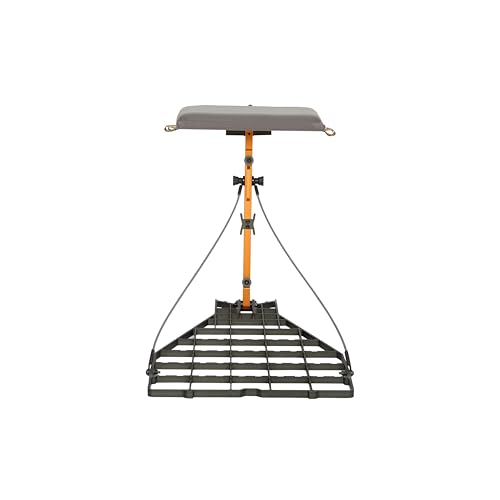
A hang-on stand is the simplest tree stand there is: a platform, a seat and a strap or chain that holds them to the trunk. It doesn't climb. It doesn't come with a ladder. You bring the way up separately and hang the stand where you want to sit. Some makers and hunters call it a lock-on or a fixed-position stand. Same thing.
That design is why it fits trees nothing else will. A Union Sportsmen's Alliance writer lists the spots: crooked trees, trees limbed low, creek crossings, ridgelines. Outdoor Life's comparison says a hang-on, like a saddle, works in almost any tree with sticks or steps, while a climber needs a straight, limbless trunk. The limbs that stop a climber cold are cover for you.
Height, hiding and the climber-or-hang-on question in general are covered on the main tree stand page. This page is about the hang-on's own decisions: how much the whole kit weighs, how you get up to it, how it sits once you're there, and how long it stays in the tree.
Below the text sits a table of hang-ons, sorted with the lightest at the top. Its columns come from the makers, with the Amazon listing's value where a maker is silent (marked as listing values; weight stays the maker's): weight, frame, rated load, platform, seat and trunk range. Where neither states a value, the cell is a dash. I don't fill blanks with hunches.
Pick the way up before you pick the hang-on stand
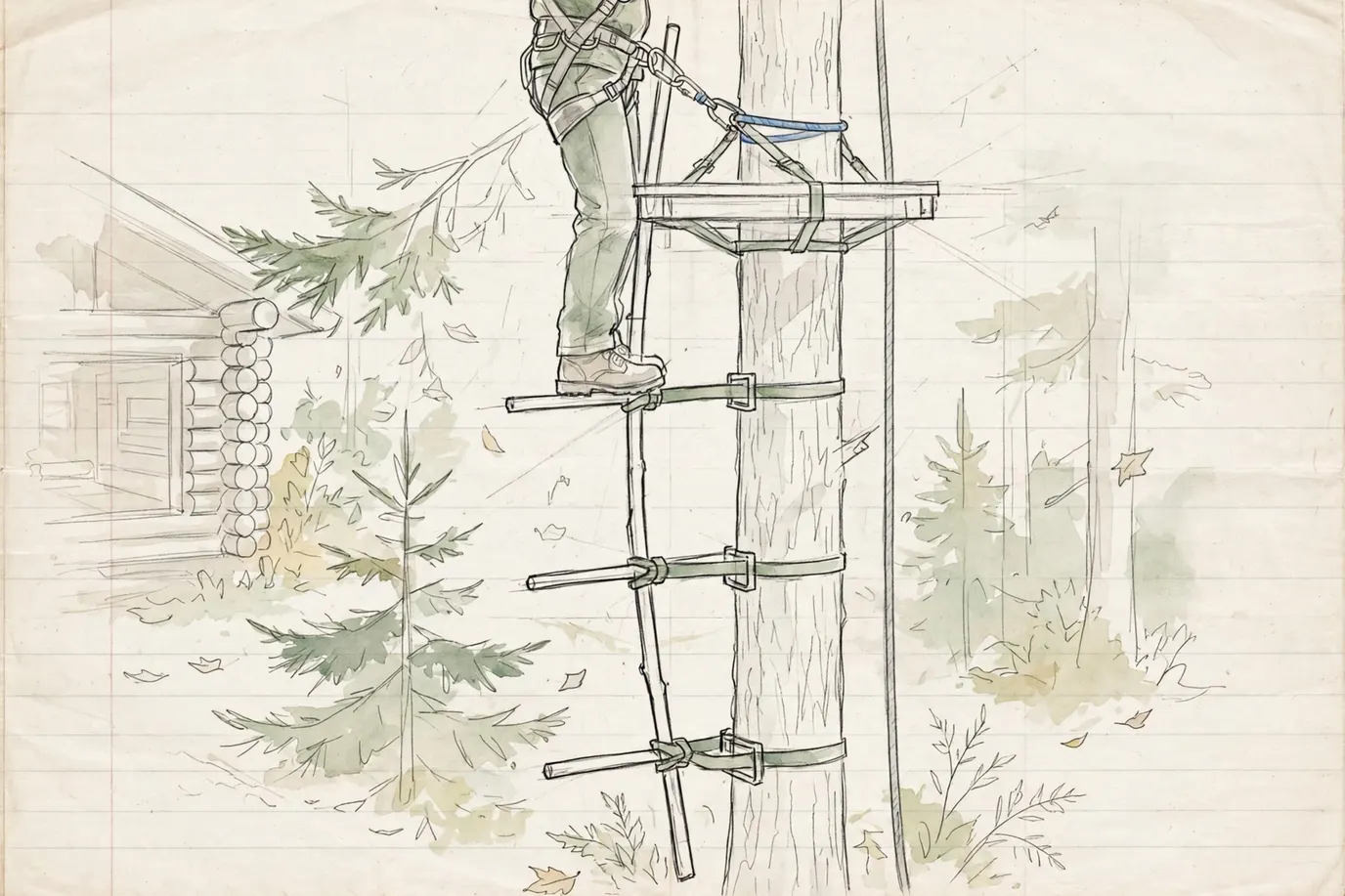
A hang-on is only half a setup. The other half is what you stand on while you climb to it:
- Climbing sticks: short ladder sections strapped to the trunk, the usual partner for a hang-on
- Tree steps: individual steps, strapped or screwed in
- Aiders: rope or webbing loops that hang from a stick for extra footholds
Union Sportsmen's writer says screw-in steps work, but a quick ladder held on with ratchet straps is safer and easier to hang. Screw-in steps aren't allowed everywhere, either, so check your state wildlife agency and the landowner before you drive anything into a tree.
Count your sticks against your height. Running out of sticks halfway up is how a 15-foot stand becomes a 9-foot stand. (That's a Saturday-afternoon fix, done on the ground, not a Saturday-morning one.)
The hang-on specs that decide it
Weight is the stand plus the sticks you carry with it
The listed weight covers the stand and nothing else. It doesn't count sticks, steps or straps you buy separately, so add those before you compare a hang-on with a climber.
Outdoor Life weighed one hang-on kit at 23.9 lb in total: a 12.2 lb stand base, 7.5 lb of climbing sticks, and the rest in the other pieces. One example, but the point holds: the table only shows you the stand.
If you hang and pull the stand every sit, every pound walks in and out with you. If you hang it for the season (up to the TMA's two-week limit, more on that below), carry weight matters once. That's the whole case for the lightweight hang-on page.
Material is the frame, and it travels with weight
Aluminum or steel, mostly. Read it next to Weight; the two travel together. Material isn't a safety rating. The TMA says to buy only stands that meet industry standards it recognizes and never to modify one without the maker's written permission.
Weight capacity covers you, your clothes and your gear
Whatever load the maker rates, stay under it; the TMA is flat about that. Add your heaviest November layers, your pack and your bow. Do the arithmetic at the kitchen table, not at 15 feet. A hang-on also hangs from a single strap or chain, so treat the maker's strap and attachment instructions as part of that rating.
Platform size is your standing room
On a hang-on, the platform is where you land when you step off the top stick, and where you'll turn to shoot.
A bigger platform means more room to shift your feet for an angled shot. A smaller one packs flatter against your back on the walk in. Stand on a tape-measured rectangle in your kitchen in your hunting boots before you decide. Your family will have questions. Answer them later.
The seat has to work with standing shots
Seat type shows foam, sling or mesh, the maker's own flexible design, or a flip-up. On a hang-on you often stand to shoot, so a seat that flips up out of the way gives your legs room. Stock cushions go numb fast, per Union Sportsmen's writer, which is why some hunters add a tree stand seat of their own.
Tree diameter range matters less than it does on a climber
Hang-ons strap around the trunk, so the tree diameter range is usually wide when the maker or the listing states one. Still, check it. The TMA's tree rule applies to every stand: live, healthy, straight, within the maker's size limits, never leaning.
Union Sportsmen's writer adds a hang-on detail. A straight trunk lets the platform angle slightly back toward the tree for balance and safety. He also suggests hanging it angled a little toward your shooting-hand side, so a right-hander can swing left.
Quiet features are about straps, not climbing
The table quotes the maker's quiet claims as stated. A hang-on doesn't scrape its way up a tree, and Outdoor Life rated the hang-on quiet to carry and set up. Noise comes from metal touching metal, loose straps and you. onX says to keep loose straps and pull-up ropes from blowing in the wind.
Camo or color is the finish, nothing more
Last column, least weight in the decision. On a hang-on, the tree's limbs usually do more hiding than the paint does.
How to hang a tree stand safely
Hanging a hang-on is the riskiest part of owning one. Bowhunting.com's stand-styles piece says hang-ons have produced the most hunter injuries and calls a lifeline essential. Follow your stand maker's instructions over anything here. The general sequence, from the sources on this page:
- Harness on, on the ground. A full-body harness that meets TMA-recognized standards, worn from the moment your feet leave the ground.
- Stay connected while you set sticks. Mossy Oak's safety article says to use a lineman's belt when climbing to place a stand, sliding it up as you go and leaning back to work hands-free. onX quotes a hunter who uses a lineman's rope so he can lean away and use both hands to set the stand.
- Climb slowly. The TMA says to keep three points of contact on every step: two hands and one foot, or one hand and two feet.
- Hang the lifeline first. At the top, place your safety line. Mossy Oak describes it as a static climbing-rated rope, TMA certified, with one or two prusik knots that slide but lock under load, and says it stays in place for future hunts.
- Haul the stand up, don't carry it. Never climb with anything in your hands or on your back, per the TMA. Pull the stand and gear up on a rope.
- Strap it, then test it. onX says to check strap integrity before you hang. Make sure the stand sits solid before you put your weight on it.
- Tether in before you sit. Once you're on the platform, connect to the tree and keep the tether snug, with no slack when sitting.
Bring a helper the first few times. Union Sportsmen's writer recommends it, and the TMA says to practice installing and using your stand at ground level with a responsible adult present.
Hang and hunt, or hang it for the season
Hang-ons get used two ways. Hang and hunt means you carry the stand and sticks in, set up, hunt, and take it all down. Bowhunting.com mentions this as the option that allows quick adjustments. Outdoor Life's writer said his own climb and setup took 15 to 20 minutes, done slowly and carefully. That's 15 to 20 minutes of noise near deer, so plan the time into your morning.
Pre-hung means you set the stand ahead of time and walk in quietly to a stand that's already there. It's quieter on hunt day. It also runs into the TMA's two-week rule, which caps how long any stand stays installed because weather does damage you can't always see.
At Hemlock Run the fix is a strip of masking tape on the underside of the seat with the date it went up, written in pencil. When that date is two weeks old, the stand comes down and gets a full inspection on the ground before it goes back up. Tape doesn't forget. I do. That's why the date goes on the stand and not in my head.
Hiding a hang-on stand
The hang-on's best trick is that it goes where the cover is. Pick a tree with something behind you. Bowhunter's concealment piece likes multi-trunk trees, conifers and trunks at least as wide as your waist, with you on the back side of the trunk.
XOP's how-to suggests tying pine boughs or leafy cuttings to the platform, seat or strap, and camo tape on shiny buckles. On public land, where trimming is often not allowed, it suggests pulling branches back with cord or zip ties instead of cutting. Clear only what blocks your shot, not a highway. If the hang-on won't sit right in a tree with a strong lean or a fork, XOP points to a hunting saddle as the option that still works there.
Hang-on vs ladder stand vs climber
All three put you up a tree. They spend their weight and effort differently.
- Hang-on vs ladder stand: Union Sportsmen's writer says ladder stands suit a spot you can leave up all season, are typically the safest option for older hunters and children, and some fit two. Hang-ons are lighter and go in more trees. See the ladder stand page.
- Hang-on vs climber: a climber needs a straight trunk with no limbs below hunting height; a hang-on doesn't care. In Outdoor Life's comparison the climber made a scraping noise on the way up, while the hang-on was quiet to carry and set. See the climbing tree stand page.
Hang-on stand safety
From the first stick to the last step down, you're in a full-body harness and tied to the tree. The CPSC says many incidents happen stepping onto or off the platform, and a harness is the one thing that helps then.
Once seated, take the slack out of the tether. Hanging in a harness is dangerous on its own: Wisconsin DNR says suspension trauma can set in within 20 minutes, and a harness foot strap eases the pressure on your legs. Keep a phone in a chest pocket, where you could reach it hanging, and leave a note at camp with the tree and the time you'll be back. Replace a harness after any fall, per the TMA and the CPSC.
My one opinion on this page, and the only one I don't negotiate: wear a harness every time your boots leave the ground, no exceptions, no "just a minute." The reason is in the CPSC's own line above. The dangerous minute is the one where you step from the sticks to the platform, and that minute happens on every single hunt. For the gear itself, see harnesses and lifelines.
Who should skip a hang-on
Skip the hang-on if climbing sticks to a stand sounds like more than you want to do in the dark. A ladder stand or a ground blind asks less of your knees and your balance. The TMA says it outright: no way to recover or escape from a fall means hunting from the ground.
Skip it, too, if your woods are full of straight, limbless poplars and you move every sit. A climber was built for exactly that.
Everybody else: pick the tree, count your sticks, date the tape. The stand is the easy part.
Brands in this list
Related
Questions people ask
How do you hang a tree stand?
Put on a full-body harness on the ground and stay connected to the tree with a lineman's belt or rope while you climb and set sticks. At height, hang a lifeline first, then haul the stand up, strap it and check it before you step on. Practice the whole sequence at ground level first, the way the TMA guidelines say.
Ladder stand vs hang-on: which is better?
It depends on how often you move. A ladder stand is sturdy and suits a spot you leave up all season; one hunting writer calls it typically the safest option for older hunters and children. A hang-on is lighter, fits more trees and more cover, and moves with you, but you climb sticks or steps to reach it.
Climber vs hang-on: which should I buy?
Look at your trees. A climber needs a straight trunk with no limbs below your hunting height. A hang-on works in almost any healthy tree because the sticks do the climbing. In one Outdoor Life side-by-side the kits weighed within a pound of each other, and the climber made a scraping noise on the way up.
Is a lock-on tree stand the same as a hang-on?
Yes. Lock-on, hang-on and fixed-position all describe a stand that straps or chains to the tree at one height and doesn't climb. You reach it with climbing sticks, tree steps or a ladder section. The table on this page lists them all under one type.
How long can I leave a hang-on stand in the tree?
The TMA guidelines say never leave a treestand installed for more than two weeks, since weather and other damage you can't see could weaken it. Write the date you hung it down, inspect the stand and straps before each use, and replace anything the maker can't repair.
Sources
- Treestand Manufacturers Association: Treestand Safety Guidelines — accessed 2026-10-22
- U.S. Consumer Product Safety Commission: Hunting Treestands and Harnesses (Pub. 5200) — accessed 2026-10-22
- Wisconsin DNR: Tree stand safety — accessed 2026-10-22
- Mossy Oak: 6 tree stand safety tips — accessed 2026-10-22
- onX Hunt: Tree stands, everything you need to know — accessed 2026-10-22
- Union Sportsmen's Alliance: Hang your treestand for comfort and success — accessed 2026-10-22
- Bowhunting.com: Treestand basics, 4 stand styles every hunter should know — accessed 2026-10-22
- Outdoor Life: Tree saddle vs climber vs hang-on — accessed 2026-10-22
- XOP: Shooting lanes, silhouettes, wind and entry routes (maker's how-to) — accessed 2026-10-22
- Bowhunter: Tree stand concealment — accessed 2026-10-22