Brand · Fire & Lighting
Acebeam Flashlights and Headlamps for Camp
Acebeam is a flashlight maker from Shenzhen, China, best known for very bright handheld lights, and on this site it covers two types: flashlights and headlamps. The flashlights run from AA and AAA pocket lights to the X75 searchlight. The headlamps are the H30, the H16 and the H18, at the high-output end of the headlamp pages. The short version: pick the battery first, then the shape, then the output you'll actually use. (Renee asked why a man who already owns a headlamp per pocket needs one that does 4,000 lumens. I said science. She said no.)
We earn a commission if you buy through our links, at no cost to you. Disclosure
Acebeam on Amazon US
23 models- Flashlight
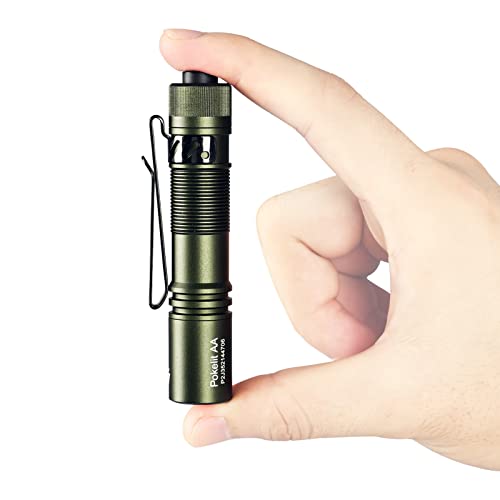
Acebeam Pokelit AA
- Body
- Aluminum
- Max output
- 550 lumens
- Max runtime
- 53 hours
- Flashlight
Acebeam X75
- Max output
- 80,000 lumens
- Beam distance
- 3,773 ft
- Flashlight
Acebeam E75
- Body
- Aluminum
- Max output
- 4,500 lumens
- Beam distance
- 853 ft
- Flashlight
Acebeam W35 LC
- Max output
- 800 lumens
- Beam distance
- 8,530 ft
- Flashlight
Acebeam TAC 2AA
- Max output
- 1,600 lumens
- Beam distance
- 594 ft
- Flashlight
Acebeam P20
- Max output
- 5,500 lumens
- Beam distance
- 4,199 ft
- Max runtime
- 72 hours
- Flashlight
Acebeam TAC AA 2.0
- Body
- Aluminum
- Max output
- 1,000 lumens
- Beam distance
- 919 ft
- Flashlight
Acebeam PT20
- Body
- Aluminum
- Max output
- 500 lumens
- Beam distance
- 262 ft
- Flashlight
Acebeam K1
- Body
- Aluminum
- Max output
- 1,000 lumens
- Beam distance
- 732 ft
- Flashlight
Acebeam EC90
- Max output
- 4,300 lumens
- Beam distance
- 1,880 ft
- Flashlight
Acebeam E10 2.0
- Body
- Aluminum
- Max output
- 1,200 lumens
- Beam distance
- 2,346 ft
- Flashlight
Acebeam L35 2.0
- Max output
- 5,000 lumens
- Beam distance
- 2,133 ft
- Max runtime
- 288 hours
- Flashlight
Acebeam E75
- Body
- Aluminum
- Max output
- 4,500 lumens
- Flashlight
Acebeam L35 2.0
- Max output
- 5,000 lumens
- Beam distance
- 2,133 ft
- Max runtime
- 288 hours
- Flashlight
Acebeam X75
- Max output
- 80,000 lumens
- Beam distance
- 3,773 ft
- Flashlight
Acebeam L19 2.0
- Max output
- 2,200 lumens
- Beam distance
- 3,553 ft
- Flashlight
Acebeam L16 2.0
- Body
- Aluminum
- Max output
- 3,000 lumens
- Beam distance
- 2,339 ft
- Flashlight
Acebeam Terminator M1 2.0
- Max output
- 3,900 lumens
- Beam distance
- 5,315 ft
- Max runtime
- 300 hours
- Headlamp
Acebeam H30 Headlamp
- Max output
- 4,000 lumens
- Power
- Rechargeable
- Headlamp
Acebeam H16 Headlamp
- Max output
- 1,000 lumens
- Beam distance
- 342 ft
- Max runtime
- 58 hours
- Headlamp
Acebeam H30 4000 Lumen Headlamp with Red and Green LEDs
- Max output
- 4,000 lumens
- Headlamp
Acebeam H30 Nichia XHP70.2 Headlamp
- Power
- Rechargeable
- Headlamp
Acebeam H18 Right Angle Headlamp
- Max output
- 4,000 lumens
- Beam distance
- 531 ft


What Acebeam makes, and what this page covers
Acebeam is a flashlight company first. Its own store sorts the lineup into EDC flashlights, tactical flashlights, high-power flashlights, LEP flashlights (the maker files them under white laser lights), dive lights, bike lights, accessories and LED headlamps.
On this site, Acebeam covers two of those: flashlights and headlamps, and the grid above has a filter for each. Flashlights are most of it. Dive lights and bike lights aren't types this site lists.
The listings change as models come and go, so I'll write about the lamps and what separates them, not about this week's count.
How Acebeam names its headlamps
Acebeam headlamps all start with H and a number. The number doesn't track lumens or size the way it does with some brands. On Acebeam's own headlamp page, the H range includes the H15 2.0, H16, H17 2.0, H18, H30, H35 and H50 2.0. A "2.0" means a second version of an older model.
The ones on this site right now are the H16, the H18 and the H30, and the H30 shows up in more than one listing. The differences between those listings are the LED and the auxiliary light colors, so read the title closely. Three listings, one lamp, slightly different hats. (Walt's comment: "So it's the same truck with a different radio." Close enough.)
Lineup notes: Acebeam headlamps
H30: the 4,000-lumen lamp
The H30 is the top of the grid for output. Acebeam's page lists:
- Main LED: CREE XHP70.2, in a 5000K or 6500K white
- Auxiliary LEDs: two, sold as red plus green, red plus UV, or red plus a high-CRI white
- Output: 4,000 lumens on Turbo-Max, down to an UltraLow mode
- Beam distance: 171 meters on Turbo-Max, about 561 feet
- Battery: one 21700 lithium-ion cell, 5,000 mAh, included
- Charging: USB-C, with a two-way cable the maker says can work as a power bank
- Weight: 6.70 oz with battery, 2.82 oz without
- Protection: IP68 and a 1.5-meter drop rating
The runtime table matters more than the headline. On Low, at 120 lumens, the maker lists 23 hours 30 minutes. That's the mode you'd actually walk in on. The 4,000-lumen mode is for a few seconds of looking across a field, not for the trail. Real talk: 4,000 lumens on your forehead will light up the next ridge and every tree between you and it.
The auxiliary colors are a choice you make at purchase. Red is on every version. Green is on the red-plus-green version. Pick the one you'll use: red for keeping your night vision, green if you want a second colored light for the walk.
H16: the lightweight AA option
The H16 is the light one. Acebeam lists it at 2.5 oz with battery and headband, or 1.9 oz for the lamp and battery alone. That's less than half the H30.
What the maker says about it:
- Output: 1,000 lumens on the 6500K gray version, 650 lumens on the 5000K black and orange versions
- Beam distance: 105 meters (about 344 feet) on the 6500K version, 86 meters on the 5000K version
- Battery: a 14500 rechargeable lithium-ion cell with USB-C, included, and the lamp also takes one AA alkaline or NiMH cell
- Runtime: 58 hours on Ultra-Low at 5 lumens, 16 hours on Low at 30 lumens
- Protection: IP68, submersible to 2 meters for up to 30 minutes, with a 1.5-meter drop rating
- Beam: wide, 100 to 110 degrees depending on the version
A 14500 is the same size as an AA, which is why the H16 can take either. Note what the maker's page doesn't list for the H16: no red light and no lockout. If those matter to you, the H30 and H18 are the ones with red.
H18: the right-angle lamp
The H18 is shaped differently. It's a right-angle light, with the lens on the side of the body instead of the end, and it comes off its headband on a quick-detach bracket. Acebeam says it can work as a headlamp, a clip light and a magnetic work light.
From the maker's page:
- Output: 4,000 lumens in 6500K white or 2,700 in 5000K, plus a 70-lumen red light
- Beam distance: 162 meters on the 6500K version, about 531 feet
- Battery: one 21700 lithium-ion cell, 6,400 mAh, included
- Charging: a USB-C port on the body with a metal cover, and a second USB-C port on the battery itself
- Weight: about 6.7 oz with battery, bracket and headband, or 70 grams for the body alone
- Protection: IP68 to 2 meters for 30 minutes, with a 2-meter drop rating
- Tilt: 180 degrees, with a pocket clip in the box
The maker lists the red light at 630 nanometers, with a runtime of 190 hours on low. For a light you hang in a ground blind or clip to a pack strap, the right-angle shape is the point. For a light you only wear, it's just a different shape.
Lineup notes: Acebeam flashlights
People search for the Acebeam flashlight far more than the headlamps. The flashlight values in the grid come from Amazon listings, and the grid marks them.
AA and AAA lights: Pokelit AA, K1, TAC AA 2.0, TAC 2AA and PT20
These are the lights you can feed from a gas station. The Pokelit AA, K1, TAC AA 2.0 and TAC 2AA list AA cells, and the PT20 is a penlight, a slim pen-shaped light, on AAA. Output runs from a few hundred lumens on the Pokelit and PT20 to over a thousand on the TAC 2AA. The Pokelit AA lists a low-mode runtime of a couple of days and a body under four inches long. The two TAC lights are the ones their listings call tactical, and the TAC 2AA adds a tail switch. The tactical flashlight guide explains the label.
E75, E10 2.0 and EC90: compact and mid-size
The E75 lists several thousand lumens in an aluminum body about five inches long, and one listing adds a strobe. The E10 2.0 has a built-in battery pack and a long beam for a small light, close to half a mile per its listing. The EC90 lists several thousand lumens and a beam of about a third of a mile.
L-series: L35 2.0, L19 2.0 and L16 2.0
The L lights are the long-reach group. The L35 2.0 lists several thousand lumens, a tail switch, a strobe and a low-mode runtime in the hundreds of hours. The L19 2.0 throws about two-thirds of a mile per its listing. The L16 2.0 is aluminum with a tail switch, and its listing calls it tactical.
P20, Terminator M1 2.0, W35 LC and X75: the big ones
The P20 lists several thousand lumens and a beam of about four-fifths of a mile. The Terminator M1 2.0 reaches about a mile and adds a red light. The W35 LC has a zoomable head and the longest beam in the Acebeam grid by far, more than a mile and a half per its listing. The X75 is the brightest, at tens of thousands of lumens. That's a light for the truck, not the coat. (Walt asked if it comes with a generator. It doesn't. He was disappointed.)
Flashlights from every brand are on the handheld spotlight page, and the brightest flashlight and best hunting flashlight lists rank them by stated rules. The lumens vs candela guide explains why a light with fewer lumens can still throw farther.
How to choose within the Acebeam lineup
Pick the battery first
My one opinion on this page: pick a headlamp you can feed from the same battery as the rest of your kit. The reason is on Acebeam's own spec pages. The H16 runs on a 14500 or a plain AA, and so do several of the Acebeam flashlights, per their listings. AA is what half the camp already runs on. The H30 and H18 run on 21700 cells, which hold far more energy but aren't something you'll find at a gas station on the way to camp.
If you go with a 21700 lamp, buy a second cell and keep it charged. If you go with the H16, a four-pack of AAs in the truck is your backup. I've forgotten both kinds of backup on different trips, so now both live in the truck.
More on charging is on the rechargeable headlamp page.
Then the shape and weight
The H30 and H18 weigh about the same with battery, according to the maker, and the H16 weighs less than half as much. On a long sit, weight on your forehead adds up. The H18's right-angle body and bracket make it more of a multi-use light. The H30 is a traditional headlamp with a big battery.
Then the output you'll actually use
All three list big top numbers. The useful numbers are lower in the table. The H30's Low (120 lumens) and the H16's Low (30 lumens) are the walk-in and camp-chore modes. Lumens are total output. Beam distance is how far the light stays useful. The headlamps page explains both across brands.
If you're tracking after the shot, bring a second light as backup, and check your state wildlife agency for rules on recovery after dark.
Then red light and the walk in
The National Park Service explains why red light matters before daylight: bright white light breaks down rhodopsin, the pigment your eyes use for night vision, in seconds, and full night vision takes roughly 20 to 40 minutes to come back. Dim red barely touches it. The H30 and H18 list red. The H16's page doesn't. See the red light headlamp page.
Then the lockout
Acebeam describes a lockout on the H30: hold the orange switch for six seconds and the lamp flashes three times and locks. A headlamp that switches on in your pack is a dead battery at 5 a.m. The maker's H18 and H16 pages don't describe a lockout, so check the manual that comes in the box.
Charging and battery care
Acebeam's H30 and H18 run on large lithium-ion cells, the H16 ships with one, and most of the flashlights are rechargeable. The U.S. Fire Administration says not to charge lithium-ion batteries below 32°F or above 105°F, to keep them out of direct sun and hot cars, and to stop using any battery that smells odd, changes shape, overheats or leaks. Charge at room temperature, not in a cold truck. Carry spare cells in a case, away from anything that can burn. Don't throw a lithium-ion cell in the trash; take it to battery recycling.
Acebeam facts
Here's what I could verify on Acebeam's own site:
- Company: established in 2009 with its own manufacturing facility, per its about page
- Location: Shenzhen, Guangdong, China, with an address in the Longhua district
- Focus: research, development and manufacturing of high-output lights, per the same page
- Warranty: a 15-day replacement for manufacturing defects, free repair within 10 years of purchase, and a limited lifetime warranty after that, with the owner paying for parts and shipping; periods vary by product, so read the terms for the exact lamp
- Not covered: normal wear, rough handling, battery leakage, disassembly or modification, per the warranty page
- Claims: through the dealer first, with a warranty card and proof of purchase, then Acebeam's customer service
Charge the cell, set the lamp to Low, and save Turbo for the one moment you need it. Renee still says no. Science disagrees, quietly.
Where Acebeam shows up
Questions about Acebeam
Are Acebeam flashlights and headlamps good?
What can be checked is in the specs. Acebeam's pages list IP68 water resistance on its headlamps, drop ratings of 1.5 to 2 meters, and outputs from 650 lumens on the H16 to 4,000 on the H30 and H18. The flashlight listings run from a few hundred lumens on the AAA penlight to tens of thousands on the X75. Its warranty page lists free repair for 10 years.
Which Acebeam flashlights take AA or AAA batteries?
In the grid, the Pokelit AA, the K1, the TAC AA 2.0 and the TAC 2AA list AA cells, and the PT20 penlight lists AAA, per their listings. The rest of the Acebeam flashlights that state their power are rechargeable. The H16 headlamp also takes a plain AA, per the maker.
Which Acebeam headlamp takes AA batteries?
The H16. Acebeam's page says it ships with a rechargeable 14500 lithium-ion cell and also accepts one AA alkaline or NiMH battery. The H30 and H18 run on a single 21700 lithium-ion cell instead. Output on AA may differ from the 14500 figures, so check the maker's table for the exact mode.
What is the Acebeam H30?
It's a rechargeable headlamp that Acebeam lists at 4,000 lumens on its Turbo-Max mode, with a CREE XHP70.2 main LED and two auxiliary LEDs in red plus green, red plus UV, or red plus a high-CRI white. It runs on a 5,000 mAh 21700 cell, charges by USB-C and weighs 6.70 oz with battery, per the maker.
Who makes Acebeam lights?
Acebeam's about page says the company was established in 2009 in Shenzhen, Guangdong, China, with its own manufacturing facility, and that it focuses on research, development and manufacturing of high-output lights. Its contact details list an address in the Longhua district of Shenzhen.
Where can I buy Acebeam flashlights and headlamps?
The product grid on this page links to the Acebeam flashlight and headlamp listings on Amazon US, with a filter for each type. Acebeam also sells on its own site. Several H30 listings differ by LED and auxiliary colors, and some flashlights appear in more than one listing, so check the exact version before you order.
Sources
- Acebeam: Home and product categories — accessed 2026-10-23
- Acebeam: LED headlamps — accessed 2026-10-23
- Acebeam: H30 USB-C rechargeable headlamp — accessed 2026-10-23
- Acebeam: H16 lightweight outdoor headlamp — accessed 2026-10-23
- Acebeam: H18 dual-source right-angle headlamp — accessed 2026-10-23
- Acebeam: About us — accessed 2026-10-23
- Acebeam: Warranty and support — accessed 2026-10-23
- National Park Service: Dark adaptation of the human eye and the value of red flashlights — accessed 2026-10-23
- U.S. Fire Administration: Lithium-ion battery safety — accessed 2026-10-23