What Fiskars makes for hunters and campers
On this site, Fiskars covers four kinds of tool. The grid above shows them first:
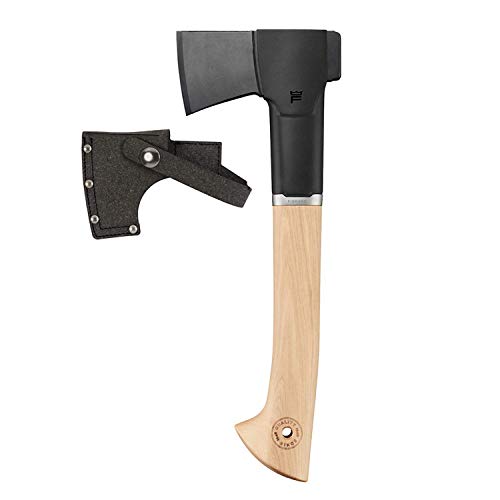
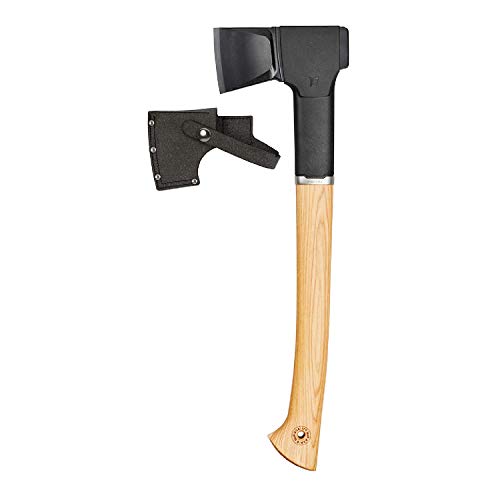
- Hatchets and axes: hatchets, mid-length chopping axes, long splitting axes and a splitting maul
- Machetes: a long plain machete, a machete saw, a brush axe and a machete axe
- A sharpener: one pull-through model its listing says handles axes as well as knives
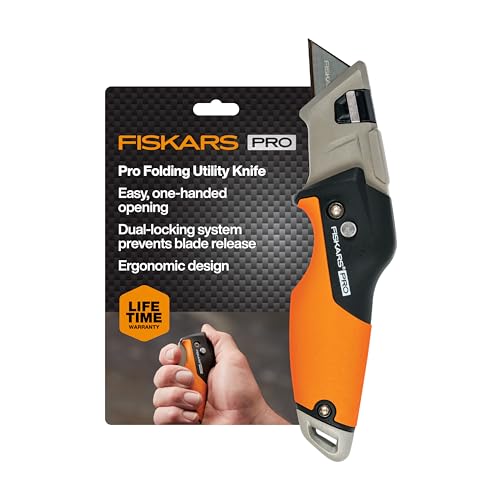
- Utility knives: a fixed-blade utility knife with a sheath, and a folding Pro utility knife
The grid changes as listings come and go, so I'll write about the tools and what separates them, not about this week's count.
Most specs here come from Amazon listings, and the grid marks those values. A dash means the listing didn't say. The 22-inch machete's listing, for one, gives us nothing beyond its name. I won't fill that in from memory. Neither should you.
Fiskars hatchets and axes
The Fiskars hatchet is what most people search for under this brand, and the axe family is now the biggest part of the grid. Fiskars's own axe pages group them into families:
- X-series: the maker calls these performance axes and says they have ultra-sharp blades
- Norden: precise carbon steel blades on hickory handles, per the maker
- Ultra: what the maker calls a precision-ground RazorEdge blade and a coating that glides through wood with less friction
The listings add the A-Series name on some chopping and splitting axes. Read the grid by length first, then by handle.
The hatchets
The short end of the lineup is one-hand tools: the X7 Hatchet, the X14 and U14 Universal Hatchets, a Steel Hatchet and the Norden N7. Their listings put them all at hatchet length. Most list fiberglass or composite handles. The Steel Hatchet lists a wood handle, and the Norden N7 lists hickory with a carbon steel head. Most come with a sheath, per their listings, and the X7's listing gives a lifetime warranty.
A hatchet is the kindling tool. It makes small wood smaller on a chopping block, one hand on the handle and the other well out of the way. More on that split of jobs is on the hatchet page and in the hatchet vs axe guide.
Between hatchet and axe
The X10 Chopping Axe S and the Norden N10 and N12 sit a step longer than the hatchets and well short of a full axe. The X10's listing names camping, bushcraft and splitting. The N10 lists chopping and the N12 lists splitting, both on hickory with carbon steel heads. This is the size people carry to a camp that needs more than kindling but doesn't want a full-length handle in the truck.
Chopping axes
The 28-inch Chopping Axe and the A-Series Chopping Axe 28 are two-hand tools, felling style in their listings. The A-Series lists a fiberglass or composite handle and a lifetime warranty. These cut across the grain: limbing a downed tree, bucking a log, chopping firewood to length.
Splitting axes and the maul
The longest tools in the grid are for rounds on a block. The A-Series Super Splitting Axe and the X36 Super Splitting Axe list fiberglass or composite handles, and the X36 lists a sheath. The Pro IsoCore Splitting Maul is the heavy end of the family. A splitting head is shaped to push the wood apart, not to bite deep, so it's the wrong tool for limbing. The splitting axe page compares heads and lengths across brands.
Lineup notes: the Fiskars machete
The 22-inch machete
This is the plain long blade. The listing in our data doesn't give a blade length, steel or handle material, so the grid shows dashes. The name gives the size class: 22 inches. Read the listing of the exact model before you order, and look for whether a sheath comes with it.
The 24-inch machete saw
The machete saw is the more interesting tool. Its listing gives an 18-inch blade and a saw-back style. That means a cutting edge on one side and saw teeth along the spine. So one tool does two jobs: swing the edge at brush, turn it over and saw a limb.
A saw back changes how you carry it. The spine isn't a smooth place for your free hand anymore. Treat both edges as edges.
The brush axe and the machete axe
Two more blades in the grid sit between a machete and an axe. The Brush Axe's listing gives a short blade, a FiberComp handle and a sheath. The 28-inch Heavy-Duty Machete Axe lists a sheath and little else, so read its listing before you order. Both are brush tools by name: saplings and woody growth rather than firewood.
What a machete is actually for around camp
American Trails, writing for trail crews, says machetes earn their place clearing dense vegetation. It also says a slightly angled stroke, off vertical, works better than a low horizontal swing. And it says a machete shouldn't be used on trailside branches, because it leaves crude cuts.
That's my one opinion on this page, and it's the trail crews' reason: a machete is for green brush, and a saw is for limbs. Clear the goldenrod and the briars in front of a ground blind with the blade. Take the branch that blocks your shooting lane with teeth. The machete saw puts both in one hand, which is the reason it exists.
Rule of thumb: if you can't see through it, swing at it. If you can see the bark on it, saw it.
Before you clear a shooting lane
Do the clearing weeks before the season, not the morning of the hunt. It's loud, sweaty work, and it's better finished long before you sit there quietly. Late summer suits it: the growth is up, and you can see what's in the way from the stand or the blind window.
On land you don't own, ask the landowner first, and ask exactly what you may cut. Public land often has its own rules about cutting vegetation, so check with the agency that manages it. A machete makes a lot of progress in an afternoon. That's the point, and it's also the problem when it's somebody else's afternoon to explain.
More on lengths and blade styles across brands is on the machete page.
The Fiskars axe and knife sharpener
The grid carries one Fiskars sharpener: the Axe & Knife Sharpener. Its listing calls it a pull-through style with ceramic abrasives and says it works on axes. A pull-through sharpener sets the angle for you; you draw the edge through the slot. That's the appeal at a woodpile, where nobody wants to hold a stone at a steady angle with cold hands.
Pull it toward you with light pressure, keep your fingers behind the guard, and wipe the edge clean afterward. The knife sharpener page and the axe sharpening guide cover the other ways to put an edge back.
Lineup notes: Fiskars utility knives
The fixed-blade utility knife
The fixed utility knife's listing gives a short blade and a sheath. A utility knife is a camp-chore knife. It cuts cord, opens feed sacks, trims tarp line and opens the box the new tarp came in. It isn't a skinning shape, and the listing doesn't claim one. There's no pivot to gum up and no lock to learn.
The Pro folding utility knife
Fiskars's hand tools page describes its Pro utility knives as using CarbonMax blades, and says those stay sharp 24x longer than the competition. That is the maker's own comparison. The page doesn't name the competitors or explain the test, so treat it as a claim, not a measurement. The practical point stands without it: a utility knife blade is cheap to swap. Keep a spare blade in the kit.
Jess asked why a deer camp needs a box cutter. Then she spent the first evening of camp opening a shrink-wrapped case of water with her truck key. She hasn't asked since.
How to choose within the Fiskars lineup
Axe, machete or knife first
Start with the job. Firewood means an axe. Brush, briars and saplings mean a machete. Cord, tape, boxes and feed sacks mean a utility knife. Field dressing means none of these, and the hunting knife page is the better start.
Then the length for the axe
Kindling on a block: a hatchet. Limbs and logs to length: a chopping axe. Rounds on a splitting block: a splitting axe or the maul.
Then the edge for the machete
Plain edge or saw back. If the brush you clear has limbs mixed in, the machete saw saves you a second tool. If it's all soft green growth, the plain blade is simpler to carry and to sharpen.
Then fixed or folding for the knife
A fixed utility knife is the one to wear. A folding one is the one to keep in the truck. Measure the pocket, belt or toolbox it'll live in before you pick.
Then the sheath and the carry
A machete in a sheath rides on a belt, a pack strap or behind the truck seat. Without one, it rides in the truck bed and rusts. Check the listing for a sheath before you count on one. Carry rules for machetes and knives vary by state, so check your state's rules.
Safe use and care
Swinging a machete
Keep your free hand behind the blade and your legs out of the arc. American Trails' advice for brushing tools is plain: they're sharp and can injure if not used properly, and wear gloves and keep covered when you use them. Clear the people out of reach before the first swing. Sheath the blade as soon as you stop.
Cleaning and sharpening
K-State Research and Extension's guide to cleaning and sharpening garden tools fits a machete well:
- Clean it with warm soapy water or a scouring pad to remove sap and debris
- Remove rust with coarse steel wool, then fine steel wool
- File the edge at the same angle as its bevel, usually 10 to 20 degrees
- Take off the burr with a few passes of a fine file on the back
- Lubricate it with a light oil or a dry lubricant before storage
The same guide says cleaning and lubrication slow rust even in a damp, unheated shed. Mine is a damp, unheated shed. I'll take the help.
Swinging an axe
Fiskars's own firewood page keeps it plain: a sharp axe, a work area cleared of branches and stones, safety glasses and gloves, and other people well back, because split pieces can fly a long way. Split on a sturdy hardwood block, set so a missed swing hits the block. Stand with your legs wide apart. Sheath the edge when you're done.
Cut away from yourself with the utility knives too, and close the folder with your fingers out of the blade's path.
What the warranty covers
Fiskars's US warranty page covers defects in materials and workmanship for as long as the original buyer or giftee owns the product, unless the product is on its excluded list. It doesn't cover normal wear and tear, sharpening, improper use or storage, accidents, or products bought from unauthorized resellers. The maker may ask for a receipt, photos and the product itself, shipped at your cost. Keep the receipt. A drawer is a better place for it than a glovebox.
Fiskars facts
Here's what I could verify from the maker's own pages:
- Founded: 1649, as an ironworks by the Fiskars river in Finland, per Fiskars's heritage page
- Family: the Björkman family took over in 1783, per the same page
- Scissors: Fiskars says it made the first plastic-handled scissors in 1967
- United States: Fiskars established a factory in the US in 1977
- Axes: the Handy axe series brought plastic-shaft axes in the 1990s, per the heritage page
- Owner: Fiskars is a brand of Fiskars Group, whose brands also include Gerber, Iittala and Wedgwood
Gerber's lineup has its own page: the Gerber brand page.
Sharpen it, oil it, sheath it, and hang it where you'll find it next August when the briars come back.