Brand · Knives & Tools
Gerber Knives and Multi-Tools
Gerber knives come in six kinds on this site: multi-tools, folding pocket knives, fixed-blade knives, machetes, hatchets and a pair of pocket sharpeners. Here's the thing: Gerber's multi-tools get as many searches as its knives, so you may have come for pliers, not a blade. Either way the choice works like anywhere else. Pick the kind of tool first, then the lock or the plier style, then the steel and the size. (Rule of thumb from 30-some years of shop class: know the job before you pick the tool.)
We earn a commission if you buy through our links, at no cost to you. Disclosure
Gerber on Amazon US
97 models- Multi-tool
Gerber Multi-Plier 600 Blunt Nose
- Tools
- 14
- Pliers
- Yes
- Knife blade
- Yes
- Multi-tool
Gerber MP600 Needle Nose
- Tools
- 14
- Pliers
- Yes
- Knife blade
- Yes
- Multi-tool
Gerber Suspension NXT
- Pliers
- Yes
- Knife blade
- Yes
- Multi-tool
Gerber Diesel
- Format
- Full-size pliers
- Tools
- 12
- Pliers
- Yes
- Multi-tool
Gerber Multi-Plier 600 Needle Nose
- Tools
- 14
- Pliers
- Yes
- Knife blade
- Yes
- Multi-tool
Gerber MP600 Pro Scout
- Tools
- 13
- Pliers
- Yes
- Multi-tool
Gerber Multi-Plier 600 with Sheath
- Format
- Full-size pliers
- Tools
- 14
- Pliers
- Yes
- Multi-tool
Gerber Multi-Plier 600 Blunt Nose
- Tools
- 14
- Pliers
- Yes
- Knife blade
- Yes
- Multi-tool
Gerber Vise
- Closed length
- 2.4 in
- Format
- Keychain / one-piece
- Tools
- 9
- Multi-tool
Gerber Dime
- Format
- Compact pliers
- Tools
- 12
- Pliers
- Yes
- Multi-tool
Gerber Center-Drive Multitool
- Pliers
- Yes
- Knife blade
- Yes
- Multi-tool
Gerber Center-Drive 16-Tool with Bit Set
- Tools
- 16
- Pliers
- Yes
- Knife blade
- Yes
- Multi-tool
Gerber Gerber Shard 7-in-1 EDC Keychain Multitool, Bottle Opener, Pry Bar, Silver | stocking stuffers, gifts for men, 7-in-1 compact keychain tool, wire stripper, screwdriver, bottle opener, everyday carry
Check price - Multi-tool
Gerber Suspension NXT
- Tools
- 15
- Pliers
- Yes
- Knife blade
- Yes
- Multi-tool
Gerber Truss
- Closed length
- 4.25 in
- Tools
- 17
- Pliers
- Yes
- Multi-tool
Gerber Suspension NXT
- Tools
- 15
- Pliers
- Yes
- Knife blade
- Yes
- Multi-tool
Gerber Center-Drive Plus
- Tools
- 16
- Pliers
- Yes
- Multi-tool
Gerber Dual-Force
- Pliers
- Yes
- Knife blade
- Yes
- Multi-tool
Gerber Armbar Drive
- Tools
- 8
- Knife blade
- Yes
- Multi-tool
Gerber Truss Black with Sheath
- Closed length
- 4.25 in
- Tools
- 17
- Pliers
- Yes
- Multi-tool
Gerber Truss Black MOLLE Sheath
- Tools
- 17
- Pliers
- Yes
- Knife blade
- Yes
- Multi-tool
Gerber Suspension NXT Black
- Tools
- 15
- Pliers
- Yes
- Knife blade
- Yes
- Multi-tool
Gerber Dual-Force White/Black
- Pliers
- Yes
- Knife blade
- Yes
- Multi-tool
Gerber Armbar Trade
- Tools
- 8
- Knife blade
- Yes
- Multi-tool
Gerber Prybrid Blue
- Tools
- 8
- Multi-tool
Gerber Prybrid Green G10
- Tools
- 8
- Multi-tool
Gerber Gerber Broadhead 5-in-1 EDC Keychain Multitool, Bottle Opener, Pocket Clip | Bottle opener, flat head & cross driver, package opener, 1/4" socket, compact EDC, clips to keychain or pocket
Check price - Fixed blade knife
Gerber LMF II Infantry
Check price - Fixed blade knife
Gerber LMF II Infantry
Check price - Fixed blade knife
Gerber LMF II Infantry
Check price - Fixed blade knife
Gerber Freeman Guide
- Blade length
- 4 in
- Overall length
- 8.38 in
- Blade steel
- 5Cr15MoV
- Fixed blade knife
Gerber Gerber Gear Vital Skin and Gut Knife [31-002743] Orange | Gut hook knife for deer hunting, field dressing, replaceable blade, lightweight handle, orange grip, 31-002743
Check price - Fixed blade knife
Gerber StrongArm Serrated
- Blade steel
- 420HC
- Fixed blade knife
Gerber Gerber Controller 6 in. Freshwater Fish Fillet Knife
Check price - Fixed blade knife
Gerber Gerber Gear Controller - 8 In. Saltwater Fillet Knife, Fishing, Cyan | An eight-inch fillet blade that flexes through skin and bone, with a sheath that sharpens it as you draw.
Check price - Fixed blade knife
Gerber Gerber Gear Controller - 10 In. Saltwater Fillet Knife, Fishing, Cyan | A ten-inch blade for big saltwater fish. Corrosion-resistant steel and a sheath with an integrated sharpener.
Check price - Fixed blade knife
Gerber Gerber Gear Controller - 6 In. Saltwater Fillet Knife, Fishing, Cyan
Check price - Fixed blade knife
Gerber Spine 31-003424
Check price - Fixed blade knife
Gerber Gerber TRI-Tip Mini Cleaver Fixed Blade, Bushcraft Knife, Molle Sheath, Green
Check price - Fixed blade knife
Gerber Principle Coyote Brown
Check price - Fixed blade knife
Gerber Principle Plain Edge
- Overall length
- 7.5 in
- Fixed blade knife
Gerber Ultimate Fixed Blade
- Blade length
- 4.8 in
- Overall length
- 10 in
- Fixed blade knife
Gerber Randy Newberg DTS
- Blade steel
- 440C
- Fixed blade knife
Gerber EXO-MOD Drop Point Orange
- Overall length
- 8.56 in
- Fixed blade knife
Gerber EXO-MOD Caper Black
- Overall length
- 7.33 in
- Fixed blade knife
Gerber EXO-MOD Drop Point Black
- Overall length
- 8.56 in
- Fixed blade knife
Gerber EXO-MOD Caper Orange
- Overall length
- 7.33 in
- Fixed blade knife
Gerber DIBS
- Blade length
- 2.5 in
- Overall length
- 5.96 in
- Fixed blade knife
Gerber Stowe
- Blade length
- 2.5 in
- Overall length
- 5.96 in
- Fixed blade knife
Gerber Convoy Micarta 1066481
- Blade length
- 3.9 in
- Overall length
- 8.52 in
- Fixed blade knife
Gerber StrongArm Sage Green
- Blade length
- 4.1 in
- Overall length
- 8.98 in
- Blade steel
- 420HC
- Fixed blade knife
Gerber StrongArm Camp
- Blade steel
- 420HC
- Fixed blade knife
Gerber Terracraft Green
- Blade length
- 4 in
- Overall length
- 9.1 in
- Blade steel
- S30V
- Fixed blade knife
Gerber StrongArm Camp MagnaCut
- Blade length
- 4.1 in
- Overall length
- 8.98 in
- Blade steel
- MagnaCut
- Folding knife
Gerber Gator Folding Knife
- Blade steel
- 420HC
- Steel type
- Stainless
- Blade shape
- Clip point
- Folding knife
Gerber Air Ranger
- Blade length
- 3.26 in
- Steel type
- Stainless
- Edge
- Serrated
- Folding knife
Gerber Fast Draw Fine Edge
- Blade length
- 2.99 in
- Steel type
- Stainless
- Edge
- Plain
- Folding knife
Gerber Fast Draw Serrated
- Blade length
- 2.99 in
- Steel type
- Stainless
- Edge
- Serrated
- Folding knife
Gerber Paraframe I Serrated
- Blade length
- 3 in
- Steel type
- Stainless
- Blade shape
- Drop point
- Folding knife
Gerber Paraframe Mini Serrated
- Weight
- 2 oz
- Blade length
- 2.22 in
- Steel type
- Stainless
- Folding knife
Gerber Paraframe I Fine Edge
- Blade length
- 3 in
- Steel type
- Stainless
- Blade shape
- Clip point
- Folding knife
Gerber Paraframe Mini Fine Edge
- Weight
- 1.6 oz
- Blade length
- 2.2 in
- Steel type
- Stainless
- Folding knife
Gerber Gerber Ripstop II Folding EDC Pocket Knife, Serrated Edge, Lightweight, Silver
Check price - Folding knife
Gerber STL 2.0
- Blade length
- 2.6 in
- Folding knife
Gerber Paraframe I Serrated
- Blade length
- 3 in
- Blade shape
- Drop point
- Edge
- Partially serrated
- Folding knife
Gerber EAB Utility Knife
Check price - Folding knife
Gerber 06 FAST Serrated Tanto
- Blade length
- 3.8 in
- Blade steel
- 7Cr17MoV
- Steel type
- Stainless
- Folding knife
Gerber EAB Lite Razor Knife
- Blade length
- 1.5 in
- Folding knife
Gerber STL Folding Knife
- Blade shape
- Drop point
- Edge
- Plain
- Folding knife
Gerber Swagger Drop Point
- Blade length
- 3.25 in
- Blade shape
- Drop point
- Edge
- Serrated
- Folding knife
Gerber Remix
- Steel type
- Stainless
- Blade shape
- Tanto
- Edge
- Partially serrated
- Folding knife
Gerber Flatiron
- Blade length
- 3.6 in
- Blade steel
- D2
- Steel type
- Tool steel
- Folding knife
Gerber Fastball Wharncliffe
- Blade length
- 3 in
- Blade steel
- S30V
- Steel type
- Stainless
- Folding knife
Gerber Quadrant
- Blade length
- 2.7 in
- Steel type
- Stainless
- Edge
- Plain
- Folding knife
Gerber Zilch
- Blade length
- 3.1 in
- Edge
- Plain
- Folding knife
Gerber Pledge
- Blade length
- 3.7 in
- Steel type
- Stainless
- Edge
- Plain
- Folding knife
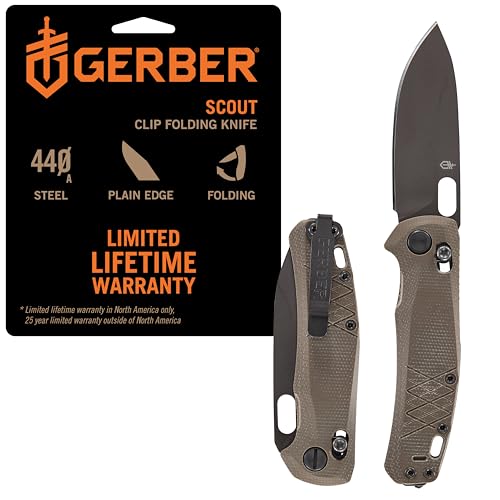
Gerber Scout Micarta
- Blade length
- 3.2 in
- Blade steel
- 440A
- Steel type
- Stainless
- Folding knife
Gerber Gerber Gear 22-48485 Paraframe Mini Pocket Knife, 2.2 Inch Fine Edge Blade, Stainless Steel & Smith's CCKS 2-Step Knife Sharpener
Check price - Folding knife
Gerber LST Mini Fine Edge
- Blade steel
- 440A
- Steel type
- Stainless
- Edge
- Plain
- Folding knife
Gerber Affirm
- Blade steel
- 7Cr17MoV
- Steel type
- Stainless
- Blade shape
- Clip point
- Axe or hatchet
Gerber Gator Combo Axe II
- Sheath included
- Yes
- Style
- Multi-tool axe
- Sold for
- Survival, Camping
- Axe or hatchet
Gerber Downrange Tomahawk
- Weight
- 2.25 lb
- Overall length
- 19.27 in
- Sheath included
- Yes
- Axe or hatchet
Gerber Freescape Hatchet 17.5"
- Overall length
- 17.3 in
- Sheath included
- Yes
- Style
- Hatchet
- Axe or hatchet
Gerber Freescape Hatchet 14"
- Overall length
- 14 in
- Sheath included
- Yes
- Style
- Hatchet
- Axe or hatchet
Gerber 9-Inch Hatchet
- Overall length
- 9 in
- Sheath included
- Yes
- Style
- Hatchet
- Axe or hatchet
Gerber Pack Hatchet
- Weight
- 1.3 lb
- Overall length
- 9.46 in
- Sheath included
- Yes
- Machete
Gerber Gator Machete 31-000758
- Blade length
- 15 in
- Sheath included
- Yes
- Machete
Gerber Gator Machete with Saw
- Blade steel
- high carbon
- Steel type
- Carbon
- Handle
- glass-filled nylon
- Machete
Gerber Compact Clearpath Machete 31-003154
- Blade length
- 11 in
- Blade steel
- stainless
- Steel type
- Stainless
- Machete
Gerber Versafix Pro
- Sheath included
- Yes
- Machete
Gerber DoubleDown Folding Machete
- Blade steel
- 420HC
- Steel type
- Stainless
- Machete
Gerber Gator Machete Jr 31-003494N
- Blade length
- 10.75 in
- Sheath included
- Yes
- Sheath
Gerber Gerber Gear Sliding Saw [22-41773],Black | Folding saw for camping, backpacking, hiking, survival kit, includes sheath, lightweight, durable blade, easy one-hand open
Check price - Sheath
Gerber Gerber Vital Pack Compact Folding Saw for Camping and Survival with Sheath | Lightweight backpacking saw, stainless steel sawtooth blade, included sheath, hunting, hiking, camping, hand saw for trail
Check price - Knife sharpener
Gerber Edgefield
- Style
- Compact field sharpener
- Abrasive
- Diamond, Ceramic
- Coarsest grit
- 220 grit
- Knife sharpener
Gerber Edgefield Pack
- Style
- Compact field sharpener
- Abrasive
- Ceramic, Carbide
- Stages
- 2
- Camp table
Gerber Gerber Gear Around Camp Kit - 3-Piece Camp Kitchen Set, Cleaver & Tong
Check price
















What Gerber makes for hunters and campers
On this site, Gerber covers six product types, and the grid above filters them:
- Multi-tools: folding pliers tools from keychain size to full size
- Folding knives: frame locks, liner locks, a lockback and assisted openers
- Fixed-blade knives: field and camp knives with sheaths
- Machetes: long and compact blades, two with saw backs
- Axes: hatchets, a tomahawk and an axe-and-knife combo
- Knife sharpeners: the Edgefield pocket sharpeners
Gerber's own site also lists shovels and camp cookware. Those aren't in this site's grid, so I'll stick to the six types above.
The grid changes as listings come and go. I'll write about the lines and what separates them, not about how many of each are listed this week. Most specs come from Amazon listings, and the grid marks them. A few, like weights, come from Gerber's own pages. Where nobody says, the grid shows a dash.
Lineup notes: the Gerber multi-tool
Full-size pliers tools
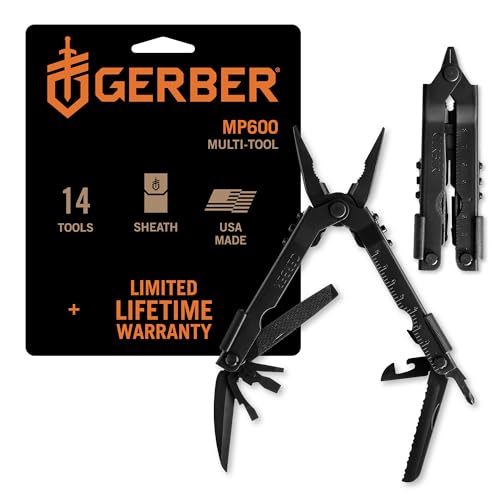
The Multi-Plier 600 is the one people ask about by name. The listings show it in needle-nose and blunt-nose versions, stainless steel, with 14 tools and a knife. The MP600 Pro Scout lists 13 tools.
Next to it in the grid:
- Diesel: full-size pliers, 12 tools, scissors and wire cutters
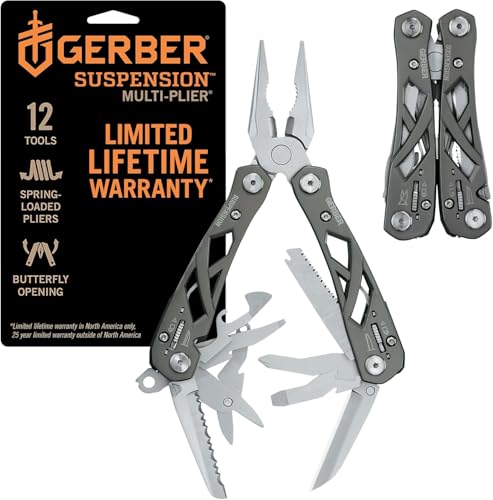
- Suspension NXT: stainless, 15 tools, scissors
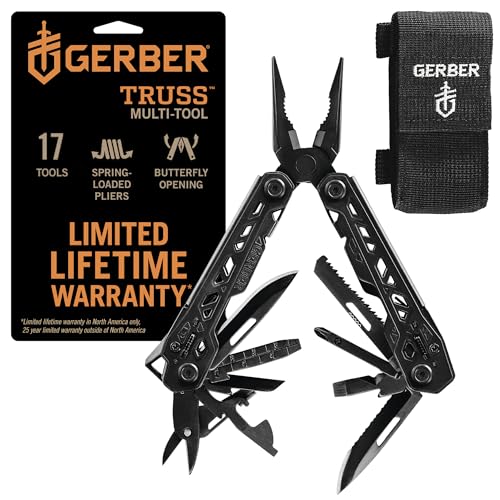
- Truss: stainless, 17 tools, a saw, scissors and wire cutters, 4.25 inches closed
- Center-Drive: pliers, knife and wire cutters, with a 16-tool version that adds a bit set
What separates them is the mix of tools, not the count. A saw matters if you cut shooting lanes or trim a branch at the stand. Wire cutters matter if you fix fence. Scissors matter if you've ever tried to trim moleskin with a knife.
Compact and keychain tools
- Dime: compact pliers, 12 tools, scissors and wire cutters
- Vise: a keychain one-piece tool, 9 tools, 2.4 inches closed
These are the ones that ride in a pocket all week and get used more than the big ones for that reason. Jess's take: "The best multi-tool is the one that's on you when the screw comes loose. Mine is in the truck. That's not helpful."
The multi-tool page covers plier styles and sizes across brands.
Lineup notes: the Gerber pocket knife
Frame locks: Paraframe, STL and Flatiron
The frame-lock folders are the biggest group:
- Paraframe I: a 3-inch blade, steel handle, clip point or drop point, plain or serrated
- Paraframe Mini: a 2.2-inch blade, plain or serrated; Gerber lists the plain edge at 1.6 oz and the serrated at 2 oz
- STL and STL 2.0: small frame-lock folders, the STL with a thumb hole
- Flatiron: a 3.6-inch blade in D2 tool steel, an aluminum handle and a thumb hole
Benchmade's mechanisms guide explains that a frame lock uses a leaf spring cut out of the handle frame itself, and that closing one puts your hand in the blade's path. Push the lock bar aside, then fold the blade with your fingers clear.
Liner locks: Remix and the EAB knives
The Remix lists a liner lock, a tanto blade, partial serrations and a G10 handle. The EAB Lite lists a liner lock and a 1.5-inch blade. The EAB knives are utility knives, the kind that cut cardboard, drywall tape and the zip ties on a new tree stand.
A liner lock works like a frame lock, but the spring is cut into a thin liner inside the handle, per Benchmade.
The Gator lockback
The Gator Folding Knife lists a lockback, a 420HC stainless clip-point blade with serrations and a polymer handle. A lockback releases from a bar on the back of the handle. It's the older design, and it's the one I learned on. Some of us still close a knife by finding the spine with a thumb in the dark.
Assisted openers: Fast Draw, 06 FAST and Swagger
Three folders list assisted opening:
- Fast Draw: a 2.99-inch blade, plain or serrated, polymer handle, pocket clip
- 06 FAST: a 3.8-inch tanto in 7Cr17MoV stainless, partial serrations, G10 handle
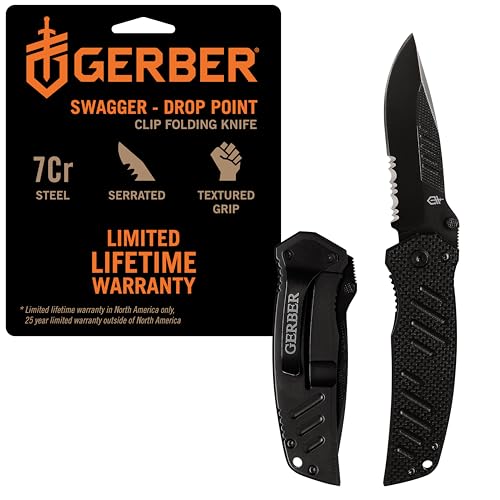
- Swagger: a drop point with serrations and a G10 handle
Benchmade explains that assisted opening adds a spring to help the blade open, but you still start it yourself with a thumb stud or a flipper tab. That's different from an automatic knife. Carry rules for both vary by state, so check your state's rules.
The Air Ranger
The Air Ranger lists a 3.26-inch blade, serrations, an aluminum handle and a thumb stud. It sits between the small Paraframe Mini and the bigger 06 FAST.
The pocket knife page, the everyday carry knife page and the lightweight pocket knife page compare locks and sizes across brands.
Lineup notes: the Gerber hunting knife and other fixed blades
LMF II Infantry
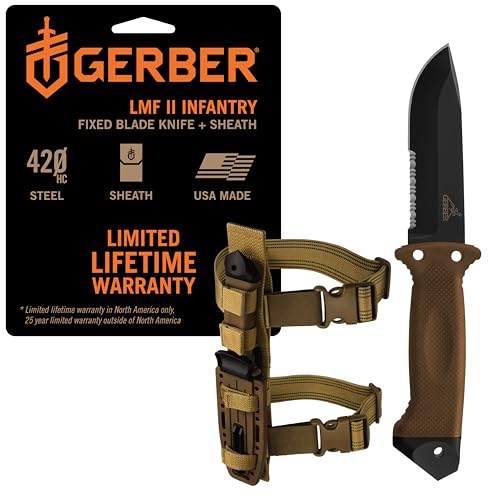
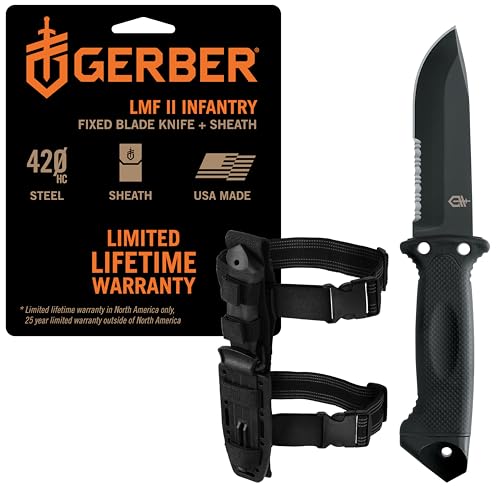
The LMF II Infantry lists a partially serrated blade, a sheath and a lifetime warranty. It turns up in several colors and versions in the grid. The serrated part of the edge is for rope and webbing; for skinning, the plain part of the edge does the work.
StrongArm
The StrongArm lists 420HC steel and a full tang, in plain-edge and serrated versions, with a sheath on the serrated one per its listing. It's a general field and camp knife.
Freeman Guide
The Freeman Guide is the hunting-shaped knife in the group: a 4-inch drop point in 5Cr15MoV stainless, a full tang and a nylon sheath. A drop point keeps the tip in line with the spine, which is the all-round shape for field dressing.
My one opinion on this page: if it's your first deer knife, pick a drop point like this one. With the tip in line with the spine, it's the shape that does the most field-dressing jobs without a second knife. Gerber's care page says to clean, dry and re-oil its products periodically, and a fixed blade makes that a five-minute job. The hunting knife page and the fixed blade knife page cover the type across brands.
Gerber machetes
The machetes in the grid, per the listings:
- Gator Machete: a 15-inch blade with a sheath
- Gator Machete with Saw: high-carbon steel, a glass-filled nylon handle, a saw back and a sheath
- Compact Clearpath: an 11-inch stainless blade with a rubberized handle, a saw back and a sheath
The split is length and steel. A long blade clears brush with fewer swings. A compact one fits in a pack and is easier to control. Carbon steel wants more drying and oil than stainless. The machete page explains blade styles.
Gerber's care page has one machete rule worth repeating: never use excess force to put the blade back into its sheath. Check where the edge sits at the sheath's mouth and ease it in.
Gerber hatchets and axes
The axe side of the grid is all short, one-hand tools with sheaths, per the listings. They split by handle and by what else the tool does:
- Freescape Hatchet: two lengths, the longer one a little under 18 inches and the shorter one a little over a foot, both with fiberglass/composite handles; the listings name camping, survival, bushcraft and splitting
- 9-Inch Hatchet: the shortest of the group, a composite handle, listed for chopping
- Pack Hatchet: about the same length, with a handle the listing doesn't classify; it names survival, bushcraft, camping and hunting
- Gator Combo Axe II: a nylon/polymer handle, an axe and a knife in one tool, per the listing
- Downrange Tomahawk: a 420HC stainless head, and the listing title adds a pry bar; it names tactical, survival and camping use
In plain words: the Freescapes are camp hatchets, the 9-inch and Pack Hatchet are pack-size, the Gator Combo brings a knife along, and the Downrange is the tomahawk with a pry bar. (Danny wanted to know which one is for opening coolers. None of them. That's what the cooler latch is for.)
Rutgers Extension says to sheath an axe when it isn't in use and to keep bystanders well back while you chop. Hatchets across brands are on the hatchet page, tomahawks on the tomahawk axe page.
Gerber Edgefield sharpeners
Gerber's two sharpeners in the grid are pocket-size field sharpeners, per the listings:
- Edgefield: diamond and ceramic, three stages from coarse to fine, and an angle guide
- Edgefield Pack: ceramic and carbide, two stages
Read the angle-guide line if you've never held a steady angle on a stone. Gerber's care page says to sharpen a serrated edge with a round sharpener, one serration at a time, so check the listing before you count on either for an LMF II's serrations. Sharpeners across brands are on the knife sharpener page and the pocket knife sharpener page.
How to choose within the Gerber lineup
Tool or knife first
If you'll grip, twist and snip more than you'll cut, start with the multi-tools. If cutting is the job, start with the knives. Plenty of hunters carry one of each. A Gerber multi-tool in the truck and a fixed blade on the belt cover most of a season.
For a folder: the lock, then the size
Frame lock, liner lock, lockback or assisted: each closes differently. Learn the close at the kitchen table, not on the tailgate. Then pick the blade length; the folders here run from about 1.5 inches on the EAB Lite to 3.8 inches on the 06 FAST.
For a fixed blade: the shape and the tang
A drop point for field dressing, a serrated or partly serrated blade for rope and rough camp work. A full tang (the steel runs the length of the handle) is listed on the StrongArm and Freeman Guide.
Plain or serrated
Serrations saw through rope and webbing. A plain edge slices cleaner and is easier to sharpen. Gerber's care page says to sharpen a serrated edge with a round sharpener, working each serration.
Then the steel
The listings name 420HC, 5Cr15MoV and 7Cr17MoV stainless, D2 tool steel on the Flatiron and high-carbon steel on one machete. Gerber's FAQ notes that stainless steel is corrosion resistant, not rust proof. Every steel wants drying.
Then how you'll carry it
The carry decides more than people admit. The folders in the grid mostly list pocket clips. The fixed blades and machetes come with sheaths, nylon on the Freeman Guide per its listing. The keychain Vise rides with your truck keys.
Harness straps and pack hip belts move a belt knife around more than you'd think, so set the knife where your hand finds it with gloves on. Practice reaching it sitting down, too. Most of a hunt is sitting down. If you can't find the handle without looking, move it before the season, not during it.
Care that applies to the whole lineup
Gerber's product care page and FAQ cover the basics:
- Clean, dry and re-oil periodically, more often in damp weather
- Rinse with tap water after saltwater, then a light coat of oil
- A small soft brush for grit in a multi-tool's grooves and handles
- Light, frequent sharpening, since over-sharpening wears a blade down
- Folders closed and fixed blades sheathed when not in use
AKTI's guide adds a toothpick for dirt in the handle, a soft cotton cloth for the oil and a cool, dry place for storage.
Safety stays plain. AKTI's first rule is to cut away from your body and away from anyone else. Keep your fingers out of a folder's closing arc, and don't use a knife as a screwdriver or a pry bar. That's what the multi-tool is for, and even it has limits.
Gerber facts
Here's what I could verify from Gerber's own site:
- Founded: 1939, when Joe Gerber turned his Portland ad agency into a kitchen knife company
- Family: he later brought his sons Pete and Ham into the business
- Where made: designed in Portland, Oregon, and made there at the factory site Gerber opened in 1966
- Owner: Gerber is part of Fiskars Group
- Warranty: a limited lifetime warranty in North America for the original owner, with sharpening, wear and modifications excluded
Buck Knives comes up in the same searches; its lineup is on the Buck Knives page.
Oil the pivot, wipe the pliers and put the tool back where it lives. The screw that comes loose next November won't wait.
Where Gerber shows up
Often compared
Questions about Gerber
Are Gerber knives good?
What the listings show is checkable: the folders in the grid list frame locks, liner locks, a lockback and assisted opening, in steels from 420HC and 7Cr17MoV to D2. The fixed blades list full tangs on the StrongArm and Freeman Guide and partial serrations on the LMF II. Which one suits you depends on the job: field dressing, camp chores or pocket carry. Pick the type first, then compare.
Where are Gerber knives made?
Gerber's about page says it designs its products in Portland, Oregon, and makes its tools there at the factory site it opened in 1966. Individual listings don't always say where a model was made, so read the listing or the maker's page for the exact knife or multi-tool you want.
Who owns Gerber?
Gerber's own about page says the company is part of Fiskars Group. It also says Gerber began in 1939, when Joe Gerber turned his Portland advertising agency into a kitchen knife company, and that he later brought his sons Pete and Ham into the business.
What warranty do Gerber knives have?
Gerber's warranty page describes a limited lifetime warranty in North America and 25 years elsewhere, for the original owner, covering defects in materials and workmanship when bought from Gerber or an authorized reseller. It excludes sharpening, normal wear, improper use and modifications. Its FAQ adds that lost or stolen products aren't covered. Read the current terms before you file a claim.
Which Gerber multi-tool should I get?
Start with size. On this site, the Vise and the Dime are the compact ones, the Multi-Plier 600, Suspension NXT and Truss are full size, and the Center-Drive adds a bit set. The listings give tool counts from 9 to 17. Pick by the pliers, scissors, saw or wire cutters you'll actually use, not by the count.
Where can I buy Gerber knives?
The product grid on this page links to Gerber listings on Amazon US, filtered by multi-tool, folding knife, fixed blade, machete, axe and knife sharpener. Gerber also sells on its own site, which says it ships only within the US. Some knives may not ship to every address; Amazon shows that at checkout. Knife carry rules vary by state, so check your state's rules.
Sources
- Gerber: About Gerber — accessed 2026-10-23
- Gerber: Warranty claim and guarantee — accessed 2026-10-23
- Gerber: Product care — accessed 2026-10-23
- Gerber: Frequently asked questions — accessed 2026-10-23
- Benchmade: Knife mechanisms guide — accessed 2026-10-23
- American Knife & Tool Institute: Knife safety, sharpening and maintenance — accessed 2026-10-23
- Rutgers Cooperative Extension: Cut costs, not fingers, when prepping firewood — accessed 2026-10-28