What Buck Knives makes for hunters and campers
On this site, Buck Knives covers two product types: fixed-blade knives and folding knives. Inside those two, the lineup splits into six groups you'll see in the grid above:
- Classic fixed-blade hunters: wood or phenolic handles, leather sheaths
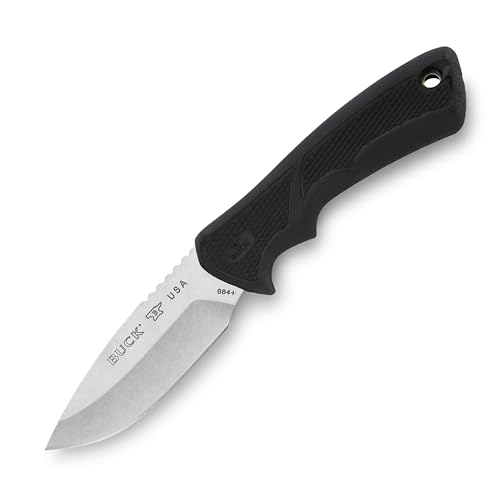
- Lightweight fixed blades: rubber or nylon handles for field dressing
- A camp knife in carbon steel
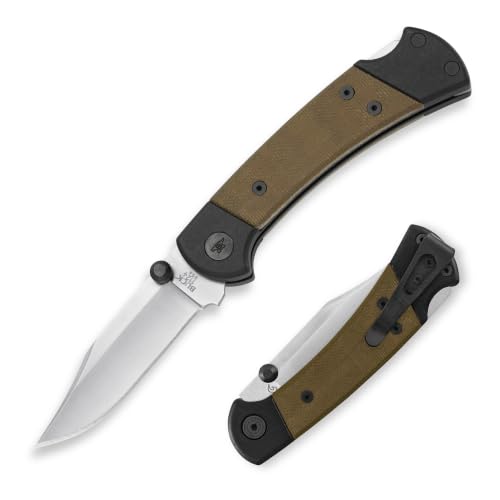
- Lockback folders, led by the 110 Folding Hunter
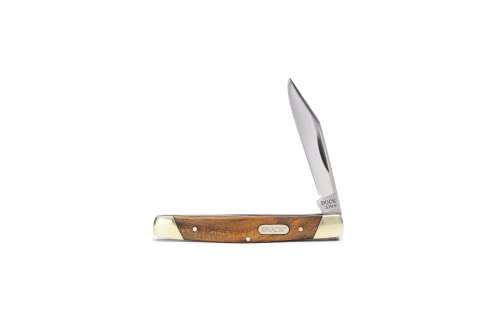
- Traditional slip-joint pocket knives with one, two or three blades
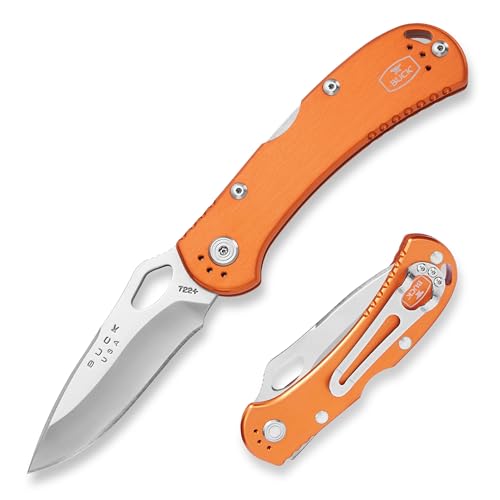
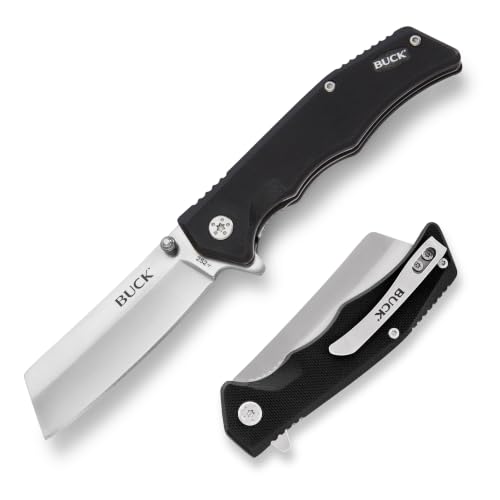
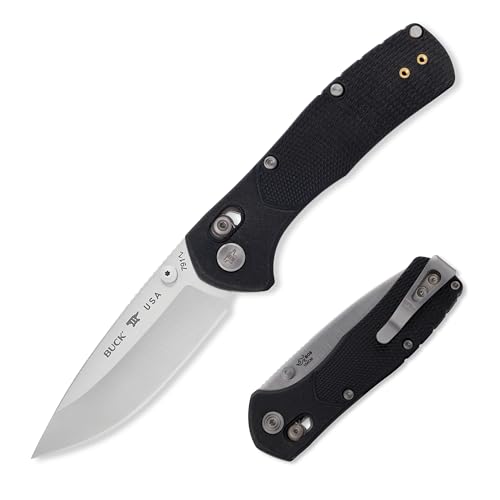
- Modern EDC folders with pocket clips and flipper or thumb-stud openings
The grid filters by type and changes as listings come and go. So I'll write about the groups and what separates them, not about how many of each are listed this week.
Most of the specs here come from Amazon listings, and the grid marks those values. Where a listing doesn't say, the grid shows a dash. I didn't fill in the gaps from memory, and neither should you.
Lineup notes: the Buck hunting knife
Classic fixed blades with leather sheaths
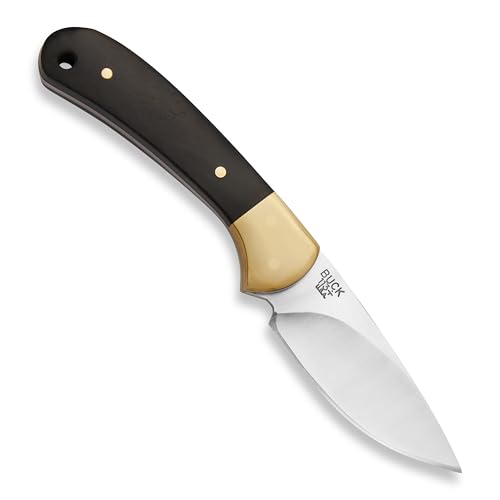
This is the group most people picture when they hear "Buck hunting knife." The listings describe 420HC stainless blades, full-tang builds on most models, and leather sheaths. The names are numbers:
- 103 Skinner and 113 Ranger Skinner: skinner blades, wide bellies for skinning work
- 105 Pathfinder, 117 Brahma, 119 Special, 120 General: clip points, stepping up in length from the Pathfinder to the General
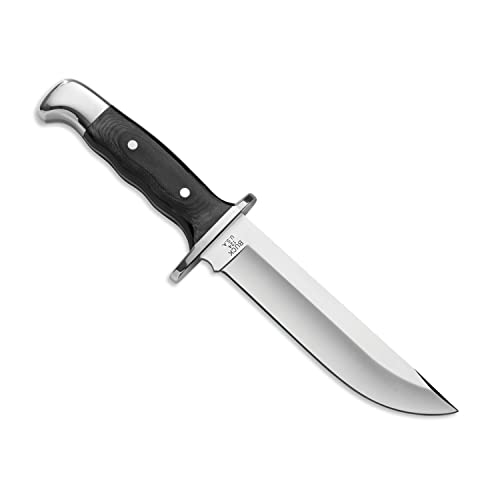
- 124 Frontiersman: a long bowie-style blade with a Micarta and aluminum handle, per its listing
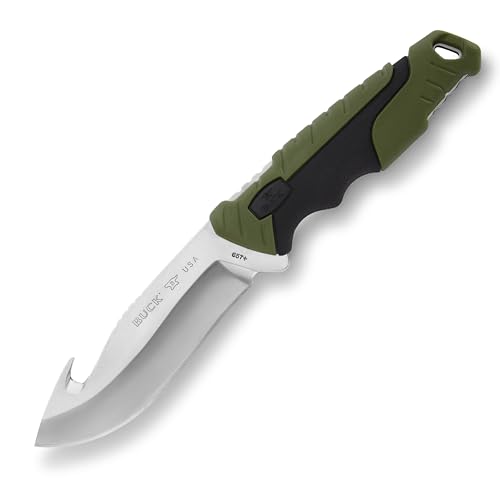
- 191 Zipper: a drop point with a gut hook
Blade lengths run from a compact skinner up to the long clip point on the 120 General. A short blade does the careful work around a deer; a long clip point like the 120 is more of a camp knife. The skinning knife page and the bowie knife page cover those shapes across brands.
Lightweight fixed blades for field dressing
The second fixed-blade group trades wood and leather for rubber and nylon. The listings describe:
- BuckLite Max II, small and large: drop points with rubber handles, the large one also offered with a gut hook
- Pursuit and Pursuit Guthook: drop point or gut hook blades, nylon handles
- 692 Vanguard: a full-tang drop point with a rubber handle and a nylon sheath
- 635 PakLite Cape: a small drop point with a nylon handle and a plastic sheath
The difference from the classics is materials, plain and simple: synthetic handles and, on several models, synthetic sheaths instead of wood and leather. More on the type is on the hunting knife page.
The 104 Compadre camp knife
The Compadre is the odd one in the fixed-blade grid. Its listing names 5160 steel, a carbon steel, not a stainless one, with a canvas Micarta handle and a leather sheath. It's built for camp chores more than for skinning. Camp-knife jobs and shapes are on the camping knife page.
Carbon steel asks for more care than stainless. Morakniv's steel guide says carbon steel needs careful drying and oiling after use to prevent rust, and that it's easier to resharpen than stainless. Wipe it dry the same day, every time.
Lineup notes: the Buck pocket knife
Lockback folders, led by the 110
The 110 Folding Hunter is the knife the brand gets asked about most. New Atlas's history of it says Buck first marketed the 110 in 1964, and describes the lock: a back spring that hooks a lock bar running along the spine. Press the bar on the back of the handle and the lock lets go.
The lockbacks in the grid, per their listings:
- 110 Folding Hunter: clip point, nail-nick opening, several handle versions, sheath included
- 112 Ranger: a smaller clip-point lockback with brass bolsters
- 112 Slim Select: nylon handle and a pocket clip
- 112 Ranger Sport: Micarta handle, and its listing names S35VN steel
- 55 and 503 Prince: small lockbacks with nail nicks
- Bantam BBW, BLW and BHW: nylon handles with thumb studs, in three sizes
- 722 Spitfire: aluminum handle, drop point
The big lockbacks come with a sheath for a reason: a 110 in a jeans pocket feels like carrying a small brick. (I've carried a lockback in deer camp since before some of these model numbers existed. The brick part is not an exaggeration.) The pocket knife page covers locks across brands.
Traditional slip joints
The traditional patterns sound like a feed-store order: Stockman, Trio, Canoe, Deuce, Solo, Toothpick. The listings describe them as non-locking slip joints with 420J2 stainless blades, and several carry two or three blades (clip, spey, sheepsfoot, pen, coping).
A slip joint doesn't lock. Benchmade's mechanisms guide explains that a back spring presses on the blade's tang and holds it at open and closed stops. So it can fold under pressure on the back of the blade. That's fine for opening feed sacks and whittling a tent stake. It's not a knife for prying, and nothing in a pocket should be. Whittling-sized jobs are on the whittling knife page.
Modern EDC folders
The newest-looking group in the grid: the 252 Trunk with its cleaver-shaped blade, the 251 Langford and the 264 Cavalier. Their listings name 7Cr17MoV stainless steel, G10 or aluminum handles and pocket clips, and the Langford and Cavalier open with a flipper (a small tab on the back of the blade you push with a finger).
Danny calls a pocket clip "the part that keeps the knife out of Renee's laundry." He has never once clipped one. Everyday-carry picks are on the everyday carry knife page.
How to choose within the Buck lineup
Fixed or folding first
A fixed blade has no pivot or lock to clean. A folder fits a pocket. If the knife's main job is field dressing, start with the fixed blades; if it rides in your pocket every day, start with the folders. The fixed blade knife page lays out the trade across brands.
My one opinion on this page: keep a dedicated field-dressing knife, and don't let it moonlight in the kitchen. Cornell's Wildlife Health Lab recommends a dedicated set of tools for field dressing, not used for butchering, washed with soap and hot water between animals.
Then the blade shape
The grid's shape field does most of the sorting:
- Drop point: the all-round hunting shape, tip in line with the spine
- Clip point: a thinner tip for detail work, as on the 110 and 119
- Skinner: lots of belly for long slicing cuts
- Gut hook: a notch on the spine for opening the hide
Then the lock
Lockback, slip joint, flipper frame or liner lock: each closes differently. Benchmade's guide says a lockback closes by pressing the back spring to release the lock, and a liner or frame lock by pushing the lock bar aside, with your fingers out of the blade's path. Learn the close at home before the first trip.
Then the sheath and how you'll carry it
The sheath decides where the knife lives on you. The listings describe leather sheaths on the classic fixed blades and the Compadre, nylon on the Vanguard, plastic on the PakLite Cape, and a sheath with the 110 Folding Hunter. The EDC folders and the Slim Select skip the sheath and use a pocket clip instead.
Rule of thumb: try the sheath on the belt you actually hunt in, over the coat you actually wear in November. A knife that fights a hip belt or a harness strap all morning gets unclipped by 9 a.m. and set on the dashboard, where it stays until April. Saddle and stand straps change where a belt knife can sit, so check that too.
Then the steel
Most of the lineup lists 420HC stainless. The traditional slip joints list 420J2, the EDC flippers 7Cr17MoV, and the Compadre 5160 carbon steel. The practical split is stainless versus carbon: stainless resists rust with less care, and carbon wants drying and oil after every use.
Care that applies to the whole lineup
A knife is a tool, and tools want the same three things: clean, dry and oiled. AKTI's maintenance guide recommends:
- A toothpick for dirt in the handle and around the blades
- A light oil made for metal, on a soft cotton cloth
- Oil on the folding mechanism of a folder you use often
- A cool, dry place for storage, not a damp basement or garage
AKTI also notes that water can harm even stainless steel, and that salt water is especially hard on it. Wipe the blade after a wet day.
Cut away from your body and keep your fingers out of a folder's closing arc. AKTI warns that once the lock is released, the spring can snap the blade shut.
Buck vs Gerber
Both brands make fixed-blade and folding knives, and both turn up in the same searches. On this site the differences are in the mix:
- Buck's grid: fixed blades and folders, mostly lockbacks and traditional slip joints, 420HC or 420J2 stainless per the listings
- Gerber's grid: folders and fixed blades plus multi-tools and machetes, with frame locks and liner locks among its folders
Gerber's own about page says Gerber started in 1939 in Portland, Oregon, that it manufactures in Portland, and that it's part of Fiskars Group. If you want a multi-tool from the same purchase, that's Gerber's side of the grid. If you want a traditional slip joint, that's Buck's. The Gerber brand page has its lineup.
Buck Knives facts
Here's what I could verify from sources outside a store shelf:
- First knife: Hoyt Buck made the first Buck knife in 1902, as a young blacksmith's apprentice in Kansas, per the Coeur d'Alene Area Economic Development Corporation
- Factory: Buck moved to Post Falls, Idaho, in 2005 and manufactures there, per the same source
- Family: CJ Buck, Hoyt's great-grandson, is described there as the fourth generation to run the company
- The 110: first marketed in 1964, per New Atlas
Warranty details are left to the FAQ, with a pointer to the maker's own terms.
Oil the pivot, dry the sheath slowly, and put the knife back where it lives. Next November it'll be right there.