Knives & Tools · Gear type
Lightweight Pocket Knife
A lightweight pocket knife is a folder you stop noticing once it's in your pocket, and this page lists folding knives at 3 oz or less, lightest first. The trade is simple: every ounce you save comes out of blade length, handle size or extra blades. So the real question is which of those you can live without. I'm 63. My pockets have opinions now.
We earn a commission if you buy through our links, at no cost to you. Disclosure
| Model | Weight | Blade length | Blade steel | Steel type | Blade shape | Edge | Amazon |
|---|---|---|---|---|---|---|---|
Benchmade Mini Bugout 533Folding knife More specs
| 1.5 ozmaker | 2.8 inlisting | CPM-S30Vlisting | Powder steellisting | Drop pointlisting | — | Check price |
Gerber Paraframe Mini Fine EdgeFolding knife More specs
| 1.6 ozmaker | 2.2 inlisting | — | Stainlesslisting | Clip pointlisting | Plainlisting | Check price |
Benchmade Bugout Outdoor EDCFolding knife More specs
| 1.85 ozmaker | 3.2 inlisting | CPM-S30Vlisting | Powder steellisting | Drop pointlisting | Plainlisting | Check price |
Gerber Paraframe Mini SerratedFolding knife More specs
| 2 ozmaker | 2.22 inlisting | — | Stainlesslisting | — | Serratedlisting | Check price |
CRKT MinimalX 5915Folding knife More specs
| 2.6 ozmaker | 2.19 inlisting | 12C27listing | Stainlesslisting | — | — | Check price |
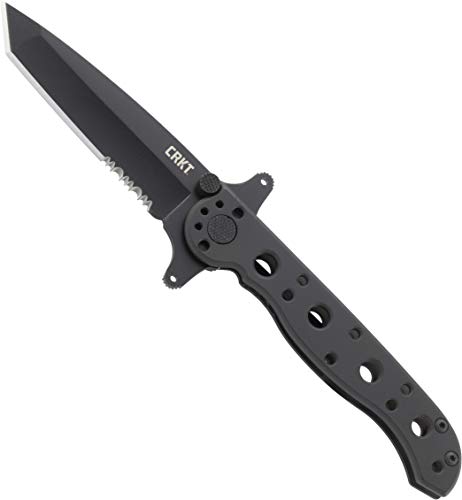
CRKT M16-10KSFFolding knife More specs
| 2.7 ozmaker | 2.94 inlisting | 8Cr14MoVlisting | Stainlesslisting | Tantolisting | — | Check price |
CIVIVI Elementum C907UFolding knife More specs
| 2.74 ozmaker | 2.96 inlisting | D2listing | Tool steellisting | — | — | Check price |
CIVIVI Elementum C907EFolding knife More specs
| 2.89 ozmaker | 2.96 inlisting | D2listing | Tool steellisting | — | — | Check price |
Benchmade Osborne 940Folding knife More specs
| 2.9 ozmaker | 3.4 inlisting | CPM-S30Vlisting | Powder steellisting | Reverse tantolisting | — | Check price |




What’s in this listFolding knives weighing 3 oz or less, as stated by the maker or the Amazon listing, lightest first. Weights are the maker's own figures. “—” means neither the maker nor the Amazon listing states it.
Why a lightweight pocket knife is its own choice
Every pocket knife is light compared with a fixed blade on a belt. A lightweight pocket knife is the one you pick because weight is the deciding spec, not an afterthought. It goes in the watch pocket, the shirt pocket or on a key ring, and it's still there at night because you forgot it was there.
That's the whole appeal. A knife you leave on the dresser because it drags your pants down doesn't cut anything.
The shared basics (lock types, steel classes, blade shapes and traditional patterns) are on the main pocket knife page. This page is about the ounces and what you give up to lose them.
The table here lists folding knives at 3 oz or less, lightest first. It shows weight, blade length, overall length, closed length when it's listed, handle, steel, blade shape and opening. Weight is the maker's number; the other columns use the maker's numbers first and the Amazon listing's where the maker is silent, marked as listing values. A dash means neither states it.
What to look at in a lightweight pocket knife
Here's the order I'd read the table in.
Weight in ounces is the first column to read
The table sorts by weight, so the top rows are the lightest. An ounce is one-sixteenth of a pound.
Benchmade's EDC advice favors compact knives with lightweight handle materials, because a knife you carry all day should not wear on you. On a camp weekend you'll take that knife up a ladder stand, across a creek and in and out of the truck a dozen times. You feel ounces on the second day, not the first.
Rule of thumb: decide what the knife has to do first, then pick the lightest knife that still does it. The lightest knife in the table is only a bargain if it handles your jobs.
Handle material is where most of the weight goes
Blades are steel and don't vary much. Handles do. From Benchmade's materials guide:
- Glass-filled nylon: keeps overall weight remarkably low; often the deciding material when carry weight matters
- Carbon fiber: maximum rigidity at minimal weight; smoother than G10, so it gets extra texture
- Aluminum: notably lighter than steel or titanium, with a solid metal feel
- Titanium: metal feel without steel's weight penalty, though heavier than aluminum
- G10: light without feeling insubstantial, doesn't absorb water
Traditional small knives often use plastic scales over brass or steel liners. Liners and bolsters add strength and some weight. The table's handle column shows what the maker or the listing states.
One more thing about aluminum. Benchmade notes it can feel cold in low temperatures. On a 5 a.m. walk to the stand, a small aluminum knife feels like an ice cube with a hinge.
Closed length tells you where the knife will fit
Weight and size usually travel together, but not always. A slim knife can be long and light. A stubby one can be short and dense.
Closed length is the column that answers this, when it's filled in. Blank? Take the open length, subtract the blade, and you're within a hair. That number tells you which pocket works:
- Watch or coin pocket: the smallest knives only
- Shirt pocket: small and thin
- Front pants pocket: almost anything on this page
- Key ring: the smallest, with a bail or a hole for the ring
Wikipedia describes the traditional penknife as a small knife that doesn't spoil the line of dress clothes. That's still a fair test for a light knife.
Blade length: how small is too small
A small pocket knife trades reach for carry. The table lists blade length next to weight so you can see the trade on every row.
Short blades are good for packaging, string, tape, splinters and fruit. They're harder to use on anything thick, and they give you less to steer with. Small handles matter too. A short handle puts your fingers closer to the edge, and in gloves that's a real thing to think about.
If you want a small knife that still has some reach, look at the knives near the 3 oz line rather than the very top of the table.
Blade shape matters more on a short blade
On a long blade you have room to work around the shape. On a short one, the shape is most of what you get. From Benchmade's blade guide:
- Drop point: broad belly and an acute tip, the all-purpose choice
- Clip point: a fine tip for detail work and piercing; good for splinters and tape
- Sheepsfoot: controlled slicing without the risk of piercing
A small clip point is the classic little-knife blade. If most of your cuts happen an inch from your own thumb, like mail or string, the blunt-nosed sheepsfoot makes more sense.
Steel: a small blade in a sweaty pocket
A light knife rides close to the body, so it sees sweat and damp. The table shows each knife's steel type. W.R. Case's notes on its own steels lay out the usual split: high-carbon steels hold an edge well but tarnish and rust more readily with air and moisture, while stainless takes minimal care. AKTI adds that salt water is especially corrosive, even to stainless. For a coin-pocket knife you'll forget about for a week, stainless is the easy choice.
Blade count: one blade or two
Traditional small patterns often carry two or three blades. Wikipedia describes the peanut, for example, as a small pattern with a clip and a drop point that open from the same end. A second blade gives you a spare edge, or one for food and one for everything else.
Each extra blade also adds a spring, a liner and a bit of weight. A single blade is lighter, simpler and easier to clean. If you only ever use one blade, carry a knife with one blade.
Slip joint or lock
Look near the top of the table and you'll find mostly slip joints. That fits Wikipedia's description of the type as the usual light-duty folder and a generally smaller one. No catch holds the blade; spring tension alone keeps it open.
A lock costs a few parts. Benchmade's mechanism guide describes the lockback as a slip joint with a locking function added, and the liner lock as a spring-cut liner that slides behind the blade. Both keep the blade from folding when you press too hard on the spine.
My rule for small knives: string and packaging, a slip joint does it. Anything you have to lean on, get the lock. Check the lock column before you check the color.
Opening: nail nick or one hand
The thumbnail notch is the lightest opener there is, since it's just a groove cut in the blade. Boker still treats it as the standard on knives meant to be opened with two hands. Nothing sticks out, so it doesn't catch on the pocket lining.
Some light modern folders add a thumb stud, thumb hole or flipper for one-hand opening. A small, light blade is actually an advantage for a flipper tab, by Boker's account, since less steel has to swing. One-hand openers and pocket clips are covered in more depth on the everyday carry knife page.
Clip or no clip
A pocket clip adds a little weight and keeps the knife upright at the top of the pocket. Kershaw also makes deep-carry versions mounted at the butt of the handle, which hide more of a small knife below the pocket edge. Kershaw also advises against carrying a clip knife loose.
Traditional small knives usually have no clip and ride loose in a coin or watch pocket, which is what that pocket was for. If you carry it loose, give it a pocket of its own, away from keys.
Weigh the knife you carry now
Before you shop, put the knife you already carry on a kitchen scale. That's your baseline. Then read the table against it. If your current knife feels fine and the table shows knives at half its weight, you'll notice the difference. If it already disappears in your pocket, you may be shopping for a solution to a problem you don't have.
Weigh it the way you carry it, too. A clip, a key ring or a lanyard all count. A scale doesn't argue, which is more than I can say for anybody at the cabin table.
Small pocket knife or something else
At my age every ounce in a pocket gets a vote. Whatever goes in at 5 a.m. is still in there at 9 p.m., and it has climbed the ladder stand twice in between. That's why a light knife earns its keep. (Jess says I empty my pockets onto the cabin table every night like a magician finishing a trick. The trick is my knee.)
- Want tools too: a keychain multi-tool adds scissors or a screwdriver to a small blade
- Want a traditional single-blade look: the Barlow knife page covers that pattern
- Want the best small picks ranked: see the small pocket knife picks
Who a lightweight pocket knife suits
A light folder fits anyone whose pockets are already full or whose day involves a lot of climbing:
- Stand hunters: one less thing pulling on the pocket up the ladder
- Dress-clothes days: a knife that doesn't spoil the line of a jacket
- Key-ring carriers: the smallest knives with a hole or bail for the ring
- Light-duty cutters: string, tape, packaging and fruit, nothing heavier
Who should skip a lightweight pocket knife
- Field dressing: a fixed blade from the hunting knife page gives you a full handle and no pivot to clean
- Big hands or heavy gloves: a full-size everyday carry knife gives your fingers room
- Hard cutting: cardboard by the bundle, thick rope and heavy plastic call for a bigger blade and a lock
Care for a small knife
Small knives collect lint fast and get lost faster. A few habits keep them working:
- Pick out lint: a wooden toothpick, per AKTI, is gentle on the metal
- Wipe and dry: a damp cloth on the parts that need it, then dry inside the frame; Benchmade is against soaking folders
- Oil sparingly: a small drop on the pivot, then wipe; extra oil holds grit
- Store it dry: Benchmade warns against damp places like gloveboxes
Keep the short edge keen. A dull blade asks for more push, and AKTI points out that's when slips happen. On a little knife, the fingers doing the pushing are right next to the edge.
Use it safely
A small blade is still sharp, and a small handle gives you less to hold.
- Point every cut away from yourself and give others room.
- Without a lock, don't put pressure on the spine; AKTI warns a non-locking blade can fold onto the fingers.
- Hand it over folded shut; Victorinox's kid rules say the same.
- Fold it before it goes back in the pocket, every time.
Knife carry rules vary by state and by place, and air travel has its own rules covered in the pocket knife on a plane guide. Check your state's rules.
Pick the lightest knife that still does your jobs. Then carry it every day, and let the pocket stop complaining.
Brands in this list
Related
Questions people ask
What is a good weight for a lightweight pocket knife?
This page draws the line at 3 oz or less, and sorts the lightest knives first. Below that, the right number depends on what you cut. A tiny single-blade knife will be lightest but gives you the least to hold. Benchmade's EDC advice favors compact knives with lightweight handle materials to cut fatigue over a full day of carry.
What is the lightest handle material for a pocket knife?
Among common materials, Benchmade describes glass-filled nylon as keeping weight remarkably low, carbon fiber as rigid at minimal weight, and aluminum as notably lighter than steel or titanium. Titanium is light for its strength but heavier than aluminum. Steel liners under any handle add weight and stiffness. The table lists each knife's handle material as the maker or the listing states it.
Is a small pocket knife good enough for deer camp?
For camp chores, yes: string, tape, packaging, apples and the logbook pencil. For field dressing a deer, a longer fixed blade gives you more reach and a fuller grip, and it has no pivot to pack with gunk. A small folder also gives cold, gloved hands less to hold. Carry the light folder for chores and a fixed blade in the pack.
Do lightweight pocket knives have a lock?
Some do and some don't. Many of the smallest knives are slip joints, which Wikipedia notes tend to be smaller than other pocket knives; a spring holds the blade open without locking it. Others use a lockback or liner lock. The table's lock column shows which, when the maker or the listing states it. On a slip joint, never push the blade toward closing.
Sources
- Wikipedia: Pocketknife — accessed 2026-10-22
- Benchmade: Knife handle materials 101 — accessed 2026-10-22
- Benchmade: What's your next Benchmade? (knife categories) — accessed 2026-10-22
- Benchmade: Understanding knife mechanisms, a complete guide — accessed 2026-10-22
- Benchmade: Knife care 101 — accessed 2026-10-22
- Boker USA: Opening mechanisms — accessed 2026-10-22
- Kershaw: Pocketclips — accessed 2026-10-22
- Benchmade: Knife blade types 101 — accessed 2026-10-22
- W.R. Case & Sons knowledge base: The Case edge (carbon and stainless steels) — accessed 2026-10-22
- American Knife and Tool Institute: Knife safety, sharpening and maintenance — accessed 2026-10-22
- American Knife and Tool Institute: My first knife — accessed 2026-10-22
- Victorinox: Our nine key rules — accessed 2026-10-22