What Benchmade makes for hunters and campers
On this site, Benchmade covers two product types: fixed-blade knives and folding knives. Inside those two, the grid above splits into five groups:
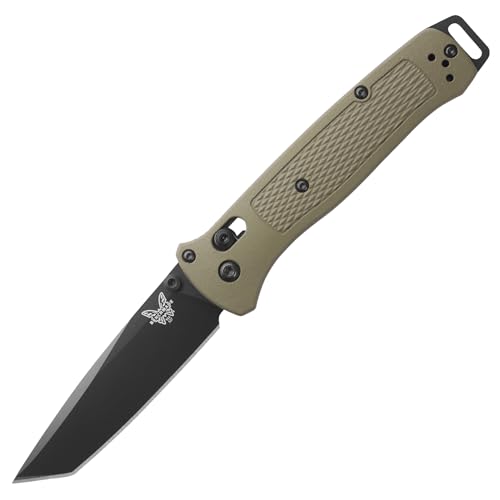
- Everyday folders: Bugout, Griptilian, Osborne and their Mini versions
- Hunting folders: the Taggedout and the Crooked River family
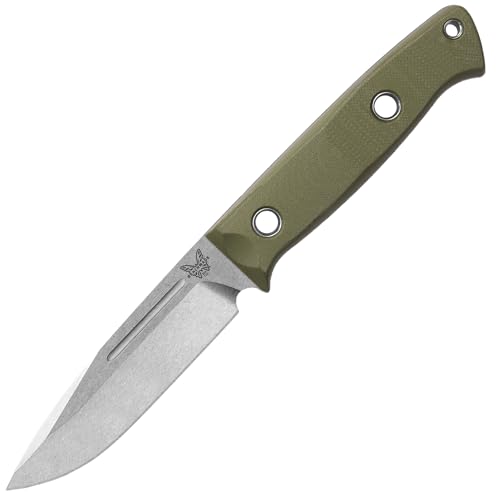
- Hunting fixed blades: skinners, drop-point hunters and a bushcraft knife
- Processing knives: the Meatcrafter boning knives
- Tactical fixed blades: the SOCP daggers, the SOCP Fixed Blade and the Dacian
Benchmade's own hunt page says its hunting knives are designed for field dressing, skinning and game processing, and that the collection has both fixed blades and folders. That's the part of the lineup this camp cares about most. The everyday folders are what most people mean when they say "a Benchmade."
The grid filters by type and changes as listings come and go. So I'll write about the groups and what separates them, not about how many of each are listed this week. Where a listing doesn't give a spec, the grid shows a dash. Several of the newer folders have no specs in their listings, and I didn't fill those in from memory.
The Benchmade pocket knife lineup
Bugout and Mini Bugout: the light end
The Bugout is built around low weight. The maker lists the full-size Bugout under 2 ounces and the Mini Bugout lighter still. The listings describe a drop-point blade in CPM-S30V (a powder stainless steel), polymer handles, a pocket clip and the crossbar AXIS-type lock.
The Mini drops the blade length by a little under half an inch, per the listings. Rule of thumb: if you'll forget a knife is there, you'll still have it at 9 p.m. A heavy knife left in the truck cuts nothing. Light pocket knives across brands are on the lightweight pocket knife page.
Griptilian and Mini Griptilian: the shape choice
The Griptilians carry the same steel and lock idea in a thicker polymer handle. What separates them is the blade:
- Griptilian 551: drop point, the all-round shape
- Griptilian 550: sheepsfoot, a flat edge and a rounded, dull spine at the tip
- Mini Griptilian 556: a shorter drop point
A sheepsfoot has no sharp point to speak of. That's handy for cutting cord and opening boxes against your leg, less so for starting a cut in hide. Pick the shape for the work, not the photo.
Osborne and Mini Osborne: reverse tanto
The Osborne 940 is the odd shape out. Its listing names a reverse tanto blade (a straight, angled tip that slopes down from the spine), CPM-S30V steel and an aluminum handle, and the maker lists it at 2.9 ounces. Other versions in the grid swap in M390 steel with a Micarta handle, or a G10 handle on the Mini. It's a pocket knife first. Everyday-carry knives across brands are on the everyday carry knife page.
Folders without specs in their listings
The Barrage, Bailout, Adira, Mini Adira, Mini Adamas and Mini Bedlam are in the grid, but their listings don't give steel, lock or blade shape. I'm leaving them as names until the data catches up. Read the maker's page for the exact model before you buy.
Taggedout and Crooked River: the hunting folders
Benchmade's hunt page calls the Taggedout an ultralight folding hunting knife and the Crooked River a folding clip-point knife. The Mini Crooked River's listing names CPM MagnaCut steel and a clip point (a thinner, dropped tip for detail work). These are the folders to look at if the knife rides in a pack on a long walk in and you still want a hunting blade. The pocket knife page covers locks and sizes across brands.
The Benchmade hunting knife lineup
Skinners and small-game knives
Two of the hunting fixed blades are built for specific jobs, per Benchmade's hunt page:
- Saddle Mountain Skinner: a skinning knife; its listing names S90V steel, a drop point and a wood handle with a sheath
- Hidden Canyon Hunter: small game and detail work; a short S30V drop point with a wood handle
Blade lengths across the hunting fixed blades run from the short Hidden Canyon to the long Meatcrafter. Skinning shapes across brands are on the skinning knife page.
Field-dressing fixed blades
The general hunting group, per the listings:
- Steep Country: S30V drop point with a Santoprene (rubbery synthetic) handle; Benchmade calls it a field dressing knife
- North Fork: S30V drop point, wood handle
- Raghorn: S30V drop point, G10 handle
- SlipRidge Fixed: MagnaCut steel, G10 or wood handle, sheath included
The difference between them is mostly handle material. Wood looks right in a cabin. Synthetics don't care if they get bloody and cold. More on the type is on the hunting knife page.
Meatcrafter: the processing knife
The Meatcrafter is a long, narrow boning knife with a trailing point (a tip that sweeps up above the spine line). Its two versions in the grid list S45VN or CPM-154 steel. Benchmade puts it in the hunt collection for meat processing. It's the knife for the garage table after the hunt, not the one on your belt during it.
Bushcrafter: the camp fixed blade
The Bushcrafter's listing names an S30V drop point, a G10 handle and one of the longer blades in the hunting grid. Bushcraft jobs are carving, feathering kindling and camp chores. The bushcraft knife page covers that work across brands.
Tactical fixed blades
The SOCP Dagger and its Mini version list 440C stainless and a sheath, and the SOCP Fixed Blade lists 3V steel and G10. The Dacian lists MagnaCut, a spear point and Micarta. These are built as tactical knives, not hunting knives, and the grid shows them because they're fixed blades. If you want one, the tactical knife page is the right comparison.
How to choose within the Benchmade lineup
Fixed or folding first
A fixed blade has no pivot or lock to clean after field dressing. A folder fits a pocket and weighs less. If the knife's main job is the deer, start with the fixed blades. If it rides with you every day, start with the folders. The fixed blade knife page lays out the trade across brands.
Then the blade shape
The grid's shape field does most of the sorting:
- Drop point: the all-round hunting and pocket shape
- Clip point: a thinner tip for detail work, as on the Crooked River
- Sheepsfoot: a flat edge with no real point, as on the Griptilian 550
- Reverse tanto: an angled tip, as on the Osborne
- Trailing point: a long sweeping edge for boning, as on the Meatcrafter
Then the steel
Most of the lineup lists CPM-S30V or S30V. The hunting knives add S90V and MagnaCut, the Meatcrafters S45VN and CPM-154, and the tactical knives 440C and 3V. Benchmade's hunt page says S90V and MagnaCut give strong edge retention and that MagnaCut also resists corrosion in wet conditions. Quick shop math: an edge that lasts longer also takes longer to bring back. Plan on a sharpener that can handle the steel you pick.
Then the lock
Benchmade's mechanisms guide describes the AXIS lock as a small spring-loaded bar that moves across the blade's tang to hold it open, with one-handed use. Benchmade's history of the lock says the idea came from Bill McHenry and Jason Williams in 1996, and the first AXIS knife was shown in 1999. The newer AXIS 2.0 swaps the old wire springs for a leaf spring built into the liners, per the same page.
Close any folder with your fingers out of the blade's path. Learn the close at the kitchen table before the first trip, not on the tailgate in the dark.
Care that applies to the whole lineup
Benchmade's care guide is plain and short, which I appreciate:
- Wash with a soft cloth and warm, soapy water; don't soak a folder, clean the parts that need it
- Dry completely before oiling or storing
- Oil the pivot and lock with a drop or two of knife lubricant, work it in, wipe off the extra
- Skip cooking oils; use food-grade mineral oil or a protectant on the blade
- Store folders closed and dry, away from basements and gloveboxes
The guide also says Benchmade sharpens most of its knives at 30 to 35 degrees inclusive, about 15 to 18 per side, and to check your model. Keep the angle steady and let the stone do the work. A sharp knife takes less pressure, and less pressure is safer.
My one opinion on this page: don't store a fixed blade in a leather sheath over the summer. Benchmade's guide says leather can hold moisture, and recommends a breathable sheath or taking the blade out. The knife and the sheath can share a drawer. They don't need to share a bed.
Benchmade also runs LifeSharp, which its site advertises as free sharpening for life, with a separate warranty service for defects. Read the current terms on the maker's pages before you mail a knife.
Benchmade vs Kershaw
Both brands make folding and fixed-blade knives, and both are from Oregon. On this site the differences are in the mix:
- Benchmade's grid: folders and fixed blades, most folders with the crossbar AXIS-type lock, steels from 440C up to MagnaCut and S90V per the listings
- Kershaw's grid: folders and fixed blades plus machetes
Kershaw's history page says Pete Kershaw started the company in 1974 in Lake Oswego, Oregon, that it's linked to Kai, the Japanese blade maker, and that it introduced its assisted opening in 1998. Its work is based in Tualatin, Oregon. The Kershaw brand page has its lineup.
Benchmade vs Spyderco
Spyderco's about page says Sal and Gail Glesser founded it in 1976 and settled in Golden, Colorado, in 1978. Its first knife, the Worker in 1981, had the round opening hole and a pocket clip, and the page lists manufacturing in the US, Japan, Taiwan, Italy and China.
- Benchmade's grid: folders and fixed blades, most folders listing the crossbar AXIS-type lock
- Spyderco: the round hole in the blade for one-handed opening, now a Spyderco trademark per its about page
Both make folders and fixed blades. Handle the opening style you prefer before you pick the brand. The Spyderco brand page has its lineup.
Benchmade facts
Here's what I could verify on the maker's own site:
- Roots: founder Les de Asis started Bali-Song, Inc. in California in 1979
- Benchmade name: the company marks itself as established in 1987
- Where made: every knife, the maker says, is crafted in its Oregon City, Oregon, facility
- The AXIS lock: first shown in 1999, per Benchmade's history of it
Wipe it, dry it, one drop on the pivot. Then put it back where it lives, and it'll be there next November.