Camp Gear · Gear type
Beach Umbrella With Sand Anchor
A beach umbrella with sand anchor is an umbrella sold together with the part that holds it down, usually a screw-in auger or a bag you fill with sand. The anchor is the safety part of the system, so judge it first: look for the ASTM F3681 label, check the largest canopy it's rated for, then install it exactly as the maker says. The umbrella on top is the easy decision. (Jess calls this "buying the foundation before the house". She also owns a level.)
We earn a commission if you buy through our links, at no cost to you. Disclosure
| Model | Canopy size | Anchor | Tilt | Amazon |
|---|---|---|---|---|
Outsunny Double-Top Striped Cabana Umbrella 5.8 ftBeach umbrella | 5.8 ftlisting | Sand bag baselisting | — | Check price |
Outsunny Portable Beach Umbrella Sandbags 5.9 ftBeach umbrella | 5.9 ftlisting | Sand bag baselisting | — | Check price |
Sport-Brella Fieldedge 6 Ft Bi-Fold UmbrellaBeach umbrella | 6 ftlisting | Screw augerlisting | — | Check price |
Ammsun 6.5ft Twice Folded Beach UmbrellaBeach umbrella More specs
| 6.5 ftlisting | Screw augerlisting | Yeslisting | Check price |
Ammsun 6.5ft Tropical Fringe Beach UmbrellaBeach umbrella More specs
| 6.5 ftlisting | Screw augerlisting | Yeslisting | Check price |
Ammsun 6.5ft Beach Umbrella with Sand AnchorBeach umbrella | 6.5 ftlisting | Screw augerlisting | Yeslisting | Check price |
Ammsun 6.5ft Folding Beach UmbrellaBeach umbrella More specs
| 6.5 ftlisting | Screw augerlisting | Yeslisting | Check price |
Aoxun 6.5ft Beach Umbrella with Tilt PoleBeach umbrella | 6.5 ftlisting | Screw augerlisting | Yeslisting | Check price |
Business Pleasure Co. Margaritaville Manana UmbrellaBeach umbrella More specs
| 6.5 ftlisting | Screw augerlisting | — | Check price |
Picnic Time Summerland 6.5 Ft Fringe UmbrellaBeach umbrella More specs
| 6.5 ftlisting | Screw augerlisting | Yeslisting | Check price |
Ammsun 7ft Heavy Duty Beach UmbrellaBeach umbrella More specs
| 7 ftlisting | Screw augerlisting | Yeslisting | Check price |
Ammsun 7ft Beach Umbrella with Table TrayBeach umbrella More specs
| 7 ftlisting | Screw augerlisting | Yeslisting | Check price |
Blissun 7.2 ft Portable Beach UmbrellaBeach umbrella | 7.2 ftlisting | Screw augerlisting | Yeslisting | Check price |
Ammsun 7.5ft Large Heavy Duty Beach UmbrellaBeach umbrella More specs
| 7.5 ftlisting | Screw augerlisting | Yeslisting | Check price |
Ammsun 8ft Large Beach UmbrellaBeach umbrella More specs
| 8 ftlisting | Screw augerlisting | Nolisting | Check price |
Ammsun 8ft Large Beach UmbrellaBeach umbrella More specs
| 8 ftlisting | Screw augerlisting | Yeslisting | Check price |
Impact Rainbow Beach Umbrella 8 Foot with Sand AnchorBeach umbrella More specs
| 8 ftlisting | Screw augerlisting | Yeslisting | Check price |
Impact 8ft Rainbow Beach Umbrella with Towel HookBeach umbrella More specs
| 8 ftlisting | Screw augerlisting | Yeslisting | Check price |
Sport-Brella Premiere 8 Ft Umbrella ShelterBeach umbrella More specs
| 8 ftlisting | Screw augerlisting | Yeslisting | Check price |
Sport-Brella Premiere XL 9 Ft Umbrella ShelterBeach umbrella | 9 ftlisting | Screw augerlisting | — | Check price |
Sport-Brella Premiere XL 9 Ft Umbrella ShelterBeach umbrella | 9 ftlisting | Screw augerlisting | — | Check price |


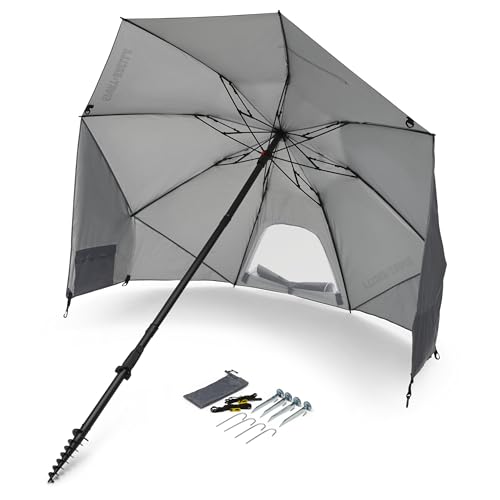


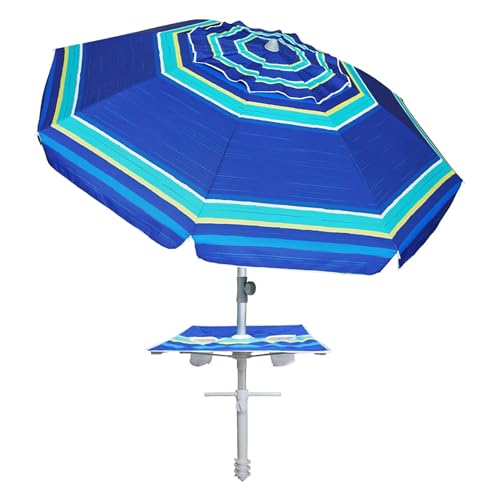


What’s in this listBeach umbrellas sold with a screw-in sand anchor or a sandbag base, as stated by the maker or the Amazon listing. “—” means neither the maker nor the Amazon listing states it.
What counts as a beach umbrella with anchor on this page
This page covers umbrellas that come with their anchor in the box. The selection rule is strict: an umbrella makes the table only when its maker or listing says it ships with a screw-in sand anchor or a sandbag base. An umbrella that "works with" an anchor you buy separately doesn't count, and neither does one whose listing is vague about it. That's why the table can be short, or even empty, some weeks while data for more brands comes in.
The table shows the same fields as the main umbrella page: canopy size, anchor type, any wind claim, tilt, pole material, UPF and weight, each as the maker states it or, where the maker is silent, the listing does (marked as listing values), except weight, which is the maker's alone. The general stuff about canopy size, vents, tilt and UPF lives on the main beach umbrella page. Here we stay below the sand line.
Why the anchor decides more than the umbrella
The Consumer Product Safety Commission's alert says plainly that airborne beach umbrellas can kill, and the hazards the new standard targets are lacerations, impalements and deaths from umbrellas the wind pulled loose. Everything that keeps an umbrella from becoming a projectile happens in the last foot or so of pole and the thing holding it.
That's why my one opinion on this page is this: buy the labeled anchor first, then pick an umbrella that fits under its rating. The reason is right on the label. A compliant anchor states the largest canopy area it's meant to hold. Choose the canopy first and you may find no anchor in the box is rated for it.
The ASTM F3681 label is the spec that matters
ASTM F3681 is the voluntary U.S. safety standard for beach umbrellas and anchor devices. ASTM published the first version on April 1, 2024, and a revision, F3681-25, in July 2025. Its scope is performance requirements that keep the umbrella and anchor system from detaching from the sand. Products made after the approval date can't claim compliance unless they meet all of its requirements.
What the standard tests
The standard treats the umbrella and anchor as one system, "a beach umbrella combined with an anchor device that is either attached to the pole or integrated with the pole," per Bureau Veritas's summary. Under it, the CPSC says, a compliant system has to provide at least 75 pounds of resisting force or stay secure in winds up to 30 mph, with the anchor installed in the sand.
There are two ways to test, picked by canopy size:
- Mechanical pull test: allowed for canopies of 45 square feet or less
- Wind tunnel test: required for canopies over 45 square feet, and allowed for smaller ones too
Quick math on that 45-square-foot line, using the round-canopy formula the 2025 summary gives (diameter = 2 × √(area ÷ π)): 45 ÷ 3.1416 is about 14.3, the square root of that is about 3.8, and doubling it gives roughly 7.6 feet across a flat round canopy. So canopies sized somewhere past 7½ feet are in wind-tunnel territory. It's the kind of number I like having in my head before I start reading boxes in a parking lot.
What the 2025 revision tightened
Per Bureau Veritas's summary of F3681-25:
- The pull test can no longer be run without the canopy
- Poles with separate top and bottom sections are tested assembled, tilted 20 degrees as a whole
- In the wind tunnel, the anchor fails if the canopy inverts, dislodges or won't stay fully open, or the frame is damaged
- Packaging must show the canopy's actual square footage, prominently
What to read on the label and the box
Look for the anchor label in bold: "MEETS ASTM F3681 FOR WIND SPEEDS UP TO 30 MPH" (the 2025 wording begins "ANCHOR MEETS"). The CPSC says the label states the maximum canopy area appropriate for that anchor, and that the anchor has to be installed in the sand with the umbrella for the safety level to count.
Then compare that maximum to the canopy square footage on the box. If the canopy is bigger than the anchor's rating, the label doesn't cover your setup, no matter how sturdy the pole looks.
Types of sand anchor, and how each one holds
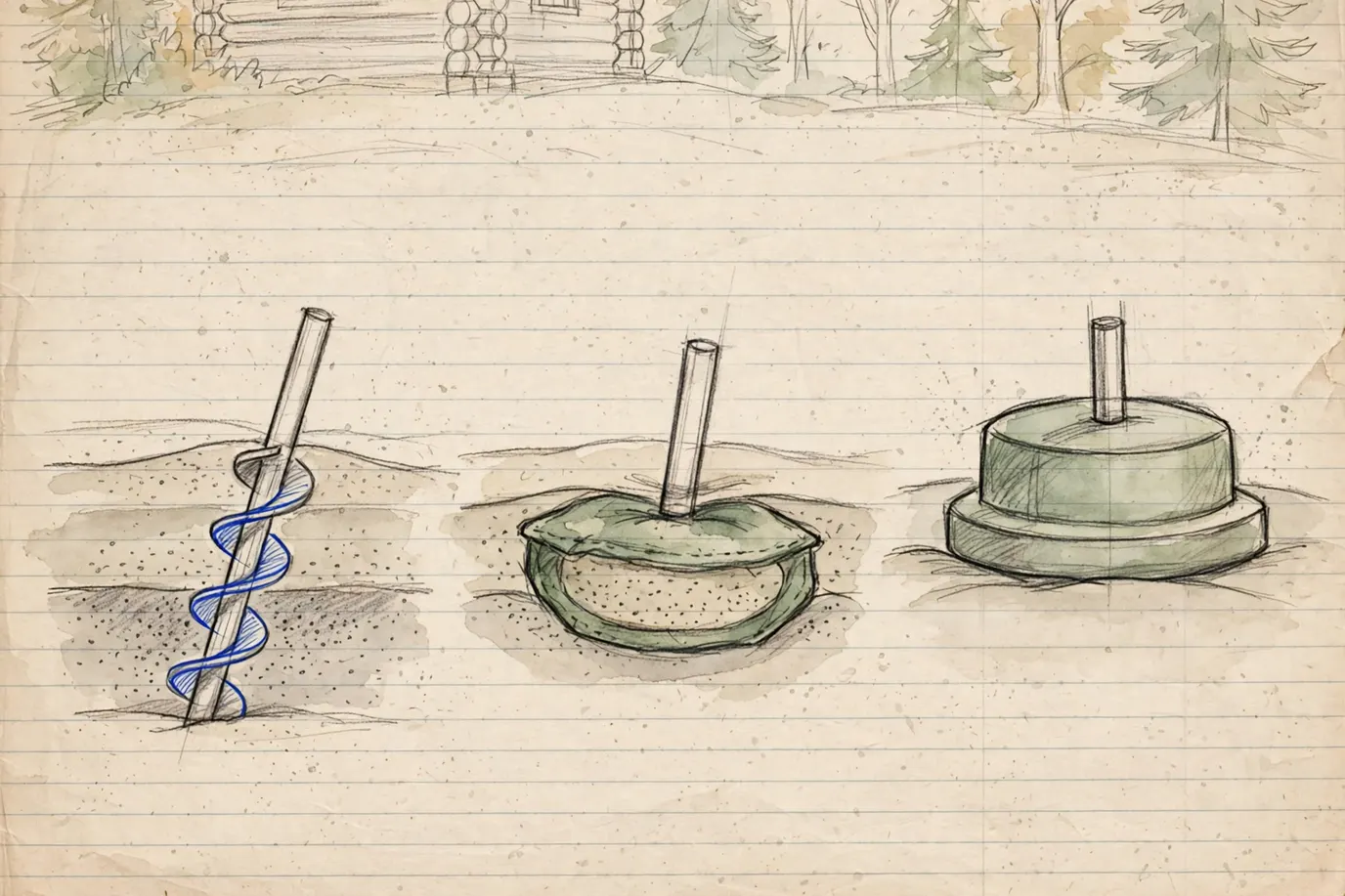
The table's anchor column uses the maker's own description, sorted into a few types. Each holds a different way.
Screw-in auger anchors
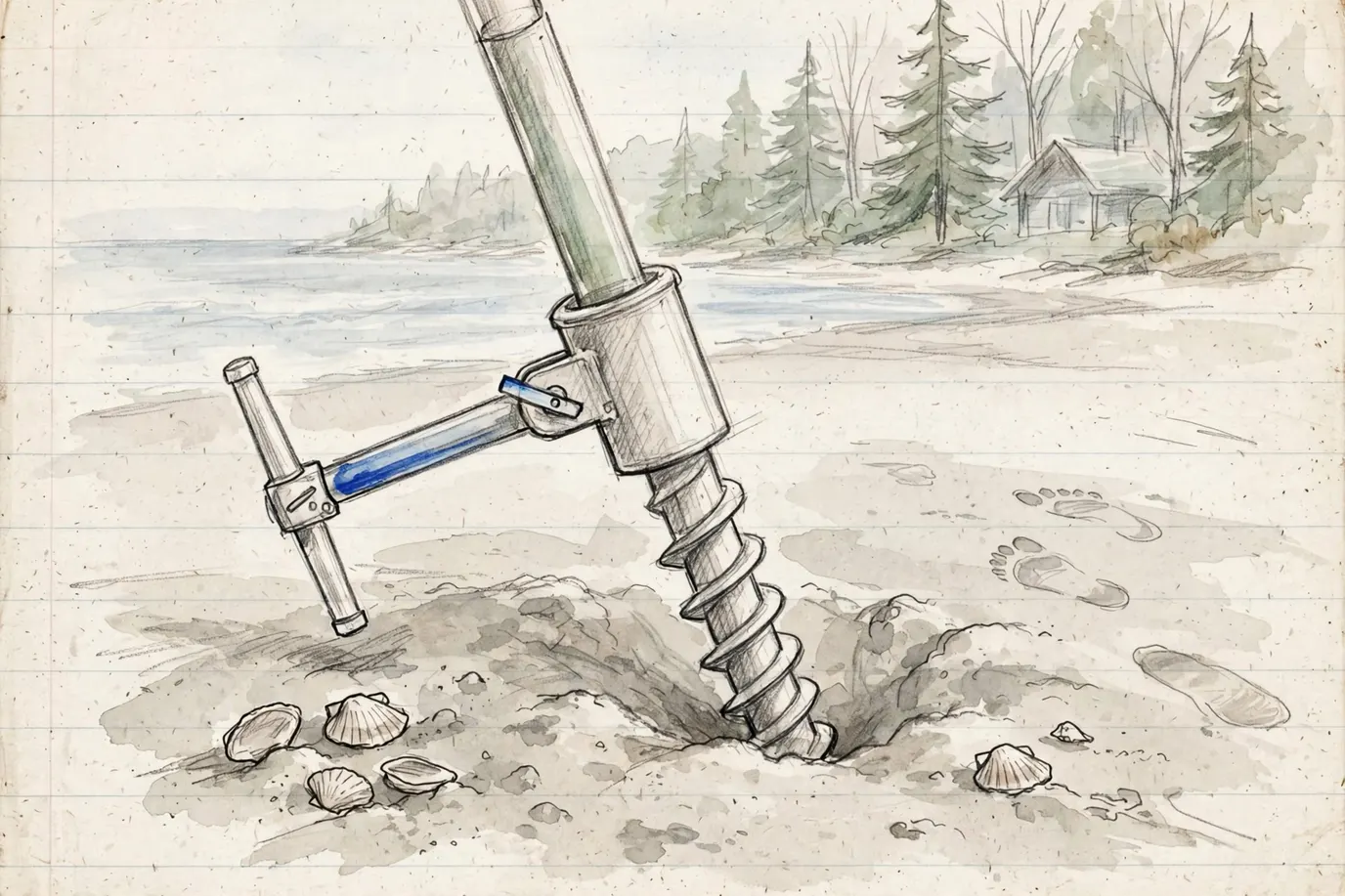
An auger anchor is a short tube with a spiral blade on the bottom and a handle on top. You twist it into the sand, then seat the umbrella pole in the tube and fasten it. The Boston Globe's how-to describes screwing it in at an angle, top facing the wind.
The auger works by grabbing sand around the blade, so it depends on the sand being firm enough to grab. Turn it until the depth the instructions call for, not until your wrists get bored. (Ask me how I know. Wrists get bored early.)
Sand-bag bases
A sand-bag base is a flat fabric ring or pouch around the pole that you fill with beach sand. Instead of digging in, it holds by weight and by spreading over the surface.
The fill is everything. One maker of these bases says its base must hold at least 75 pounds of sand to meet the standard, holds 125 pounds when full, and should be filled completely, with the sand packed down by foot as you go. Its test for "full" is that the base is firm and taut, firm enough to bounce a coin off. The same maker warns that a partial fill can cut holding strength significantly. It's the cooler math in reverse: the empty part doesn't help.
The upside is the walk. It weighs nothing on the way in, because the beach supplies the weight. Renee likes that part more than any spec on the box.
Weighted bases
A weighted base sits on top of the ground and holds by mass alone. It's built more for decks and hard ground than for soft sand. One U.S. umbrella maker's wind-rating page says umbrellas must be secured to a sufficiently weighted base, that listed base weights are minimums, and that with surface bases, umbrellas should be closed and stored when not in use. If the table shows a weighted base, read it as an umbrella that's at home on a pool deck as much as a beach.
Clamps
A clamp grips a chair arm, a cart or a rail. It isn't a sand anchor at all; it's a different job. Chair-mounted shade is covered on the beach chair with umbrella page.
Match the anchor to the sand
Sand isn't one thing, and the beach gets a vote.
- Soft sand: The Myrtle Beach Fire Department's battalion chief told WMBF that soft sand lets you go deeper, and hard-packed sand is harder to secure.
- Damp layer: In the Boston Globe's piece, an oceanographer notes that wet sand just below the surface helps an umbrella hold, and suggests a flatter area with a dry top layer.
- Shelter: An engineer quoted there suggests a spot where a dune or building blocks the wind.
An auger needs sand it can bite into. A sand-bag base needs enough loose sand nearby to fill it. On a beach that's shallow sand over rock or shell, neither one is happy, and that's a day for the beach shade with its own stakes and sandbags, or no shade at all.
Read the wind before you set anything
Walt checks the wind before every hunt, before he even looks at the temperature. I used to tease him about it. Now the first thing I check for a beach day is the wind forecast, and I write it on the cooler lid. (Walt has not been told. He'd want royalties.)
Here's why it matters. The ASTM label covers winds up to 30 mph. The National Weather Service's Beaufort scale puts 25 to 31 mph at "large branches in motion" with "umbrellas used with difficulty". So a day forecast near that band is a day the label is already close to its limit, before any gust shows up.
Setting it up so the rating means something
- Read the anchor's instructions at home. The CPSC says to secure the umbrella and anchor by carefully following the maker's setup instructions.
- Check the anchor. Make sure nothing is cracked, bent or torn and it works as described. A frayed bag or a bent auger blade is a retired anchor.
- Set the anchor before the canopy. Auger to depth, or bag filled until taut.
- Seat and lock the pole, then open the canopy.
- Point the top at the wind. Myrtle Beach's fire officials say that keeps gusts from lifting it from below.
- Recheck through the day. When the wind swings around, swing the canopy with it.
Caught with no anchor at all? The Globe describes a buried "dead man": old pant legs filled with sand, tied off, buried, with a cord running up to the umbrella. It's a field fix, not a rating. The labeled anchor is still the plan.
When to close it
Be aware of sudden gusts. The CPSC says to close the canopy immediately if the umbrella becomes unstable in wind. One anchor maker's setup notes say the same: close it, then reassess the conditions. Don't leave an anchored umbrella open while nobody's at the spot.
Pulling the anchor and leaving the beach clean
Close the canopy before you pull anything. Unscrew an auger the way it went in. Empty a sand-bag base where you are, then lift it out flat.
Then fill the hole. Mote Marine Laboratory asks beachgoers to fill in holes that may trap sea turtle hatchlings on their way to the water and to remove furniture from the beach at night during nesting season. It notes that local ordinances on some Florida beaches require furniture to be removed or stored during nesting hours. Beach and nesting rules vary by town; check the posted beach rules and your state wildlife agency before you leave gear out overnight.
Who can skip an umbrella with an anchor in the box
- You already own an umbrella you like. Buy a labeled anchor rated for its canopy instead. The 2025 standard's warning says that if an umbrella doesn't include an anchor, use an ASTM F3681 compliant one.
- You only need shade for one. A chair canopy is lighter and plants itself.
- Your beach is mostly rock or shell. Neither an auger nor a bag works well there; a different shade design does.
- Your crew needs more than one canopy covers. A beach shade or beach tent spreads the load over more points.
Buy the anchor like it's the part that matters, because it is. Then buy the umbrella that fits under it, and write the wind on the cooler lid. Walt would.
Brands in this list
Related
Questions people ask
Is a sand-bag base better than a screw-in anchor?
Neither style wins on its design alone. What counts is whether the umbrella and anchor system passed the ASTM F3681 test and carries the label. A sand-bag base needs to be filled completely; one maker says its base must hold at least 75 pounds of sand to meet the standard. A screw-in anchor needs firm enough sand and the depth its instructions call for.
What does ASTM F3681 mean on a beach umbrella anchor?
It's the voluntary U.S. safety standard for beach umbrellas and their anchors, first published in 2024 and revised in 2025. A compliant system has to resist at least 75 pounds of pull or stay secure in winds up to 30 mph, with the anchor installed in the sand. The label also states the largest canopy area the anchor is meant for.
Can I use a sand anchor with any beach umbrella?
Only within what the anchor's maker says. A compliant anchor's label states the maximum canopy area it's meant to hold, and the pole has to fit the anchor's sleeve or clamp the way its instructions describe. A bigger canopy than the label allows means the rating no longer applies, even if everything seems to fit.
Do I still need to bury the pole if the umbrella has an anchor?
Follow the anchor's instructions instead of old habits. Rocking a bare pole deep into the sand was the standard advice for years, but the CPSC's 2024 safety alert replaced its older guidance and now points buyers to labeled, compliant anchors installed as the maker directs. Some systems seat the pole in the anchor; others need a set depth.
Sources
- U.S. Consumer Product Safety Commission: Safety Alert, Airborne beach umbrellas can kill — accessed 2026-10-22
- Bureau Veritas CPS: ASTM has published a new safety standard for beach umbrellas and anchor devices (ASTM F3681-24) — accessed 2026-10-22
- Bureau Veritas CPS: ASTM publishes new standard for beach umbrellas and anchor devices (ASTM F3681-25) — accessed 2026-10-22
- ASTM International: F3681-25 Standard Consumer Safety Specification for Beach Umbrellas and Anchor Devices (scope) — accessed 2026-10-22
- beachBUB: ASTM F3681 compliance and base fill instructions — accessed 2026-10-22
- beachBUB: Home page (setup notes on filling the base and wind gusts) — accessed 2026-10-22
- The Boston Globe: Here's how to plant a beach umbrella so it doesn't blow away — accessed 2026-10-22
- WMBF News: Myrtle Beach Fire Department reminding beachgoers of beach umbrella safety — accessed 2026-10-22
- Frankford Umbrellas: Wind ratings (base weights and closing umbrellas) — accessed 2026-10-22
- National Weather Service Miami: Beaufort wind force scale — accessed 2026-10-22
- Mote Marine Laboratory: Beach furniture affects nesting turtles in Southwest Florida — accessed 2026-10-22