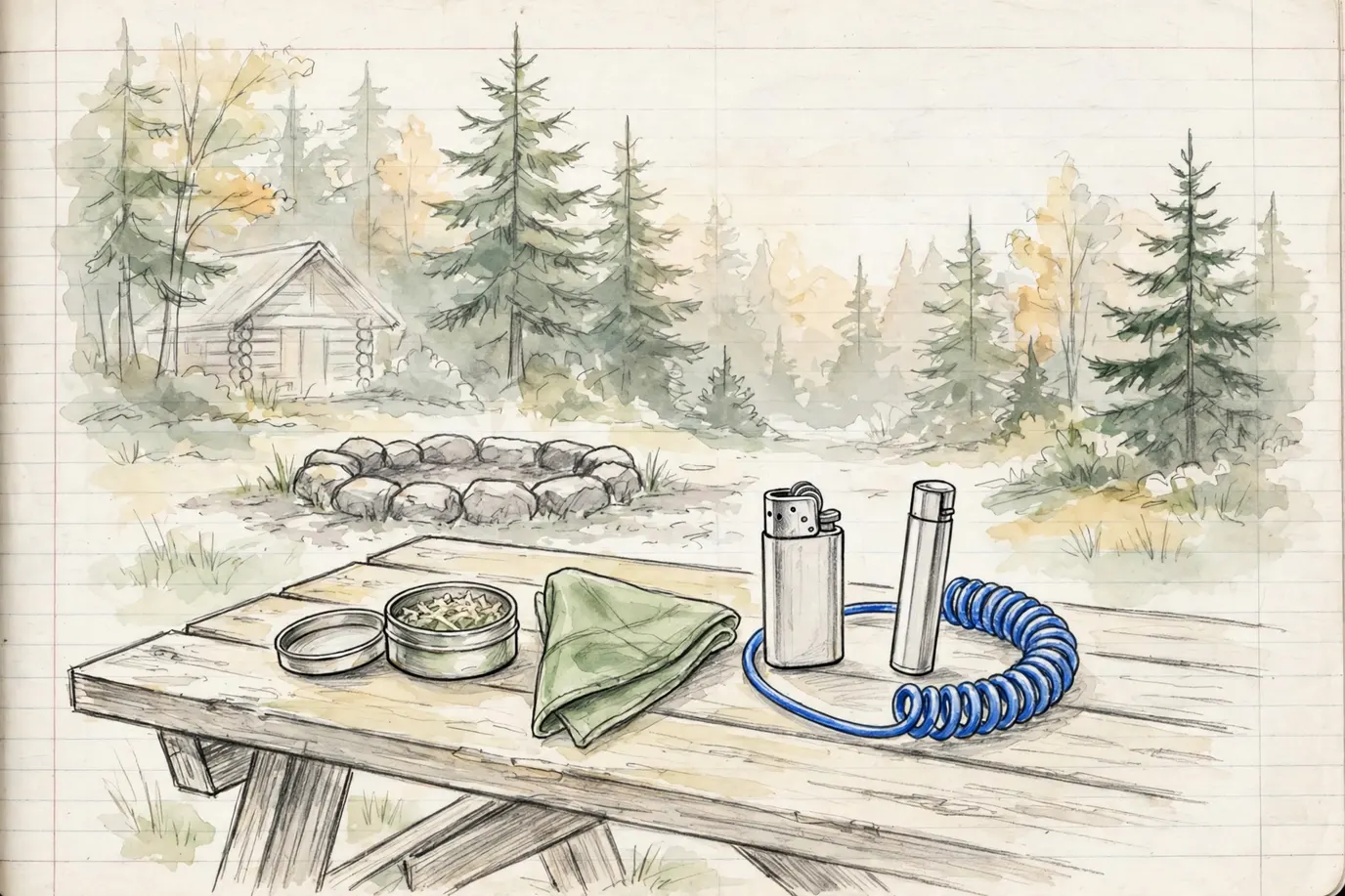
Two ways a camping lighter keeps going
Every lighter on this list does one of two things when it runs low. You refill it, or you recharge it. That's the whole rule, plus one more condition: the maker has to call it windproof. A lighter that does neither ends up in the junk drawer after one season, and a camp lighter that quits in a breeze isn't much of a camp lighter.
Right now four listings qualify, from two brands:
- Black Beard Arc Lighter, two listings of the same model: electric arc, rechargeable by the listing, windproof and waterproof by the maker
- Zippo Classic Black Crackle: wick lighter, lighter fluid, refillable by the listing, windproof by the maker
- Zippo Classic Street Chrome: the same wick lighter in a different finish, with the same fields
So this page is really a choice between a battery and a can of fluid. Neither one is better. They need different habits, and they quit for different reasons.
Pick labels that follow from the data
The Black Beard Arc Lighter is the rechargeable one
Two listings carry the same Black Beard Arc Lighter, and their data matches field for field. The Amazon listing gives the fuel as electric arc (plasma) and says it's rechargeable. The maker calls it windproof and waterproof. It's the only lighter here with a waterproof claim from its maker. There is no flame to set and no fuel to carry. An arc lights what you hold in it, so it suits tinder, a fire starter cube or a candle wick you can reach. For a burner set deep in a stove, an open flame you can tip is easier to aim.
The Zippo Classic Black Crackle is the refillable wick lighter
The Zippo Classic Black Crackle is a flip-top wick lighter. The Amazon listing says it runs on lighter fluid and is refillable. Zippo calls it a windproof lighter, and the chimney around the wick is how that kind of lighter is built. It gives you an open flame you can tilt toward a wick or a stove. The trade is upkeep: fluid, flints and wicks are consumables, and Zippo sells all three separately.
The Zippo Classic Street Chrome is the same lighter in another finish
The Zippo Classic Street Chrome has the same data as the Black Crackle: wick, lighter fluid, refillable by the listing, windproof by Zippo. The difference is the case finish, not the insert. Pick by which one you'll find faster when it falls in the leaves. (Walt says that's a reason to buy the shiny one. Walt also owns a blaze-orange hat he can't find.)
How to choose a camping lighter
Pick the power source before the model
This is the one decision that matters, and the list makes it easy because each brand sits on one side of it.
- Recharge (arc): no fuel can in the truck, no spills; needs a charging cable and a place to plug in
- Refill (wick): an open flame you can aim; needs fluid, spare flints and a wick now and then
Ask yourself which chore you'll actually do. If you charge your phone and headlamp every night anyway, one more cable won't hurt. If your camp has no outlet and the truck is a long walk, a can of fluid is simpler. Walt looked at the arc lighter and said it looked like something he'd have taken off a sophomore in shop class. He then asked if he could try it.
Read "windproof" as the maker's word
Both makers on this page use the word windproof. That's their claim about their lighter, and it's the reason each one made the list. It doesn't mean wind stops mattering. A wick lighter, per Wikipedia's write-up on lighters, puts a metal enclosure with air holes around the flame, which makes the flame less sensitive to wind. An arc lighter has no flame to blow out; it uses an electric arc to light whatever you put into it. Either way, your tinder is not windproof. Build the fire where Smokey Bear says to, in an open spot without strong gusts, and turn your back to the wind when you light it.
Know the upkeep on a wick lighter
Zippo's own care pages lay out the routine, and it's a short list:
- Fuel: pull the insert, lift the felt pad, soak the packing slowly until the fluid reaches its top; never overfill
- Dry off: wipe the lighter and your hands before you light it
- Flint: when the wheel turns with no spark, the flint is worn; a new one goes in under the spring screw
- Wick: when the tip turns black, pull up about 1 cm and trim it even with the chimney, once or twice a year
- Replace the wick: after two or three trims
Zippo's troubleshooting page also notes its windproof lighters ship without fuel. Buy the fluid with the lighter, not on the drive up. Wikipedia's lighter article says the closed top on a wick lighter is there to keep the volatile fuel from evaporating. That's the reason a wick lighter left in a drawer since last November tends to be dry. Fill it the night before the trip.
Know the upkeep on an arc lighter
An arc lighter trades fuel chores for battery chores. Black Beard's page doesn't list a charge time, a cable type or a battery size, so I won't guess. Zippo's guide for its own arc insert gives a sense of the category: charge it fully before the first use, use the cable that came with it, and clean debris off the electrodes with something non-metallic, like a toothpick, if the arc won't connect. Zippo's insert also shuts the arc off on its own after 10 seconds. Those are Zippo's numbers for Zippo's insert, not Black Beard's, so read your own manual.
I charge mine on the drive in. Somewhere between the Turnpike and the gravel road, the cable usually works its way under the seat, which is how I know I'm close to camp.
Charge it warm, store it warm
The U.S. Fire Administration says not to charge lithium-ion batteries below 32°F or above 105°F, and to store them at room temperature when possible. A deer camp in November spends a lot of hours under 32°F. So charge the arc lighter at home or in the heated cabin, not on the tailgate at 5 a.m.
The same page says not to leave lithium-ion batteries in direct sunlight or in hot cars. That covers the dashboard in September and the glove box in August. Wick lighters have their own heat rule: lighter fluid is flammable, so a fueled lighter on a hot dash isn't a good idea either. Both lighters ride in a pocket or a kit, not on display.
Carry one of each, if you carry two
My one opinion on this page: if your fire kit has room for two lighters, make them different kinds. Here's the checkable reason. They fail differently. A wick lighter runs dry when its fuel evaporates or burns off, and it never needs an outlet. An arc lighter has no fuel to lose, but the USFA says not to charge its battery below freezing. A dead battery and a dry wick rarely happen on the same morning. Two of the same kind tend to quit together.
I know what Renee would say. She'd say I've found a reason to buy two lighters. She'd be right, and I'd still pack them.
Plan the lighter around the trip, not the store
For hiking, the lighter that matters is the one in your pocket every mile. For camp, it's the one in the fire kit by the ring. If you drive to camp, any lighter here works. If you fly to a hunt or a trailhead, TSA's rules decide for you:
- Zippo-style lighters: allowed in carry-on; checked only empty, or fueled inside a DOT-approved case
- Arc lighters: carry-on only, with the button locked, a cover on, or the battery out; no charging on the plane
- Lighter fluid: not allowed in either bag
So a wick lighter can fly, but its fluid can't. Plan to buy fluid where you land. An arc lighter can fly in your carry-on if you lock it.
Lighter and fire safety, plainly
Fill a wick lighter away from any flame, close the fluid can, and wipe up spills before you light it. Zippo says a lighter with fuel on the outside shouldn't go in your pocket, and to wash fluid off your skin right away.
Use only the charging cable that came with an arc lighter. Stop using any lithium-ion battery that smells, swells, leaks, changes color or gets too hot, per the USFA.
At the fire ring, follow Smokey Bear's basics: at least 15 feet from tents and brush, a 10-foot cleared circle, water and a shovel nearby. Drown, stir, drown again, and feel the ashes before you walk away. Check fire restrictions before you light anything.
Keep any lighter out of kids' reach.
Who should skip this list
If you only light a gas grill or a cabin stove with a pilot, skip it. A lighter with a longer reach suits that job better, and the electric lighter page covers the rechargeable kinds beyond the pocket arc. If you want butane and a hot, focused flame, look at the torch lighters page instead; that page covers the jet-flame kind in depth.
Skip it too if you want a lighter as your only way to light a fire on a long trip. A ferro rod has no fuel and no battery to run out, and it belongs in the kit next to whatever lighter you carry. And if you need a waterproof claim on a wick lighter, neither Zippo here makes one in our data; the windproof lighter page covers sealed designs.
How this list of camping lighters is built
A lighter makes this list when two things are stated. The maker calls it windproof, and the maker or the Amazon listing says it refills or recharges. Missing either one, it's out. The order follows the data, not a brand I like better, and nothing here is ranked by ratings.
Values come from the maker's own product page first. Where the maker is silent, the Amazon listing fills in, and the table marks those values. On this page, the windproof and waterproof claims are the makers'; fuel, flame type and refill or recharge come from the listings. A blank in the table means neither source states it.
The list is checked again every week. Listings drop out when they stop being available, new lighters join when their data qualifies, and the order can change. Price shows only as a tier, never a number, and every lighter here sits in the same tier right now.
For the brands themselves, see Zippo and Black Beard Fire Starter. For how the wind-blocking designs work in general, the windproof lighter page goes deeper.
Charge the one that charges, fill the one that fills, and put both back in the kit when you're done. The lighter you can find in the dark is worth more than the one you can't.