Archery & Bowhunting · Gear type
Compact Crossbow
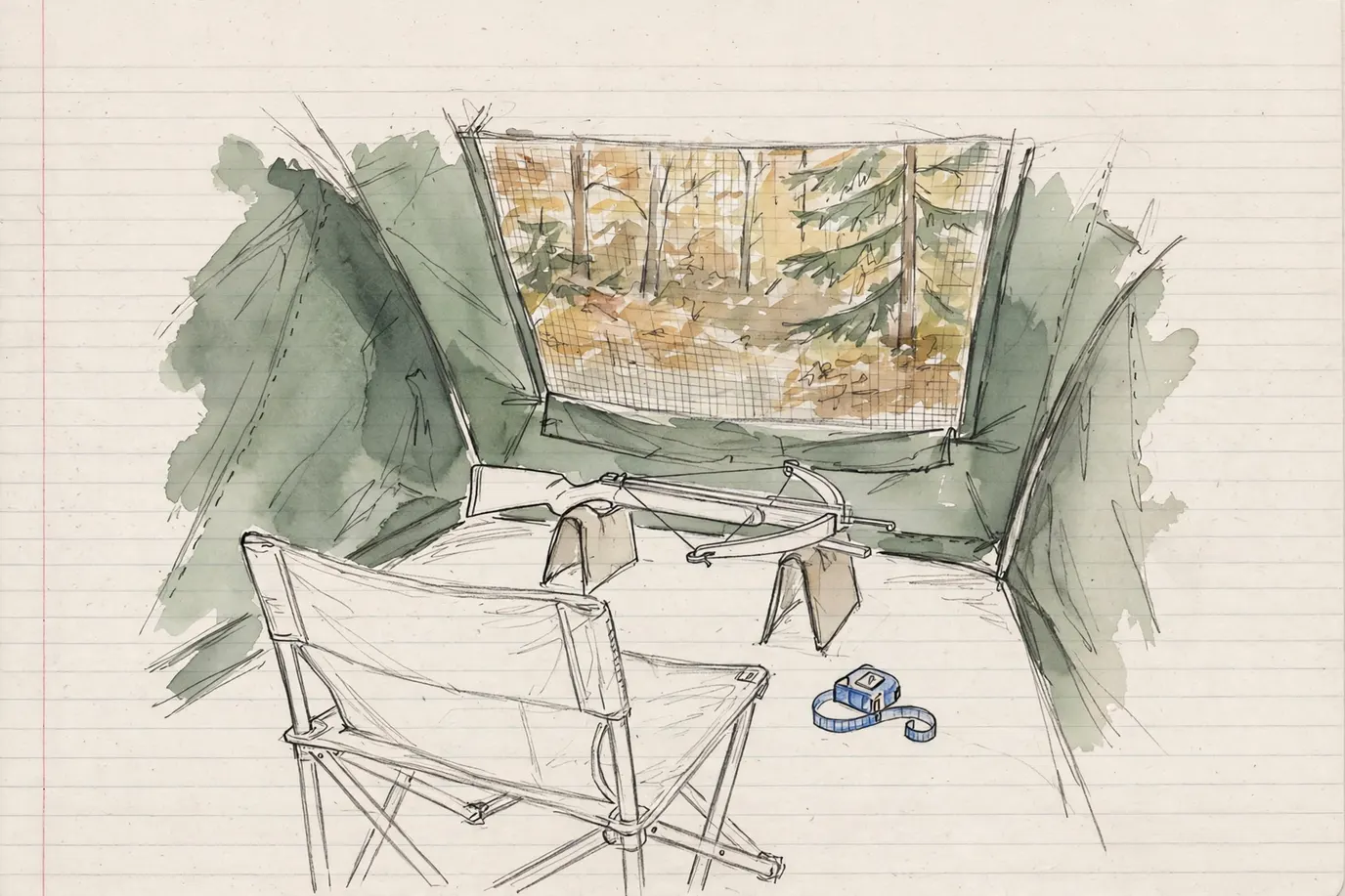
A compact crossbow is a crossbow built short and narrow, so its limbs clear the walls of a ground blind and the trunk beside a tree stand. The number that decides it is cocked width, measured axle to axle, followed by overall length and how you cock it. Speed comes after fit. The short version: measure the place you hunt from, then buy the crossbow that fits it. (I keep a tape measure in my blind bag. It has more miles on it than my boots.)
We earn a commission if you buy through our links, at no cost to you. Disclosure
| Model | Type | Speed | Kinetic energy | Draw weight | Width (cocked) | Length | Amazon |
|---|---|---|---|---|---|---|---|
| Compoundlisting | 300 fpslisting | — | 130 lblisting | 5 inlisting | — | Check price | |
| Compoundlisting | 300 fpslisting | — | 130 lblisting | 5 inlisting | — | Check price | |
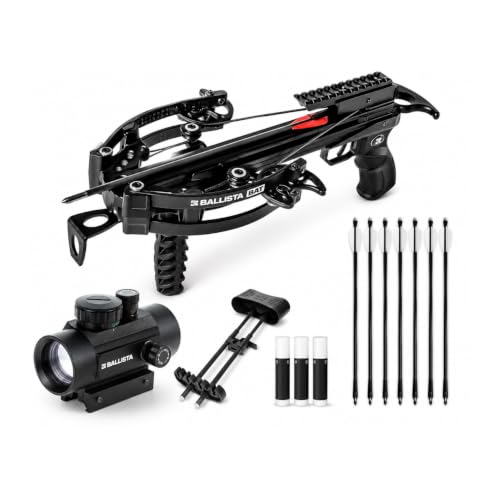
Ballista BAT Compound Crossbow BundleCrossbow More specs
| Compoundlisting | 300 fpslisting | — | 130 lblisting | 5 inlisting | — | Check price |
Ravin R26X BundleCrossbow More specs
| — | 400 fpsmaker | 142 ft-lbmaker | — | 5.75 inmaker | — | Check price |
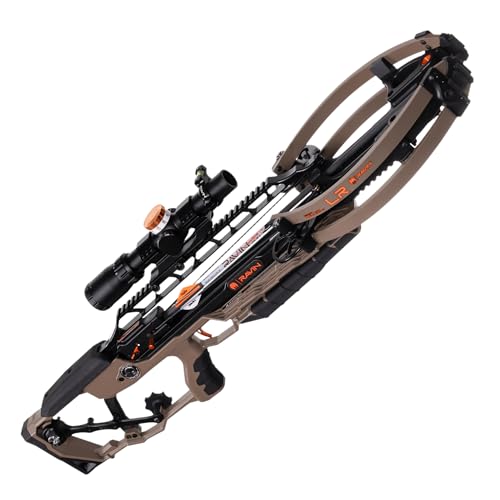
Ravin LR Long RangeCrossbow More specs
| — | 450 fpsmaker | 180 ft-lbmaker | — | 6 inmaker | — | Check price |
TenPoint TRX Ultra Vision HDCrossbow More specs
| Reverse drawlisting | 515 fpslisting | — | — | 6 inlisting | — | Check price |
TenPoint TRX Ultra EVO-X MarksmanCrossbow More specs
| Reverse drawlisting | 515 fpslisting | — | — | 6 inlisting | — | Check price |
TenPoint Stealth 450 Oracle XCrossbow More specs
| Compoundmaker | 450 fpslisting | 184 ft-lbmaker | — | 6.5 inlisting | — | Check price |
TenPoint TX 28Crossbow More specs
| — | 410 fpslisting | — | — | 6.5 inlisting | — | Check price |
TenPoint TX Ultra 29.5 EVO-X MarksmanCrossbow More specs
| — | 460 fpslisting | — | — | 6.5 inlisting | — | Check price |
TenPoint TX Ultra 29.5 Vision HDCrossbow More specs
| — | 460 fpslisting | — | — | 6.5 inlisting | — | Check price |
TenPoint TX Ultra 29.5 Oracle XCrossbow More specs
| — | 460 fpslisting | — | — | 6.5 inlisting | — | Check price |
Killer Instinct TEMPR-X KitCrossbow More specs
| — | 405 fpslisting | — | 195 lblisting | 6.75 inlisting | — | Check price |
Killer Instinct LogiX DC 435 BundleCrossbow More specs
| — | 435 fpslisting | — | — | 6.75 inlisting | — | Check price |
| — | — | — | — | 6.75 inlisting | — | Check price | |
| — | — | — | — | 6.75 inlisting | — | Check price | |
| — | — | — | — | 6.75 inlisting | — | Check price | |
Killer Instinct LogiX DC 435 BundleCrossbow More specs
| — | 435 fpslisting | — | — | 6.75 inlisting | — | Check price |
Killer Instinct LogiX 435 BundleCrossbow More specs
| — | 435 fpslisting | — | — | 6.75 inlisting | — | Check price |
TenPoint Flatline 460 EVO-X MarksmanCrossbow More specs
| Reverse drawmaker | 460 fpslisting | 193 ft-lbmaker | — | 7.5 inlisting | — | Check price |
CenterPoint Hellion 400Crossbow More specs
| Compoundlisting | 400 fpslisting | — | 185 lblisting | 8 inlisting | 33 inmaker | Check price |
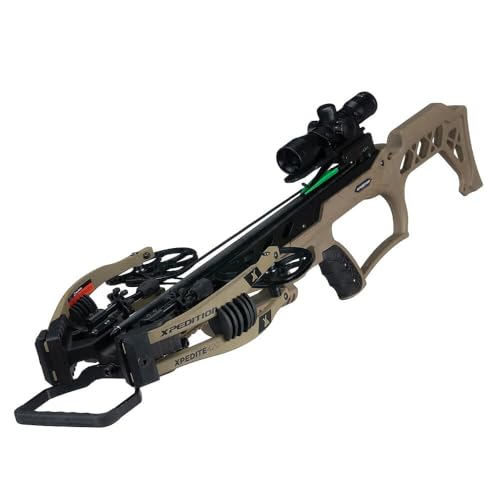
Xpedition Archery Xpedite 420Crossbow More specs
| Compoundlisting | 420 fpslisting | — | — | 8 inlisting | — | Check price |
Xpedition Archery Xtraction 400XCrossbow More specs
| Compoundlisting | 400 fpslisting | — | — | 8 inlisting | — | Check price |






What’s in this listCrossbows no wider than 8 inches axle to axle when cocked, as stated by the maker or the Amazon listing — the measurement that decides how well a crossbow fits a blind or stand. “—” means neither the maker nor the Amazon listing states it.
What makes a compact crossbow different
Every crossbow has the same basic parts: a stock, a rail, a trigger box, limbs and a string. The crossbow page covers those and how they work together. A compact crossbow keeps all of that and shrinks two numbers:
- Width: how far apart the limb tips sit, measured axle to axle with the crossbow cocked
- Length: front to back, stock to limbs
One maker's sizing guide says crossbows were once up to 30 inches wide, and current models go as narrow as 6 inches cocked. It calls 6 to 12 inches cocked narrow. Length runs from about 34 inches down to a short 26, with most around 32.
Why care? Because a crossbow fires sideways as well as forward. When the string goes, the limbs flex several inches outward on both sides, per the same guide. Clip a blind wall or a tree trunk and the shot can miss and the crossbow can be damaged. A narrow, short crossbow simply has less to bump into.
The table on this page lists crossbows by the maker's stated cocked width, narrowest first. It also shows type, speed, draw weight, length, weight, cocking device, whether it de-cocks without firing, the optic and what's in the box. Length and weight are the maker's; the other values come from the maker or the Amazon listing (the table marks the listing ones). Anything neither states shows as a dash.
What to look at in a compact crossbow
Width first, then everything that rides along with it. This is the order I'd read the table in.
Read cocked width, axle to axle, before anything else
Cocked width is the number that fits the crossbow to your blind or stand. It's measured axle to axle (center of one limb-tip wheel to the other) with the string drawn back.
Two things trip people up here. First, an uncocked crossbow is often wider than the cocked number, because drawing the string pulls the limb tips in. One trade review lists a compound crossbow at 9 inches cocked and 13 inches uncocked. Same crossbow, 4 inches apart. Second, the cocked number is not the width the limbs need when you shoot. They flex outward when fired, so you want clearance beyond it.
Quick math for a ground blind: measure the inside width of the window you'll shoot through. Subtract the cocked width. What's left is your margin on each side, split in two. If that margin is an inch, you'll be threading a needle every time a deer steps a little left.
Pick length for your body, then for your blind
Short crossbows are easier to swing around in an enclosed blind or a tree stand, per the maker's sizing guide. But length is also fit. The same guide says a 26-inch crossbow may feel too small to a 6'3" shooter, and a 34-inch one may feel cumbersome and front-heavy to someone 5'5".
It also says no length is more accurate on its own. Shooters tend to shoot best with a crossbow sized to their body. So the shortest crossbow in the table isn't automatically the best compact crossbow for you. It's the best one only if you can shoulder it, see through the optic and settle the stock against your cheek the same way every time.
(I'm 5'6". A 34-inch crossbow and I look like a kid carrying a canoe paddle.)
Weight: compact doesn't always mean light
Crossbows range from about 10 lb down to 6 lb, which one maker calls ultralight. The weight depends on the crossbow's design, its cocking device and its optic; rangefinding optics add weight.
The same maker points out that most whitetail hunters sling the crossbow and walk a short way to the stand or blind. Ground blind hunters usually rest it on a tripod or shooting stick, and stand hunters often use a gun rest. So weight matters less than width for most compact crossbow buyers. It matters more if you walk far, hunt from a saddle with no rail to rest on, or shoot offhand.
Check whether the table's weight is the bare crossbow or includes the optic and cocking device. We list what the maker lists.
Limb type: compound, reverse-draw or recurve
Bowhunter's limb technology article sorts crossbows into three builds, and they don't shrink equally:
- Compound: cams, cables and short limbs. Shorter and more compact; string changes typically need a bow press.
- Reverse-draw: a compound with limbs mounted near the middle and pointing away from you. Longer power stroke, usually the fastest, and better balance.
- Recurve: no cams. Lighter, easier to maintain, but wider and longer.
So most compact crossbows are compounds or reverse-draws. The cams let short limbs store the energy, while a recurve needs its wider, longer limbs to do the same job. More on those trade-offs is on the reverse-draw crossbow page and the recurve crossbow page.
Speed and power stroke
Speed is listed in FPS, feet per second, as the maker or the listing states it. Power stroke is the distance the string pushes the bolt, and Bowhunter's article explains that it decides how long the bolt stays on the string. Longer contact transfers more energy.
A short crossbow has less room for power stroke. The reverse-draw layout is one way around that, since it starts the string farther from the trigger box. Cams are another; Bowhunter says they store more energy for faster bolts. Draw weights have climbed too: one maker says modern crossbows typically run 200 to 350 lb, against 150 lb or less in the 1970s.
A speed number is a fair way to compare crossbows on paper. In practice, it depends on the bolt weight the maker used for the test, so compare like with like.
The cocking device matters more on a compact crossbow
High draw weight means cocking is real work. One maker's cocking guide lays out the options:
- Rope cocker: pulleys cut the effort by 50%, so a 270-lb draw takes about 135 lb of pull
- Removable crank: a boat-winch style that can bring effort down to 5 to 10 lb in some cases; you carry it separately and remove it before shooting
- Integrated crank: built into the stock, nothing to forget at the truck
The same guide notes that compound crossbows get easier in the last third of the cocking stroke thanks to their cams. Recurves get steadily harder.
For compact crossbows in blinds, an integrated crank is the tidy setup, because you can recock without standing up and swinging a rope around inside a 5-foot room. In a tree stand, follow your manual. One maker's manual says never to cock or uncock while standing in a stand; cock on the ground and raise the crossbow with a pull rope. The crossbow cocking device page has more.
Safe de-cocking: know how you'll unload at dark
Most crossbows can't be de-cocked by hand, even ones with a crank, per that cocking guide. You unload them by shooting: a blunt de-cocking bolt into the ground or a practice bolt into a target. Crossbows with a de-cocking crank unwind the string instead. The table's "Safe de-cocking" column is yes only when the maker or the listing says it de-cocks without firing.
Don't leave it cocked overnight to skip the step. The same maker says leaving a crossbow cocked more than a day can prematurely stretch strings and cables and damage the limbs.
Optic included and what's in the box
The "Optic included" column tells you whether a scope, a red dot or nothing comes with it. "In the box" lists bolts (count and length), quiver, cocking aid and optic as the maker or the listing states them. A compact crossbow with a bulky quiver mounted on the side isn't very compact anymore, so check where the quiver rides. Bolts are on the crossbow bolts page; use the length your crossbow's manual names.
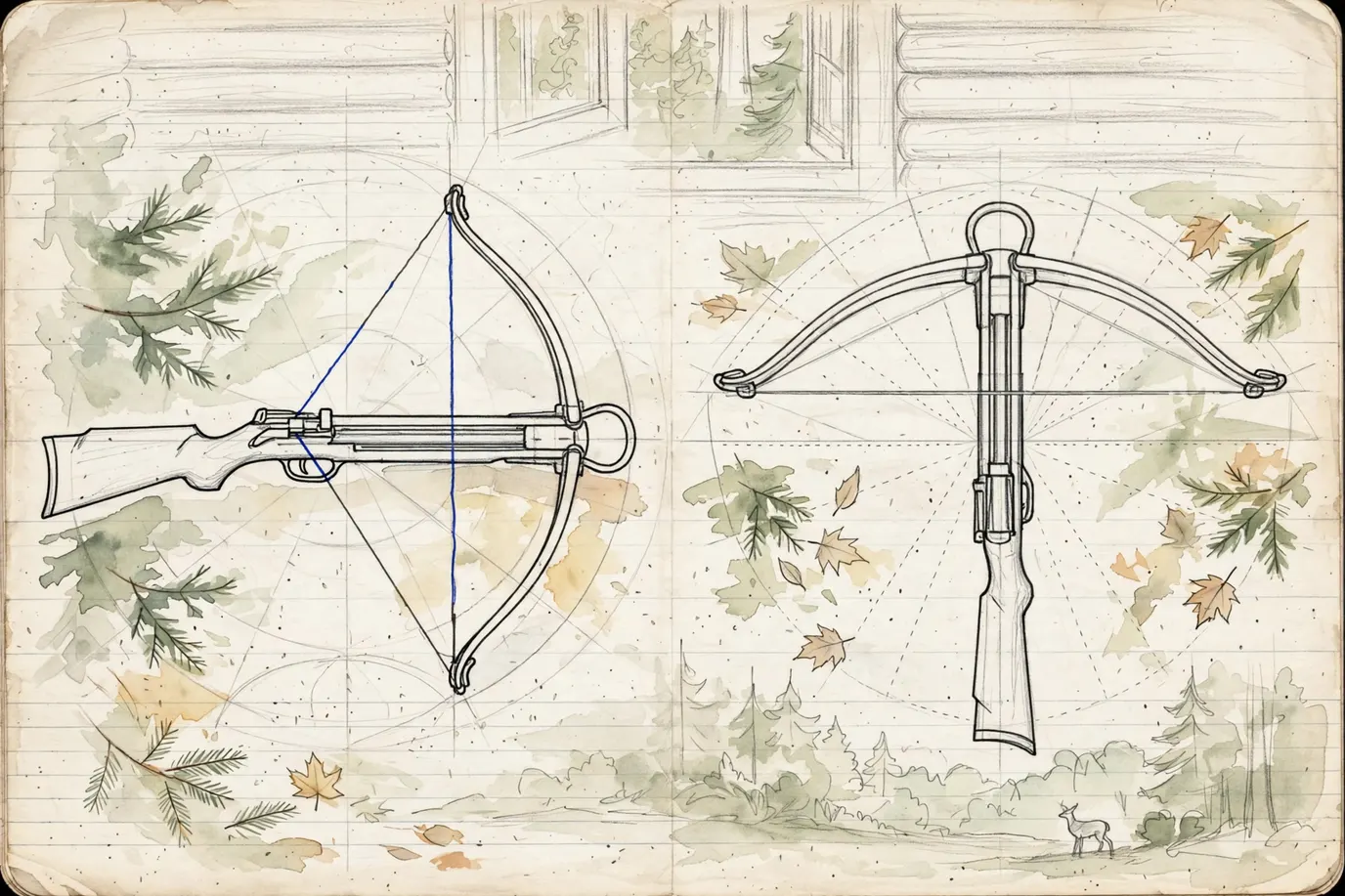
Who a compact crossbow is for
Ground blind hunters
This is the main customer. A pop-up blind has walls on every side, and your shooting windows are only so big. A narrow crossbow lets you turn toward a deer that came in from the wrong side without the limbs brushing fabric.
Measure the windows of the blind you actually own, not the one in the catalog photo. I write the window widths on a strip of duct tape inside the blind door. (Danny asked why. Danny has never had to turn left in a blind with a crossbow and a thermos.)
Tree stand and saddle hunters
A narrow crossbow keeps its limbs clear of the trunk and the branches you didn't trim. A short one is easier to bring around to a shot on your weak side. In a saddle, with no rail to rest on, weight and balance start to matter as much as width.
Smaller-framed shooters
A short stock can fit a shorter shooter better. Check length of pull and whether the stock adjusts, if the maker or the listing lists it. A compact crossbow can be a good fit here; a youth model is a separate category on the youth crossbow page.
Set it up in the blind before the season
Do a dry run with the crossbow uncocked and no bolt on the rail.
- Set the blind where you'll hunt it, staked and roped.
- Sit in your actual chair, at your actual height.
- Shoulder the crossbow at each window and swing it through the angles you expect.
- Check that the limb tips clear the walls with room to spare for the outward flex.
- Note which windows are tight and which are open. Mine go in the logbook as "yes," "maybe" and "nope."
If a window is too tight, open it wider or move the chair. A crossbow can't get narrower than the maker built it.
Crossbow safety in tight spaces
Keep your fingers and thumb below the rail and out of the string path whenever the crossbow is cocked. Raise and lower it with a haul line, uncocked, and never dry-fire it; Archery 360 says a dry-fire can damage the bow and injure the shooter.
Wisconsin's DNR adds that crossbows have a safety, so confirm it's engaged after cocking, and keep the limb tips clear of obstructions. Crossbow seasons and rules vary by state. Check your state wildlife agency before the season.
Who should skip a compact crossbow
If you hunt from a roomy box blind or shoot across open fields from a ladder stand, width buys you little. A standard-size crossbow may fit a tall shooter better and balance steadier on a rest.
Also skip the narrowest one if it means a cocking setup you can't run where you hunt. A crossbow you can't recock quietly in your blind isn't the right one, however narrow it is.
My one opinion on this page: measure your blind window or stand space before you shop, and buy for that number. The reason is in the first section. Limbs flex outward several inches when fired, so the space you hunt from sets the real limit, not the spec sheet.
Brands in this list
Related
Questions people ask
How narrow is a compact crossbow?
One crossbow maker calls anything from 6 to 12 inches wide when cocked narrow, and notes that current models go as narrow as 6 inches. The list on this page uses a tighter cutoff, shown in the rule box. Always compare cocked width, measured axle to axle, because that is the width the crossbow has while you sit and wait.
Is a shorter crossbow less accurate?
Not by itself. A crossbow maker's sizing guide says no length is inherently more accurate, and that shooters tend to shoot best with a crossbow sized to their body. Most crossbows run about 32 inches long. A very short one can feel cramped to a tall shooter, and a long one can feel front-heavy to a short shooter.
Can I cock a compact crossbow in a tree stand?
Follow your crossbow's manual. One maker's manual says never to cock or uncock a crossbow in a tree stand while standing; cock it on the ground and raise it with a pull rope. Wisconsin's DNR advises raising and lowering a crossbow uncocked. Some crank systems are designed to be used seated, so check what yours allows.
Why do makers list cocked width and not uncocked width?
Because cocked is the state the crossbow is in while you hunt. On a compound or reverse-draw crossbow the limbs pull inward as the string comes back, so it is narrower cocked than at rest. When you fire, the limbs flex several inches outward on both sides, per one maker's guide, so leave room beyond the listed number.
Sources
- TenPoint Crossbows: Crossbow size, what to consider before you buy — accessed 2026-10-22
- TenPoint Crossbows: Crossbow weight, what to consider before you buy — accessed 2026-10-22
- TenPoint Crossbows: Crossbow cocking and de-cocking, what to consider before you buy — accessed 2026-10-22
- Bowhunter: Understanding crossbow limb technology — accessed 2026-10-22
- Excalibur: Micro and Matrix owner's manual (safety, cocking, de-cocking) — accessed 2026-10-22
- Archery Business (Shooting Sports Retailer): Crossbow review, cocked and uncocked width specs — accessed 2026-10-22
- Wisconsin DNR: Archery and crossbow safety tips — accessed 2026-10-22
- Archery 360 (Archery Trade Association): Archery Lingo: Dry-Fire — accessed 2026-10-22