Archery & Bowhunting · Gear type
Compound Crossbow
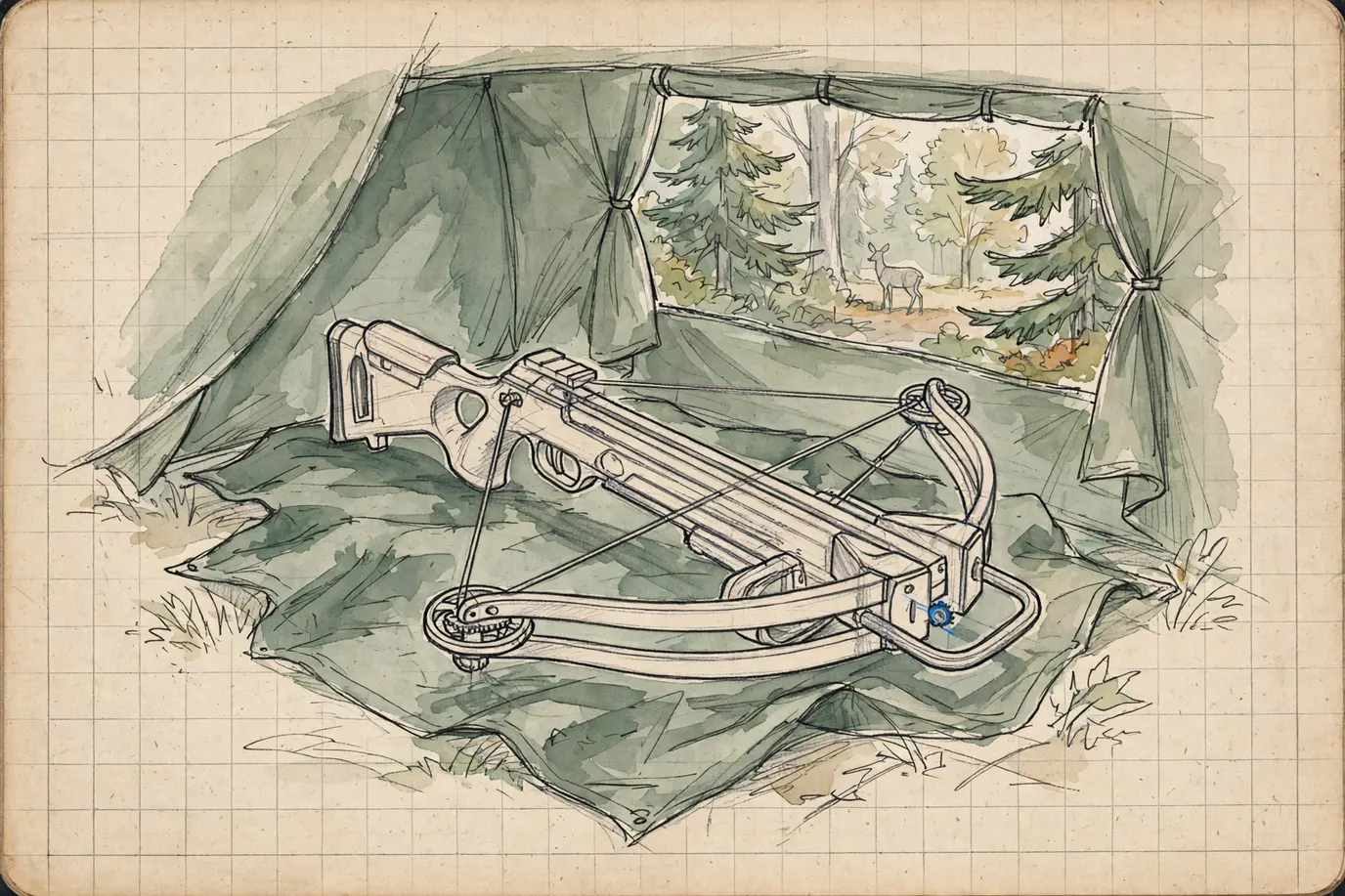
A compound crossbow puts cams and cables on the limb tips, the same idea as a compound bow, so it gets more speed out of each pound of draw weight than plain recurve limbs do. That buys you a narrower, faster bow that's easier to cock near the end of the stroke. The trade is more parts: string, two cables, cams, axles, and a trip to a shop when a string needs changing. (Danny counted the moving parts once. He got bored at the axles.)
We earn a commission if you buy through our links, at no cost to you. Disclosure
| Model | Speed | Kinetic energy | Draw weight | Width (cocked) | Length | Amazon |
|---|---|---|---|---|---|---|
TenPoint Stealth 450 Oracle XCrossbow More specs
| 450 fpslisting | 184 ft-lbmaker | — | 6.5 inlisting | — | Check price |
CenterPoint Wrath 430Crossbow More specs
| 430 fpslisting | — | 200 lblisting | 9 inlisting | 28.26 inmaker | Check price |
Xpedition Archery Xpedite 420Crossbow More specs
| 420 fpslisting | — | — | 8 inlisting | — | Check price |
TenPoint Turbo XCrossbow More specs
| 415 fpslisting | 157 ft-lbmaker | — | 9.5 inmaker | — | Check price |
Barnett Alpha 410Crossbow More specs
| 410 fpslisting | 138 ft-lbmaker | 190 lbmaker | 13 inmaker | — | Check price |
CenterPoint Dagger 405Crossbow More specs
| 405 fpslisting | — | 220 lblisting | 15 inlisting | 33.5 inmaker | Check price |
CenterPoint Hellion 400Crossbow More specs
| 400 fpslisting | — | 185 lblisting | 8 inlisting | 33 inmaker | Check price |
TenPoint Titan 400 VektraCrossbow More specs
| 400 fpslisting | 146 ft-lbmaker | — | 9.75 inmaker | — | Check price |
Xpedition Archery Xtraction 400XCrossbow More specs
| 400 fpslisting | — | — | 8 inlisting | — | Check price |
Barnett BLK OPS 390Crossbow More specs
| 390 fpslisting | 128 ft-lbmaker | 175 lbmaker | 13 inmaker | — | Check price |
Wicked Ridge Rampage XS Peak XTCrossbow More specs
| 390 fpslisting | 128 ft-lbmaker | — | 15 inmaker | — | Check price |
Wicked Ridge Invader M1 De-Cock (ACUdraw crank)Crossbow More specs
| 390 fpslisting | 125 ft-lbmaker | — | 9.5 inlisting | — | Check price |
Xpedition Archery Scrapeline 390XCrossbow More specs
| 390 fpslisting | — | — | — | — | Check price |
Barnett Explorer XP370Crossbow More specs
| 370 fpslisting | 115 ft-lbmaker | 165 lbmaker | 13 inmaker | — | Check price |
Barnett Recruit XPCrossbow More specs
| 330 fpslisting | 92 ft-lbmaker | 150 lbmaker | 13 inmaker | — | Check price |
Ballista BAT Compound CrossbowCrossbow More specs
| 300 fpslisting | — | 130 lblisting | — | — | Check price |
Ballista BAT Compound Crossbow Hunting BundleCrossbow More specs
| 300 fpslisting | — | 130 lblisting | — | — | Check price |
Ballista BAT T-Stock CrossbowCrossbow More specs
| 300 fpslisting | — | 130 lblisting | — | — | Check price |
Ballista BAT Crossbow with Folding StockCrossbow More specs
| 300 fpslisting | — | 130 lblisting | 5 inlisting | — | Check price |
Ballista BAT Compound Crossbow Recreational BundleCrossbow More specs
| 300 fpslisting | — | 130 lblisting | 5 inlisting | — | Check price |
Ballista BAT Compound Crossbow L-Buttstock BundleCrossbow More specs
| 300 fpslisting | — | 130 lblisting | — | — | Check price |
Ballista BAT Compound Crossbow L-Buttstock BundleCrossbow More specs
| 300 fpslisting | — | 130 lblisting | — | — | Check price |
Ballista BAT Compound Crossbow BundleCrossbow More specs
| 300 fpslisting | — | 130 lblisting | 5 inlisting | — | Check price |


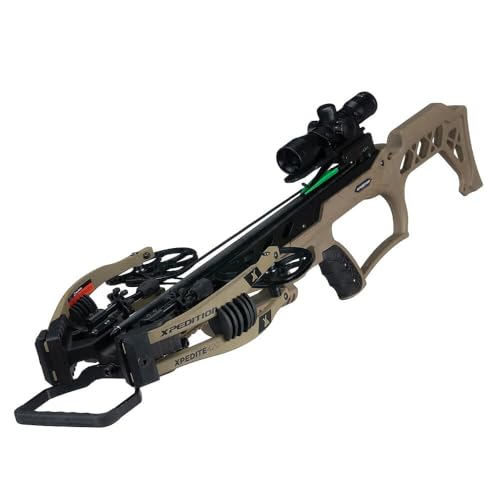


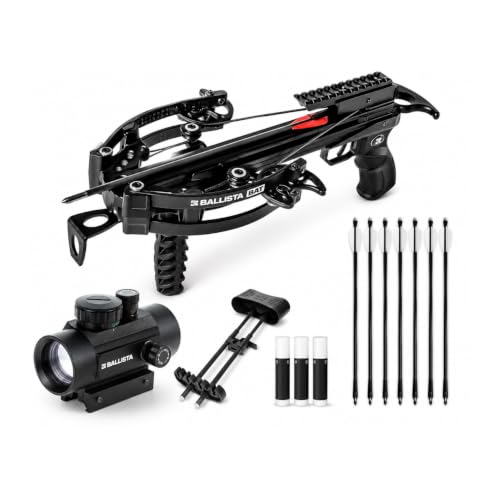


What’s in this listCrossbows with compound (cam) limbs, as stated by the maker or the Amazon listing. Reverse-draw models are on their own page. “—” means neither the maker nor the Amazon listing states it.
What makes a compound crossbow different
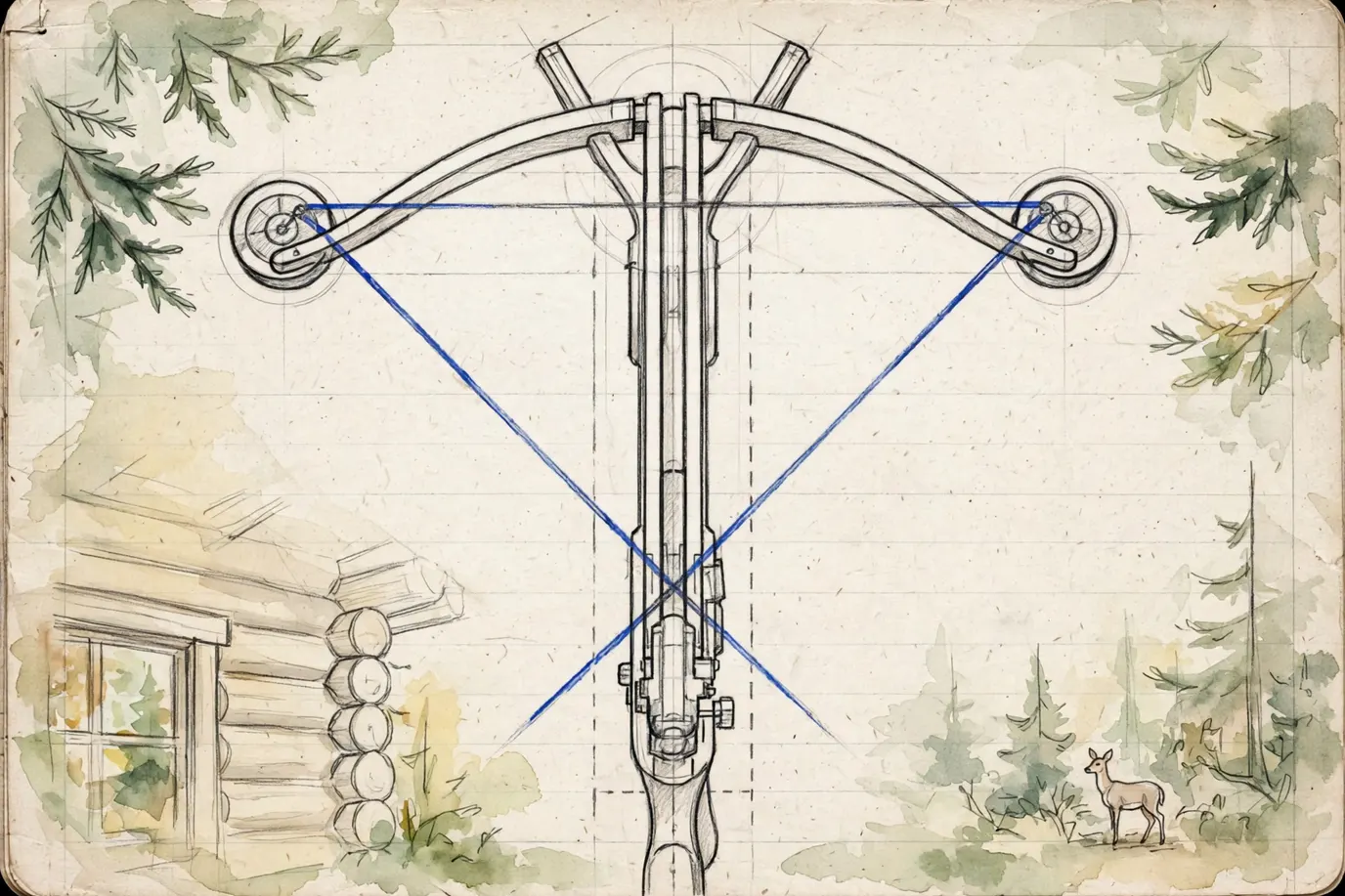
A compound crossbow is a crossbow whose limbs end in cams, oval or round wheels that the string and cables wrap around. One maker's style guide describes the system as cams or wheels working with a string and two cables to create a mechanical advantage. A recurve crossbow has none of that. Its string runs straight from one limb tip to the other.
That one difference drives everything on this page. The cams let the limbs store more energy over the stroke, so a compound needs less draw weight than a recurve to reach the same speed. The same guide says this is the design with the largest market share. If you've looked at a row of hunting crossbows, most of them were compounds.
goHUNT puts it plainly: compound crossbow limbs work like a compound bow's, only much shorter. The stock, rail and trigger are the same as any other crossbow. If you want the basics of how any crossbow fires and what the parts are called, start on the crossbow page. This page is about what the cams change.
Forward draw or reverse draw
Both are compound crossbows. They just point the engine in different directions.
Forward draw is the classic layout: the limbs and riser sit out front, ahead of your hand, and the string draws back toward you. One maker calls it a narrower bow with a quieter shot than a recurve, and it's the most common design on the shelf.
Reverse draw flips the limbs around so they face the shooter. That maker credits the layout with a much longer power stroke (the distance the string pushes the bolt). A longer stroke lets it reach high speeds with lower draw weight. It also moves the riser back above your front hand, which the maker says takes away the front-heavy feel common on forward-draw bows. Reverse-draw models have their own reverse-draw crossbow page.
The product table on this page lists crossbows their maker describes as compound. Reverse-draw models are on their page, not here.
What to look at in a compound crossbow
Here's how to read each table column when the bow has cams.
Speed: compare at the same bolt weight
Cams make speed cheap. That's the point of them, and it's why compounds fill the top of most speed lists. In one maker's current list, even the slowest model is rated at 390 fps, and the fastest passes 500.
The catch is that speed is measured with a specific bolt. A lighter bolt reads faster on the same bow. If you want to check a number yourself, Buckmasters explains the setup: put a chronograph's gate the same distance from the end of the rail as the bolt is long. For a 20-inch bolt, that's 20 inches. A local shop can do it if you don't own a chronograph.
Kinetic energy: heavier bolts quiet the cams down
On a compound, there's a second reason to like heavier bolts. Buckmasters notes that a heavier bolt carries more of the bow's energy away with it. Less energy stays behind to rattle through the limbs, cams and cables. He says that makes for a quieter shot and longer-lived parts.
A compound has more of those parts to stress. So when the table shows two bows at similar speed, look at the kinetic energy column and the bolt weight the maker used. More foot-pounds from a heavier bolt is usually the better hunting setup.
Draw weight: lower for the same speed
Because cams add efficiency, compound crossbows reach their speed at lower draw weights than recurve designs. One maker's guide says recurves need "much higher draw weights" to match compound speeds. Reverse-draw compounds go lower still, thanks to the longer stroke.
Bowhunting.com adds a caution that applies to any heavy crossbow: higher draw weights make the bow less forgiving of shooter error and add wear to the parts. Faster isn't free. It costs you in strings, cables and patience.
Cocking device: the cams help at the end
Here's what actually changes for your back. One maker's cocking guide explains that a compound gets easier to cock in the final third of the stroke, because of the cams and let-off. A recurve gets harder all the way back. (It's the only part of cocking a crossbow that feels like a reward. I'll take it.)
Most compound crossbows ship with a rope cocker or a crank. The table's cocking device column tells you which. My one opinion on this page: pick a cocking method you can repeat in the dark with cold hands. The reason is in that same guide: a crank can bring the effort down to 5 to 10 lb, while a rope cocker still asks for half the draw weight. You'll cock it far more often than you'll shoot it.
Safe de-cocking: check, don't assume
Cams don't make a crossbow easier to de-cock. That maker's guide says most crossbows can't be de-cocked at all, even with a crank on board. Only an explicit statement from the maker or the listing earns a yes in that column. If yours doesn't qualify, the evening routine is a practice bolt into the target in the truck bed.
NRA Family's loading guide adds a reason to cock all the way: a partial pull can leave a crossbow in a state where it can't fire or be easily de-cocked.
Width (cocked): the cams' best trick
Compound limbs bend sharply when cocked, so the cams end up close together. Bowhunting.com says compound crossbows can be built narrower and longer than recurves, and recurves are the wider of the two. That maker's cocked widths start under 6 inches and none reach 10.
That matters most in a ground blind, where the shooting window is always smaller than you remember. A narrow crossbow swings through that window. A wide one bumps the frame, and it picks the worst moment to do it. (Physics has a sense of humor. It just never tells the joke at a convenient time.)
Length and weight: the price of the hardware
Bowhunting.com notes compounds run somewhat heavier than recurves because of the extra hardware, and goHUNT says recurves are generally lighter. The weight column shows bare-bow weight where the maker separates it from scope and quiver.
On length, the same list has nothing under 26 inches and nothing much past 33. Short and narrow compounds are the core of the compact crossbow page, if that's your priority.
Optic and box contents
Most compound crossbows arrive with a scope or a red dot, plus some bolts and a quiver. The "In the box" column lists what the maker or listing names. If the bow comes as a full kit, the crossbow package page covers those.
Compound crossbow or recurve crossbow
The short version:
- Pick a compound for a narrower bow, more speed per pound of draw weight and easier cocking at the end of the stroke.
- Pick a recurve for fewer parts, a lighter bow and a string you can change yourself.
Bowhunting.com is fair to both. It says recurve strings rarely break if you keep up with string wax and rail lube, and they can be replaced in the field, so it suggests carrying a spare. It calls compounds the least forgiving in the crossbow family and notes their strings and cables usually need a shop. goHUNT adds that recurves have no wheels or cams to break and no cables or cable savers to change. For the cam-free argument in full, read the recurve crossbow page.
Who a compound crossbow suits
A compound crossbow suits most deer hunters who sit in a stand or a blind and want a narrow bow they can cock with help from a rope or crank. It also suits hunters who'd rather have a shop handle string service than do it on the tailgate.
Who should skip it? A hunter who wants to fix everything at camp with a wrench and an opinion. A recurve is the better fit there. So is anyone who wants the absolute lightest crossbow to carry a long way in. And if you want the balance and stroke of a reverse-draw, look on that page instead.
Bolts and nocks on narrow compound crossbows
Narrow cams change what the nock has to do. One maker says older nock styles (flat, half-moon, capture) were made for wider bows: on narrow, high-performance bows the string can slip over or under them, a simulated dry fire that can happen even with a dry-fire inhibitor on board. Those nocks can also chew through the center serving early.
So use the nock your maker specifies, and the bolt length and weight it names. Wisconsin's DNR gives the same advice for any crossbow. Shafts, lengths and grain weights are covered on the crossbow bolts page.
Caring for cams, cables and strings
A compound has more to look after, and the makers' manuals don't agree on how. One maker says to wax the string and all non-served cable areas, including where the cables cross at the cable saver, and to keep conditioner on the servings at the cams. Another says never put wax on the string, center serving or cables, because it builds up in the trigger. Follow the manual for your bow.
A pre-season check for cams and cables, from both makers' guides:
- Cam timing: one maker checks it from above, uncocked, with a cable lined up between marks on both cams
- Cam and limb bolts: if one is loose, don't tighten it; take the bow to a dealer
- Limb edges: no splinters, nicks or chips
- Cables and string: no fraying, no separated center serving
- Dry-fire inhibitor: if the string ever hit it, inspect the center serving closely
Replacement is a shop job on most compounds. Taking tension off the limbs needs a crossbow press approved by your maker. One maker requires its own press and recommends a dealer do the work. Bowhunting.com says the same thing in plainer words: a broken string or cable usually means a trip to a shop or the maker, unless you're experienced.
Replace string and cables together. One maker says every two years, worn or not. A second maker sets the limit at two years or 400 shots, if the shot count comes up first. Worn strings also throw the cams out of time, which is another reason not to stretch the schedule.
Safety with cams and cables
On a cocked compound, the string path is the danger zone: no fingers or thumbs above the rail. Never dry fire it; Wisconsin's DNR lists that among its basic crossbow rules. Never take a compound crossbow apart or adjust its cables without a maker-approved press.
Bowhunter's rule is to take the bolt off before you enter or leave a tree stand. Climb harnessed and tethered, every time. Where and when a compound crossbow is legal is a state question; your state wildlife agency has the answer.
Cams, cables, a narrow cocked width and a bolt the maker names. That's the compound crossbow. Write the shop's phone number in the logbook, next to the string date.
Brands in this list
Related
Questions people ask
What is the difference between a compound and a recurve crossbow?
A compound crossbow uses cams or wheels plus a string and two cables, so it gets more speed from the same draw weight and can be built narrower. A recurve crossbow uses plain limbs with no cams to break or cables to change. It's usually lighter and simpler, and its string can be swapped in the field, but it's wider and harder to cock.
Is a compound crossbow better than a reverse-draw?
Neither is better across the board. Both use cams. A forward-draw compound has its limbs out front, while a reverse-draw turns them back toward you. One maker credits reverse-draw with a longer power stroke, lower draw weights for the same speed and less front-heavy balance. Forward-draw models are the most common, which makes parts and service easy to find.
Can I change the string on a compound crossbow at home?
Usually not without the right press. Changing a string or cables means taking the tension off the limbs, which needs a crossbow press approved by your maker. One maker says outright that its crossbows need its own press and suggests a dealer or bow shop do the job. Bowhunting.com notes that a broken string or cable usually means a shop trip unless you're experienced.
How often should compound crossbow strings and cables be replaced?
Follow your manual. One maker says every two years even if they look fine, and always string and cables together. Another says every two years or 400 shots, whichever comes first, and right away if you see fraying, a worn center serving or cams out of time. Shooting the string into the dry-fire inhibitor is another reason to replace it.
Sources
- TenPoint: Crossbow style, what to consider before you buy — accessed 2026-10-21
- TenPoint: Crossbow cocking and de-cocking, what to consider before you buy — accessed 2026-10-21
- TenPoint: Crossbow buyer's guide (speeds, length and width by model) — accessed 2026-10-21
- TenPoint: Maintenance procedures and nock installation — accessed 2026-10-21
- TenPoint: How often do I need to change the string and cables on my crossbow? — accessed 2026-10-21
- TenPoint: Are you using the best nock for crossbow bolts? — accessed 2026-10-21
- Ravin: Pre-season care and maintenance for your crossbow — accessed 2026-10-21
- Bowhunting.com: Crossbows, what you need to know before you buy — accessed 2026-10-21
- goHUNT: Compound crossbow versus recurve crossbow — accessed 2026-10-21
- Buckmasters: Are you shooting for speed or power with your hunting crossbow? — accessed 2026-10-21
- Bowhunter: Crossbow hunting 101, eight great tips to get you started — accessed 2026-10-21
- NRA Family: How to safely load and unload crossbows — accessed 2026-10-21
- Wisconsin DNR: Archery and crossbow safety tips — accessed 2026-10-21