Archery & Bowhunting · Gear type
Drop Away Arrow Rest
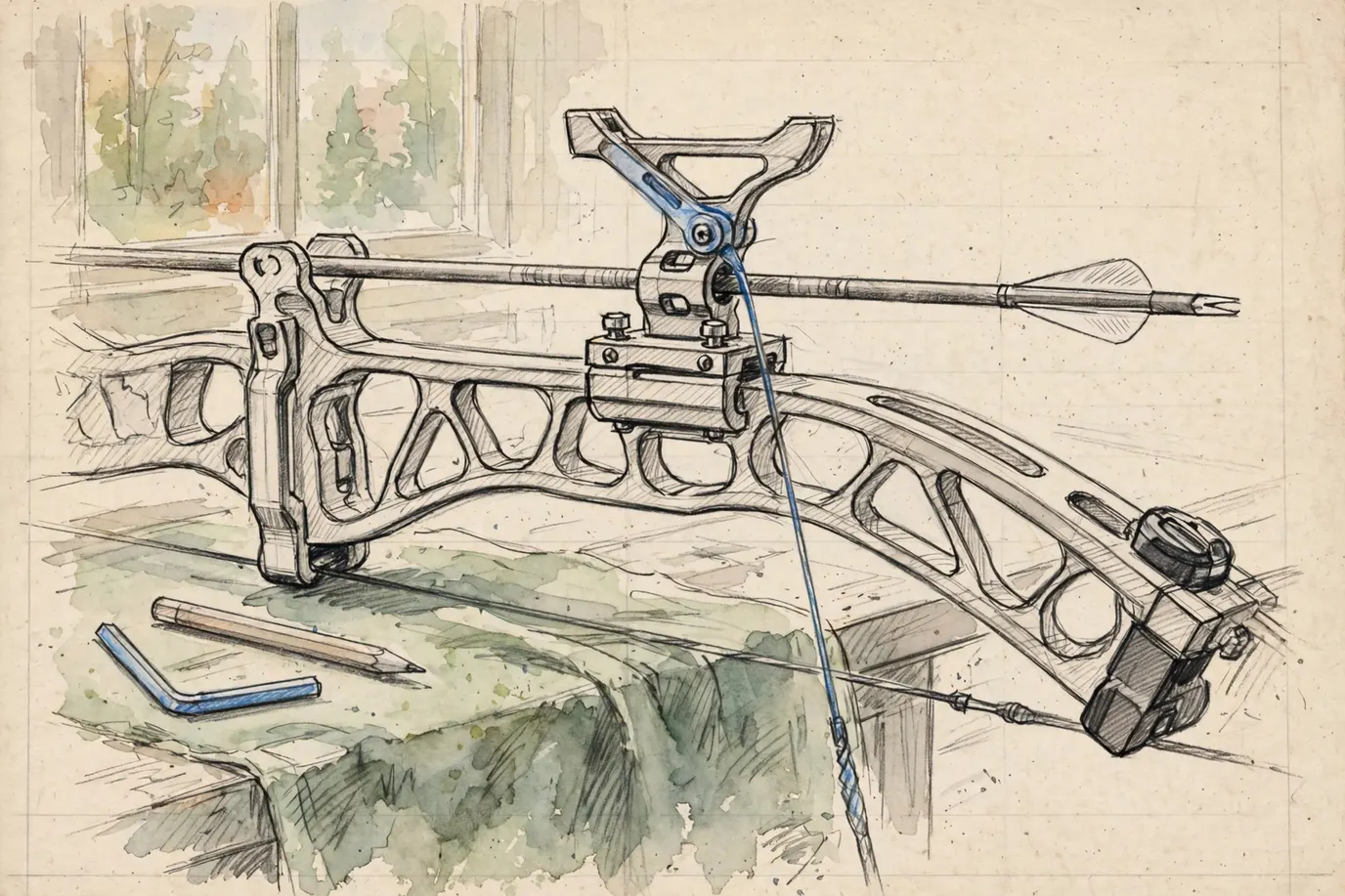
A drop away arrow rest holds your arrow up while you draw, then falls out of the way when you shoot, so the vanes pass over nothing. That's the whole appeal: clearance. The cost is setup. A cord ties the rest to your bow's cable or limb, and that cord has to be timed so the rest drops at the right moment. Time it right and you get a quiet, accurate hunting rest. (Time it wrong and you own a very complicated flipper.)
We earn a commission if you buy through our links, at no cost to you. Disclosure
| Model | Hand | Drop-away drive | Full containment | Windage/elevation adjust | Amazon |
|---|---|---|---|---|---|
Ameyxgs Drop Away Arrow Rest with Locking StructureArrow rest More specs
| Rightlisting | — | — | — | Check price |
Ameyxgs Drop Away Arrow Rest AdjustableArrow rest More specs
| Rightlisting | — | — | — | Check price |
Ameyxgs CNC Drop Away Arrow RestArrow rest More specs
| Rightlisting | — | — | — | Check price |
Ameyxgs Compound Bow Arrow RestArrow rest More specs
| Rightlisting | — | — | — | Check price |
Ameyxgs Drop Away Arrow Launcher RestArrow rest More specs
| — | — | — | — | Check price |
Ameyxgs Drop Away Arrow Launcher RestArrow rest More specs
| — | — | — | — | Check price |
Ameyxgs Drop Away Arrow Rest Four-Way AdjustableArrow rest More specs
| Rightlisting | Cable drivenlisting | Yeslisting | — | Check price |
Hamskea Hybrid Hunter Pro Arrow RestArrow rest More specs
| Rightlisting | — | Yeslisting | Yeslisting | Check price |
Hamskea Trinity Target Micro RH 211078Arrow rest More specs
| Rightlisting | — | — | — | Check price |
Lwano Drop Fall-Away RestArrow rest More specs
| Rightlisting | — | Yeslisting | — | Check price |
New Archery Products NighthawkArrow rest More specs
| Rightlisting | — | Yeslisting | — | Check price |
Nika Archery Drop Away RHArrow rest More specs
| Rightlisting | — | — | — | Check price |
QAD Ultra Rest HunterArrow rest More specs
| Rightlisting | — | Yeslisting | — | Check price |
QAD Ultra-Rest Pro HDXArrow rest More specs
| Rightlisting | — | — | — | Check price |
QAD Ultra-Rest Pro HDXArrow rest More specs
| Rightlisting | — | — | — | Check price |
QAD Ultra-Rest Pro HDXArrow rest More specs
| Leftlisting | — | — | — | Check price |
QAD Ultra-Rest for PSEArrow rest More specs
| Leftlisting | — | Yeslisting | — | Check price |
QAD Ultrarest Integrate R2Arrow rest More specs
| Rightlisting | — | Yeslisting | Nolisting | Check price |
QAD Ultrarest Integrate MX2Arrow rest More specs
| Rightlisting | — | Yeslisting | Yeslisting | Check price |
QAD UltraRest Integrate MX2 LHArrow rest More specs
| Leftlisting | — | — | — | Check price |
sanlida Drop Away RestArrow rest More specs
| Rightlisting | — | — | — | Check price |
Sharrow Drop Away RHArrow rest More specs
| Rightlisting | — | Yeslisting | — | Check price |
Sharrow Drop Away Launcher RestArrow rest More specs
| Rightlisting | — | — | — | Check price |
Sharrow Drop Away Launcher RestArrow rest More specs
| Rightlisting | — | — | — | Check price |
Sharrow Drop Away Micro AdjustableArrow rest More specs
| Rightlisting | — | — | Yeslisting | Check price |
Sharrow Drop Away RestArrow rest More specs
| Rightlisting | — | — | — | Check price |
Sharrow Drop Away 4-Way AdjustableArrow rest More specs
| Rightlisting | — | — | — | Check price |
Trophy Ridge LevelArrow rest More specs
| — | Cable drivenlisting | Yeslisting | — | Check price |
Trophy Ridge SyncArrow rest More specs
| Rightlisting | Cable drivenlisting | Yeslisting | — | Check price |
Trophy Ridge Sync MDArrow rest More specs
| Rightlisting | Cable drivenlisting | Yeslisting | Yeslisting | Check price |
TRUGLO AG Surge Drop-AwayArrow rest More specs
| Leftlisting | — | — | — | Check price |


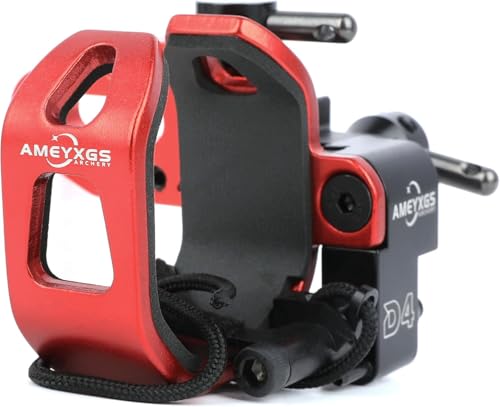


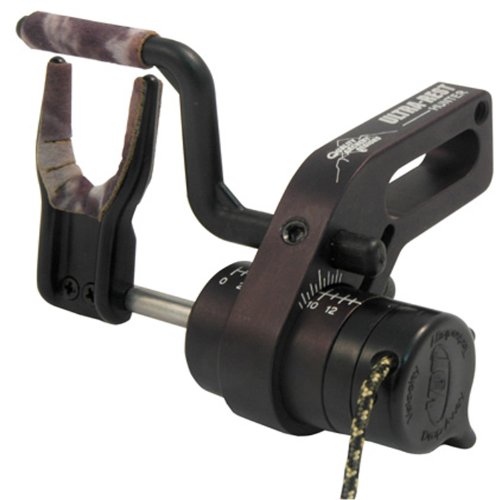


What’s in this listDrop-away (fall-away) arrow rests, as stated by the maker or the Amazon listing. “—” means neither the maker nor the Amazon listing states it.
What makes a drop away rest different
Every compound needs a rest, and most hunting rests fall into three families: blade or prong launchers, brush or bristle containment rests, and drop-aways. The family tree, mounting basics and center shot are on the compound bow arrow rest page. This page is only about the one that moves.
A drop-away supports the arrow through the draw and then gets out of the way. Archery 360's rest guide puts it plainly: it falls away from the shaft and fletching before the arrow clears the riser, so nothing touches the arrow after release. Carolina Sportsman's rest guide says the same thing from the other end: the rest drops before the fletching reaches it. A blade rest, by contrast, rides under the arrow its whole way out. A brush rest drags bristles along it.
So the deciding question is simple. Do you want full vane clearance badly enough to manage a cord? Archery 360's compound accessory guide says both drop-aways and blades can be very accurate, and the choice comes down to preference. That's true on paper. In practice, the cord is the preference.
How a drop-away gets its signal
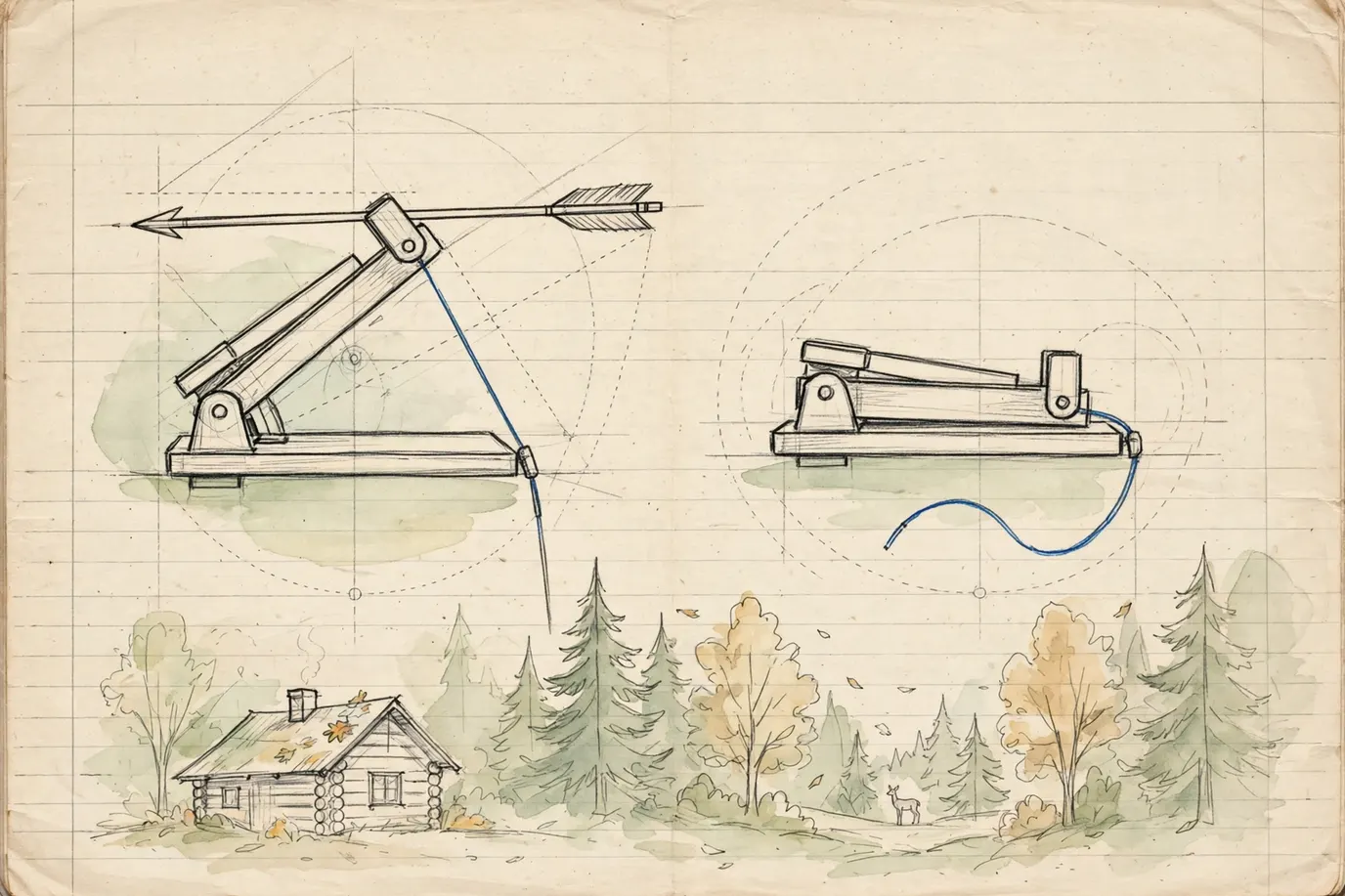
Something has to tell the arm when to rise and when to fall. Realtree's drop-away rundown describes three designs, and the "Activation" column in the table sorts rests the same way when the maker or the listing states it.
- Limb-driven: a cord runs from the rest to a limb. At rest, the cord holds the arm down on the shelf. As the limb flexes on the draw, the arm rises. At the shot, the limb snaps back and pulls it down.
- Cable-driven: a cord ties the rest to the cable that moves down when you draw. Drawing lifts the arm; at the shot, the cable travels back and the arm drops.
- Cocked (inertia) style: the cord still goes to the down cable, but you can flip the arm up by hand before you draw. You can let it down without firing it, and an inertia trigger drops it when the bow jumps at the shot.
Realtree says users of that last style praise its full containment, even with the bow turned upside down, so you can nock an arrow, cock the rest and stop worrying about the arrow sliding off. If you've ever heard an arrow clatter off a rest in a quiet blind, you understand the appeal. (So did every deer in the township.)
Limb-driven rests have their own page, the limb driven arrow rest page, so I'll keep them short here.
What to look at in a drop away arrow rest
The table under this page shows what the makers or the Amazon listings state for each rest: type, activation, containment, hand, adjustment and which bows it's for, plus the maker's weight (the table marks values that come from the listing). A dash means neither states it. Here's how I'd read those columns.
Activation decides your tuning job
Activation is the one spec that changes how you live with the rest. A cable-driven rest has to be timed against the cable's travel. GOHUNT's rest guide calls a strictly cable-driven rest "an excellent option for accuracy" but says it needs the cord length and position set correctly. It also calls a cut cord this rest's greatest weakness, because re-timing it in the field without a bow press is hard.
Limb-driven rests are easier on that front. GOHUNT says field repair is a new piece of cord and doesn't depend on perfect timing with the cables. Carolina Sportsman's rest guide adds that a limb-driven rest is cut off from string stretch and cable timing problems, and tunes more easily on many fast bows. The catch, per an NAP engineer quoted by Realtree: set one up wrong and the fletching can touch the arm, and getting the timing right can take some trial and error.
Containment arms hold the arrow until the shot
A plain launcher arm only supports the arrow from below. Tilt the bow and the arrow can roll. Some drop-aways add arms or a hoop that close around the shaft. The "Full containment" column marks rests whose maker or listing says the arrow is captured.
GOHUNT describes one containment drop-away design: two parts close together sideways at full draw and fully contain the arrow, then move away at release. The trade it lists is that this design won't stay engaged if you let down from full draw. Locking it for a stalk takes both hands on different parts of the rest. Other designs stay engaged on letdown. Read the maker's description for which kind you're looking at, because that's a field habit, not a footnote.
Windage and elevation adjustment
Every drop-away has to be moved left, right, up and down at least once: American Hunter's install guide has you center the arrow and set its height before you tie a cord. Past that first setup, some rests add dialed fine adjustment. GOHUNT's rest guide points these microtune rests at archers who want to set the rest in very small steps, and says a rest's accuracy depends on how precisely its adjustments can be made and held.
The "Windage/elevation adjust" column marks rests whose maker or listing lists a dialed adjustment. If you tune your own bow, a micro-adjust rest saves loosening a block and nudging it by eye. If a shop tunes it once a year, you'll touch it less than the cabin thermostat. (Walt touches the cabin thermostat constantly. Nobody else is allowed to.)
Which bows it fits, and which hand
The "For" column says whether the maker sells the rest for compounds, recurves or both. Drop-aways are a compound thing; a recurve has no down cable to drive one.
The "Hand" column matters more than people think. A drop-away bolts to one side of the riser, so a right-hand rest on a left-hand bow is a paperweight. Some makers sell separate right and left versions; some list one rest as fitting both. Buy the hand of your bow, not of your writing.
Weight and noise dampening
Weight is listed in ounces when the maker states it. It's a small share of a hunting bow's total, but it sits right at the riser, and it adds up with the sight, quiver and stabilizer.
Noise is the other hunting spec. A metal arm slapping a metal shelf at the shot is a sound. Some makers say they add felt, rubber or pads where the arm lands or where the arrow rides. The table can filter on that when the maker says so. I'd still pad the shelf if your rest doesn't, because deer don't read spec sheets.
Mount style
Older rests bolt through a single hole in the riser. Newer bows also offer a dovetail on the back of the riser for rests built to clamp onto it, per Outdoor Life's compound anatomy guide. The two aren't interchangeable, so check which your bow has before you buy. The mounting comparison lives on the compound bow arrow rest page.
Timing a drop-away is the whole job
American Hunter's install guide (by Bob Robb) lays out the order most makers follow. I've trimmed it to the parts that matter for hunting.
- Mount it level with the supplied bolt and washer. Use the set screw if one comes with the rest, so it can't shift.
- Set center shot with the arm in the up position, as if at full draw. Slide the horizontal block until the arrow lines up, then snug it.
- Set height so the arrow sits about level from the nock or string loop to the rest. You'll fine-tune it later.
- Attach the cord to the down cable about 1 inch below the rest, using the clamp pieces many makers include or by threading it through the cable.
- Draw and watch. At full draw the arm must rise all the way, and the cord must not pull the cable out of line. The guide's test: no bulge in the down cable.
- Let down and watch again. The arm should start to drop almost immediately as the string comes forward.
- Lock it. Tighten the clamp or knot the cord, trim the extra, and burn the ends so they don't fray.
Have a friend watch the arm and cable while you draw. You can't see the cable from behind the peep, and your friend can't hold the bow for you. (Division of labor. Danny is great at this job as long as there's coffee in it for him.)
The guide says most installs take 15 to 20 minutes. My first one took an afternoon, mostly spent finding the hex key I'd just put down.
Check clearance before you trust it
A drop-away's job is clearance, so check that it's doing it. Easton's tuning guide has a simple test. Spray dry powder foot spray or dry deodorant spray on the back quarter of the arrow, the fletching, the rest and the sight window near it. Shoot into a firm target so the arrow doesn't bury to the vanes. Wherever the powder is scraped off, something touched.
American Hunter adds a quicker clue: discoloration on the launcher arm means your fletching is hitting it. If center shot and nocking point are right, the fix is usually a tiny cord adjustment. Start with about 1/16 inch, then confirm the arm still rises fully with no bulge in the cable.
Easton's guide also gives a nock trick for vane contact in general: rotate the nock 1/32 of a turn at a time until the vanes clear. That's for press-fit nocks you can turn; the nocks page covers which ones those are.
When the powder comes back clean and paper tears look right, write the cord position down. A paint pen mark on the cable works, and so does a line in your logbook.
Arrow length and broadheads with a drop-away
Drop-aways change how short you can cut an arrow. Archery 360's arrow length guide explains it. A drop-away set back from the shelf can let broadhead blades catch the front of the shelf as you draw and as the arm rises. The guide notes some fixed-blade heads have pretty big blades.
Its rule is easy to remember. If the end of the shaft sits flush with the front of the riser at full draw, you won't have clearance trouble with fixed blades. It also suggests never cutting shorter than the middle of the riser. Arrow length itself is on the hunting arrows page.
Who should skip a drop-away
Skip it if you shoot a recurve or longbow. There's no cable to drive it, and you'll want a stick-on or shelf rest instead.
Skip it if you don't want to own the tuning. Archery 360 calls drop-aways more complex to tune than other rests, and most archers hand the install to a shop. If you won't recheck a cord after a season of trucks, ladders and cold mornings, a whisker biscuit has no cord to slip. GOHUNT's rule applies: the more moving parts, the more ways something can fail.
And skip the plain launcher-arm style if you hunt on foot and carry the bow nocked over rough ground. Pick one with containment arms or a cocked style instead.
Safety before the first shot
Never dry-fire a bow to watch the rest drop. Archery 360 says dry firing can damage the bow and injure the archer, and a dry-fired bow should be inspected by a professional before it's shot again. Test the drop with an arrow, into a target.
Get the cord timed, the powder clean and the setting written down. Then leave it alone until something changes. The best drop-away is the one you forget you own.
Brands in this list
Related
Questions people ask
Is a fall away arrow rest the same as a drop away rest?
Yes. Fall away, drop away and drop arrow rest are names for the same idea: a launcher arm that supports the arrow during the draw and moves out of its path at the shot. The difference that matters is what drives the arm. Limb-driven rests tie to a limb, cable-driven rests tie to the down cable, and some can be cocked up by hand before you draw.
Is a drop away arrow rest good for hunting?
It can be. Archery 360 says drop-aways can be very accurate once set up correctly, and Realtree notes that hunters who use the styles you can cock up before the draw praise how fully they hold the arrow, even with the bow tipped over. The trade is more tuning and more moving parts than a brush rest. If you'll stalk or shoot at steep angles, look at the containment arm styles.
Cable-driven or limb-driven drop away rest: which should I pick?
Both drop the arm at the shot. GOHUNT calls a cable-driven rest an excellent option for accuracy but says a cut cord is hard to re-time in the field without a bow press. It calls limb-driven rests easy to set up and repair. An NAP engineer quoted by Realtree adds that a limb-driven rest set up wrong can let the fletching touch the arm, and that timing one can take some trial and error.
Can I install a drop away rest myself?
Many archers do. American Hunter's step-by-step guide says most installs take 15 to 20 minutes: mount, center the arrow, set height, tie the cord to the down cable and time it. Archery 360 notes most archers have a shop do it, because shops have a bow press and staff for serving, timing and tuning. If your cord has to be served into the cable, that's shop work.
Why is my drop away rest arm turning dark or marked?
Discoloration on the launcher arm means your fletching is hitting it, according to American Hunter's install guide. If center shot and nocking point are already right, a small cord adjustment usually fixes it. The guide suggests moving about 1/16 inch of cord at a time, then checking that the arm still rises fully at full draw.
Sources
- Realtree: Which drop-away arrow rest design is best? — accessed 2026-10-22
- Archery 360 (Archery Trade Association): Which arrow rest is best for you? — accessed 2026-10-22
- Archery 360 (Archery Trade Association): Accessories for target compound bows — accessed 2026-10-22
- NRA American Hunter: How to install a drop-away arrow rest — accessed 2026-10-22
- GOHUNT: How to select the best arrow rest for your next hunting setup — accessed 2026-10-22
- Carolina Sportsman: Choose the correct arrow rest for your bow — accessed 2026-10-22
- Easton: Arrow Tuning and Maintenance Guide — accessed 2026-10-22
- Archery 360 (Archery Trade Association): Archery Lingo: Arrow Length — accessed 2026-10-22
- Outdoor Life: Parts of a compound bow — accessed 2026-10-22
- Archery 360 (Archery Trade Association): Everything you should know about dry-firing bows — accessed 2026-10-22