Archery & Bowhunting · Gear type
Whisker Biscuit Arrow Rest
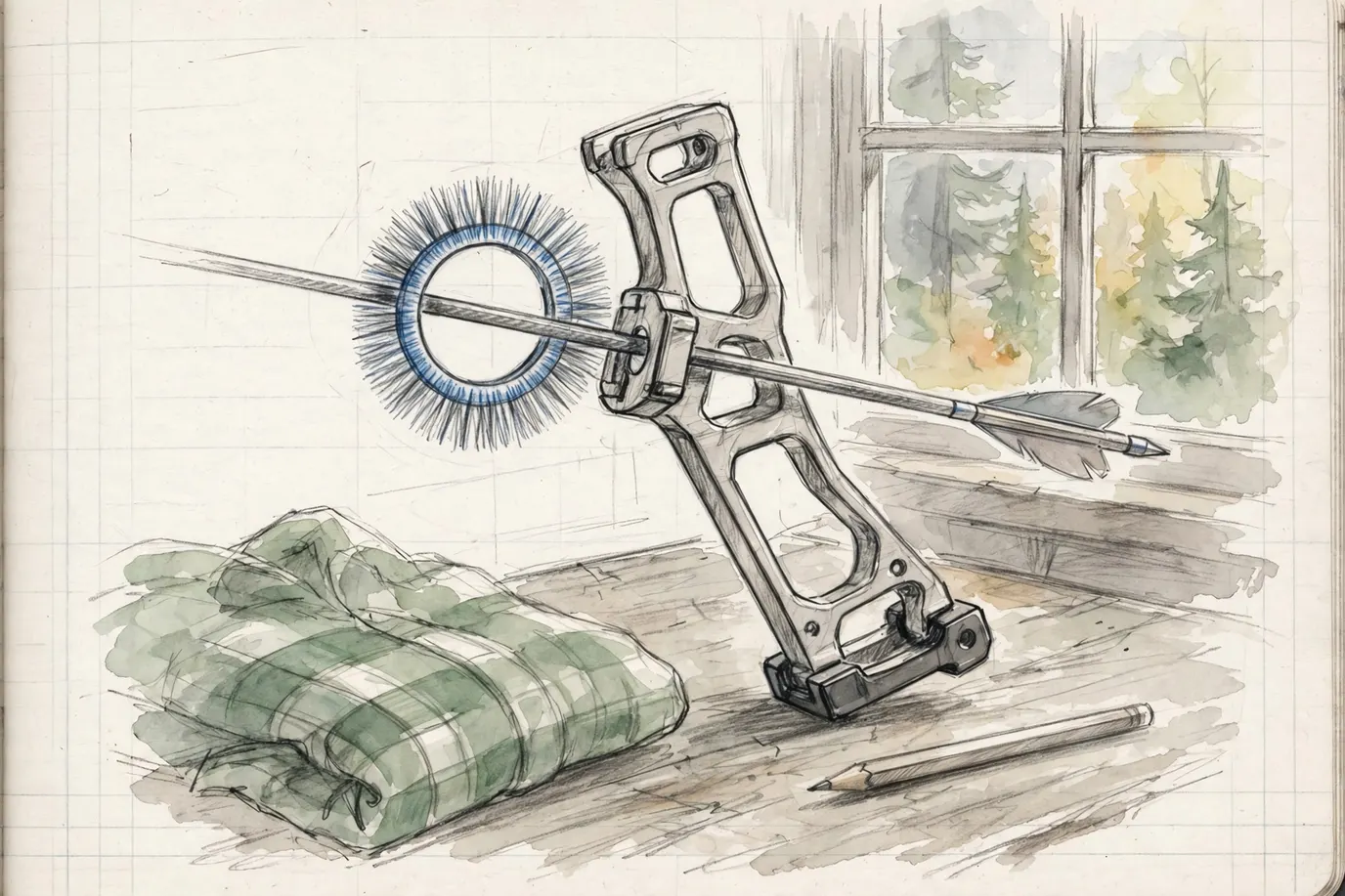
A whisker biscuit is a full containment arrow rest: a ring of stiff bristles that holds the arrow on all sides, so it can't fall off no matter how you tilt the bow. No cords, no timing, no moving parts. The trade is contact. The bristles touch the shaft and vanes all the way out of the bow, which costs a little speed and asks for a good tune. For a lot of deer hunters that's a fair deal. (It's also the only part of my bow Uncle Walt has never called fussy.)
We earn a commission if you buy through our links, at no cost to you. Disclosure
| Model | Hand | Full containment | Amazon |
|---|---|---|---|
Cajun Bowfishing Bowfishing Whisker BiscuitArrow rest More specs
| Right or leftmaker | — | Check price |
Lwano Whisker Biscuit Brush RestArrow rest More specs
| Ambidextrouslisting | — | Check price |
sanlida Dragon X9 Whisker BiscuitArrow rest More specs
| Ambidextrouslisting | — | Check price |
SAS Brush CaptureArrow rest More specs
| Ambidextrouslisting | Yeslisting | Check price |
SAS Brush Capture with Extra BrushesArrow rest More specs
| — | Yeslisting | Check price |
SAS Brush CaptureArrow rest More specs
| Ambidextrouslisting | Yeslisting | Check price |
Toparchery Whisker Biscuit Capture BrushArrow rest More specs
| Ambidextrouslisting | — | Check price |
Trophy Ridge Quick Shot Whisker BiscuitArrow rest More specs
| Rightlisting | — | Check price |
Trophy Ridge Kill Shot Whisker BiscuitArrow rest More specs
| Ambidextrouslisting | — | Check price |
Trophy Ridge Whisker Biscuit OriginalArrow rest More specs
| Ambidextrouslisting | — | Check price |
Trophy Ridge Whisker Biscuit V MaxArrow rest More specs
| Leftlisting | Yeslisting | Check price |
Trophy Ridge Whisker Biscuit V ConArrow rest More specs
| Ambidextrouslisting | Yeslisting | Check price |
Trophy Ridge Whisker Biscuit V Max IMSArrow rest More specs
| Rightlisting | Yeslisting | Check price |
Trophy Ridge Whisker Biscuit ProArrow rest More specs
| Ambidextrouslisting | — | Check price |
Trophy Ridge Whisker Biscuit ProArrow rest More specs
| — | — | Check price |
TRUGLO StormArrow rest More specs
| Ambidextrouslisting | Yeslisting | Check price |


What’s in this listFull-containment brush rests of the whisker-biscuit style, as described by the maker or the Amazon listing. “—” means neither the maker nor the Amazon listing states it.
What a whisker biscuit actually does
A whisker biscuit is a ring of bristles in a frame. You push the arrow in from the front or slide it through, and the bristles close around the shaft. Carolina Sportsman's rest guide describes the original Trophy Ridge design as a full circle of synthetic bristles, and GOHUNT says a containment rest holds the arrow in its housing so it's almost impossible for it to fall out. The name started as one maker's trade name and stuck to the whole style.
What makes it different from every other compound rest is that it never lets go early. A drop-away falls clear at the shot. A blade only supports from below. The biscuit holds the arrow from nock to release and touches it the whole way out. Archery 360's rest guide calls the family full-capture rests: they support the arrow at all times, have no moving parts, and keep it in place no matter how much you tilt the bow.
Anything every compound rest shares lives on the compound bow arrow rest page. Here it's all bristles.
Why bowhunters pick a whisker biscuit arrow rest
Carolina Sportsman's rest guide says full-containment rests are generally simple, with few if any moving parts to malfunction or freeze, which suits hunters in remote or very cold country. Here's what that means once you leave the yard:
- Steep angles: the arrow stays put when you lean out of a stand or shoot downhill
- Moving with a nocked arrow: no arrow clattering off the shelf while you shift your feet
- Cold hands: nothing to cock, lock or flip before you draw
- Fewer failure points: no cord to fray, no spring to weaken, no timing to drift
- Quiet loading: the arrow sits in bristles, not against bare metal
GOHUNT adds that the fine bristles make for a quieter shot, and Archery 360 says that full-capture rests suit 3D courses with awkward shot angles, which is a decent preview of a November woodlot.
My one opinion on this page: for a first hunting setup, a brush containment rest is where I'd start. The reason is checkable. It has no moving parts to time, the arrow can't fall off at any angle, and GOHUNT rates it the simplest rest to operate. You can always move to a drop-away once you know you want one.
The trade-offs, on paper and in practice
Contact is the price. GOHUNT's rest guide is direct about it: bristle friction slows the arrow by a few FPS (feet per second, the unit arrow speed is measured in) and can deflect it, and accuracy declines as the bristles weaken and shift. Carolina Sportsman notes early biscuits were hard on fletching until stiffer vanes came along, and that the rest can be a little noisy during the draw.
Archery 360 frames it as a tuning problem rather than a flaw. The more contact points a rest has with the shaft, the better the bow must be tuned. If one side of the ring pushes on the arrow more than the other, it won't fly straight. That's why its advice is a paper-tuning session with a shop.
In practice, a few FPS is small next to the other things that change your arrow's speed. A heavier point or a cold morning costs you too. The wear is the part to manage, and it's manageable. (It's like a toothbrush. It works fine for a long time, and then one day you look at it and wonder how long it's been like that.)
What to look at in a whisker biscuit rest
Below the text sits the product table, filled from what each maker states, or from the Amazon listing where the maker is silent (marked as listing values): type, containment, hand, weight, adjustment and which bows the rest fits. Blank cells mean neither the maker nor the listing states that spec. These are the columns that matter for a brush rest.
Type and the full containment column
"Type" separates brush containment rests from drop-aways and blades. Next to it, "Full containment" gets a mark only when the maker states full capture. For a whisker biscuit both should line up. If a listing calls itself containment but the maker doesn't state full capture, read the description before you assume it holds the arrow upside down.
Match the biscuit size to your arrow diameter
A bristle ring has a hole, and the hole has to suit your shaft. Too tight and the bristles squeeze the arrow; too loose and it rattles. Makers sell brush rests in sizes. One maker sells a rest in small and medium "to fit various arrow diameters," and another lists a single medium it says fits most standard diameters.
So start with your arrow, not the rest. Find the shaft's outside diameter on the arrow maker's spec sheet, then match it to the rest maker's size chart. Fat target-style shafts and skinny hunting shafts may not want the same biscuit. Diameter basics are on the hunting arrows page.
Round ring or V-notch
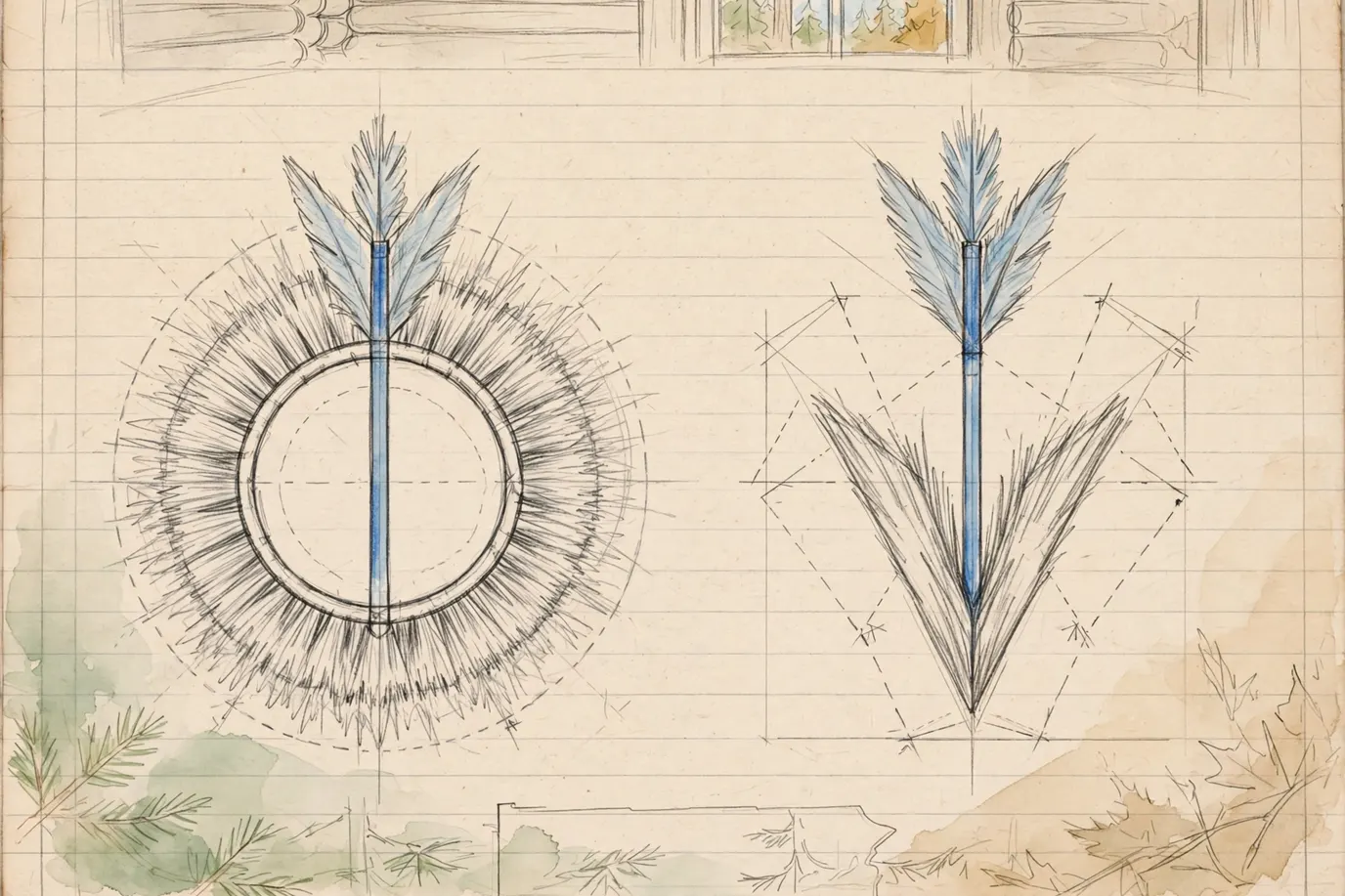
Not every brush rest is a full circle. One maker's V-shaped design uses a notch of bristles that, it says, naturally centers the arrow with two points of contact and stops side-to-side movement. The same maker says its bristles sit perpendicular to the arrow to reduce vane drag.
A round ring holds the arrow evenly all the way around. A V-notch cradles it from below and the sides. Both claim full containment when the maker says so. Which one your arrow likes is a tuning question, not a spec-sheet one.
Replaceable bristles or biscuit
Bristles wear, so check what the maker offers to replace them. Some rests have quick-swap bristles the maker says you can change in seconds. Others take a replacement biscuit, and one maker notes its replacement fits only its original rest, not the whole lineup.
Before you buy, find the replacement part for that exact rest. Bristles are the part you'll eventually buy twice.
Windage and elevation adjustment
You still need to move the rest left, right, up and down to tune. Check the adjustment column for whether the maker or the listing lists it. Some use adjustable blocks you loosen and slide. One maker lists tool-less micro windage and elevation with laser-engraved reference marks on the housing.
Reference marks are worth more than they look. If the rest gets knocked in a truck bed, you can see whether it moved. (My truck bed has strong opinions about bows. None of them are good.)
Hand and mount style
Brush rests are often ambidextrous. Several maker pages list dexterity as "Both." Others sell separate right-hand and left-hand versions at the same spec. The "Hand" column tells you which.
Mounting comes in two styles. Most brush rests bolt to the riser's standard rest hole, and several are also sold in a version for bows with a dovetail rest mount. They aren't interchangeable, so buy the version that matches your riser.
Weight and loading noise
Weight shows in ounces when the maker gives it. A full-metal housing weighs more than a plastic frame, and it all sits at the riser.
Noise is mostly about loading. One maker says its custom rubber arrow guides allow quick, quiet loading. The "Noise dampening" filter catches rests whose maker or listing states felt, rubber or pads. On a still morning, the scrape of an arrow going into a ring is the loudest thing you'll do until you shoot.
Setting up a whisker biscuit on a compound
Brush rests are simple, not automatic. The order I'd follow:
- Mount it snug on the riser with the supplied bolt or the dovetail clamp. A rest that shifts takes your tune with it.
- Center the arrow. Use Easton's release-shooter starting point from the compound bow arrow rest page: point in line with the string.
- Set the nocking point. Easton warns that a low nocking point can force the fletching down into the rest and cause clearance trouble.
- Paper tune. Archery 360 recommends a pro paper-tuning session for full-capture rests. Easton's guide reads the tears: a high tear means a high nocking point, clearance trouble or a weak arrow with a release.
- Watch the vanes. Easton notes that with a release the whole arrow usually contacts the rest on the way out, so the fletching has to be positioned to clear it.
If tears won't clean up after nocking point moves, check whether the vanes are fighting the bristles before you blame the spine.
Fletching and the biscuit
The bristles touch your vanes on every shot, so fletching choice matters more here than with a drop-away. Archery 360's fletching guide says vanes are more durable and water-resistant, and their low profile resists wind drift. Durable is the word that matters to a brush rest.
Inspect fletching after each session. Look for vanes peeling at the edges, bent tips or a vane that's lost its shape. Replace damaged fletching before you shoot it again. If one vane keeps taking the beating, the rest may be off center or the nock may be turned so a vane rides into dense bristle. More on vane shapes and lengths is on the fletching page.
Keeping it working through the season
Brush rests need almost nothing, which is why people forget the almost.
- Look at the bristles before each hunt. Bent, matted or missing bristles mean replacement.
- Pick out debris. Pine needles and burrs end up in odd places on a bow.
- Check the bolt with a hex key now and then. Archery 360's storage guide says to make sure screws and bolts on the rest are tight before you store the bow, since loose hardware affects accuracy.
- Keep it dry in storage. The same guide says not to case a bow until it's free of moisture.
Who should skip a whisker biscuit
Traditional shooters can stop here. A compound brush rest isn't built for a recurve or longbow shot off the shelf.
Skip it if you're chasing the tightest groups you can get at long range and you're happy to tune. A drop away arrow rest gives full vane clearance in exchange for the cord. Archery 360 and GOHUNT both describe drop-aways as the accuracy-minded choice.
And skip it if you hate replacing parts. Bristles wear out; that's not a defect, it's the design.
One safety line
A rest that holds the arrow is not a reason to climb with one nocked. Wisconsin's DNR is clear that a bow goes up and down the tree on a haul line, unloaded.
Set it up, tune it once, check the bristles each season. Then go hunt. That's the whole point of a rest with no moving parts.
Brands in this list
Related
Questions people ask
Is a full containment arrow rest the same as a whisker biscuit?
Mostly. Whisker biscuit started as one maker's name for a bristle ring, and archers now use it for any brush-style rest that surrounds the arrow. Full containment is the wider term. Archery 360 calls the family full-capture rests: no moving parts, and the arrow stays put however you tilt the bow. Some drop-aways also contain the arrow, with arms instead of bristles.
Does a whisker biscuit slow your arrow down?
A little. GOHUNT's rest guide says bristle friction slows the arrow by a few FPS (feet per second) and can deflect it, and that accuracy declines as bristles weaken and shift. Inside normal bowhunting distances, a good tune matters more than those few FPS.
What size whisker biscuit do I need?
The one sized for your arrow's outside diameter. Makers sell brush rests and replacement biscuits in sizes such as small and medium, and some say one size fits a wide range of diameters. Check your shaft's outside diameter on the arrow maker's spec sheet, then match it to the rest maker's size chart before you buy.
Are whisker biscuits good for beginners?
They're a common first hunting rest. GOHUNT calls containment rests the simplest to operate and often the lowest cost. The arrow can't fall off, there's nothing to time, and there's no cord to snap. Archery 360 still recommends a paper-tuning session at a shop, because a rest that touches the arrow on several sides needs a careful tune.
When should I replace the bristles or the biscuit?
Makers don't give a shot count. GOHUNT notes a stationary brush rest wears out over time and accuracy drops as bristles weaken and shift. Replace it when the bristles stay bent, the hole looks lopsided, or groups open up after you've ruled out other causes. Many makers sell replacement biscuits or quick-swap bristles for their own rests.
Sources
- Archery 360 (Archery Trade Association): Which arrow rest is best for you? — accessed 2026-10-22
- GOHUNT: How to select the best arrow rest for your next hunting setup — accessed 2026-10-22
- Carolina Sportsman: Choose the correct arrow rest for your bow — accessed 2026-10-22
- Bear Archery: Whisker Biscuit V Max arrow rest (maker product page) — accessed 2026-10-22
- Bear Archery: Whisker Biscuit Pro arrow rest (maker product page) — accessed 2026-10-22
- Bear Archery: Whisker Biscuit HTR arrow rest (maker product page) — accessed 2026-10-22
- Bear Archery: Replacement biscuit (maker product page) — accessed 2026-10-22
- Easton: Arrow Tuning and Maintenance Guide — accessed 2026-10-22
- Archery 360 (Archery Trade Association): Understanding arrow fletchings — accessed 2026-10-22
- Archery 360 (Archery Trade Association): Winterize your equipment the right way — accessed 2026-10-22
- Wisconsin DNR: Tree stand safety tips — accessed 2026-10-22