Brand · Archery & Bowhunting
Bigshot Archery Targets
A Bigshot archery target is one of five things: a 3D foam animal, a compressed Iron Man crossbow target, a multi-sided Titan foam block, a bag target, or a small ball target. The short version: the family tells you how the target stops an arrow, and the FPS rating tells you what it can stop. Pick by your tip (field point or broadhead) and your fastest setup first, then by shape. (Quick math: the target is always cheaper than whatever stands behind it.)
We earn a commission if you buy through our links, at no cost to you. Disclosure
Bigshot on Amazon US
25 models- Archery target
Bigshot Pro Hunter Raccoon and Groundhog
- Type
- 3d animal
- Stops
- Broadheads and field points
- Archery target
Bigshot Real Wild Armadillo 3D
- Type
- 3d animal
- Stops
- Field points only
- Archery target
Bigshot Real Wild Raccoon 3D
- Type
- 3d animal
- Stops
- Broadheads and field points
- Archery target
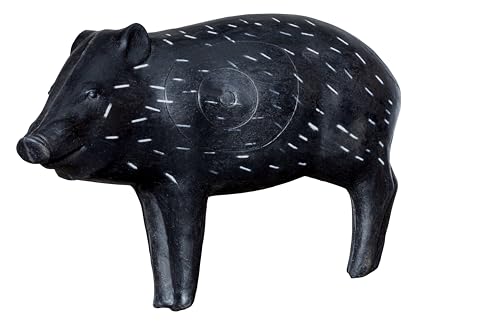
Bigshot Pro Hunter Javelina 3D
- Type
- 3d animal
- Archery target
Bigshot Real Wild Black Boar 3D
- Type
- 3d animal
- Speed rating
- 450 fps
- Archery target
Bigshot Ballistic 450 X Bag Target
- Type
- Bag
- Archery target
Bigshot 10-Inch Ball Target
- Stops
- Broadheads and field points
- Speed rating
- 475 fps
- Size
- 10 diameter
- Archery target
Bigshot Real Wild Competition Bobcat 3D
- Type
- 3d animal
- Stops
- Broadheads and field points
- Speed rating
- 375 fps
- Archery target
Bigshot Real Wild Grey Coyote 3D
- Type
- 3d animal
- Stops
- Broadheads and field points
- Speed rating
- 425 fps
- Archery target
Bigshot Iron Man Xtreme 500 FPS
- Speed rating
- 500 fps
- Size
- 24
- Archery target
Bigshot Iron Man 20 Kinetic 650
- Speed rating
- 650 fps
- Size
- 20 x 20 x 14
- Archery target
Bigshot Real Wild Bigfoot 3D
- Type
- 3d animal
- Archery target
Bigshot Titan 10X HD 505 FPS
- Type
- Foam block
- Stops
- Broadheads and field points
- Speed rating
- 505 fps
- Archery target
Bigshot Pro Hunter 16 Multipurpose
- Type
- Foam block
- Stops
- Broadheads and field points
- Speed rating
- 375 fps
- Archery target
Bigshot Real Wild Boss Rat 3D
- Type
- 3d animal
- Stops
- Broadheads and field points
- Speed rating
- 375 fps
- Archery target
Bigshot Titan 10XS Broadhead Target
- Type
- Foam block
- Speed rating
- 450 fps
- Shooting sides
- 10
- Archery target
Bigshot Titan 10XS Foam Block
- Type
- Foam block
- Stops
- Broadheads and field points
- Archery target
Bigshot Iron Man Kinetic 650 Ten Point
- Stops
- Field points only
- Speed rating
- 650 fps
- Archery target
Bigshot Crossbow Ballistic Discharge Bag Target
- Type
- Bag
- Speed rating
- 505 fps
- Size
- 18 x 10 x 8
- Archery target
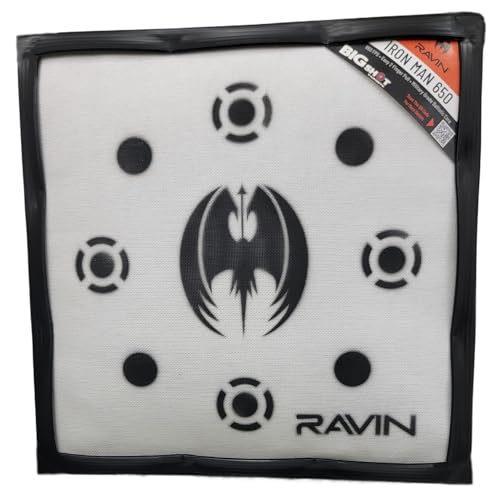
Bigshot Iron Man Kinetic 650 Ravin Edition
- Stops
- Field points only
- Speed rating
- 650 fps
- Size
- 20 x 20 x 13
- Archery target
Bigshot Real Wild Hanging Opossum 3D
- Type
- 3d animal
- Stops
- Broadheads and field points
- Size
- 26 x 8 x 8
- Archery target
Bigshot Real Wild Mountain Goat 3D
- Type
- 3d animal
- Stops
- Broadheads and field points
- Speed rating
- 375 fps
- Archery target
Bigshot Real Wild Dall Sheep 3D
- Type
- 3d animal
- Speed rating
- 375 fps
- Archery target
Bigshot Outdoor Range Bag Target
- Type
- Bag
- Size
- 36 x 30 x 11
- Archery target
Bigshot Pro Hunter Coyote Target
- Type
- 3d animal
- Speed rating
- 375 fps







What Bigshot makes for bowhunters
Bigshot makes archery targets, and only targets, as far as this site's product grid goes. That's the whole lineup on Amazon right now: 3D animals, crossbow targets, foam blocks, bag targets and one ball target. The brand data also files Bigshot under crossbows, but there's no Bigshot crossbow among the listings. What the maker sells is targets built for crossbows. Its own shop also lists archery simulators and axe targets; this site doesn't list either.
Inside the target grid, the names sort themselves into families:
- Real Wild 3D: foam animals, from an armadillo to a Dall sheep (and one Bigfoot)
- Pro Hunter: hunting-style 3D animals and a multi-sided block
- Iron Man: compressed field point targets for fast crossbows and compounds
- Titan: multi-sided foam blocks the maker files under broadhead targets
- Bags and a ball: the Ballistic bags, the Outdoor Range bag and a 10-inch ball
Most specs in the grid came from Amazon listings, and the grid marks those values. Several listings leave fields blank, so you'll see dashes. A dash means the listing didn't say. It doesn't mean zero. Where the maker's own page fills a gap, I say so below.
How a target stops an arrow
Here's what actually changes from family to family. A target stops an arrow one of two ways: friction or density.
Foam targets (the 3D animals and the Titan blocks) let the arrow push in and grab the shaft by friction. A broadhead's blades cut foam, so foam is where broadhead practice happens. Bag and compressed-fiber targets (the Ballistic bags, the Iron Man series) pack material tight enough to squeeze a field point and stop it. They're built for field points, and the maker says so on most of their pages.
Quick test before you buy: what's on the end of your arrow most of the summer? If it's a field point, the bag and Iron Man pages are where to start. If you practice with the same broadheads you hunt with, start with foam and read the point rating.
Lineup notes: Real Wild 3D animals
Real Wild is the biggest family in the grid, and the most fun to scroll. The maker files it under competition 3D targets, and most of its pages name EZ Pull Foam. The animals in the grid include:
- Small game and varmints: armadillo, raccoon, boss rat, hanging opossum
- Predators: grey coyote, competition bobcat
- Big game: black boar, mountain goat, Dall sheep
- One cryptid: the Bigfoot 3D (I checked the schema; there's no animal value for this)
Speed ratings on the listings that give one run from 375 fps up to 450 fps on the black boar. Point ratings vary inside the family. Most listings say broadheads and field points, but the armadillo listing says field points only. Read the exact listing. Don't assume the animal next to it follows the same rule.
Sizes vary a lot too. The bobcat lists 16 x 33 x 7 inches, the hanging opossum 26 x 8 x 8, and the maker gives the armadillo 23 x 8 x 10. A small animal is a small vital zone, which is the point for 3D practice. It's also harder to find in tall grass. (Ask me how many arrows I've walked past looking for a raccoon.)
The maker sells replaceable vitals and midsections for some of its larger Real Wild deer. When a 3D animal wears out, it's almost always in the vitals. That's where everyone aims, which is a good sign about everyone.
The 3D archery target page compares 3D animals across brands.
Lineup notes: Pro Hunter
Pro Hunter is the hunting-flavored side of the 3D lineup. The grid holds the Double Duty Buck, a coyote, a javelina and a raccoon-and-groundhog pair, plus the Pro Hunter 16 block.
The Double Duty Buck is the one worth a paragraph. The maker describes it as a deer with a second target painted on the back for broadhead tuning, rated to 375 fps. It has a replaceable vital with ASA scoring rings, and a solid back wall the maker says keeps it from breaking in half. Its listing gives broadheads and field points. The maker lists it at 43 x 11 x 44 inches, so plan on two trips from the truck, or one trip and a sore back.
The Pro Coyote listing gives 375 fps; the javelina and the raccoon pair don't list a speed. The Pro Hunter 16's listing leaves its fields blank, but the maker files it with its broadhead targets.
Lineup notes: Iron Man crossbow targets
Iron Man is the density family. The maker describes a rigid frame or fortified shell packed with compressed fibers, built to stop fast crossbows and compounds with field points. The grid holds three Iron Man models:
- Iron Man Xtreme 500: listed at 500 fps and 24 inches, a long-range square face. The maker adds a woven nylon facing and a kinetic energy rating of 220 ft-lb.
- Iron Man Kinetic 650 Ten Point Edition: 650 fps, field points only, per the listing
- Iron Man Kinetic 650 Ravin Edition: 650 fps, field points only, 20 x 20 x 13 inches per the listing
The two 650s carry the names of two crossbow makers, and the maker's pages say each one is built to stop that maker's fastest bolts. The maker rates both at 250 ft-lb and describes a layered aramid core (aramid is a tough synthetic fiber).
Why two numbers? Speed alone doesn't tell the whole story. A heavier bolt at the same speed carries more energy, and energy is what the target has to soak up. So the maker gives fps and foot-pounds. On paper, read both against your crossbow maker's numbers.
The crossbow target page has more crossbow targets across brands.
Lineup notes: Titan foam blocks
Titan is the multi-sided foam family. The grid holds the Titan 10X HD, the Titan 10XS broadhead target and the Titan 10XS foam block. Their listings leave the spec fields empty, so this part is from the maker's pages:
- Titan 10XS: 10 sides, each with a shooting face, rated 440 fps, about 17 x 17 x 12.5 inches
- Titan 10X HD: 10 shooting faces, over 150 aiming points, a 17 x 17 size, and a tree stand mode for practice from above
Ten faces means ten fresh surfaces. Rotate the block when one face gets soft, and the target lasts longer than a single face would. The maker says its custom foam is built for easy arrow removal.
Tree stand practice is worth the trouble. A shot from above hits the target at a different angle than one from the yard, and a block with a face for it saves you from aiming at the corner. Harness on before your boots leave the ground, even for a backyard practice stand.
Lineup notes: bag and ball targets
Bags are the simplest targets in the lineup. The grid holds three, plus a ball:
- Ballistic 450X Bag Target: the maker calls it a field point bag with a dual core, rated 450 fps, about 26 x 13 x 28 inches, with an internal stand and a rain barrier
- Crossbow Ballistic Discharge Bag Target: 505 fps and 18 x 10 x 8 inches per the listing; the maker says field points only
- Outdoor Range Bag Target: 36 x 30 x 11 inches per the listing, with grommets for hanging, a UV coating and an internal weather barrier per the maker
- 10-Inch Ball Target: 475 fps, broadheads and field points, per its listing
The discharge bag is a specific tool. The maker describes it as a small bag you keep in the truck for unloading your crossbow at the end of the day. A cocked crossbow has to be unloaded somehow before the drive home. Follow your crossbow maker's unloading instructions, and never dry-fire a crossbow.
The Outdoor Range bag is the other end of the scale. The maker calls it an ultra large bag for club ranges and long backyard shots. Quick math: 36 by 30 inches of face is a lot of target for a beginner's first 30 yards. That's a feature.
How to choose within the Bigshot lineup
Start with your tip
Field points only, or broadheads too? This one decides the family before anything else. Bags and the Iron Man 650s say field points only. Foam animals and Titan blocks are where broadheads go, but the point rating differs by model.
Safety line: handle broadheads like knives. Keep the blades covered in a quiver or a case, and pull them from foam by the shaft, not the blade.
Then the speed rating
My one opinion on this page: buy the target for the fastest thing you'll shoot into it, not the bow you shoot most. Speed ratings in this grid run from 375 fps on the 3D animals to 650 fps on the Kinetic 650s. If one crossbow at camp shoots faster than the rating, the rating is the one number that matters.
Then the shape
3D animals teach shot placement and yardage. Blocks and bags teach form, and they're easier to move around. If you hunt a whitetail stand, a deer 3D or a multi-sided block with a stand-height face makes sense. If you're grouping arrows at 20 yards in July, a bag does it.
Then size and where it lives
Read the dimensions in the grid against your truck bed and your shed. A big bag on a stand stays in the yard. A 26-inch opossum goes anywhere a small backpack goes. (Uncle Walt carries targets by the corner and calls it "the shop method." His shop method has a limp.)
See the archery target page for targets across brands, and the broadheads page for heads to practice with.
Care that applies to the whole lineup
The maker's FAQ gives two rules that fit every Bigshot target:
- Store it covered, out of the weather and out of direct sunlight, when you're not shooting
- Use the whole face, not one dot, so one spot doesn't wear through first
The bag and Iron Man pages add a third: bullet-shaped field points help the target last. A sharp-shouldered field tip tears more on the way out.
On 3D animals, the maker sells replacement vitals and midsections for some deer models, and covers for some bags. Replace the worn part, not the whole target. And pull arrows straight out, in line with the shaft. Yanking sideways is a workout for you and the foam.
Bigshot facts
Here's what the maker states on its own site:
- Location: BIGshot Archery LLC, Elverson, Pennsylvania
- Start: the about page says the story began in 2003, with home-built layered targets for broadhead practice, and dealer sales began in 2004
- The name: the founder and his sons thought the targets were "BIG" and took a lot of shots, per the same page
- Where made: some product pages, such as the Iron Man 18, say made in America; others don't say
Write the fps rating on the target with a marker the day it arrives. Next August, when somebody brings a new crossbow to camp, you'll know.
Where Bigshot shows up
Questions about Bigshot
Are Bigshot archery targets good?
What the listings and the maker state is checkable: speed ratings in the grid run from 375 fps on the 3D animals to 650 fps on the Iron Man Kinetic 650 crossbow targets, and each listing says whether it takes field points only or broadheads too. Whether one suits you depends on your tip, your fastest bow or crossbow, and how far you'll carry the target.
Can you shoot broadheads into a Bigshot target?
Into some of them. Many of the Real Wild and Pro Hunter 3D listings say broadheads and field points, and the maker files the Titan blocks under broadhead targets. The Iron Man Kinetic 650 targets and the Ballistic Discharge bag say field points only. Read the point rating of the exact target before the first broadhead goes in.
Which Bigshot target is for crossbows?
The maker groups its crossbow targets around the Iron Man series (rated 450 to 650 fps on its pages), the Titan 10X HD and 10XS, and the Ballistic 450X and Ballistic Discharge bags. Match the rating to your crossbow's speed, and check whether the target takes broadheads or field points only.
Where is Bigshot Archery located?
BIGshot Archery LLC lists its address in Elverson, Pennsylvania, on its own site. Its about page says the story began in 2003 with home-built layered targets, and that it started selling to dealers in 2004. Some of its product pages, such as the Iron Man 18, say the target is made in America.
How do you make a Bigshot target last longer?
The maker's FAQ says to store targets in a covered area, away from weather and direct sunlight, and to use the whole face instead of one spot. Several of its bag and Iron Man pages also recommend bullet-shaped field tips for longer life. On 3D targets with replaceable vitals, replace the worn core instead of the whole animal.
Where can I buy Bigshot targets?
The product grid on this page links to Bigshot listings on Amazon US. The maker also sells targets, replacement vitals, midsections and bag covers on its own site. Check the listing's dimensions and point rating against the target you want before you order; Bigshot names a lot of very similar animals.
Sources
- BIGshot Archery: About us — accessed 2026-10-23
- BIGshot Archery: FAQ — accessed 2026-10-23
- BIGshot Archery: Crossbow targets — accessed 2026-10-23
- BIGshot Archery: Competition 3D targets — accessed 2026-10-23
- BIGshot Archery: Pro Hunter Double Duty Buck — accessed 2026-10-23
- BIGshot Archery: Iron Man 24-inch Xtreme 500 crossbow target — accessed 2026-10-23
- BIGshot Archery: Iron Man Kinetic 650 Ten Point Edition — accessed 2026-10-23
- BIGshot Archery: Iron Man 650 Ravin Edition — accessed 2026-10-23
- BIGshot Archery: Iron Man 18-inch crossbow target — accessed 2026-10-23
- BIGshot Archery: Titan XS Easy Pull crossbow target — accessed 2026-10-23
- BIGshot Archery: Titan 10X HD crossbow target — accessed 2026-10-23
- BIGshot Archery: Ballistic 450X bag target — accessed 2026-10-23
- BIGshot Archery: Ballistic Discharge bag target — accessed 2026-10-23
- BIGshot Archery: Outdoor Range bag target — accessed 2026-10-23
- BIGshot Archery: Real Wild Competition Armadillo — accessed 2026-10-23