Brand · Knives & Tools
Condor Machetes and Bushcraft Knives
Condor makes two things for hunters and campers: machetes, in a long list of traditional patterns, and fixed-blade knives, mostly bushcraft and camp knives with leather sheaths. A Condor machete is usually a carbon steel blade on a walnut or Micarta handle, and the patterns differ by shape, length and thickness more than by steel. Pick the job first, then the pattern, then the thickness. (Rule of thumb from a shop teacher: the tool's shape tells you the work it was made for. Read it before you swing it.)
We earn a commission if you buy through our links, at no cost to you. Disclosure
Condor on Amazon US
46 models- Fixed blade knife
Condor Bushlore Bushcraft Knife
- Blade length
- 4.3 in
- Blade steel
- 1075
- Steel type
- Carbon
- Fixed blade knife
Condor Bushlore Camp Knife
- Blade length
- 4.31 in
- Blade steel
- 1075
- Steel type
- Carbon
- Fixed blade knife
Condor Hudson Bay Camp Knife
- Blade length
- 8.4 in
- Blade steel
- 1075
- Steel type
- Carbon
- Fixed blade knife
Condor Mini Bushlore Knife
- Blade length
- 3 in
- Blade steel
- 1075
- Steel type
- Carbon
- Fixed blade knife
Condor Woodlaw Knife
- Blade thickness
- 0.12 in
- Blade length
- 4 in
- Overall length
- 8.5 in
- Fixed blade knife
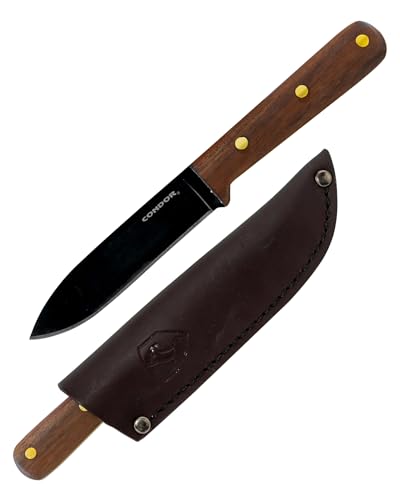
Condor Kephart Camp Knife
- Blade length
- 2.6 in
- Blade steel
- 1075
- Steel type
- Carbon
- Fixed blade knife
Condor Swamp Romper
- Blade length
- 4.5 in
- Blade steel
- 1075
- Steel type
- Carbon
- Fixed blade knife
Condor Primitive Sequoia
- Blade steel
- 1075
- Steel type
- Carbon
- Fixed blade knife
Condor Primitive Mountain
- Blade steel
- 1075
- Steel type
- Carbon
- Fixed blade knife
Condor Atrox
- Blade steel
- 1075
- Steel type
- Carbon
- Fixed blade knife
Condor Otzi
- Blade length
- 2.3 in
- Blade steel
- 1095
- Steel type
- Carbon
- Fixed blade knife
Condor Low Drag Knife
Check price - Fixed blade knife
Condor Selknam
- Blade steel
- 1075
- Steel type
- Carbon
- Fixed blade knife
Condor Mini Hudson Bay Knife
- Blade length
- 4.9 in
- Blade steel
- 1075
- Steel type
- Carbon
- Fixed blade knife
Condor Terrasaur Desert
- Blade steel
- 1095
- Steel type
- Carbon
- Fixed blade knife
Condor Cavelore
- Blade length
- 4.31 in
- Overall length
- 9.32 in
- Fixed blade knife
Condor Blue River
- Blade steel
- 1095
- Steel type
- Carbon
- Fixed blade knife
Condor Plan A
- Blade steel
- 1075
- Steel type
- Carbon
- Fixed blade knife
Condor SBK
- Blade thickness
- 0.12 in
- Blade length
- 5.3 in
- Blade steel
- 1075
- Fixed blade knife
Condor Pictus
- Blade length
- 6.1 in
- Blade steel
- 1095
- Steel type
- Carbon
- Fixed blade knife
Condor Pangui Neck Knife
- Blade length
- 3.3 in
- Blade steel
- 1095
- Steel type
- Carbon
- Fixed blade knife
Condor Terrasaur Black
- Blade steel
- 1095
- Steel type
- Carbon
- Fixed blade knife
Condor Wayfinder
- Blade length
- 5.3 in
- Blade steel
- 1095
- Steel type
- Carbon
- Fixed blade knife
Condor Bisonte
- Blade length
- 4.7 in
- Blade steel
- 1095
- Steel type
- Carbon
- Fixed blade knife
Condor Bushcraft Bliss
- Blade steel
- 1075
- Steel type
- Carbon
- Fixed blade knife
Condor Lost Roman
- Blade steel
- 1075
- Steel type
- Carbon
- Fixed blade knife
Condor Sigrun Seax
- Blade steel
- 1075
- Steel type
- Carbon
- Fixed blade knife
Condor Trivittata Puukko 3.47"
- Blade thickness
- 0.12 in
- Blade length
- 3.47 in
- Blade steel
- 1095
- Machete
Condor El Salvador Machete 18-Inch
- Blade length
- 18 in
- Blade steel
- 1075
- Steel type
- Carbon
- Machete
Condor Golok Machete 14.5-Inch
- Blade length
- 14.5 in
- Blade steel
- 1075
- Steel type
- Carbon
- Machete
Condor Parang Machete 17.5-Inch
- Blade length
- 17.5 in
- Blade steel
- 1075
- Steel type
- Carbon
- Machete
Condor Warlock Machete 12.5-Inch
- Blade length
- 12.5 in
- Blade steel
- 1075
- Steel type
- Carbon
- Machete
Condor Village Parang Machete 12-Inch
- Blade length
- 12 in
- Blade steel
- 1075
- Steel type
- Carbon
- Machete
Condor Engineer Bolo
- Blade length
- 15 in
- Blade steel
- high carbon
- Steel type
- Carbon
- Machete
Condor Bushcraft Parang Machete
- Blade length
- 13 in
- Blade steel
- 1075
- Steel type
- Carbon
- Machete
Condor Australian Army Machete
- Blade length
- 12.9 in
- Blade steel
- 1075
- Steel type
- Carbon
- Machete
Condor Jungolo Machete
- Blade steel
- 1075
- Steel type
- Carbon
- Sheath included
- Yes
- Machete
Condor K-Tact Kukri 10"
- Blade length
- 10 in
- Blade steel
- 1075
- Steel type
- Carbon
- Machete
Condor Argyll Scottish Machete
- Blade steel
- 1075
- Steel type
- Carbon
- Handle
- walnut
- Machete
Condor German Aviator Machete
- Blade length
- 15.92 in
- Blade steel
- high carbon
- Steel type
- Carbon
- Machete
Condor Mountain Pass Machete
- Blade length
- 15.5 in
- Blade steel
- 1075
- Steel type
- Carbon
- Machete
Condor Mid Makara Machete
- Blade length
- 14 in
- Blade steel
- 1075
- Steel type
- Carbon
- Machete
Condor Terra Machete Army Green
- Blade length
- 14.6 in
- Blade steel
- 1075
- Steel type
- Carbon
- Machete
Condor Burmese Hunter Machete
- Blade length
- 20.25 in
- Blade steel
- 1075
- Steel type
- Carbon
- Machete
Condor Terra Machete Desert
- Blade length
- 14.6 in
- Blade steel
- 1075
- Steel type
- Carbon
- Machete
Condor K-Night Machete
- Blade length
- 13.2 in
- Blade steel
- 1075
- Steel type
- Carbon










What Condor makes for hunters and campers
On this site, Condor covers two product types: machetes and fixed-blade knives. Condor's own catalog goes wider, with throwing tools, axes, tactical and martial arts gear; none of those are in the grid on this page.
Inside the two types, the grid sorts out like this:
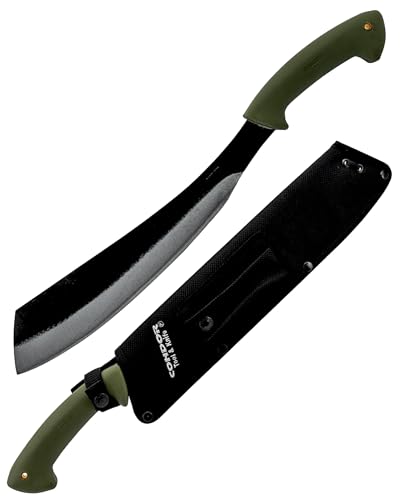
- Traditional machetes: golok, parang, bolo, kukri and the long El Salvador pattern
- Military-pattern machetes: named after the armies and pilots that carried them
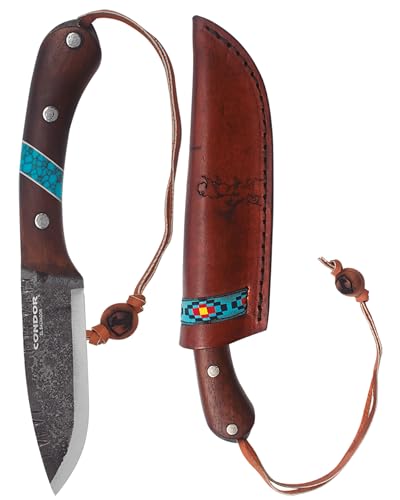
- Bushcraft knives: Bushlore, Kephart, Terrasaur and a long row of others
- Big camp knives: the Hudson Bay and its smaller sibling
- Small and neck knives: short blades for carving and light camp work
The grid above filters by type and changes as listings come and go. So I'll write about the patterns and what separates them, not about how many of each are listed this week. Most specs in the grid come from Amazon listings, and the grid marks those values. Where I give a weight or thickness here, it's from Condor's own product page.
Lineup notes: the Condor machete
Condor golok machete
The Golok is the machete people ask about by name. Condor's page lists a 14.5-inch blade in 1075 high carbon steel, 0.2 inch thick, with a convex grind, a black epoxy powder coat, a walnut handle and a welted leather sheath. It weighs 30.7 ounces, per the maker, and it's credited to designer Joe Flowers.
The maker says it combines Latin machete utility with a Malaysian golok influence. In shop terms: a short, stout blade that carries its weight forward. Condor pitches it for chopping, trail clearing and camp work, and says a distal taper and a skeletonized handle keep the weight down. (Distal taper means the blade gets thinner toward the tip.)
Parangs: long, village and bushcraft
The grid has three parangs, and they're three different tools.
- Parang, 17.5 inches: the maker calls it a larger take on the traditional Borneo parang, 0.24 inch thick, walnut scales, 33.9 ounces
- Village Parang, 12 inches: 0.2 inch thick, walnut handle with three rivets, 33.5 ounces; the maker calls it a chopper for branches and wood
- Bushcraft Parang, 13 inches: its specs in the grid come from the listing
Notice the Village Parang. It's shorter than the long Parang by more than 5 inches and weighs almost the same. That's a short, heavy chopper. The long one spreads its weight over more blade for reach. Same family name, different job.
El Salvador machete
The El Salvador is the long, thin one. The Micarta-handled version on Condor's page lists an 18-inch blade, only 0.12 inch thick, a convex grind, a powder coat and a leather sheath, at 31.5 ounces. The maker says the pattern is inspired by Salvadoran agricultural workers and that the blade stays flexible enough for daily use.
Thin and long is a field-work blade. It's for brush, grass and light growth, swung fast. Here's the thing: a thin blade that flexes is doing its job. Don't pry with it.
Kukri, bolo and the rest
The K-Tact Kukri is the short, thick end of the line: a 10-inch blade, 0.24 inch thick, Micarta handle, Kydex sheath with a leather belt loop, 32.4 ounces, per the maker. A kukri's blade bends forward, a shape built around chopping.
The Engineer Bolo is a 15-inch bolo pattern in high carbon steel with a walnut handle, per its listing. The Warlock and the Jungolo round out the traditional shapes, with their specs from their listings.
The military patterns
Then there's the history-class shelf: the Australian Army, German Aviator and Argyll Scottish machetes, plus a Mountain Pass with a canvas Micarta handle. The listings give walnut handles on most of them and blade lengths in the middle of the line.
Danny wanted to know if the Australian Army outranks the German Aviator. I told him they're both walnut-handled privates, and the Argyll is the one in a kilt.
How to choose a Condor machete
My opinion: pick the thickness, then the length
My one opinion on this page: choose a machete by thickness before length. The maker's own numbers show why. The El Salvador is 0.12 inch thick and meant to flex through brush. The Golok and Village Parang are 0.2 inch. The long Parang and the K-Tact Kukri are 0.24, twice the El Salvador. A thin blade is quick and light in grass and vines. A thick blade holds up to chopping wood, and it weighs about the same as the long thin one in a shorter package.
Then length for the swing you've got
Longer blades reach further and need room to swing. On a narrow trail or inside a thicket, a 10 or 12-inch blade is easier to control than an 18. Measure the space you work in, not the blade you like the look of. The machete page covers lengths across brands.
Then handle and sheath
Walnut, Micarta and polypropylene all show up. Condor's care article says Micarta and synthetic handles wipe clean with a damp cloth and mild soap, while wood handles want a light coat of oil every few months. The sheaths are mostly welted leather, with Kydex or polymer on some models. Leather needs conditioner now and then; that's the trade for the look.
Lineup notes: Condor bushcraft knives
Bushlore and Mini Bushlore
The Bushlore is the knife that leads Condor's bushcraft row. Per the maker: a 4.3-inch blade in 1075 steel, 0.12 inch thick, a scandi grind, full tang, walnut handle and welted leather sheath, at 6.07 ounces, designed by Joe Flowers. The maker says the scandi edge gives cutting precision and easy field maintenance.
A scandi grind is one wide flat bevel down to the edge, with no secondary bevel. You sharpen it by laying that flat on the stone. The Mini Bushlore is the 3-inch version with the same grind, per the maker. The Bushlore Camp Knife in the grid is a sibling with listing specs.
Kephart
The Kephart is a 4.5-inch, full-flat-ground knife with a secondary bevel and a walnut handle, per the maker, pitched for carving, camp utility and food prep. A flat grind with a second bevel slices well and sharpens like most kitchen knives. That's the main difference from the scandi Bushlore.
Terrasaur, Pictus, Wayfinder and the 1095 group
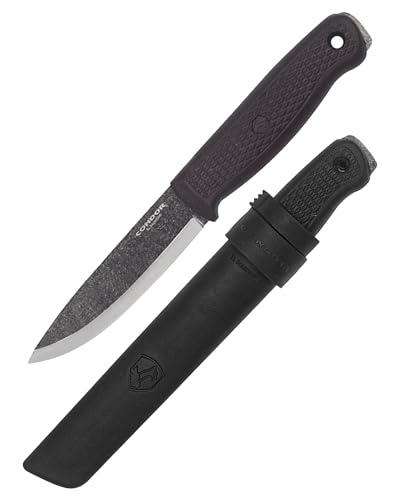
A group of Condor bushcraft knives list 1095 steel instead of 1075: the Terrasaur, Otzi, Blue River, Pictus, Pangui, Wayfinder and Bisonte. Both are carbon steels. The Terrasaur, per the maker, has a 4.2-inch scandi blade, a polypropylene handle and a polypropylene sheath with a leather belt loop, and its page mentions a lifetime warranty from Condor.
The rest of the row (Woodlaw, Swamp Romper, Primitive Sequoia and Mountain, Selknam, Cavelore, Plan A, SBK, Bushcraft Bliss, Lost Roman, Sigrun Seax, Atrox) splits by grind and handle in the grid: scandi, flat or convex, on walnut, hickory or Micarta. On Condor's own pages, convex grinds go with the chopping blades, scandi grinds with carving and easy field sharpening, and flat grinds with slicing and food prep. The bushcraft knife page covers grinds across brands.
Hudson Bay knives
The Hudson Bay is the big camp knife. Per the maker: an 8.4-inch blade, 0.2 inch thick, full flat grind with a second bevel, walnut handle, welted leather sheath, 20.5 ounces. Condor says it's inspired by frontier knives of fur trappers and suits splitting wood and processing game. The Mini Hudson Bay in the grid has a shorter blade per its listing. Big camp knives across brands are on the camping knife page.
How to choose a Condor knife
Pick by the work. Carving and fire prep point to a scandi grind. Food and game point to a flat grind. Splitting wood points to a bigger blade, like the Hudson Bay the maker pitches for it. Then pick the length: small knives in the 3-inch range for neck or pocket carry, 4 to 5 inches for general camp work, the Hudson Bay when you want one blade that does some chopping. The fixed blade knife page and hunting knife page cover the same choices across brands.
Care for carbon steel and leather
Every Condor blade in the grid that names its steel lists a carbon steel, so care is not optional. Condor's maintenance article says high-carbon steel rusts if moisture stays on it. Its routine, in short:
- Dry the blade completely after cleaning
- Oil it lightly with mineral oil, food-grade if you prep food with it
- Oil more often in humid weather; about once a month for knives in regular use
- Rust spots: a rust eraser or fine sandpaper, then clean, dry and oil
- Leather sheaths: a little conditioner, and air-dry a wet sheath before the blade goes back in
- Wood handles: a damp cloth, no soaking, and a light coat of linseed or tung oil every few months
For sharpening, Condor's article suggests about 20 degrees per side for most of its knives, coarse grit to reshape and fine grit to refine, then a strop. Follow the maker's angle for its own blades. Store knives dry, in their sheaths, away from extreme heat and cold. Never put a carbon blade away wet in a leather sheath; that's how rust starts where you can't see it.
Safety with machetes and knives
The American Knife & Tool Institute's first rule is to cut away from your body and away from anyone else. It also says a sharp blade is a safer blade, because it takes less force. With a machete, give yourself a full swing's clearance and know where everyone around you is standing. Sheath the blade before you walk anywhere. Knife and machete carry rules vary by state, so check your state's rules.
Who's behind Condor
Condor Tool & Knife's own blog traces the company to the Weyersberg company, founded in Solingen, Germany, in 1787. It says the business moved to Santa Ana, El Salvador, became Imacasa, and that Condor emerged under the same roof. Many of its product pages credit Joe Flowers as designer. I couldn't verify a country of manufacture on the product pages themselves, or full warranty terms for every model, so I've left those out.
Write the pattern, the length and the thickness on the sheath tag. Three numbers, and you'll know which blade to grab in the dark of the truck bed.
Where Condor shows up
Questions about Condor
What is a Condor golok machete?
The Golok is a 14.5-inch machete in 1075 high carbon steel, 0.2 inch thick, with a walnut handle and a welted leather sheath, per the maker. Condor's page says it combines Latin machete utility with Malaysian golok influence and pitches it for chopping, clearing trails and camp work. The maker lists it at 30.7 ounces.
Where are Condor machetes made?
Condor's own blog traces the company to the Weyersberg company of Solingen, Germany, founded in 1787, and says it moved to Santa Ana, El Salvador, where it became Imacasa and Condor began under the same roof. The product pages I read don't state a country of manufacture, so check the packaging of the exact model.
What steel do Condor knives and machetes use?
Most Condor blades in the grid list 1075 high carbon steel, and a group of the bushcraft knives list 1095, also a carbon steel. A few machete listings say only high carbon. No listing here names a stainless steel. Carbon steel needs drying and a light coat of oil after use, which Condor's care article spells out.
Are Condor machetes good?
What the maker states is checkable: carbon steel blades, full or skeletonized tangs, walnut, Micarta or polypropylene handles, and leather, Kydex or polymer sheaths, with weights and thicknesses on its pages. Whether one suits you depends on what you cut. Thin blades suit light, fast work; thick ones suit chopping wood.
Where can I buy Condor machetes?
The product grid on this page links to the Condor listings on Amazon US, filtered by machetes and fixed-blade knives. Condor's own site shows its catalog, with pricing behind a login. Some blades may not ship to every address, and Amazon shows that at checkout. Carry rules vary by state, so check your state's rules.
Sources
- Condor Tool & Knife: Home page (categories) — accessed 2026-10-23
- Condor Tool & Knife: The art of crafting high-quality knives, a behind-the-scenes look — accessed 2026-10-23
- Condor Tool & Knife: Knife maintenance 101 — accessed 2026-10-23
- Condor Tool & Knife: Golok machete 14 inch with leather sheath — accessed 2026-10-23
- Condor Tool & Knife: Parang machete 17 1/2 inch with leather sheath — accessed 2026-10-23
- Condor Tool & Knife: Village parang 12 inch with leather sheath — accessed 2026-10-23
- Condor Tool & Knife: El Salvador machete, Micarta handle — accessed 2026-10-23
- Condor Tool & Knife: K-Tact kukri knife — accessed 2026-10-23
- Condor Tool & Knife: Terra Camp machete — accessed 2026-10-23
- Condor Tool & Knife: Bushlore knife with leather sheath — accessed 2026-10-23
- Condor Tool & Knife: Mini Bushlore knife — accessed 2026-10-23
- Condor Tool & Knife: Hudson Bay knife 8 1/2 inch — accessed 2026-10-23
- Condor Tool & Knife: Kephart 4 1/2 inch with leather sheath — accessed 2026-10-23
- Condor Tool & Knife: Terrasaur knife, black — accessed 2026-10-23
- American Knife & Tool Institute: Knife safety, sharpening and maintenance — accessed 2026-10-23