Brand · Trail Cameras & Optics
GardePro Trail Cameras
A GardePro trail camera comes in one of four ways to get pictures off the tree: an SD card you pull by hand, a short-range WiFi and Bluetooth link to your phone, a cellular plan, or the Link system that relays through a hub at home. That's the first choice, and it matters more than the megapixel line on the box. The short version: pick how you'll collect pictures, then how the camera is powered, then the night flash. (I made a spreadsheet for this. Uncle Walt made a face.)
We earn a commission if you buy through our links, at no cost to you. Disclosure
GardePro on Amazon US
21 models- Trail camera
GardePro A3S
- Connectivity
- None sd card
- Photo resolution
- 64 MP
- Video
- 1296p
- Trail camera
GardePro E5
- Connectivity
- None sd card
- Photo resolution
- 48 MP
- Video
- 1296p
- Trail camera
GardePro E6 WiFi
- Connectivity
- Wifi bluetooth
- Photo resolution
- 64 MP
- Video
- 1296p
- Trail camera
GardePro E5S
- Connectivity
- None sd card
- Photo resolution
- 64 MP
- Video
- 1296p
- Trail camera
GardePro E5S 64MP
- Connectivity
- None sd card
- Photo resolution
- 64 MP
- Video
- 1296p
- Trail camera
GardePro A3
- Connectivity
- None sd card
- Photo resolution
- 48 MP
- Video
- 1296p
- Trail camera
GardePro X50P Cellular
- Connectivity
- Cellular
- Trail camera
GardePro A60 4K
- Connectivity
- None sd card
- Photo resolution
- 64 MP
- Video
- 4k
- Trail camera
GardePro E8PMB WiFi
- Connectivity
- Wifi bluetooth
- Trail camera
GardePro X50S
- Connectivity
- Cellular
- Photo resolution
- 48 MP
- Video
- 1296p
- Trail camera
GardePro X66 Pro
- Connectivity
- Cellular
- Night/flash range
- 100 ft
- Trail camera
GardePro X66 Pro
- Units in pack
- 2
- Connectivity
- Cellular
- Night/flash range
- 100 ft
- Trail camera
GardePro E8 2.0 WiFi Bluetooth
- Connectivity
- Wifi bluetooth
- Video
- 4k
- Trail camera
GardePro E8 2.0 Pro WiFi Bluetooth
- Connectivity
- Wifi bluetooth
- Video
- 4k
- Trail camera
GardePro X66 Pro
- Connectivity
- Cellular
- Night/flash range
- 100 ft
- Trail camera
GardePro X66 Pro Cellular with SP350 Solar Panel
- Units in pack
- 1
- Connectivity
- Cellular
- Trail camera
GardePro E8 2.0 Pro Solar WiFi
- Connectivity
- Wifi bluetooth
- Photo resolution
- 64 MP
- Video
- 4k
- Trail camera
GardePro Link 1.0 R3 Pro + Hub
- Connectivity
- Wifi bluetooth
- Trail camera
GardePro Link 1.0 Hub + 4 R3 Pro
- Units in pack
- 4
- Connectivity
- Wifi bluetooth
- Trail camera
GardePro Link 1.0 Hub + 2 R3 Pro
- Units in pack
- 2
- Connectivity
- Wifi bluetooth
- Trail camera
GardePro Link 1.0 Hub + 3 R3 Pro
- Units in pack
- 3
- Connectivity
- Wifi bluetooth






What GardePro makes for hunters
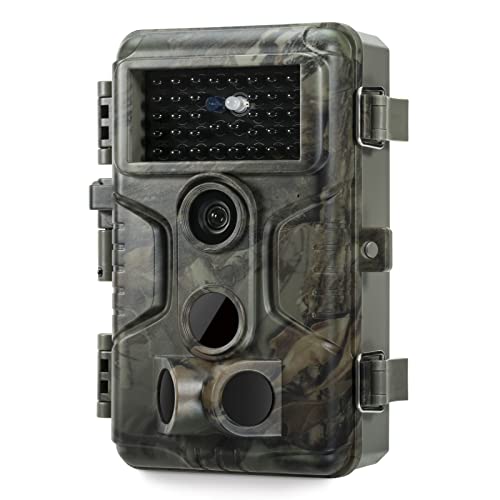
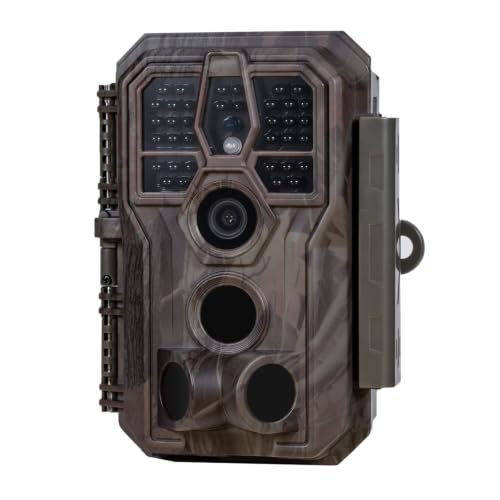
On this site, GardePro covers one type: trail cameras. The grid above also holds a few bundles, like multi-packs, a camera sold with a solar panel, and the Link hub kits. Everything in it is about one job: taking pictures of what walks past a tree while you're somewhere else.
The lineup splits by how the pictures reach you:
- SD-card cameras: the A series and the E5 models, checked by hand
- WiFi and Bluetooth cameras: most of the E6 and E8 models, read from your phone at close range
- Cellular cameras: the X series, which send pictures over a cell network
- The Link system: R3 Pro cameras that relay through a hub at home
GardePro's own site sorts its cameras the same way, into non-cellular, WiFi and cellular families, with Link as its long-range WiFi line. The grid filters by type and changes as listings come and go, so I'll write about the families and what separates them, not about how many are listed this week.
Most of the specs in the grid came from Amazon listings, and the grid marks those values. Where I checked the maker's own product page, I say so. Where a value is missing, the grid shows a dash. On paper, a dash means nobody told us. It doesn't mean zero.
Lineup notes: the GardePro trail camera families
A series and E5: SD-card cameras
These are the simplest cameras in the lineup. No app, no plan, no signal needed. The camera writes to an SD card, and you walk in and swap it.
The listings for the A3, A3S, E5 and E5S describe a 0.1-second trigger, 1296p video and no-glow infrared at 100 ft. The photo line ranges from 48 to 64 megapixels across the models. The A60 4K steps video up to 4K, per its listing.
GardePro's A3S page fills in what a listing usually doesn't:
- Detection: a 120-degree angle and an 85 ft range
- Recovery time: 0.5 seconds between triggers
- Power: 8 AA batteries, a 12V DC input, or the optional SP350 solar panel
- Storage: SD cards up to 512GB
- Weather: rated IP66
- Screen: a 2.4-inch color screen for setup and review
That screen is worth more than it sounds. You can check the picture at the tree instead of finding out at the kitchen table that you filmed a fern for two weeks.
My one opinion on this page: for most hunters, an SD-card camera hung in the right spot beats a connected camera hung in the wrong one. Field & Stream's mounting advice is all about where the camera points (angle, sun, the spot deer actually use). None of it is about how the picture travels. More on this type is on the trail camera page.
E series WiFi and Bluetooth: pictures to your phone at close range
The E6 and E8 models in the grid list WiFi and Bluetooth. That word "WiFi" trips people up, so here's what actually changes. GardePro says the E8 2.0 Pro makes its own Bluetooth and WiFi hotspot. Your phone connects straight to the camera through the GardePro app. It doesn't join your home router, and the maker says there are no monthly fees.
The catch is range. GardePro gives up to 165 ft for the E8 2.0 Pro. So you still walk in, just not all the way to the tree. You can download files from the edge of the field without pulling the card.
Across the family, the listings show the split that matters:
- E6 WiFi: 8 AA batteries, with a jack for an external solar panel
- E6P Max WiFi and E8PMB WiFi: a built-in 8,000 mAh battery
- E8 2.0 and E8 2.0 Pro: 4K video in the listings; the maker gives the Pro a built-in 7,800 mAh battery and an IP66 rating
- E8 2.0 Pro Solar: the same camera family with a solar panel included
The WiFi trail camera page covers how close-range WiFi cameras work across brands.
X series: cellular cameras
The X models send pictures over a cell network, so you see them at home. The listings for the X50P, X50S and X66 Pro name AT&T, Verizon and T-Mobile. GardePro says the X66 Pro connects to the strongest available network on its own.
What GardePro's pages add:
- X50S: 48MP photos, 1296p video, a 0.1-second trigger, 940nm no-glow infrared at 100 ft, a 120-degree PIR sensor (the heat-and-motion detector) and an IP66 rating
- X66 Pro: 36 infrared LEDs for night pictures up to 100 ft, a built-in 7,800 mAh rechargeable battery, live view and GPS location in the app
Live view lets you open a session when a notification arrives, or request a photo or short clip. GardePro also warns that live streaming drains the battery quickly. Quick math: every minute you spend watching a squirrel live is a minute of battery that won't be there in November.
GardePro says several cameras can share one data plan, with the first camera billed at full price and the others at a lower rate. Plans change, so read the current terms on the maker's site. The grid also holds an X66 Pro two-pack and an X66 Pro sold with the SP350 solar panel. The cellular trail camera page covers carriers, plans and signal across brands.
Link 1.0: a hub and R3 Pro cameras
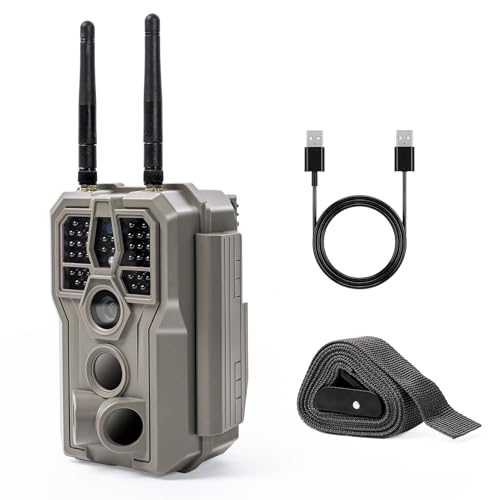
Link is the odd one in the lineup. GardePro describes a hub that connects to your home router, and R3 Pro cameras that talk to the hub. The R3 Pro works only with the Link 1.0 hub, per the maker. The grid has kits with one, two, three or four cameras.
GardePro claims up to 3,000 ft of transmission in open air and gives 1,600 ft as its reliable range in typical use. The cameras run on a built-in 7,800 mAh rechargeable battery. In plain words: Link is for land close to home, like a back field or a woodlot behind the house, not a ridge two counties away. Walt asked if 3,000 ft reaches Hemlock Run from his kitchen. It does not. The cabin doesn't have a router either, which he considers a feature.
How to choose within the GardePro lineup
Decide how you'll collect pictures
This is the deciding spec, and the grid's connectivity field sorts it:
- SD card only: you visit the camera; no plan, no app needed
- WiFi and Bluetooth: you visit the area; your phone downloads from up to the maker's stated range
- Cellular: you stay home; you pay for a data plan
- Link: you stay home on land near your router
If you hunt a lease you only see on weekends, an SD-card camera means a walk in each visit, which also means scent and noise near the spot. A cellular camera saves the walk and adds a monthly bill. That's the trade, and it's yours to make.
Then the power
Two systems run through the lineup. Some models take 8 AA batteries; others have a built-in rechargeable battery of 5,200 to 8,000 mAh, per the listings. Several accept a solar panel, either through a jack or in a bundle.
Outdoor Life notes that ordinary alkaline batteries can fail in cold weather and lose power over time, and it recommends lithium or NiMH rechargeables instead. Lithium costs more but lasts longer and doesn't quit in the cold, per the same article. For an AA model hung in December, that matters. GardePro also says on the X66 Pro page that it recommends its larger 10W panel for cold, low-light conditions.
Then the night flash
Most GardePro listings in the grid name no-glow infrared, and the maker's pages give 940nm for several models. Here's what that trade looks like in practice. Browning Trail Cameras explains that no-glow LEDs aren't visible when the camera fires, while low-glow ones show a faint red glow. The same article says no-glow images come out a little grainier, because less light reaches the subject and the shutter slows down.
So no-glow is the quieter choice near a trail. Expect night pictures that are a bit softer than daylight ones. That's physics, not a flaw.
Then the picture specs, with a grain of salt
The photo line in the grid runs from 48 to 64 megapixels. Outdoor Life says most trail cameras have a native sensor resolution of three to five megapixels, and that a higher setting mostly makes a bigger file and uses more card space. That's true across the category, not just for one brand. GardePro's own pages don't list a native sensor value, so I can't give you one.
What I'd look at instead: trigger speed and recovery time. Outdoor Life calls a trigger of half a second or less acceptable and puts a good recovery time at 5 seconds or less. GardePro lists 0.1 seconds for the trigger on several models and 0.5 seconds for the A3S recovery. Those two numbers decide whether you get the deer or its back half.
Setup notes that apply to the whole lineup
GardePro's product pages show the camera strapped to a tree and say setup takes minutes, without much placement advice. Field & Stream's advice fills the gap, and it applies to any camera:
- Face north or south: less glare from the rising and setting sun
- Angle the camera: quarter it to the trail, not straight across it
- Use a post: when no tree points the lens where you need it
- Pick the spot deer use: scrapes, licking branches, field corners and pinch points
Walt scouted for decades before anybody at camp owned a trail camera, and he'll tell you a camera mostly confirms what a good scout already suspected. (He reminds me of this. Often.) Hang it where you've already seen sign, not where you hope to.
Use the screen, if your model has one, to frame the shot before you leave. Clear the grass and twigs in front of the lens so they don't block the shot. Check the card or the app after the first few days, then adjust.
Trail camera rules vary by state. Check your state wildlife agency before you hang one.
GardePro facts
Here's what I could verify on the maker's own site:
- Founded: 2016, per GardePro's about page
- Product families: non-cellular, WiFi and cellular cameras, plus the Link long-range WiFi line, a thermal monocular and accessories
- Warranty: 1 year, plus a second year the maker labels a GardePro Shop exclusive; for the original retail buyer from an authorized dealer, with proof of purchase
I couldn't verify where GardePro cameras are made or who owns the company, so I've left those out.
Write the camera's model name and the date you hung it on the strap with a paint pen. Future you, standing in the woods in November, will appreciate the paperwork.
Where GardePro shows up
Questions about GardePro
Is a GardePro trail camera good?
What's checkable is the spec sheet. GardePro states a 0.1-second trigger, 940nm no-glow infrared and an IP66 rating for models such as the A3S and E8 2.0 Pro, and the A3S page lists a 120-degree detection angle with an 85 ft range. Whether a model suits you depends on how you'll collect pictures: SD card, WiFi, cellular or the Link hub. Compare those values in the grid.
Do GardePro WiFi cameras need a monthly plan?
For the E8 2.0 Pro, GardePro says the camera makes its own Bluetooth and WiFi hotspot for a direct link to the GardePro app, with no home router and no monthly fees, at up to 165 ft. The X series cameras are cellular and use a data plan. The Link 1.0 hub connects to your home router instead.
What warranty does GardePro offer?
GardePro's warranty page covers defects in materials and workmanship for 1 year, plus a second year it labels a GardePro Shop exclusive offer. It applies to the original retail buyer from an authorized dealer and needs proof of purchase. Misuse, damage from wild animals and normal wear are excluded. Read the page before you count on the second year.
What batteries do GardePro trail cameras use?
It depends on the model. GardePro's A3S page lists 8 AA batteries, a 12V DC input and an optional SP350 solar panel. The E6 WiFi listing names 8 AA batteries too. The X66 Pro, E8 2.0 Pro and Link cameras use a built-in 7,800 mAh rechargeable battery, according to the maker.
Where can I buy GardePro trail cameras?
The product grid on this page links to GardePro listings on Amazon US, including single cameras, multi-packs, Link bundles and a solar bundle. GardePro also sells on its own site. Check the exact model name and pack count in the listing, since several models share a series name.
Sources
- GardePro: About us — accessed 2026-10-23
- GardePro: Warranty — accessed 2026-10-23
- GardePro: A3S non-cellular trail camera — accessed 2026-10-23
- GardePro: E8 2.0 Pro WiFi trail camera — accessed 2026-10-23
- GardePro: X50S cellular trail camera — accessed 2026-10-23
- GardePro: X66 Pro cellular trail camera — accessed 2026-10-23
- GardePro: Link 1.0 long-range wireless trail camera — accessed 2026-10-23
- Outdoor Life: Technical aspects of trail cameras — accessed 2026-10-23
- Browning Trail Cameras: Nighttime trail camera images, putting light on the subject — accessed 2026-10-23
- Field & Stream: Where to mount a trail camera — accessed 2026-10-23