


GardePro X50S
Good for spots where T-Mobile has the signal, since the listing names AT&T, Verizon and T-Mobile; 0.1-second trigger, built-in battery with solar panel included, maker-stated live view.
Skip it if you'd rather swap AA batteries.
Trail Cameras & Optics · Best-of list
The best cellular trail camera is one that runs on a carrier with signal at your tree and still has power when the snow comes. This list keeps only cellular cameras whose maker or Amazon listing states trigger speed and carrier support, and puts the fastest stated trigger first. Carrier first, power second, everything else after. (Danny asked if a cellular camera could text him when the deer show up. It can. It cannot also make the coffee. He checked.)
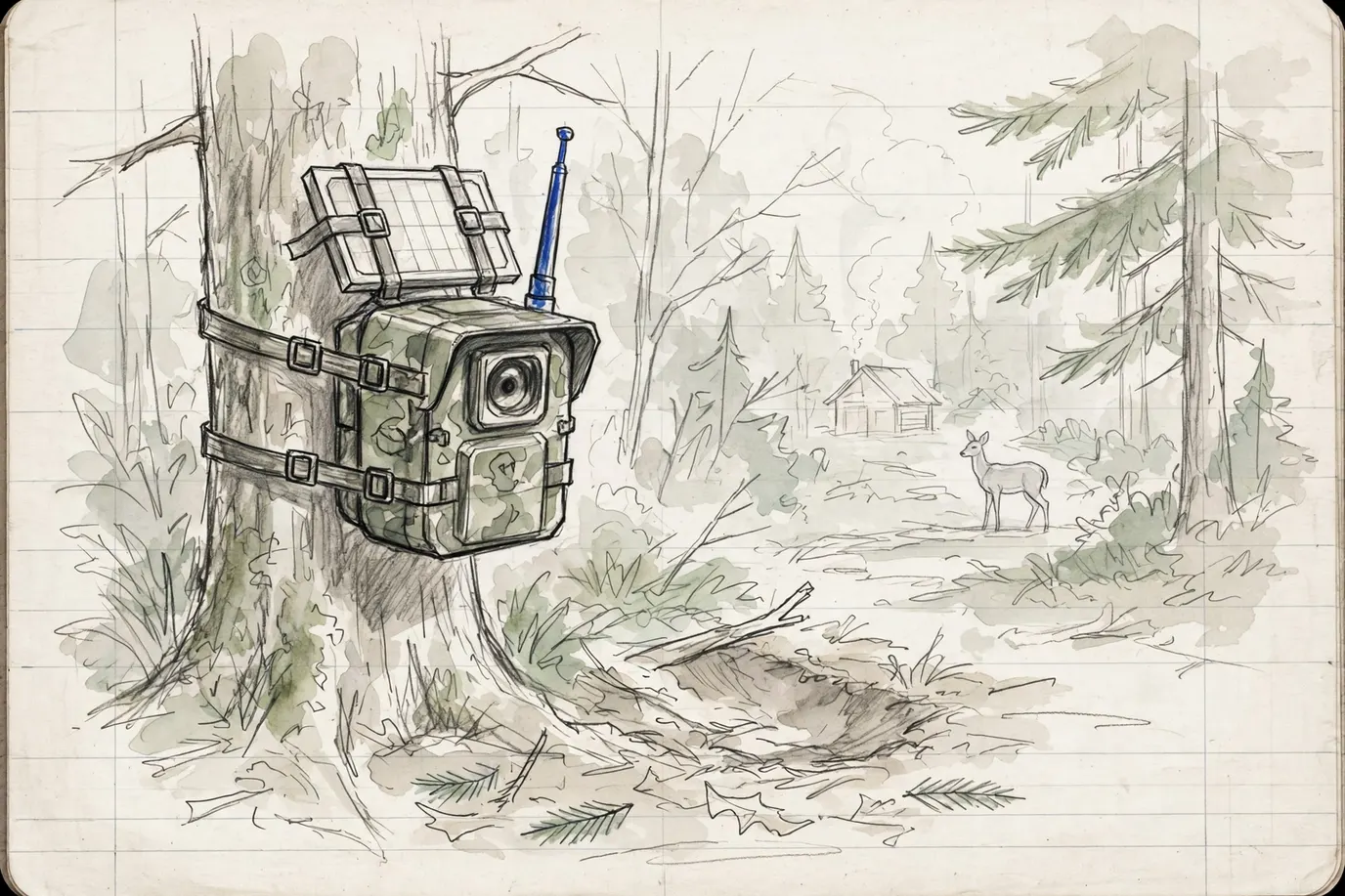
How this list is builtCellular trail cameras whose maker or Amazon listing states trigger speed and carrier support, fastest trigger first.
We earn a commission if you buy through our links, at no cost to you. Disclosure
| Model | Units in pack | Photo resolution | Video | Trigger speed | Night/flash range | Amazon |
|---|---|---|---|---|---|---|
GardePro X50STrail camera More specs
| — | 48 MPmaker | 1296pmaker | 0.1 slisting | 100 ftlisting | Check price |
Sehmua Cellular 2K Live Streaming Gen 3Trail camera More specs
| — | — | 1440p 2klisting | 0.2 slisting | — | Check price |
Sehmua Cellular Trail Camera 2 PacksTrail camera More specs
| 2listing | — | — | 0.2 slisting | — | Check price |
Browning Defender Pro Scout Max Extreme HDTrail camera More specs
| — | 22 MPlisting | 1080plisting | 0.25 smaker | 120 ftmaker | Check price |
Browning Defender Pro Scout Max Extreme HDTrail camera More specs
| 2listing | 22 MPlisting | 1080plisting | 0.25 smaker | 120 ftmaker | Check price |
Bushnell CelluCORE LiveTrail camera More specs
| — | 32 MPlisting | 1080plisting | 0.3 slisting | 100 ftmaker | Check price |
Moultrie Edge 3 Pro 50MPTrail camera More specs
| — | 50 MPlisting | 1440p 2klisting | 0.3 slisting | 100 ftlisting | Check price |
SPYPOINT Flex G-36 TwinTrail camera More specs
| — | 36 MPlisting | 1080plisting | 0.3 slisting | 100 ftlisting | Check price |
Stealth Cam Deceptor No-Glo 40MPTrail camera More specs
| — | 40 MPlisting | 1440p 2klisting | 0.3 slisting | 80 ftlisting | Check price |
Moultrie Edge Solar 40MPTrail camera More specs
| — | 40 MPlisting | 1080plisting | 0.4 slisting | 100 ftlisting | Check price |
Good for spots where T-Mobile has the signal, since the listing names AT&T, Verizon and T-Mobile; 0.1-second trigger, built-in battery with solar panel included, maker-stated live view.
Skip it if you'd rather swap AA batteries.
Good for AT&T or Verizon country, per the listing, with a maker-stated 120-ft flash range and 8 AA batteries.
Skip it if you want live view or a flash type stated; neither is in its data.
Good for covering two spots on AT&T or Verizon with the same Browning camera, in a 2-pack per the listing; maker-stated 120-ft flash and 0.25-second trigger.
Skip it if you only need one camera.
Good for AT&T or Verizon spots where you want live view and a no-glow flash, both stated by the maker, on 12 AA batteries.
Skip it if you want the fastest trigger; it lists 0.3 second.
Good for a cellular camera on Verizon, AT&T or T-Mobile with live view, 1440p video and a 0.2-second trigger, per the listing.
Skip it if you want flash range, flash type or power stated; the listing gives none.
Good for two cellular cameras in one box on Verizon, T-Mobile or AT&T, with live view and a 0.2-second trigger, per the listing.
Skip it if you want photo, video or flash specs; the listing doesn't state them.
Good for a cellular camera with 4-carrier auto-connect, 50MP photos, 1440p video and a 100-ft no-glow flash, per the listing.
Skip it if you want live view or the power source stated.
Good for a dual-SIM cellular camera with a 0.3-second trigger, 36MP photos and a 100-ft flash, per the listing.
Skip it if you want the carriers or flash type named; the listing doesn't.
Good for close trails on AT&T or Verizon, with a 0.3-second trigger, 40MP photos, 1440p video and no-glow flash, per the listing.
Skip it if you want more than its 80 ft of flash range.
Good for a spot with sky where built-in solar helps, on 4-carrier auto-connect with a 100-ft flash, per the listing.
Skip it if you want no-glow or a faster trigger than its 0.4 second.
Ten listings qualify this week. Two are 2-packs per their listings, and one Browning camera appears both as a single and as a 2-pack. Each label says what a camera is on this list by its stated specs. Nobody at Hemlock Run has hung these. The closest we get to field data is Walt asking why anybody's phone should buzz about deer.
The GardePro X50S lists the fastest trigger on this list, 0.1 second, and names three carriers: AT&T, Verizon and T-Mobile.
GardePro states 48 megapixel photos, 1296p video and live view. The listing adds a 100-ft no-glow flash, a built-in 5200 mAh battery and an included solar panel. It's the only listing here that states a built-in battery, and it sits in the lowest price tier.
That battery is the trade to think about. Solar keeps it topped up when there's light. AA cameras let you swap fresh batteries in at the tree.
The Sehmua Gen 3 listing names Verizon, AT&T and T-Mobile, states live view and gives a 0.2-second trigger and 1440p (2K) video. It doesn't state megapixels, flash range, flash type or power, so those columns stay blank.
This Sehmua listing is a 2-pack. It names Verizon, T-Mobile and AT&T, states live view and a 0.2-second trigger, and stops there: no photo, video, flash or power figures. Two cameras on three carriers is the whole spec sheet.
The Browning Defender Pro Scout Max Extreme HD appears twice: as a single camera and, per its listing, as a 2-pack. Browning states a 0.25-second trigger, a 120-ft flash range (the longest here) and power from 8 AA batteries.
The listings add AT&T and Verizon support, 22 megapixel photos and 1080p video. Neither source states the flash type. The single sits in the lowest price tier and the 2-pack in the middle tier. A 2-pack makes sense if you're covering two spots and want one app for both.
The Bushnell CelluCORE Live has more of its specs stated by the maker than any other camera on this list. Bushnell states AT&T and Verizon support, live view, a 100-ft flash range, a no-glow flash and power from 12 AA batteries, the most AA cells here.
The listing gives a 0.3-second trigger, 32 megapixel photos and 1080p video. It sits in the middle price tier. Bushnell's page says it connects to whichever of its two networks has the stronger signal, and that live streams run up to 2 minutes.
The Moultrie Edge 3 Pro listing states 4-carrier auto-connect, 50 megapixel photos (the highest figure here), 1440p (2K) video, a 0.3-second trigger and a 100-ft no-glow flash. It's in the lowest price tier.
The SPYPOINT Flex G-36 Twin listing states dual-SIM rather than naming carriers. It lists a 0.3-second trigger, 36 megapixel photos, 1080p video and a 100-ft flash range, with no flash type stated. It sits in the middle price tier.
The Stealth Cam Deceptor listing names AT&T and Verizon and states a 0.3-second trigger, 40 megapixel photos, 1440p (2K) video and a no-glow flash. Its 80-ft flash range is the shortest stated here, which matters little on a close trail. It's in the lowest price tier.
The Moultrie Edge Solar listing states built-in solar, 4-carrier auto-connect, 40 megapixel photos, 1080p video, a 100-ft flash range and a low-glow flash, the only low-glow camera here. Its 0.4-second trigger is the slowest stated figure on this list and still inside the 0.5-second line Outdoor Life calls acceptable. Last on a fastest-first list is a sorting result.
The rule box sorts by trigger speed. For a cellular camera, I'd check the carrier first, because a camera with no signal is just a regular trail camera with a monthly bill.
A cellular trail camera sends its photos over a cell network to an app on your phone, as Browning's beginner guide describes. If your carrier has no signal where you hang it, nothing gets sent.
Tactacam's support page explains what a weak signal does. The camera can time out while trying to send and keep the photo on the SD card. You find out next time you walk in, which is the trip you bought the camera to skip.
Here's how this list splits:
GardePro and Bushnell say on their own pages that the camera picks the strongest available signal. Before you buy, stand at the tree with a phone on each carrier you're considering and see who answers. (I did this once on the ridge above camp. Verizon had one bar. My phone had opinions about the other carriers. Walt had a pencil.)
This is my one opinion on the page: for a cellular camera, pick the power source before the megapixels. A cellular camera spends power on every photo it sends, not just every photo it takes. And Outdoor Life notes standard alkaline batteries can fail below 32°F, while lithium batteries last longer and work in the cold.
On this list:
The other listings don't state a power source; check the maker's manual.
More AA cells means more batteries to buy and more time between swaps. Solar means fewer trips, as long as the panel sees sky. A camera tucked under hemlocks in December may not.
Follow the maker's charging instructions for any built-in lithium battery, and don't charge a damaged one.
Trigger speed is the delay between the camera's sensor noticing a deer and the shutter firing. Outdoor Life calls 0.5 second or less acceptable, and Buckmasters calls under a second ideal. Everything on this list clears both lines on paper: 0.1 second for the GardePro, 0.2 for the Sehmua listings, 0.25 for the Browning, 0.3 for four cameras and 0.4 for the Moultrie Edge Solar.
Where it matters: Field & Stream recommends cellular cameras for mineral licks and mock scrapes, spots you don't want to visit often. Buckmasters points out deer stand still at food sources, so slower cameras still get the shot there. A camera watching a mock scrape sees deer walking in and out, so faster helps.
Recovery time is how long a camera needs before it can take the next photo. Outdoor Life says good cameras recover in 5 seconds or less, while slow ones can take 10 to 15 seconds. Buckmasters gives the classic case: a buck trailing a few yards behind a doe walks through while the camera is still getting ready.
None of the ten listings here states recovery time, so it isn't part of the rule. If deer often come in pairs at your scrape, look for the figure in the maker's manual. A missing number isn't a bad number, just a question for the maker.
Live view lets you open a live feed from the camera on your phone. The GardePro X50S and the Bushnell CelluCORE Live state it from the maker, and both Sehmua listings state it too. Bushnell says its streams run up to 2 minutes. GardePro says live view minutes come out of a plan allowance.
It's handy for checking a camera after a storm, or whether the strap slipped. (Walt's version of live view is walking out to the tree. It also runs about 2 minutes, plus the walk back.)
Bushnell states a no-glow flash on the CelluCORE Live, and the GardePro, Moultrie Edge 3 Pro and Stealth Cam listings say no-glow too. The Moultrie Edge Solar lists low-glow. Browning's guide to night images explains the trade. No-glow LEDs sit near 950 nm and are invisible, but they put less light on the deer. Less light means a slower shutter, so night photos come out grainier and blur more on a moving deer than with low-glow flash at about 850 nm.
The Browning, SPYPOINT and both Sehmua listings don't state a flash type. The Browning does state the longest flash range here, 120 ft.
Every cellular camera runs on a plan from its maker's service. Tactacam notes photos stop sending once the plan's data limit is reached. GardePro's page says several cameras can share one plan's data. Read the plan terms before the camera terms. They're the part you pay for every month.
The camera still saves to an SD card. Tactacam says a full, failing or incompatible card can stop photos from reaching the app, and lists the card specs its cameras need. Use the card type your camera's maker names.
The site never shows prices. Each product sits in a hidden price tier worked out from Amazon's price data when the site is built:
The camera's tier is only half the cost. The data plan is the other half, and it repeats. Tiers can change when prices do, and the list is rebuilt weekly.
Purdue Extension's deer survey guide hangs cameras at about 2.5 to 3 feet off the ground and aims them north or south so the sun doesn't wash out the frame. Field & Stream gives the same north-or-south advice and, on travel funnels, says to angle the camera along the trail rather than straight across it.
For a cellular camera, add one more step: send a test photo before you walk out. If it doesn't arrive, move the camera now, not next month.
Some states restrict cellular cameras during hunting season, or ban them. Check your state wildlife agency before you hang one.
If you walk past your camera spot every week anyway, you may not need a cellular camera at all. A standard SD-card camera does the same job without a plan; those are on the trail camera list. If you want photos on your phone but only when you're within range of the camera, the WiFi trail camera page covers that middle ground.
Skip it too if no carrier has signal where you hunt. Every camera on this list depends on one. More on how cellular cameras work is on the cellular trail camera page.
The rule: cellular trail cameras whose maker or Amazon listing states trigger speed and carrier support, fastest stated trigger first. A camera that doesn't state both doesn't make the list. Same-speed listings keep the order the data gives them.
Values come from the camera maker's own page first. Where the maker is silent, the value comes from the Amazon listing, and the table marks it that way. Blank means neither source states it.
There are no ratings in the rule. The list is re-checked weekly, so cameras can join, drop out or move as data and availability change.
Signal at the tree, power for the cold, then the rest. The deer will keep their own schedule either way.
The one that runs on a carrier with signal where you'll hang it. On this list, the GardePro X50S and both Sehmua listings name AT&T, Verizon and T-Mobile; the Browning, Bushnell and Stealth Cam name AT&T and Verizon; both Moultrie listings state 4-carrier auto-connect. After that, compare trigger speed (0.1 to 0.4 second here), power source and flash range. The site doesn't rank by ratings.
Tactacam's support page lists three common causes. A weak signal can make the camera time out and keep the photo on the SD card. Photos stop sending once the data plan limit is reached. And an incompatible, full or failing SD card can stop photos from reaching the app.
Yes. A cellular camera sends photos over a cell network, so it needs an active plan with the camera maker's service. Tactacam notes photos stop sending when the plan's data limit is reached. GardePro's page says several cameras can share one plan's data. Check the maker's plan terms before you buy.
Check the maker's manual first. Outdoor Life notes that standard alkaline batteries can fail below 32°F, and lithium batteries last longer and work in the cold. On this list, the Browning lists 8 AA batteries and the Bushnell lists 12 AA; the GardePro listing names a built-in battery with a solar panel included.
It depends on the state. Game & Fish reported several Western states restricting cellular or all trail cameras during hunting seasons, while few states in the Midwest, South and East had such rules at the time. Check your state wildlife agency before you hang one.