

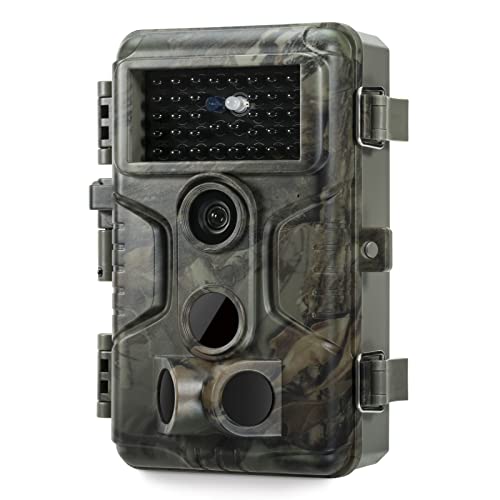



Blazevideo 4K 64MP Trail Camera
Good for trails where you want a 0.1-second trigger, 4K video and a 100-ft no-glow flash, per the listing.
Skip it if you want a field-of-view figure stated; this listing doesn't give one.
Trail Cameras & Optics · Best-of list
The best trail camera for a deer trail is one that fires fast enough to catch the whole deer, with a flash the deer won't notice. This list keeps only cameras whose maker or Amazon listing states photo resolution, trigger speed and flash type, and puts the fastest stated trigger first. Megapixels come last in my order, for reasons below. (Uncle Walt still calls every trail camera "the gadget." He also checks the gadget's pictures before breakfast.)
How this list is builtTrail cameras whose maker or Amazon listing states photo resolution, trigger speed and flash type, fastest trigger first, mixing cellular and non-cellular models.
We earn a commission if you buy through our links, at no cost to you. Disclosure
| Model | Connectivity | Photo resolution | Video | Trigger speed | Night/flash range | Amazon |
|---|---|---|---|---|---|---|
Blazevideo 4K 64MP Trail CameraTrail camera More specs
| — | 64 MPlisting | 4klisting | 0.1 slisting | 100 ftlisting | Check price |
Blazevideo A106 Trail CameraTrail camera More specs
| — | 64 MPlisting | 4klisting | 0.1 slisting | 100 ftlisting | Check price |
GardePro A3STrail camera More specs
| None sd cardlisting | 64 MPlisting | 1296plisting | 0.1 slisting | 100 ftlisting | Check price |
GardePro E5Trail camera More specs
| None sd cardlisting | 48 MPlisting | 1296plisting | 0.1 slisting | 100 ftlisting | Check price |
Meidase P70 64MPTrail camera More specs
| None sd cardlisting | 64 MPlisting | 1296plisting | 0.1 slisting | 100 ftlisting | Check price |
Meidase P200 WiFi 64MPTrail camera More specs
| Wifi bluetoothlisting | 64 MPlisting | 1296plisting | 0.1 slisting | 100 ftlisting | Check price |
Sehmua Dual Lens 180 2K CellularTrail camera More specs
| Cellularlisting | 24 MPlisting | 1440p 2klisting | 0.1 slisting | 82 ftlisting | Check price |
Sehmua Dual Lens 180 2K CellularTrail camera More specs
| Cellularlisting | 24 MPlisting | 1440p 2klisting | 0.1 slisting | 82 ftlisting | Check price |
Voopeak Dual Lens WiFi 60MP 4K SolarTrail camera More specs
| Wifi bluetoothlisting | 60 MPlisting | 4klisting | 0.1 slisting | — | Check price |
Bushnell Core DS-4K No GlowTrail camera More specs
| — | 32 MPlisting | 4klisting | 0.15 slisting | 120 ftlisting | Check price |
Good for trails where you want a 0.1-second trigger, 4K video and a 100-ft no-glow flash, per the listing.
Skip it if you want a field-of-view figure stated; this listing doesn't give one.
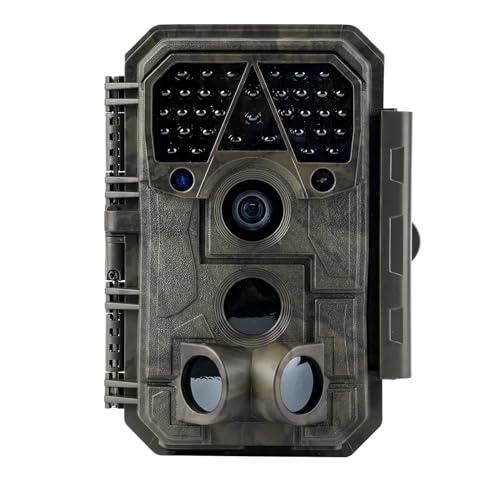
Good for a trail setup where you want the listing's 0.1-second trigger, 4K video, 100-ft no-glow flash and a stated 70° field of view.
Skip it if you need a wider view than 70°.
Good for an SD-card camera with a listed 0.1-second trigger, 100-ft no-glow flash and 1296p video.
Skip it if you want 4K video or photos sent to your phone.
Good for an SD-card camera with the listing's 0.1-second trigger and 100-ft no-glow flash, at the lowest price tier.
Skip it if you want 4K video or a cellular camera.
Good for field edges and wide spots where the listing's 120-ft no-glow flash, the longest here, helps; 4K video and a 0.15-second trigger.
Skip it if you want the lowest price tier.
Good for an SD-card camera with the listing's 0.1-second trigger, 100-ft no-glow flash, 1296p video and a jack for an external solar panel.
Skip it if you want 4K video or photos sent to your phone.
Good for pulling photos to your phone at the tree over WiFi or Bluetooth, with a listed 0.1-second trigger, 100-ft no-glow flash and IP66.
Skip it if you want cellular photos from home or 4K video.
Good for a cellular camera with two lenses and a listed 180° view, 0.1-second trigger, 82-ft no-glow flash and IP66.
Skip it if you want 4K video, or no data plan.
Good for the same listed specs as the other Sehmua Dual Lens 180 listing: cellular, 180° view, 0.1-second trigger, 2K video, 82-ft no-glow flash.
Skip it if you want an SD-card camera with no data plan.
Good for a WiFi camera with built-in solar, a 5200mAh battery with AA backup, a 0.1-second trigger and 4K video, per the listing.
Skip it if you want a no-glow flash; this one lists low-glow.
Ten cameras qualify this week. Each label says what a camera is on this list by its stated specs. None of them says a camera takes better pictures, because nobody at Hemlock Run has hung these cameras, and a spec sheet has never once photographed a deer.
Nine of the ten state a 0.1-second trigger, and nine state a no-glow flash. So the differences are in flash range, video, field of view and what the listing tells you about connectivity: SD card, WiFi or cellular.
The Blazevideo 4K 64MP trail camera states a 0.1-second trigger, the fastest figure on this list, shared by nine of the ten. The listing gives 64 megapixel photos, 4K video, a 100-ft flash range and a no-glow flash.
The listing doesn't give a field of view or a connection type. That's not a flaw, just a blank in the table.
The Blazevideo A106 shares the 0.1-second trigger, 64 megapixel, 4K video and 100-ft no-glow figures from its listing. It also states a field of view of 70°, one of three cameras here that give the number.
Field of view is how wide the picture is. A narrow view on a trail means you aim along the trail, not across it. When a listing gives you the number, you can plan the angle before you're standing at the tree in the dark.
The GardePro A3S is one of three cameras here whose listing states SD card only, non-cellular. It lists a 0.1-second trigger, 64 megapixel photos, 1296p video, 100-ft flash range and no-glow flash.
1296p is a video resolution between 1080p and 4K. If you mostly shoot photos and pull the card on your own schedule, this is the setup the listing describes.
The GardePro E5 also states SD card only. It lists a 0.1-second trigger, 48 megapixel photos, 1296p video, 100-ft flash range and a no-glow flash. It states a lower megapixel figure than the A3S, and as the megapixel section below explains, that number tells you more about file size than about sharpness.
The Meidase P70 is the third SD-card-only listing. It states a 0.1-second trigger, 64 megapixel photos, 1296p video, a 100-ft flash range and a no-glow flash. Its listing also says it works with an external solar panel through a jack, which can stretch the time between battery changes.
The Meidase P200 lists WiFi and Bluetooth, so you can pull pictures to your phone when you're standing near the camera, without pulling the card. It states a 0.1-second trigger, 64 megapixel photos, 1296p video, a 100-ft flash range, a no-glow flash and an IP66 rating. WiFi is not cellular: you still walk in, just without opening the case.
Two separate Amazon listings on this list carry the Sehmua Dual Lens 180 2K Cellular, and their stated specs match line for line. Both state a cellular connection, two lenses with a 180° field of view, the widest here, a 0.1-second trigger, 24 megapixel photos, 1440p (2K) video, an 82-ft no-glow flash and IP66.
They're the only cellular cameras on this list. The wide view suits a spot where deer can come from more than one direction, like a field corner. A cellular camera needs a data plan, which the cellular trail camera page covers.
The Voopeak listing states WiFi and Bluetooth, a built-in solar panel, and power from a 5200mAh internal battery or 4 AA batteries as backup. It lists a 0.1-second trigger, 60 megapixel photos and 4K video.
It's the only camera here with a low-glow flash rather than no-glow, and its listing gives no flash range. The flash section below explains what low-glow trades.
The Bushnell Core DS-4K's listing states a 120-ft flash range, the longest here. It also lists a 0.15-second trigger, 32 megapixel photos, 4K video and a no-glow flash. It's the only camera on this list outside the lowest price tier.
Its trigger is the slowest stated figure here, and 0.15 second is still well inside the 0.5-second line Outdoor Life calls acceptable. Being last on a fastest-first list means exactly that, and nothing more. On a narrow trail, a deer at 20 feet doesn't care whether your flash could have reached 120.
The rule box sorts by trigger speed. That's the right first sort for trails, and here's how the rest of the specs fit in.
Trigger speed is the delay between the sensor noticing an animal and the shutter firing. Browning's beginner guide explains that the camera uses a passive infrared (PIR) sensor, which notices changes in heat and motion in front of it. Then the camera has to wake up and take the picture.
Outdoor Life calls 0.5 second or less acceptable. Buckmasters says under a second is ideal and warns that a slow trigger leaves you with a deer's back end, or an empty frame. Every camera on this list states 0.1 or 0.15 second, so all ten clear both lines on paper.
My one opinion on this page: trigger speed matters most on trails, and much less over a food source. Buckmasters makes the reason plain. On a feeder or a plot, deer stand still and a slower camera still gets the shot. On a trail they're walking through, so speed decides the picture. If your camera is going on a scrape line or a funnel, sort by trigger. If it's watching a plot, you can sort by something else.
(Uncle Walt's scouting camera is a folding chair on the porch. Its trigger speed depends on the coffee.)
Recovery time is how long a camera needs before it can take the next picture. Outdoor Life says good cameras recover in 5 seconds or less, and some slow ones take 10 to 15 seconds. Buckmasters' example is a buck trailing a few yards behind a doe, gone before the camera is ready again.
None of the ten listings here states recovery time, so it isn't in the rule. If it matters to you, check the maker's manual before you buy.
Nine cameras on this list state a no-glow flash, also called no-glow IR; the Voopeak states low-glow. Browning's guide to night images explains the options:
Less light means a slower shutter, and a slower shutter means more blur on a walking deer. Browning ranks night image quality from white flash at the top to no-glow at the bottom. Both IR types are usable; no-glow is the stealth pick, and low-glow trades a faint red glow for more light.
Flash range on this list runs 82, 100 and 120 ft, per the listings, and the Voopeak listing gives none. A longer reach helps on a field edge, where deer stand out in the open. On a trail, the deer passes much closer, so the extra reach mostly lights up empty woods behind it.
Field & Stream suggests standard SD-card cameras for field edges and bait sites you visit regularly. That's where the longer flash figures earn their keep.
This one surprises people. Outdoor Life says most trail cameras have a native sensor resolution of about 3 to 5 megapixels. A higher setting makes a bigger file, not a clearer picture, and it fills the card faster and slows the camera.
Spartan Camera explains how the bigger numbers happen. Interpolation is software that estimates extra pixels and adds them after the shot. The picture gets bigger. It doesn't get more detailed. Zoom in and interpolated photos look softer.
So the 64, 60, 48, 32 and 24 megapixel figures on this list are best read as the size of the files the camera can make. (I explained interpolation to Uncle Walt as a photocopy of a photocopy, blown up. He said that describes most of his photos from 1987.)
Four cameras here list 4K video: both Blazevideo models, the Voopeak and the Bushnell Core DS-4K. Both Sehmua listings give 1440p (2K). Both GardePro and both Meidase cameras list 1296p. Higher video resolution means bigger files, so plan on a larger card if you shoot a lot of video.
Only the Voopeak listing states its power: a 5200mAh internal battery with 4 AA as backup, plus built-in solar. For the rest, check the maker's manual. Outdoor Life's notes are worth knowing either way. Standard alkaline batteries can fail below 32°F. Lithium batteries last longer and work in the cold. Rechargeable NiMH batteries hold steady voltage but suffer above 80°F. Pennsylvania in late November is not 80°F. Plan accordingly.
The site never shows prices, but every product sits in a hidden price tier worked out from Amazon's price data when the site is built. On this list:
Read the tier next to the specs. The nine lowest-tier cameras all state a 0.1-second trigger. The Core DS-4K states the longest flash range here and the one 0.15-second trigger. Tiers can move when prices do, and the list is rebuilt every week.
Placement doesn't change which camera you buy, but it decides what any of them sees. Purdue Extension's deer survey guide puts the camera at about 2.5 to 3 feet off the ground, roughly waist to chest height. It also aims the camera north or south so the rising and setting sun doesn't wash out the frame. Field & Stream gives the same north-or-south advice.
On travel funnels, Field & Stream says not to set the camera straight across the trail. Angle it quartering or nearly along the deer's line of travel, which gives a fast trigger more time to work.
Some states restrict trail cameras during hunting season, or ban cellular ones. Game & Fish reported rules like that in several Western states. Check your state wildlife agency before you hang one.
If you want pictures on your phone without walking in, the two Sehmua listings are the only cellular cameras here, so the cellular trail camera list gives you far more to compare. The three SD-card listings and the two WiFi cameras here all need a walk to the tree.
Skip it too if you hunt one small property and walk past your camera spot every week anyway. A camera you already own and move to a better tree may do more than a new one. The background on how trail cameras work is on the trail camera page, and cameras that connect to your phone up close are on the WiFi trail camera page.
The rule: trail cameras whose maker or Amazon listing states photo resolution, trigger speed and flash type, fastest stated trigger first. The rule can mix cellular and non-cellular cameras. This week the list holds SD-card, WiFi and cellular cameras, plus three that don't state connectivity. Ties on trigger speed keep the order the data gives them.
Values come from the camera maker's own page first. Where the maker is silent, the value comes from the Amazon listing, and the table marks it that way. For every camera on this week's list, the deciding numbers come from the listing. Blank means neither source states it.
There are no ratings in the rule. The list is re-checked every week, so cameras can join, drop out or change places as data and availability change.
Fast trigger, quiet flash, and a tree at waist height. The megapixels can sort themselves out.
Outdoor Life calls 0.5 second or less acceptable, and Buckmasters says under a second is ideal. Faster matters most on trails, where deer keep walking; Buckmasters notes cameras on food sources can live with slower triggers because deer stand still there. Every camera on this list states 0.1 or 0.15 second.
Not by themselves. Outdoor Life says most trail cameras have a native sensor resolution of about 3 to 5 megapixels, and higher settings make bigger files, not clearer ones. Spartan Camera explains that interpolation adds estimated pixels rather than real detail. Treat a big megapixel figure as file size, not sharpness.
No-glow LEDs are not visible, per Browning's guide to night images, which puts most of them near 950 nm. The trade is less light: night photos come out grainier and blur more on moving deer than with low-glow flash. Nine of the ten cameras on this list state a no-glow flash; the Voopeak states low-glow.
The site doesn't show prices, but it does sort products into hidden price tiers. Nine cameras on this list sit in the lowest tier, and the Bushnell Core DS-4K sits in the middle tier. Compare tiers against the stated trigger speed, flash range and video spec in the table.
Purdue Extension's deer survey guide puts the camera at about 2.5 to 3 feet, roughly waist to chest height, and aims it north or south so the sun doesn't wash out the picture. Field & Stream adds that on travel funnels you should angle the camera along the trail rather than straight across it.