Brand · Knives & Tools
Mtech USA Knives
Mtech USA makes four kinds of tool that show up on this site: fixed-blade knives that ride in a sheath, folding knives that ride in a pocket, small axes, and a machete. The lineup is wide and leans tactical in its names, so the trick is to read past the name to the spec sheet. Here's the thing: the deciding specs are blade length, blade shape, edge type and, on folders, how it opens and locks. (My grandson picked one out by the color of the handle. We had a talk.)
We earn a commission if you buy through our links, at no cost to you. Disclosure
Mtech USA on Amazon US
71 models- Fixed blade knife
Mtech USA MT-113 Rescue Team
- Blade length
- 5.25 in
- Overall length
- 10.5 in
- Blade steel
- 440
- Fixed blade knife
Mtech USA MT-225
- Overall length
- 11.5 in
- Blade steel
- 3Cr13
- Steel type
- Stainless
- Fixed blade knife
Mtech USA MTECH USA M-tech USA Leather Ribbed Stainless Steel Survival Knife , Brown , Small
Check price - Fixed blade knife
Mtech USA 15 in Fixed Blade Pakkawood
- Blade length
- 8.5 in
- Overall length
- 15 in
- Steel type
- Stainless
- Fixed blade knife
Mtech USA MT-096
- Overall length
- 14 in
- Blade steel
- 3Cr13
- Steel type
- Stainless
- Fixed blade knife
Mtech USA MT-097
- Overall length
- 9 in
- Blade steel
- 3Cr13
- Steel type
- Stainless
- Fixed blade knife
Mtech USA MT-537
- Overall length
- 17 in
- Blade steel
- 3Cr13
- Steel type
- Stainless
- Fixed blade knife
Mtech USA Xtreme Boot Knife
- Overall length
- 9 in
- Blade steel
- 440
- Steel type
- Stainless
- Fixed blade knife
Mtech USA Green Cord Wrapped Fixed Blade
- Blade steel
- 3Cr13
- Steel type
- Stainless
- Fixed blade knife
Mtech USA MT-575
- Overall length
- 10.5 in
- Blade steel
- 3Cr13
- Steel type
- Stainless
- Fixed blade knife
Mtech USA Xtreme MX-8
- Blade thickness
- 0.2 in
- Blade length
- 3.75 in
- Overall length
- 7 in
- Fixed blade knife
Mtech USA Brown Wood Handle Fixed Blade
- Blade steel
- 3Cr13
- Steel type
- Stainless
- Fixed blade knife
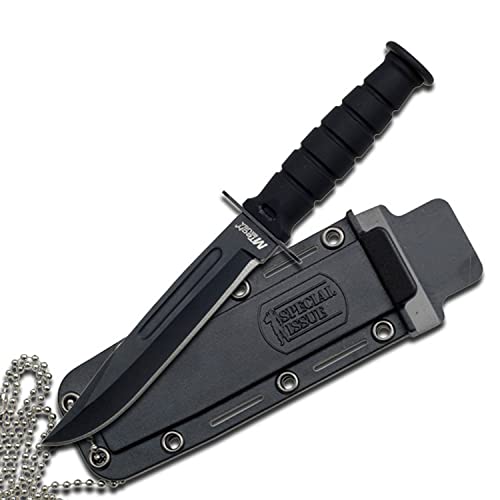
Mtech USA Clip Point Molded Sheath Ball Chain
- Blade length
- 3.25 in
- Overall length
- 5.75 in
- Blade steel
- 3Cr13
- Fixed blade knife
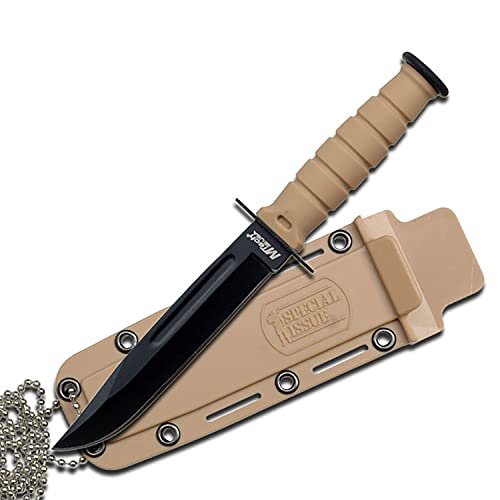
Mtech USA Clip Point Molded Sheath Ball Chain Tan
- Blade length
- 3.25 in
- Overall length
- 5.75 in
- Blade steel
- 3Cr13
- Fixed blade knife
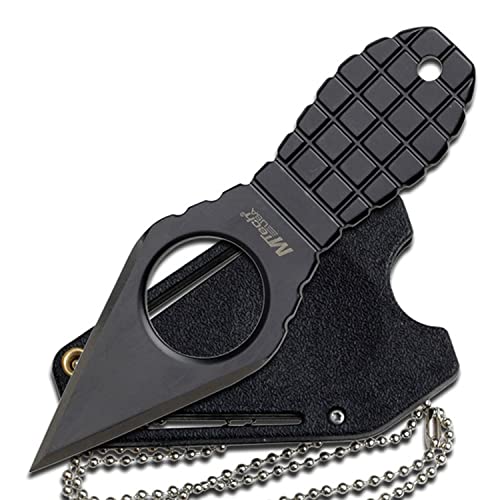
Mtech USA Neck Knife
- Steel type
- Stainless
- Fixed blade knife
Mtech USA Xtreme Tanto Sawback
- Blade length
- 7 in
- Overall length
- 12 in
- Blade steel
- 440
- Fixed blade knife
Mtech USA Neck Knife Ball Chain
- Overall length
- 6.5 in
- Steel type
- Stainless
- Fixed blade knife
Mtech USA MT-20-12 Bowie
- Blade thickness
- 0.118 in
- Blade length
- 5.5 in
- Overall length
- 10 in
- Fixed blade knife
Mtech USA Fixed Blade Karambit
- Blade length
- 3.5 in
- Overall length
- 7.5 in
- Steel type
- Stainless
- Fixed blade knife
Mtech USA Marines Combat Style 12 in
- Overall length
- 12 in
- Fixed blade knife
Mtech USA MTECH USA Mt-676Tb Fixed Blade Knife 12-Inch Overall , Black
Check price - Fixed blade knife
Mtech USA First Recon Tanto
- Overall length
- 12 in
- Steel type
- Stainless
- Fixed blade knife
Mtech USA Black Nylon Fiber Fixed Blade
- Blade steel
- 3Cr13
- Steel type
- Stainless
- Fixed blade knife
Mtech USA Neck Knife Stonewashed
- Blade thickness
- 0.11 in
- Blade length
- 2 in
- Overall length
- 4.75 in
- Fixed blade knife
Mtech USA 14 in Carved G10 Fixed Blade
- Blade thickness
- 0.197 in
- Blade length
- 8 in
- Overall length
- 14 in
- Fixed blade knife
Mtech USA Xtreme Blood Groove
- Blade steel
- 3Cr13
- Steel type
- Stainless
- Fixed blade knife
Mtech USA MT-20-57BK
- Blade thickness
- 0.138 in
- Blade length
- 7 in
- Overall length
- 12.5 in
- Fixed blade knife
Mtech USA Green Rubber Coated Fixed Blade
- Blade steel
- 3Cr13
- Steel type
- Stainless
- Fixed blade knife
Mtech USA Grey TiNite Fixed Blade
- Blade thickness
- 0.157 in
- Blade length
- 5 in
- Overall length
- 10 in
- Fixed blade knife
Mtech USA Xtreme MX-8054GD
- Blade thickness
- 0.217 in
- Blade length
- 5.5 in
- Overall length
- 11 in
- Fixed blade knife
Mtech USA TiNite Fixed Blade Grey
- Blade steel
- 3Cr13
- Steel type
- Stainless
- Fixed blade knife
Mtech USA MT-2 Gold TiNite
- Blade steel
- 3Cr13
- Steel type
- Stainless
- Fixed blade knife
Mtech USA Black Wood Handle Fixed Blade
- Blade steel
- 3Cr13
- Steel type
- Stainless
- Fixed blade knife
Mtech USA MTECH USA - Countertop Knife Sharpener - Ceramic Rods, Injection Molded ABS Handle, Stands on Countertop, Keep Your Knives Sharp! MT-SPN001BK - EDC, Self Defense, Tactical
Check price - Fixed blade knife
Mtech USA MT-20-93 Neck Knife
- Blade steel
- 3Cr13
- Steel type
- Stainless
- Fixed blade knife
Mtech USA USMC Marine Force Recon
- Blade length
- 10.4 in
- Overall length
- 15.9 in
- Blade steel
- 3Cr13MoV
- Folding knife
Mtech USA Tactical Rescue Knife
- Blade length
- 3.25 in
- Blade steel
- 440
- Steel type
- Stainless
- Folding knife
Mtech USA Xtreme MX-8054
- Blade length
- 5.5 in
- Blade steel
- 440 stainless steel
- Steel type
- Stainless
- Folding knife
Mtech USA MT-472RB
- Blade length
- 2.75 in
- Steel type
- Stainless
- Folding knife
Mtech USA Xtreme MX-A805
- Blade steel
- 3Cr13
- Steel type
- Stainless
- Blade shape
- Tanto
- Folding knife
Mtech USA MT-A840P
- Blade length
- 3.25 in
- Steel type
- Stainless
- Folding knife
Mtech USA MT-A845DM
- Blade length
- 3.75 in
- Steel type
- Stainless
- Folding knife
Mtech USA Titanium-Coated Half-Serrated Folder
- Blade length
- 3.75 in
- Steel type
- Stainless
- Edge
- Partially serrated
- Folding knife
Mtech USA MT-A882BL
- Blade length
- 2.75 in
- Steel type
- Stainless
- Edge
- Plain
- Folding knife
Mtech USA USMC Spring Assisted Rescue
- Blade steel
- 3Cr13
- Steel type
- Stainless
- Folding knife
Mtech USA MT-A907RD
- Edge
- Plain
- Folding knife
Mtech USA Xtreme MX-A849AS
- Blade steel
- 3Cr13
- Steel type
- Stainless
- Blade shape
- Drop point
- Folding knife
Mtech USA MT-A882SCH
- Steel type
- Stainless
- Folding knife
Mtech USA M-A1052BK
- Blade steel
- 3Cr13
- Steel type
- Stainless
- Edge
- Partially serrated
- Folding knife
Mtech USA Marine Tactical EGA
- Blade length
- 4 in
- Steel type
- Stainless
- Blade shape
- Tanto
- Folding knife
Mtech USA Two-Tone Tanto Folder
- Blade length
- 3.25 in
- Blade steel
- 3Cr13
- Steel type
- Stainless
- Folding knife
Mtech USA MT-1160SD
- Blade steel
- 3Cr13
- Steel type
- Stainless
- Folding knife
Mtech USA MT-1160LD
- Blade steel
- 3Cr13
- Steel type
- Stainless
- Folding knife
Mtech USA MT-A1114RD
- Blade steel
- 3Cr13
- Steel type
- Stainless
- Blade shape
- Tanto
- Folding knife
Mtech USA MT-A1197BR
- Blade steel
- 3Cr13
- Steel type
- Stainless
- Folding knife
Mtech USA MT-A1201RD
- Blade steel
- 3Cr13
- Steel type
- Stainless
- Folding knife
Mtech USA 8.1in Frame Lock Folder
- Blade length
- 3.6 in
- Blade steel
- 3Cr13MoV
- Folding knife
Mtech USA 8in Rescue Style Folder
- Blade length
- 3.5 in
- Steel type
- Stainless
- Edge
- Partially serrated
- Folding knife
Mtech USA MT-A2044PL
- Blade length
- 3.5 in
- Blade steel
- 3Cr13MoV
- Folding knife
Mtech USA 250th Anniversary Flag
- Blade length
- 3.75 in
- Steel type
- Stainless
- Axe or hatchet
Mtech USA Camping Axe 11-Inch
- Overall length
- 11 in
- Sheath included
- Yes
- Style
- Camp axe
- Axe or hatchet
Mtech USA MT-628 Throwing Axe
- Overall length
- 10.75 in
- Sheath included
- Yes
- Sold for
- Throwing
- Axe or hatchet
Mtech USA MT-600CA Axe
- Overall length
- 9 in
- Sheath included
- Yes
- Sold for
- Hunting, Camping, Survival, Tactical
- Axe or hatchet
Mtech USA MT-629 Throwing Axe
- Overall length
- 8.75 in
- Sheath included
- Yes
- Sold for
- Throwing
- Axe or hatchet
Mtech USA MT-AXE8B Axe
- Overall length
- 15 in
- Sheath included
- Yes
- Sold for
- Tactical, Hunting, Survival, Camping
- Axe or hatchet
Mtech USA MT-AXE11B Axe
- Overall length
- 9.75 in
- Sheath included
- Yes
- Axe or hatchet
Mtech USA MT-AXE13SW Camping Axe
- Overall length
- 14.5 in
- Sheath included
- Yes
- Style
- Camp axe
- Axe or hatchet
Mtech USA Tomahawk Blade Survival Camp Axe
- Overall length
- 14.5 in
- Sheath included
- Yes
- Style
- Camp axe
- Axe or hatchet
Mtech USA USMC Tactical Tomahawk
- Overall length
- 11 in
- Sheath included
- Yes
- Style
- Tomahawk
- Axe or hatchet
Mtech USA Dragon Axe 10-Inch
- Overall length
- 10 in
- Sheath included
- Yes
- Sold for
- Camping
- Machete
Mtech USA MT-20-08L Machete Knife 25-Inch Overall
- Handle
- pakkawood
- Sheath included
- Yes




What Mtech USA makes for hunters and campers
On this site, Mtech USA covers four product types: fixed-blade knives, folding knives, axes and machetes. The grid above filters by those four. Inside them, the lineup sorts into a handful of groups:
- Neck knives and small fixed blades: short blades, ball chains, molded or Kydex-style sheaths
- Mid-size fixed blades: tantos, drop points and clip points around the 5-inch mark
- Large fixed blades and bowies: long blades, nylon or leather sheaths
- Spring-assisted folders: liner locks, pocket clips, often tanto blades
- Manual folders: thumb studs, frame or liner locks, a few with rescue extras
- Small axes: a camping axe, compact tactical-style axes and throwing axes, all with sheaths
- A machete with a Pakkawood handle and a sheath
Listings come and go every week, and Mtech sells a lot of look-alikes in different colors. So I'll write about the groups and what separates them, not about how many of each are in the grid today.
Most specs in the grid come from Amazon listings, and the grid marks those values. Where a listing leaves a field out, the grid leaves it out too. Rule of thumb: a blank is a question for the listing, not a reason to assume the best.
Lineup notes: Mtech USA fixed blades
Neck knives and small fixed blades
The smallest group hangs around your neck. The listings describe ball chains, nylon fiber or Kydex-style sheaths, and short blades:
- Neck Knife Stonewashed: a 2-inch drop point, 4.75 in overall, full tang, tan G10 handle, Kydex-style sheath with a ball chain
- Clip Point Molded Sheath Ball Chain: a 3.25-inch clip point in 3Cr13, 5.75 in overall, in black or tan
- Neck Knife and Neck Knife Ball Chain: black blades with nylon sheaths, one with a pocket clip on the sheath
- Camo cord-wrapped neck knife: 3Cr13, full tang, Kydex-style sheath
A neck knife is a small tool for small jobs: cutting cord, opening a bag of feed, trimming a shooting lane twig. A 2-inch blade isn't a field-dressing knife for most hunters, but a 3-inch clip point gets closer. The boot knife page covers other small carry fixed blades.
The Fixed Blade Karambit sits here by size: a curved 3.5-inch blade, 7.5 in overall, G10 handle and a nylon fiber sheath, per its listing. A curved blade like that is built for different work than the hunting shapes further down this page.
Mid-size fixed blades
This is the group most likely to end up on a hunting belt. The listings describe blades in the 5-inch range:
- MT-113 Rescue Team: a 5.25-inch tanto, 10.5 in overall, 440 stainless, plain edge, full tang, hard rubber handle, nylon sheath
- Xtreme MX-8054GD: a 5.5-inch tanto with a gold titanium coating, 11 in overall, 0.217 in thick, G10 handle
- Grey TiNite Fixed Blade: a 5-inch plain-edge blade, 10 in overall, 0.157 in thick, full tang, nylon fiber handle
- MT-20-12 Bowie: a 5.5-inch bowie-style blade in 440, 10 in overall, 0.118 in thick
- Xtreme MX-8: a 3.75-inch hollow-ground blade, 7 in overall, 0.2 in thick, Micarta handle, Kydex-style sheath
Thickness is worth a look here. The range runs from about 0.118 in on the MT-20-12 to over 0.2 in on the MX-8 and MX-8054GD. A thicker blade takes more abuse; a thinner one slices with less effort. Neither is wrong. They're built for different jobs.
The listings also describe several mid-size models by finish and handle rather than model number: black or gold TiNite-coated blades with ABS handles, wood-handled blades with stainless bolsters, green rubber-coated and black nylon fiber handles, a green cord-wrapped handle. Most of those name 3Cr13 steel and a nylon sheath.
Large fixed blades and bowies
The long end of the grid is camp-knife and survival-knife territory:
- USMC Marine Force Recon: a 10.4-inch clip point in 3Cr13MoV, 15.9 in overall, full tang
- 15 in Fixed Blade Pakkawood: an 8.5-inch blade, Pakkawood handle with a bolster, nylon sheath
- 14 in Carved G10 Fixed Blade: an 8-inch clip point, 0.197 in thick, full tang, nylon sheath
- Xtreme Tanto Sawback: a 7-inch tanto with a sawback spine, 12 in overall, 440, full tang
- MT-20-57BK: a 7-inch blade, 12.5 in overall, 0.138 in thick, rubberized handle
- MT-537, MT-096, MT-225: 3Cr13 fixed blades at 17, 14 and 11.5 in overall
A few carry U.S. Marines markings or styling, per their listings, like the leather-handled Marines Combat Style knife with a leather sheath. Others are plain black.
A blade over 7 inches is more chopper than skinner. Long knives are handy for splitting kindling and clearing brush around a blind. They are clumsy inside a deer. The bowie knife page and the survival knife page cover those shapes across brands.
Lineup notes: Mtech USA folding knives
Spring-assisted folders
The biggest part of the folding grid is spring-assisted. Boker's guide to opening mechanisms explains it: you move the blade by hand to a set angle, then a spring finishes the opening. An automatic knife is different; a button or slider fires the spring by itself.
The assisted folders in the grid, per their listings:
- Xtreme MX-8054: a 5.5-inch tanto with a sawback, G10 handle, liner lock, 11 in overall
- MT-A845DM: a 3.75-inch blade, aluminum handle in desert camo, liner lock, pocket clip, 5 in closed
- MT-A882BL: a 2.75-inch plain edge, nylon handle, liner lock, bottle opener, 3 in closed
- Xtreme MX-A805 and M-A1052BK: 3Cr13 blades, 5 in closed, tanto on the MX-A805, partly serrated on the M-A1052BK
- MT-A907RD, MT-A1114RD, MT-A1197BR, MT-A1201RD: aluminum handles in bright colors, liner locks on most
- Marine Tactical folder: a 4-inch partly serrated tanto, G10 handle, 5 in closed
That's a lot of red and blue handles. My grandson approves. I approve of the part where you can find a red knife in brown leaves.
Manual folders and rescue-style knives
The rest of the folding grid opens by hand:
- Tactical Rescue Knife: a 3.25-inch blade in 440, aluminum handle, liner lock, thumb stud, pocket clip
- Frame-lock folder in black aluminum: a 3.6-inch 3Cr13MoV blade, 8.1 in overall
- MT-A2044PL: a 3.5-inch two-tone 3Cr13MoV blade, 8.3 in overall, embossed aluminum handle
- MT-1160 SD and LD: manual folders with aluminum handles and pocket clips
- MT-472RB and MT-A840P: steel handles, pocket clips, blades of 2.75 and 3.25 in
Several listings mention a glass breaker or a seatbelt-style rescue design. Those are extras for the truck console, not hunting features. The everyday carry knife page and the pocket knife page compare locks and sizes across brands.
Mtech USA axes
All the Mtech USA axes in the grid are short, one-hand tools, and every listing includes a sheath. Per the listings, they fall into three groups:
- Camping Axe 11-Inch: a camp-axe style head in 440 stainless steel; its listing names camping and tactical use
- MT-600CA, MT-AXE8B and MT-AXE11B: compact axes with 3Cr13 or 440 stainless heads; the MT-AXE8B is the longest of them and the MT-AXE11B lists a nylon or polymer handle; the first two list hunting, camping and survival among their uses
- MT-628 and MT-629 Throwing Axes: stainless heads, sold for throwing
None of the listings gives a head weight, and I won't guess one. Size them by length and by the use the listing names. For kindling, look at the camping axe and the longer compact models; the camping hatchet page, the tomahawk axe page and the hatchet vs axe guide compare sizes across brands.
The throwing axes are a backyard-target tool, not a camp tool. Throw only at a proper target, with nobody downrange and nobody walking up to pull axes while someone else is still throwing. Sheath every axe when it leaves your hand.
The Mtech USA machete
The machete is the odd one in the lineup: the MT-20-08L, 25 in overall, with a Pakkawood handle and a sheath, per its listing. A machete is a brush tool. It clears a lane to a stand, cuts back vines around a blind and trims what the stand straps snag on.
Machete work comes with its own rules. A job safety analysis from CIRSA, a Colorado public-entity risk pool, sets them out plainly:
- Keep 10 feet of clear space around anyone swinging a machete
- Chop away from your body, toward your dominant side
- Keep hands and feet out of the blade's swing radius
- Don't swing while walking
- Use a saw for branches over 1 inch thick
- Wear safety glasses, long pants, leather gloves and boots
More on blade lengths and shapes is on the machete page.
How to choose within the Mtech USA lineup
Fixed or folding first
A fixed blade has nothing to fold, so there's no lock or pivot to clean after field dressing. A folder rides in a pocket. An axe or the machete is for wood and brush, not for the deer. Start with the job, then the type. The fixed blade knife page lays out that trade across brands.
Then blade shape
The shape field in the grid does most of the sorting. Benchmade's blade-style guide describes the shapes:
- Tanto: angular, reinforced piercing tip; built for hard use and piercing
- Drop point: broad belly, controllable tip; the guide lists hunting and field dressing among its uses
- Clip point: a cut-out near the tip for a sharp point and detail work
A lot of Mtech's lineup is tanto. For a deer, I'd look at the drop points and clip points first. The hunting knife page and tactical knife page explain why those two groups look different.
Then the edge: plain or partly serrated
Here's my one opinion on this page: for a deer camp knife, take a plain edge over a partly serrated one. Blade Magazine says a plain edge suits most cutting tasks and is the easiest to sharpen, while serrations need a special sharpener. A partly serrated edge earns its keep on rope and webbing. Field dressing isn't rope.
Then steel and finish
The listings name two main steels, 440 and 3Cr13 (3Cr13MoV on newer models), and both are sold as stainless. Spyderco's steel primer says that by American cutlery standards a steel generally needs about 13 percent chromium to be called stainless. It also says steels that hold an edge longest are usually the hardest to sharpen. Stainless still isn't rust-proof; more on that below.
Coatings and finishes vary: black coatings, TiNite, titanium coating, stonewash and satin, per the listings. A coating changes the look and adds a layer over the steel. Treat a scratched coating like bare steel and dry it.
Then handle and sheath
Handles in the grid run from G10 and Micarta to aluminum, steel, rubber, nylon fiber, wood, Pakkawood and cord wrap. Benchmade's handle guide says G10 doesn't absorb water and can be textured for grip when wet or cold, and that aluminum can feel cold in low temperatures. That last part matters in November, when your fingers already know it.
Sheaths in the listings are mostly nylon, with leather on a few and Kydex-style molded sheaths on the small knives. Try the sheath on the belt you hunt in, over the coat you hunt in, before opening day.
Care and safety for the whole lineup
Clean, dry, oiled. That covers most of it. Benchmade's care guide recommends wiping the blade with warm, soapy water, not soaking a folder, drying it fully, then a drop of lubricant on the pivot and lock. For assisted folders it says to add a drop to the mechanism and cycle the blade a few times. It also warns that leather sheaths can hold moisture, so don't store a knife in one long-term.
AKTI adds a few habits worth keeping:
- A toothpick for dirt in the handle and around the pivot
- A light metal oil on a soft cotton cloth
- Dry after rain or salt water, since both can corrode even stainless steel
- A cool, dry place for storage, not a damp basement or garage
Cut away from your body. Keep your fingers out of a folder's closing arc. Benchmade notes that closing a liner or frame lock puts your hand near the blade path, so move the lock bar with your thumb and let the blade close under control.
Knife carry rules, including rules on spring-assisted folders and blade length, vary by state. Check your state's rules.
Put the knife back in its sheath and the sheath back on its hook.
Where Mtech USA shows up
Questions about Mtech USA
Are Mtech USA knives good?
What the listings state is checkable: most Mtech USA knives in the grid name 440 or 3Cr13 stainless steel, many fixed blades list full tangs and include a nylon, leather or Kydex-style sheath, and many folders list liner locks and spring-assisted opening. Whether one suits you depends on the job. Pick the type, blade shape and edge first, then compare the specs in the grid.
Are Mtech USA knives good for hunting?
Some fit the job better than others. For field dressing, look for a drop point or clip point with a plain edge and a blade you can control, like the small neck knives or the mid-size fixed blades. The long tanto and bowie models suit camp chores more than careful work around a deer. The hunting knife page explains the shapes across brands.
What steel do Mtech USA knives use?
The listings in the grid name two main steels: 440 stainless and 3Cr13 (also written 3Cr13MoV) stainless. Some listings only say stainless steel without a grade. Several blades also carry a coating or finish, such as black coating, TiNite, titanium coating or a stonewashed finish, per their listings.
Are Mtech USA spring-assisted knives legal to carry?
A spring-assisted folder opens partway by hand before a spring finishes the job, which is different from an automatic knife that opens with a button. Knife carry rules, including rules on assisted openers and blade length, vary by state and city. Check your state's rules before you carry one. Some knives may not ship to every address; Amazon shows that at checkout.
Where can I buy Mtech USA knives?
The product grid on this page links to Mtech USA listings on Amazon US, filtered by fixed blade, folding knife, axe and machete. Read the listing of the exact knife for blade length, steel and sheath before you order, because the lineup has many look-alike models in different colors.
Sources
- Benchmade: Knife blade styles guide — accessed 2026-10-28
- Benchmade: Understanding knife mechanisms, a complete guide — accessed 2026-10-28
- Benchmade: Knife handle materials guide — accessed 2026-10-28
- Benchmade: Knife care 101 — accessed 2026-10-28
- Boker USA: Opening mechanisms — accessed 2026-10-28
- Blade Magazine: Plain vs serrated knives — accessed 2026-10-28
- Spyderco: Understanding tool steels — accessed 2026-10-28
- American Knife & Tool Institute: Knife safety, sharpening and maintenance — accessed 2026-10-28
- CIRSA (Colorado Intergovernmental Risk Sharing Agency): Job safety analysis, machete usage — accessed 2026-10-28