Camp Gear · Gear type
Inflatable Tents
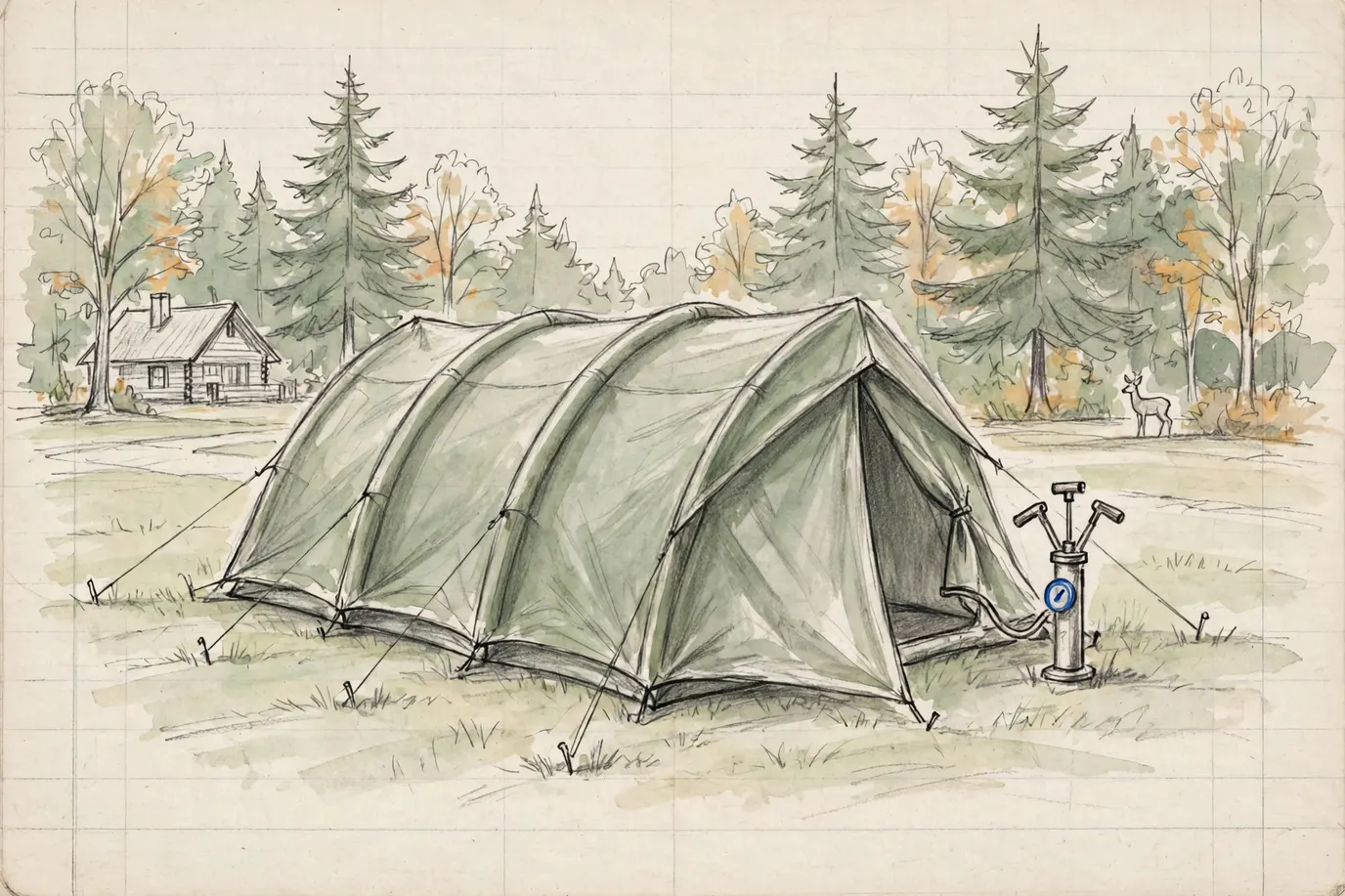
An inflatable tent stands on air beams, tubes you pump up, instead of poles. You stake the corners, connect a pump, and the tent rises as the beams fill. The main choice is how the beams inflate: one valve for the whole frame or one valve per beam. After that, it's about the pump, the pressure and how you handle a leak. Here's the thing: the pump is now part of the frame. Forget it and you brought a very nice tarp.
We earn a commission if you buy through our links, at no cost to you. Disclosure
| Model | Weight | Center height | Sleeps | Floor length | Amazon |
|---|---|---|---|---|---|
Geertop 4-6 Person Inflatable Tent With Stove JackTent More specs
| 33 lbmaker | 78.7 inmaker | 4 personsmaker | 9.8 ftmaker | Check price |
Timber Ridge Inflatable Tent 6 Person Hot Tent with Skylight & Stove JackTent More specs
| — | 78 inlisting | 6 personslisting | — | Check price |
Erommy Family Inflatable Tent 8-10 PersonTent More specs
| — | — | — | — | Check price |


What’s in this listTents held up by inflatable air beams instead of poles, as stated by the maker or the Amazon listing. “—” means neither the maker nor the Amazon listing states it.
What makes an inflatable tent different
Most tents stand on poles that bend into arches. An inflatable tent, also sold as an air tent, gets its arches from air beams: fabric-covered tubes that hold their shape when pumped up. The tent fabric, doors, floor and windows look like any other tent. The skeleton is what changed.
That changes three things. Setup becomes a pumping job, not a pole puzzle. The frame can bend under a gust and spring back instead of snapping. And you now carry a pump, a pressure gauge and a repair kit as part of the shelter.
The table on this page lists tents the maker says are held up by inflatable air beams instead of poles. It shows the specs the maker or the Amazon listing states: capacity, setup type, center height, rooms, rainfly, waterproof rating and weight (listing values are marked; the waterproof rating appears only when the maker states it). If neither states a value, the cell shows a dash. The shared tent basics (what "sleeps six" really means, seasons, floor area) are on the camping tent page.
How an air beam holds up a tent
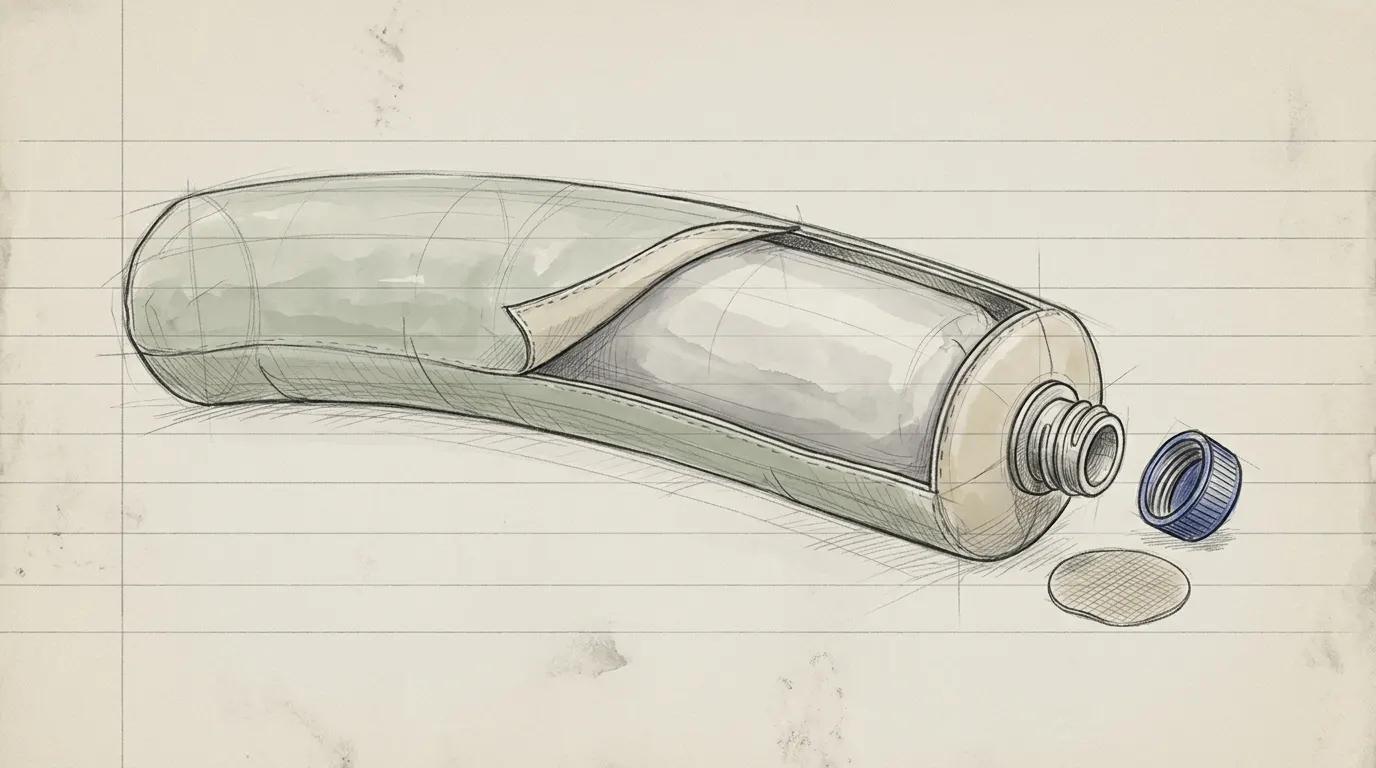
An air beam is built like a bicycle tire. An inner bladder holds the air. An outer jacket, tough fabric, protects the bladder and keeps it from stretching out of shape. One maker describes its frame exactly that way: a plastic bladder wrapped in a tear-resistant outer layer, reinforced where it touches the ground.
Pressure turns that soft tube into a stiff arch. Too little and the tent sags. Too much and you're stressing the bladder and the seams. That's why every manual gives a pressure range and why the pump has a gauge.
Jess's take: "An air beam is just a spring made of air. Heat it and it pushes harder. Chill it and it relaxes." She's right, and it matters at 6 a.m. in October.
What to look at when you pick an inflatable tent
Setup type: confirm it's really air
The setup field is the selection rule for this page. A tent lands here only when the maker says it stands on air beams instead of poles. Some tents mix the two, with air beams for the main arches and a pole or two elsewhere. The listing should say so. If it doesn't, read the manual before you buy.
One valve or one per beam
There are two common inflation layouts:
- Single-point inflation: connector hoses link the beams, so you pump the whole frame through one valve. One maker says a pump and one valve are all it takes to set up its tent.
- One valve per beam: you inflate each beam in order. One manual starts with the second beam from the front, works to the rear, and does the front beam last.
Single-point is quicker. Per-beam lets you top up one sagging beam without touching the rest.
Multi-chamber frames keep standing when one beam fails
Some single-point frames have clips on the connector hoses. Close them after inflation and each chamber is sealed off. One maker says that with its multi-chamber system closed, the frame stays stable even if a section fails. On a tent with linked beams and no shut-offs, one leak can let the whole frame down slowly. Ask which kind you're buying.
The pump and the gauge
The pump is the most important accessory you'll own for this tent. My one opinion on this page: pack the pump like it's the tent poles, because it is. The reason is the pressure. Manuals give numbers in PSI and supply a pump with a built-in gauge so you can hit them. One manual says to pump slowly enough to read the gauge. Without the right pump, you can't pitch the tent at all.
Air beam pressure runs several PSI, and the manual's range is narrow. A pump that came with some other piece of gear may not reach it, or may not tell you when you've passed it. Use the maker's pump or one the manual approves, and trust the gauge over your arms. (I'd tape a note inside the bag lid: "PUMP?" Shop teachers label everything. It's a habit with benefits.)
Center height, rooms and sleeps
Air tents come in many sizes, and the manuals I've read are mostly for family tents with a bedroom and a living area. Rooms are counted the way the maker counts them; a removable divider counts as two rooms in our data. Check center height if you want to stand up in the living area, and read floor area over capacity. The family tent and multi-room tent pages go deeper on layout.
Weight and packed size
Air beams don't make a tent light. You still carry the fabric, the beams and the pump, and the beams don't break into short sections the way poles do. A large air tent packs as one long, heavy roll. Go by the maker's stated weight; store listings get it wrong often enough that we don't use them for this. Then figure out who's lifting it into the truck. (It's you. It's always you.)
Waterproof rating and rainfly
Some makers state a fabric rating in millimeters, and some air tents have a separate fly while others use one waterproof outer layer. The table shows the fabric rating only when the maker states it. A dash means the maker didn't.
Pitching an inflatable tent
The same ground rules apply as with any tent: a large flat spot cleared of sticks and rocks, no low spots that turn soggy in rain, no dead trees overhead, head on the uphill side, per the National Park Service. Then the air tent steps, from one maker's manual:
- Unroll it floor-down and peg the four corners of the floor so it's tight and flat. Angle pegs away from the tent at about 45 degrees.
- Zip the doors closed but open the window covers. The tent holds its shape while it inflates, and air can still get in.
- Check every valve: screwed in straight, not cross-threaded, firmly tightened, no fabric caught in it. A pinch of fabric in a valve leaks all night.
- Inflate in the manual's order to the stated pressure, steadying the middle of each beam as it rises.
- Peg the anchor straps and guy lines. One manual calls its anchor straps essential for stability and says to double-peg them in wind or on soggy ground.
- Square up the floor so it sits flat, re-pegging corners if needed.
Temperature changes the pressure
Air expands when it warms and shrinks when it cools. One tent maker runs burst tests by over-inflating air beams and heating them until they pop, precisely because heat raises the pressure. One manual handles it with two settings: 7 PSI in very hot weather, to leave room for the afternoon sun, and 9 PSI in cooler or windier weather.
In practice:
- Hot afternoon: don't top up to the maximum in full sun
- Cold morning: beams can feel softer after a cold night; check the gauge before you add air
- Wind coming: firm beams and every guy line out
Write your pressure in the logbook with the temperature. Next trip you'll know.
Wind and air beams
Air beams bend instead of breaking. One maker says its airbeams will bend but won't break, and it tested one of its air tents by mounting it on a truck and driving fast. That's real strength. But a bent beam still puts strain on stakes, straps and seams, and a big flat tent wall catches a lot of wind. One manual says to keep guy ropes out at all times. Pitch with the door facing away from the wind if the site allows.
Leaks and repairs
Most "punctures" are valves. Check those first: cap tight, valve seated straight, nothing caught in the threads.
If it's a real leak:
- Find it: check the valve first, then the bladder, which comes out of its sleeve for inspection on frames built that way
- Patch it with the repair kit the maker supplies
- Or replace the bladder: one maker says its bladders and even whole air struts can be replaced
Carry the repair kit in the tent bag, not in the garage. A leak with the kit at camp is an evening chore. A leak with the kit at home is a long weekend.
Packing up and storing
To take it down, one manual says: close the mesh doors, open the covers so air can escape, loosen the straps, unpeg everything except the four corners, then open the deflation valves and wait. Fold the tent parallel to the beams, put the pump and pegs on the end away from the valves, and roll toward the valves to push the last air out. It may take more than one roll. Put the cap back on the pump hose so it doesn't scuff the fabric.
Then dry it. Damp is the enemy of every tent coating, and one tent maker puts mildew's head start at about a day for a tent rolled up wet. If you packed it wet, pitch it at home and dry it before storage. Two more care notes from air-tent makers: long stretches in strong sun degrade tent fabric, and closed-cell or bonded mats are better than open-cell foam directly on the floor, which traps condensation underneath.
Safety inside the tent
Keep heaters, fuel lanterns and camp stoves out of the tent while anyone sleeps in it. Carbon monoxide gives sleeping people no warning. One air-tent maker's care page puts it simply: no open flame inside the tent.
Who should buy an inflatable tent, and who should skip it
An inflatable tent makes sense for:
- Family car camping with a big tent you'd otherwise build pole by pole
- Campers who pitch alone and can pump but don't love pole sleeves
- Weekends at one site, where the pump stays in the car and the tent stays up
Skip it if:
- You carry the tent any distance. The roll is heavy and the pump comes too.
- You forget things. No pump, no tent. A pole tent forgives a forgetful packer.
- You camp in long freezing stretches and don't want to manage pressure every morning. A winter camping tent is built for that night.
- You want the simplest repair. A pole tent with a spare section is the plainest fix in the woods.
If an inflatable tent fits your camp, buy it with the pump, learn the pressure, and practice at home once. Then put the pump in the bag before you put the bag in the truck.
Brands in this list
Related
Questions people ask
How much pressure does an inflatable tent need?
Use the number in your tent's manual; it's printed for a reason. As one example, a family air tent's manual says to inflate the tubes to 7 to 9 PSI, using 7 PSI in very hot weather to leave room for expansion and 9 PSI in cooler or windier conditions, and warns against over-inflating. A pump with a gauge is the only way to hit it.
Can you use an electric pump on an air tent?
Only if the manual approves it and it reaches the pressure your tent needs, with a gauge you can read. Air beams run at several PSI, and the family air tent manual quoted on this page supplies a hand pump with a built-in gauge for exactly that reason. Check the manual before trusting a pump that came with something else.
What happens if an air beam gets a hole?
First check the valve, since a valve that's loose, cross-threaded or has fabric caught in it leaks like a puncture. If it's a real hole, the beam's inner bladder comes out of its sleeve and can be patched with the repair kit, or replaced. On multi-chamber frames you can close the connectors so the rest of the frame stays up.
Are inflatable tents good in wind?
Air beams bend under a gust and spring back instead of snapping, which one maker calls their main strength over poles. They still need every stake, guy line and anchor strap the maker supplies. One manual calls its anchor straps essential for stability and says to double-stake them in wind or soggy ground.
Sources
- Heimplanet: Tent technology (inflatable frame, valves, multi-chamber system) — accessed 2026-10-22
- Zempire: Evo TXL V2 air tent instruction booklet — accessed 2026-10-22
- Zempire: Tent care frequently asked questions — accessed 2026-10-22
- NEMO Equipment: The 6 most dramatic ways we test our products (airbeam burst and wind tests) — accessed 2026-10-22
- MSR (Cascade Designs): Tent care 101, keeping your tent clean and dry — accessed 2026-10-22
- National Park Service: Finding and setting up a campsite — accessed 2026-10-22
- U.S. Consumer Product Safety Commission: Portable heaters and camping equipment (carbon monoxide) — accessed 2026-10-22