Guide
Saddle Hunting: What It Is and How It Works
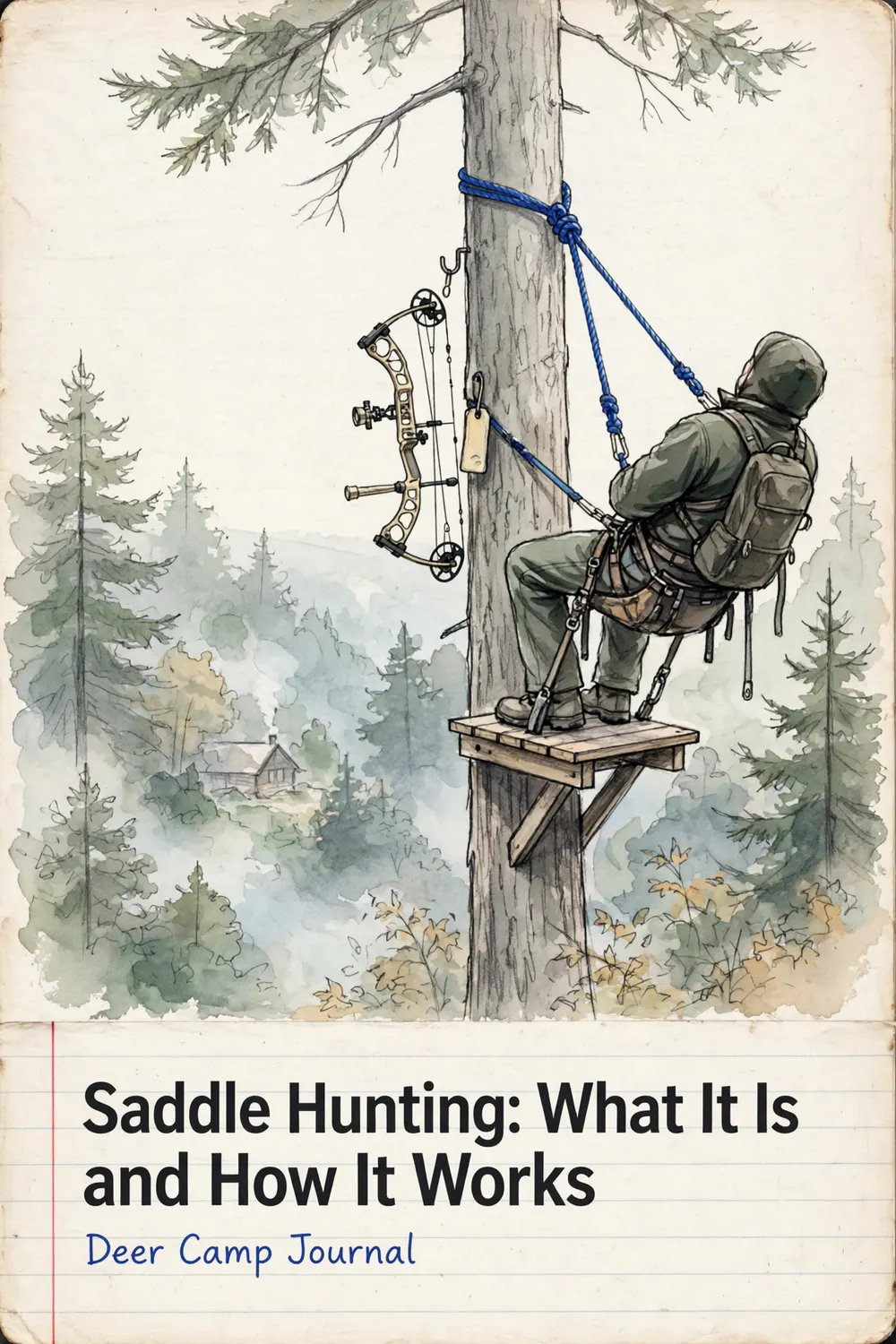
Saddle hunting is hunting from a tree while you sit in a light harness, called a saddle, that a rope ties to the trunk. There's no seat and no stand frame: you face the tree, lean back into the rope, and stand on a small platform or a step. It's light enough to carry to a new tree every sit, and it comes with a real learning curve. (On paper it's a rope, a belt and a footrest. In practice it's a rope, a belt, a footrest and a lot of practice.)
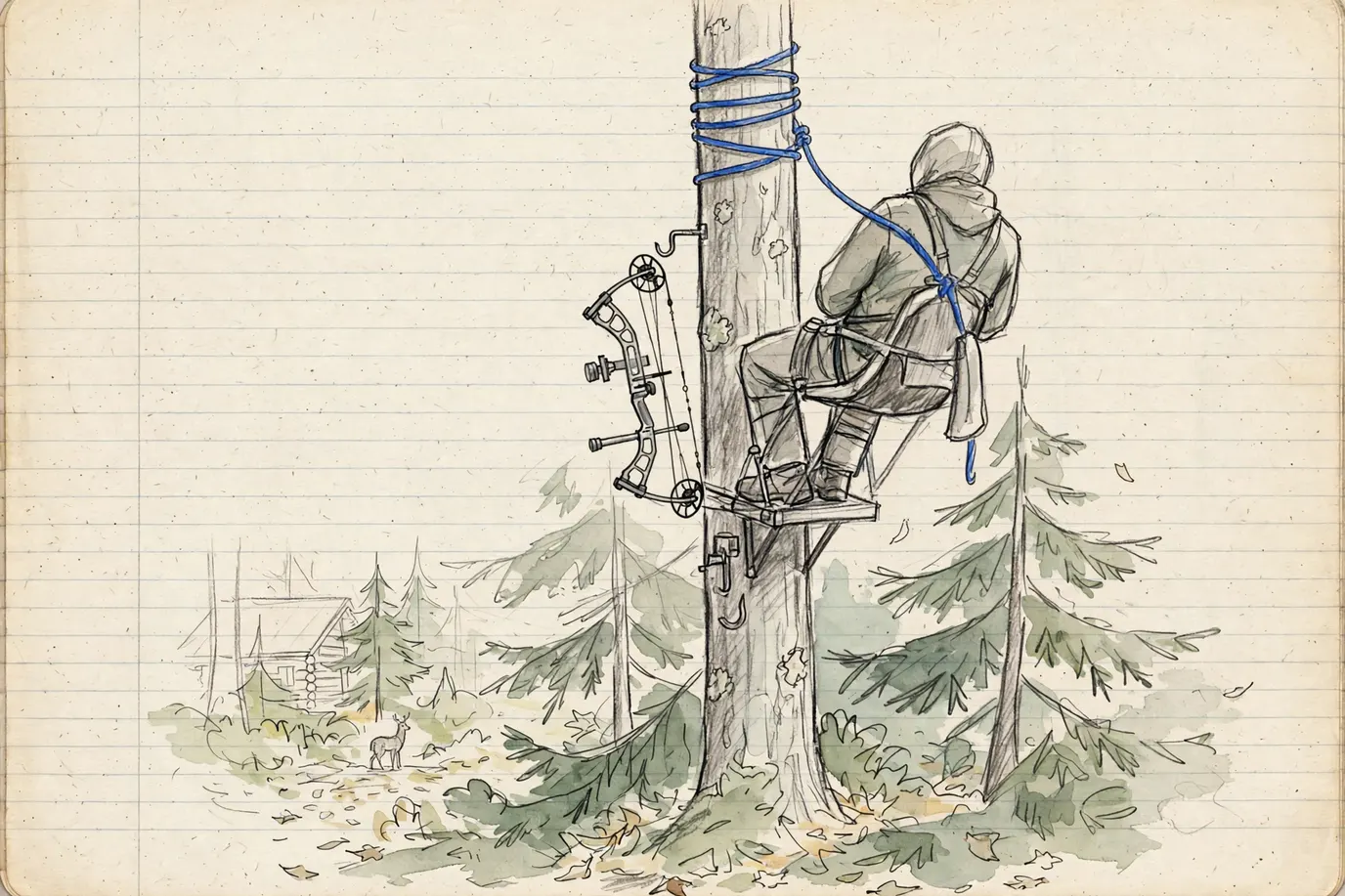
What is saddle hunting
The Missouri Department of Conservation describes saddle hunting as a mobile way to hunt up in a tree: you sit in a lightweight tree saddle harness tethered to the tree with ropes. Unlike a tree stand, you sit in the saddle itself, not on a rigid platform. You face the trunk and turn around it to shoot.
The short version: a tree stand is a chair you bolt to a tree. A saddle is a rope that turns the tree into the chair. Because there's no frame to haul in, you can hunt trees a stand won't fit. One maker's how-to lists crooked, branchy and leaning trees as fair game.
Quick physics aside (Uncle Walt asked, so now you get it too): with the tether centered on the trunk, your body weight pulls you back to center. It's a pendulum that wants to stay put. Walt still calls it "the swing."
The five parts of a saddle hunting setup
Quick math: five pieces, two ropes that matter more than the rest. Here's what each one does.
The saddle and its bridge
The saddle is the harness you sit in, and every other piece connects to it. Across its front runs the bridge, a rope from one side of the saddle to the other. Your tether attaches to the bridge. Size it by the maker's chart, not by guesswork.
The tree tether
The tether is the rope that holds you to the tree while you hunt. It wraps the trunk and locks to the bridge. Its height and tension set how you hang, so follow the maker's instructions for it.
The lineman's rope
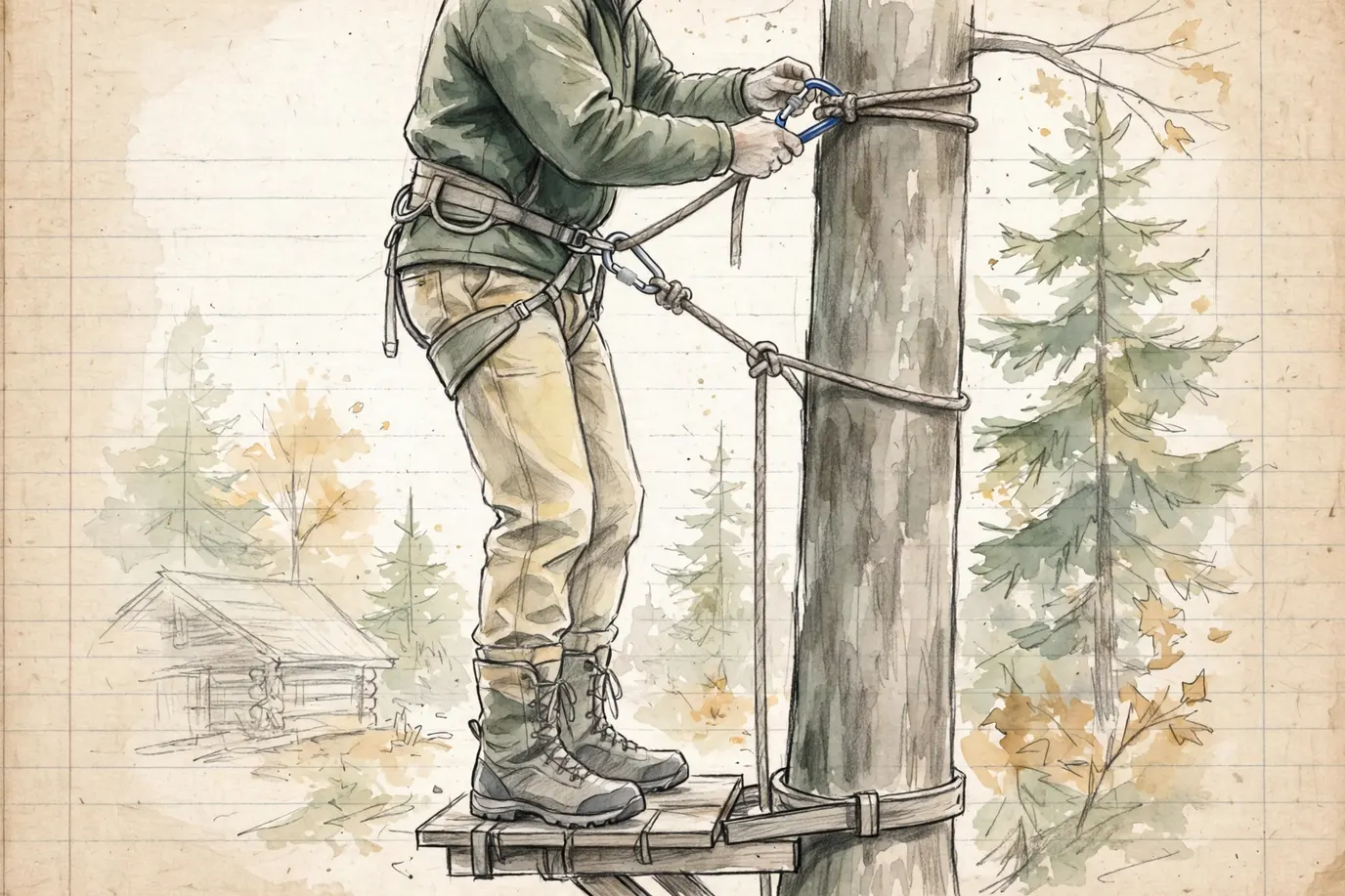
The lineman's rope (or lineman's belt) holds you to the tree while you climb. It wraps the trunk and clips to the rings on the sides of the saddle. You slide it up as you go, with no extra slack.
A platform or a ring of steps
You need something under your feet. A platform is a small footrest you strap to the trunk. It takes weight off the saddle and lets you swing around the tree. The older option is a ring of steps screwed or strapped around the trunk. One maker calls the platform much more comfortable, and many hunters mix the two.
Climbing sticks
Climbing sticks are short ladder sections you strap to the tree one above another. They come in several lengths. Steps can do the same job, and some hunters mix sticks and steps.
Add a haul line, a thin rope that raises and lowers your bow, and a few straps or hooks for the pack. That's the kit.
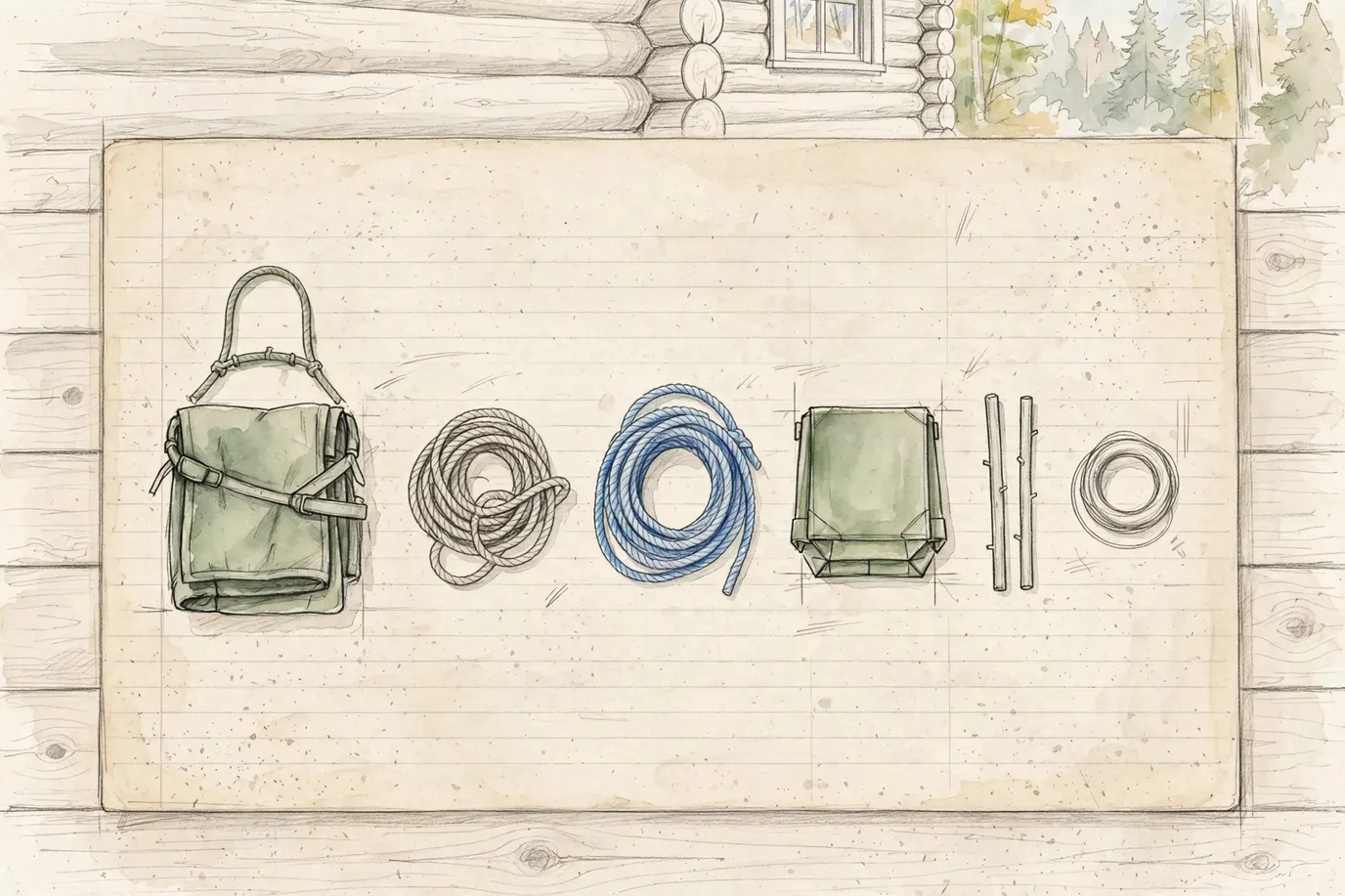
How a saddle hunt works
On paper it's six steps. In practice it's six steps plus a mental checklist you run every single time.
- Put on the saddle on the ground and tie your bow to the haul line.
- Hang the first stick, then wrap the lineman's rope around the trunk and connect it before your first step up.
- Climb, sliding the lineman's rope up with you and keeping it snug.
- At height, hang the platform.
- Wrap the tether, lock it to the bridge, and only then take off the lineman's rope.
- Pull up the bow, nock an arrow, hang the bow within reach.
Coming down is the same list backwards: lineman's rope back on before the tether comes off.
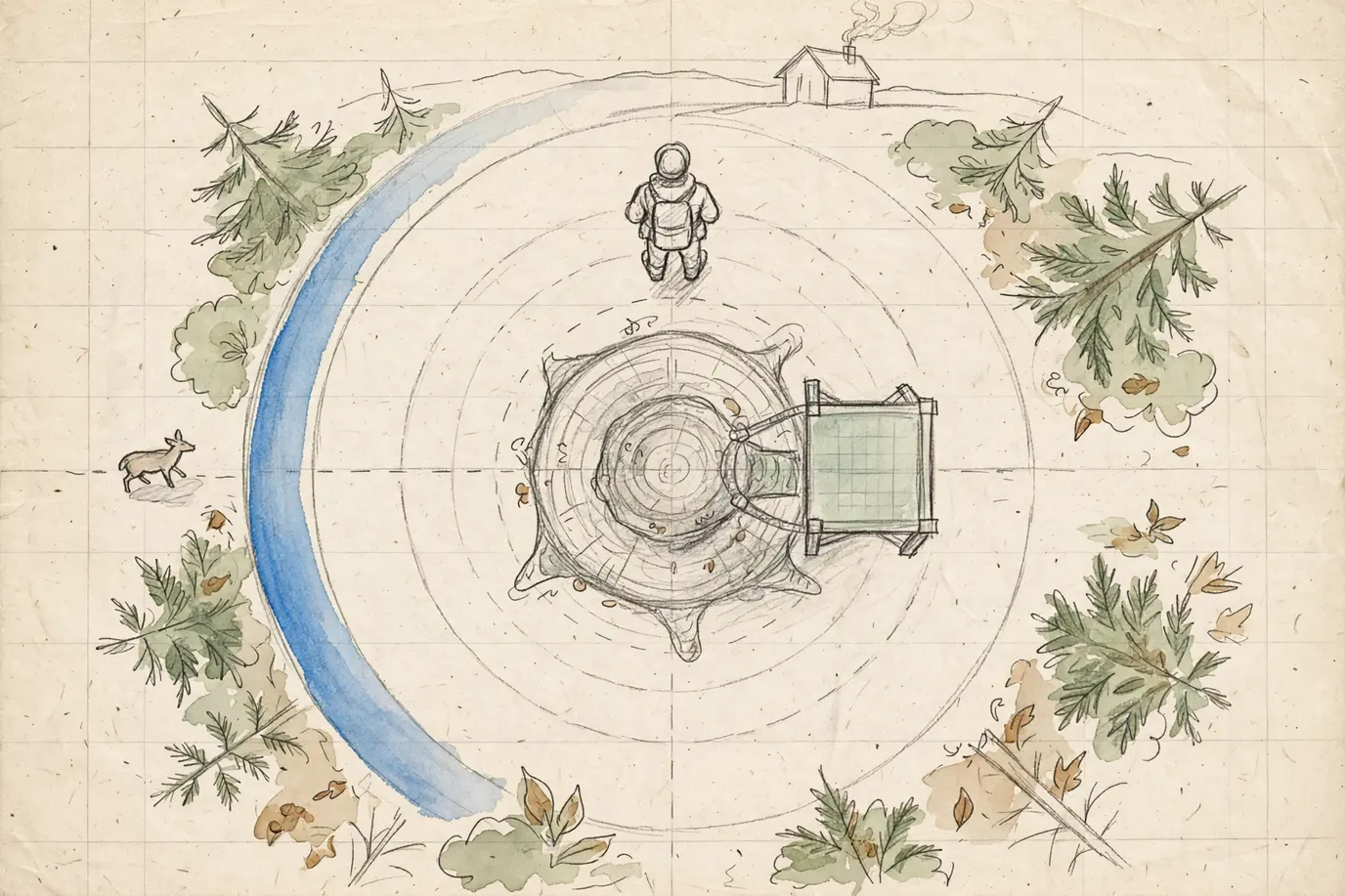
Where your shots are
Set up on your strong side. For a right-handed shooter, that means the deer you expect should come by on your left. Shots to your left, behind the tree and in front of it are the easiest. Shots to your right are harder. (I'm right-handed, so my best shot is behind a tree I'm hugging. Physics was not consulted when they named it "strong side.")
Shooting all the way around is possible on the right tree. Limbs, lean and trunk width cut into that circle, so pick the tree with the shot in mind. On a leaning trunk, the maker's how-to says to set up on the underside of the lean.
Saddle hunting vs a tree stand
Here's what actually changes when you swap a stand for a saddle.
- Weight. Saddles are much lighter than tree stands. That's the whole pitch.
- Mobility. You hunt where the deer are this week, not where the stand went up in August. Almost any tree works.
- Cover. You can turn around the trunk and keep the tree between you and the deer.
- Learning curve. Real. The steps are simple, but rope work, tree choice and shot angles take a few tries to feel normal.
- Comfort. The saddle and the platform share your weight, so it's comfortable once your setup is dialed in. Expect sore feet for the first few sits each year. Even one maker admits a box blind wins for an all-day sit.
At camp, every stand has a name: "ridge ladder," "the oak." Since I switched to a saddle, Walt calls my spot "Jess, some tree." He means it as a complaint. I take it as the whole point of the saddle.
My one opinion: a saddle pays off for the hunter who moves. If you sit the same tree every season, most of the benefit (light weight, any tree) goes unused, and you still pay the learning curve.
Saddle hunting safety
A saddle keeps you tied to the tree, but only if you use the system exactly as the maker designed it.
- Stay connected to the tree from the moment you leave the ground until you are back on it.
- Connect the lineman's rope before your first step up and keep it snug while you climb.
- Lock the tether to the bridge before you take the lineman's rope off. Put the lineman's rope back on before the tether comes off.
- Inspect the saddle, ropes, platform and sticks before every hunt for cuts, tears and wear.
- Follow the maker's instructions for setup and tether height.
- Use a haul line to raise and lower your bow instead of climbing with it.
- Keep your phone on your body and tell someone where you are hunting and when you will be back.
The transfer between ropes is where one maker's how-to says most accidents happen. Practice the climb and the transfer until they are routine. A class helps; Missouri's conservation department has run beginner saddle classes that cover rope-assisted climbing and tree choice.
Pick a sound tree. Wisconsin DNR says to choose a tree that can hold your weight and to avoid trees with obvious decay or disease. While climbing, keep three points of contact: two hands and one foot, or two feet and one hand.
State safety advice for tree stands says to wear a full-body harness, a fall-arrest system, every time, connected to the tree. If any part of your sit uses a tree stand, that rule applies there. For the saddle, read how the maker says the system protects you before you rely on it. Rules on stands and saddles vary by state and by property, so check your state wildlife agency.
Who should skip saddle hunting
- You hunt from the ground and like it. A ground blind is a fine answer.
- You sit the same stand all season. A tree stand you trust already does the job.
- You want long, all-day sits in comfort. A box blind or a stand with a seat is easier on you.
- You won't practice the rope steps before season. That practice is not optional.
If you're still curious, start at ground level with the rope steps and see if they click. Mine clicked on about the fourth try. Uncle Walt's never will, and he's fine with that.
Questions people ask
Is saddle hunting safe?
It can be, if you stay connected to the tree the whole time and follow the maker's instructions. The system is built for that: the lineman's rope holds you while you climb, the tether while you hunt. The riskiest part is the climb and the switch between the two ropes. Iowa DNR notes that most tree stand falls happen outside the stand, and one saddle maker's how-to says most accidents happen during the transition.
What gear do you need for saddle hunting?
Five pieces: the saddle itself (with its bridge), a tree tether, a lineman's rope, something to stand on (a platform or a ring of steps) and a way up the tree, usually climbing sticks. Add a haul line to raise and lower your bow, and inspect all of it before every hunt.
How high should the tree tether be?
Follow your saddle maker's instructions; the tether height is part of how the system is designed to hold you. One saddle guide says makers recommend starting at about eye level. Don't improvise a different setup to get a little more lean or reach.
Can you shoot all the way around the tree from a saddle?
Sometimes. You face the trunk and swing around it on the platform, so shots to your weak side, behind the tree and in front of it are often possible. Limbs, lean and trunk diameter decide how much of the circle you actually get. Pick the tree with your likely shot in mind, not just the deer trail.
Is saddle hunting comfortable?
Saddle makers call it comfortable once the setup is dialed in, because your weight is shared between the saddle, your hips and your feet on the platform. Expect sore feet for the first few hunts each season. For true all-day sits, even saddle makers admit a box blind is more comfortable.
Save this guide for later
Sources
- Missouri Department of Conservation: Learn tree-saddle hunting with MDC Aug. 15 in Blue Springs — accessed 2026-10-21
- Tethrd: Saddle hunting 101 (maker's how-to) — accessed 2026-10-21
- Game & Fish: Complete guide to saddle hunting — accessed 2026-10-21
- Wisconsin DNR: DNR urges hunters to prioritize tree stand safety this fall — accessed 2026-10-21
- Iowa DNR: Bowhunters encouraged to practice the ABCs of tree stand safety — accessed 2026-10-21
- Bowhunting.com: Can you fall out of a tree saddle? — accessed 2026-10-21