Archery & Bowhunting · Gear type
Archery Accessories
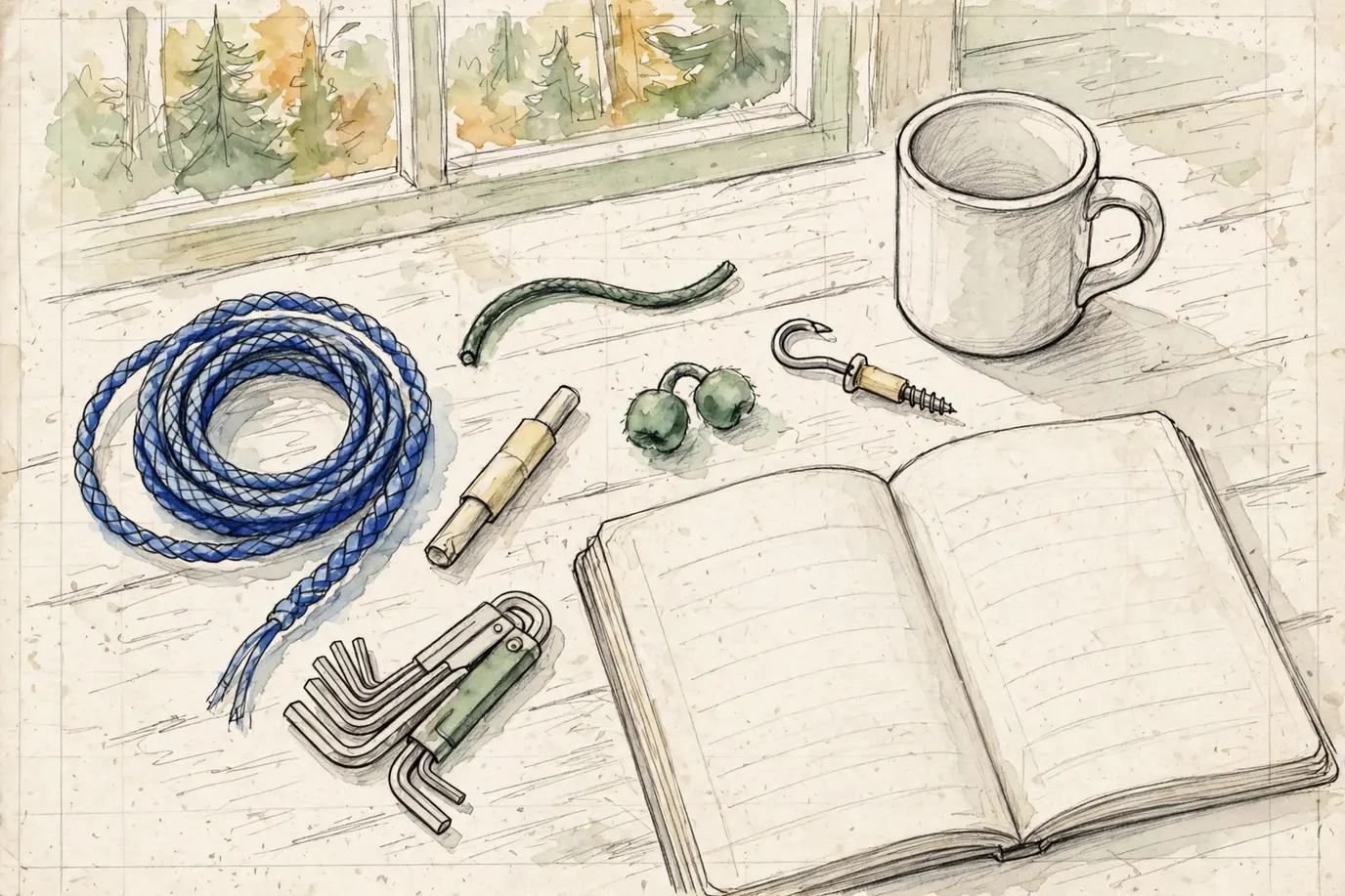
Archery accessories are the small parts around the bow that keep it quiet, protected and in your hand: a wrist sling, a hook to hang it on, string wax, silencers, D-loop cord, a stand for the target and a set of hex keys. None of them aims for you. All of them decide whether the bow works the same way in November as it did in August. Start with what protects the string, then add what fits where you hunt. (This is the cheapest page on the site to argue about, so naturally Hemlock Run argues about it most.)
We earn a commission if you buy through our links, at no cost to you. Disclosure
| Model | Material | Item | For | Quantity | Adjustable | Amazon |
|---|---|---|---|---|---|---|
AC Allen Archery Bullet Points 100 GrainArchery accessory | — | — | — | — | — | Check price |
Ameyxgs Recurve Limb Center Line GaugeArchery accessory | — | Tuning toollisting | Recurvelisting | — | — | Check price |
Ameyxgs Aluminum Alloy Bow StandArchery accessory | aluminum alloylisting | — | Recurvelisting | — | — | Check price |
Ameyxgs Leather Bow Grip Saddle Pad 2-PackArchery accessory | leatherlisting | — | — | 2listing | — | Check price |
Ameyxgs Aluminum Bow Bubble Level Tuning ToolArchery accessory | aluminum alloylisting | Tuning toollisting | Compoundlisting | — | — | Check price |
Ameyxgs Aluminum Bow Bubble Level Tuning ToolArchery accessory | aluminum alloylisting | Tuning toollisting | Compoundlisting | — | — | Check price |
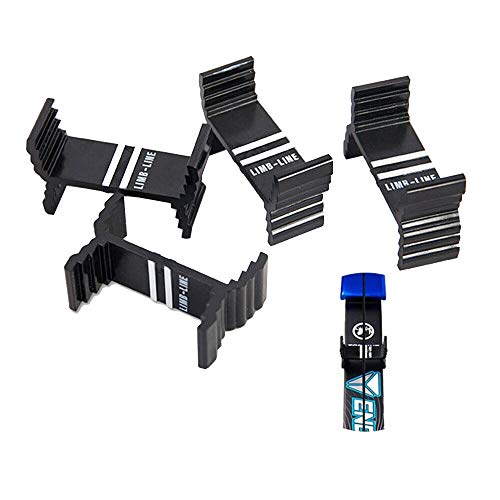
Ameyxgs Recurve Limb Center Line Gauge 4-PackArchery accessory | — | Tuning toollisting | Recurvelisting | 4listing | — | Check price |
Bicaster Finger Tab GuardArchery accessory | aluminum plate and cow leatherlisting | — | — | — | — | Check price |
Bicaster Arm GuardsArchery accessory | PClisting | — | — | — | — | Check price |
Bicaster Screw-in Pressure ButtonArchery accessory | copper shaft and aluminumlisting | — | — | — | — | Check price |
Bicaster Finger TabArchery accessory | aluminum plate and cow leatherlisting | — | — | — | — | Check price |
Bicaster Log Recurve Finger TabArchery accessory | cordovan and aluminum platelisting | — | — | — | — | Check price |
Bohning 1306 Tex-Tite Bowstring WaxArchery accessory | — | String wax lubelisting | — | 1 ozlisting | — | Check price |
Bowjax UltraJax II String SilencerArchery accessory | — | String silencerlisting | — | — | — | Check price |
Bowmar Archery Recurve Nose ButtonArchery accessory | — | — | — | — | — | Check price |
CBE Picatinny Mount AdapterArchery accessory | — | — | — | — | — | Check price |
CBE Flare Bow Sight LightArchery accessory | — | — | — | — | — | Check price |
Dead Ringer Easy Go Bow SlingArchery accessory | neoprenelisting | Bow slinglisting | Compoundlisting | — | Yeslisting | Check price |
Deerseeker Outdoor Recurve Bow Tip ProtectorArchery accessory | siliconelisting | — | — | 2listing | — | Check price |
Gold Tip Glue-In Point for 30X, 100 GrainArchery accessory | — | — | — | 12listing | — | Check price |
Hamskea Versa Overdraw Arrow RestArchery accessory | — | — | — | — | — | Check price |
Hawk Limb Grip Bow HolderArchery accessory | — | Bow hangerlisting | — | — | — | Check price |
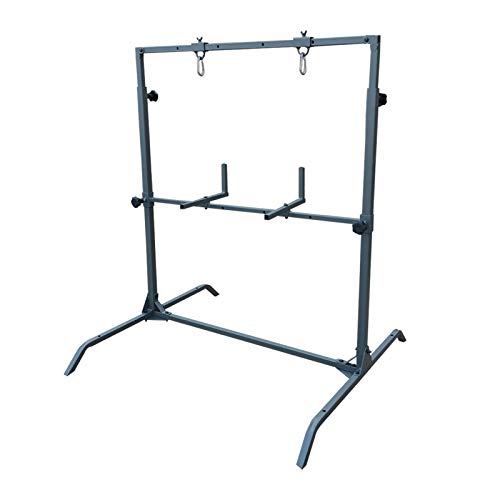
Highwild Universal 3D Target StandArchery accessory | steellisting | Target standlisting | — | — | Yeslisting | Check price |
Highwild Bag Target StandArchery accessory | — | Target standlisting | — | — | Yeslisting | Check price |
HME Tree Stand Bow HolderArchery accessory | — | Bow hangerlisting | — | — | — | Check price |
HME Pro Series Super Bow HangerArchery accessory | — | Bow hangerlisting | — | — | — | Check price |
HME Folding Tree Stand Bow HangerArchery accessory | — | Bow hangerlisting | — | — | — | Check price |
LimbSaver SuperQuad Split Limb DampenerArchery accessory | — | — | — | 2listing | — | Check price |
LimbSaver String Silencers 4-PackArchery accessory | — | String silencerlisting | — | 4listing | — | Check price |
Mathews SCS Bow SlingArchery accessory | — | Bow slinglisting | — | — | — | Check price |
Mathews SCS Bow Sling CoyoteArchery accessory | — | Bow slinglisting | — | — | — | Check price |
October Mountain Products Bowstring Wax Hunter SizeArchery accessory | — | String wax lubelisting | — | 1 ozlisting | — | Check price |
October Mountain Products Bowstring Wax Hunter Size 10 PackArchery accessory | — | String wax lubelisting | — | 10 x 1 ozlisting | — | Check price |
October Mountain Products OMP String Silencers Bulk RollArchery accessory | — | String silencerlisting | — | 85 ft rolllisting | — | Check price |
Pine Ridge Nitro Whiskers String SilencersArchery accessory | — | String silencerlisting | — | — | — | Check price |
Pine Ridge Nitro Split Limb DampenerArchery accessory | — | — | — | 2listing | — | Check price |
SAS Arrow Release String D LoopArchery accessory | — | D looplisting | — | 6listing | — | Check price |
SAS Ambidextrous Barebow Finger TabArchery accessory | suede leatherlisting | — | — | — | — | Check price |
TenPoint Flight Rail & Trigger LubeArchery accessory | — | String wax lubelisting | Crossbowlisting | 6 cclisting | — | Check price |
TRUGLO Bow Jack Folding Bow StandArchery accessory | — | — | — | — | — | Check price |







What’s in this listSlings, hangers, string wax, silencers, D-loop and other small archery accessories we track on Amazon US. “—” means neither the maker nor the Amazon listing states it.
What counts as an archery accessory here
On this site, the big add-ons have their own pages: arrow rests, sights, releases, quivers, stabilizers and cases. This page is the drawer they don't fit in. Slings, hangers, wax, silencers, D-loop cord, target stands and the little tools that keep it all tight.
Archery 360's starter list reads like that drawer. After the bow, it names a quiver, a release and D-loop, a finger tab or glove for recurves, an armguard, a case, a bow stringer for recurves, hex keys, a bow stand, arrow lube and an arrow puller, and string wax. Some of those are must-buys. Some are "you'll want it by October."
What to look at in archery accessories
The table under this page mixes several kinds of small gear, so read it one row at a time. It shows what the item is, which bows it's for, the material, the quantity in the pack, and whether it adjusts, as the maker or the Amazon listing states them (the table marks values that come from the listing). A dash means neither states it.
The Item column sorts the drawer
"Item" tells you what you're looking at: wrist sling, bow sling, crossbow sling, bow hanger, string wax or lube, silencer, D-loop, target stand, tuning tool or kit. Each has its own page linked below, with a table filtered to just that item. Here they share one list.
"For" keeps crossbow gear off your compound
The "For" column says compound, recurve, crossbow or universal. It's how you tell bowstring wax from crossbow rail and string lube, and a bow sling from a crossbow sling. When a maker writes for crossbows, follow the crossbow maker's own care instructions first. Crossbow add-ons are on the crossbow accessories page.
Material tells you how it'll age
Slings come in paracord, nylon or neoprene. Hangers are usually steel, sometimes coated. Wax comes in different formulas. The "Material" column shows what the maker or the listing states. For anything that touches the string, the string maker's instructions beat the accessory's packaging.
Quantity means count, length or size
"Quantity" changes meaning by item. For silencers it's a count. For D-loop cord it's a length, which matters because you'll cut several loops from one pack. For wax it's the size of the stick or tube. Compare like with like.
Adjustable mostly means slings and stands
The "Adjustable" column applies mostly to slings and target stands. An adjustable wrist sling can be loosened for a heavy coat in November and snugged for a T-shirt in August. An adjustable stand sets the target height.
Bow slings and wrist slings
A wrist sling is a loop that connects your bow hand to the riser so the bow can't fall when you open your hand. Archery 360's grip guide explains why you'd want that. A good grip is barely a grip at all, because a loose hand reduces torque. If you find yourself squeezing, it says, tuck your fingers away from the bow, and then you'll need a finger or wrist sling to keep the bow from dropping.
Archery 360's guide to keeping the arrow on the rest makes the same point from the other side: holding the bow like a baseball bat makes it twist side to side. A sling is how you stop squeezing without dropping a bow on the gravel. (I'm a physical therapist. I see a lot of white knuckles in November, and some of them are mine.)
Carry slings are different. They let you walk with the bow over your shoulder, hands free. If you still-hunt or walk long ways to a stand, look at those in the table under "bow sling." Fit and styles are on the wrist sling page, and crossbow carry slings on the crossbow sling page.
Bow hangers
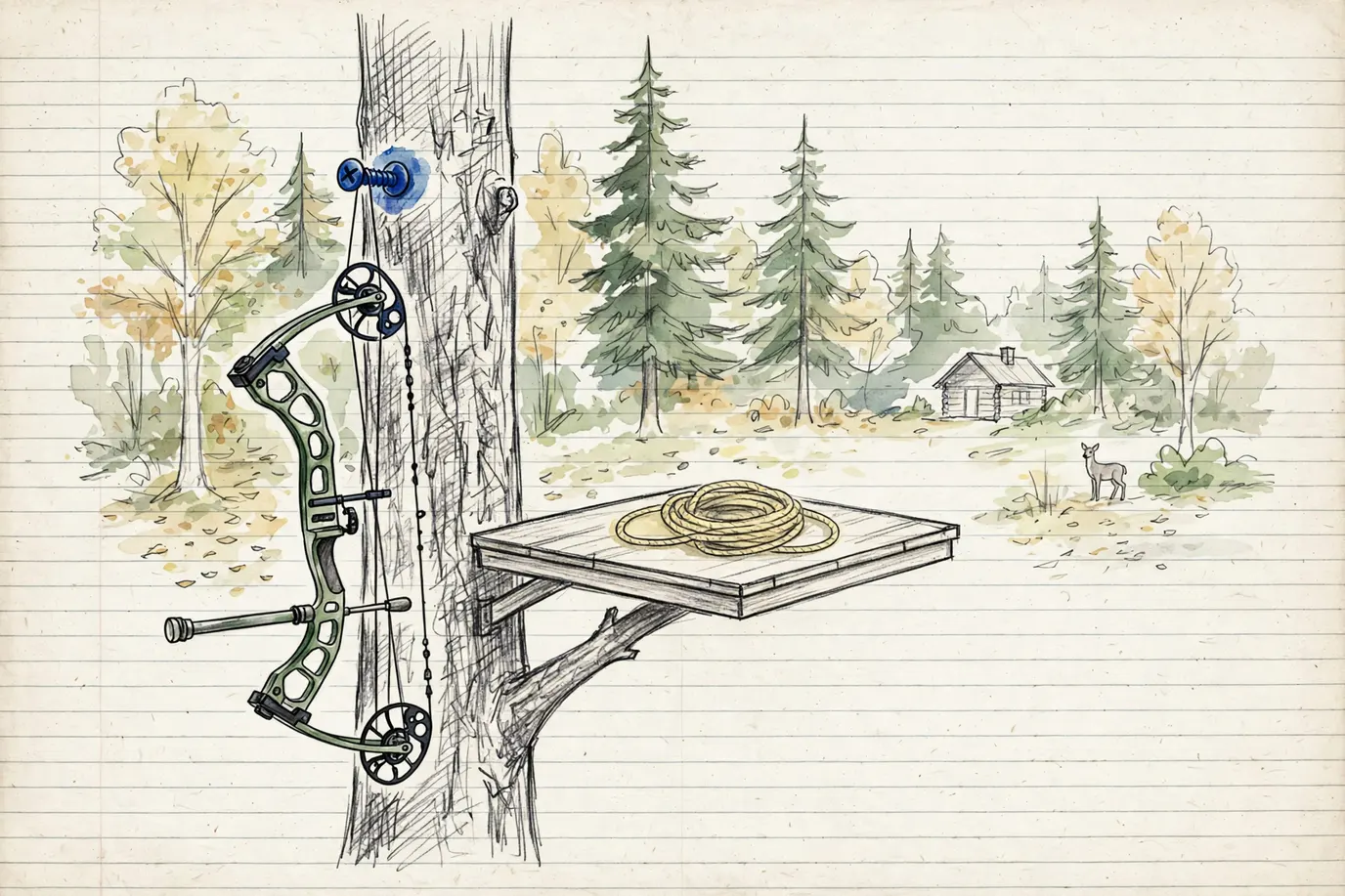
A bow hanger is a hook that holds your bow within reach in a tree, so it's not in your lap for four hours. Buckmasters' article on stand hooks has practical advice.
- Size the hook to the bark: the harder the bark, the smaller the hook
- Hard trees: on oaks, start a hole with a tree-step tool before a bigger hook
- Rest spot: leave a little room at the end of one hook to hang the bow when your arm needs a break
- Separate hooks: one for the bow, one for the quiver, one for the pack
- Coating: a rubber coating stops metal-on-metal clanks
The same article says to take hooks out in the off-season. Left in, bark can grow around them, and they can rust or weaken.
My rule is simple: whatever I screw into a tree in October comes out in January. I keep a count of hooks in the pack, so I know how many should come home. (It's the only thing in the woods I count twice.)
Screw-in hooks aren't allowed everywhere. Check the rules for the land you hunt and your state wildlife agency before you put one in. More on hook styles is on the bow hanger page.
String wax
Wax keeps a bowstring from drying out and fraying. Archery 360's storage guide says wax keeps your bowstring from fraying and twisting. World Archery's waxing guide has the method:
- Check the string first: servings intact, twists set. Wax stiffens the string, so twist changes get hard afterward.
- Rub the stick up and down the string until you can see wax across the strands.
- Work it in with your fingers so it fills the gaps between strands, then run a loop of cord or a bit of card up and down to spread it and pick off any lumps.
- Keep it off the serving. World Archery warns wax makes serving unravel faster and leaves it slippery.
World Archery says most top archers wax every two to three weeks. The test is touch: the string should feel smooth and slightly tacky. Dry, discolored or fuzzy means wax. Loose strands or frays mean the string is done, and wax won't fix that. Strings themselves are on the bow string page, and wax types on the bow string wax page.
String silencers
Silencers are small rubbery or fuzzy pieces tied into the string. Outdoor Life describes them as designed to thwart noise and residual oscillation after the shot. On a hunting bow, quiet is the point.
They do cost a little speed, because they're weight on the string. Grand View Outdoors walks through a bow rated at 340 fps. A 29-inch draw alone usually brings it to 325 to 330. Add two string silencers and a peep sight and you can expect 315 to 320. The article also notes that speed ratings assume a bare string, with no peep or silencers.
Quick math from those numbers: the silencers and peep together cost roughly 5 to 15 fps in that example. Whether that matters depends on whether you'd rather be quiet or fast. (A deer has never once complained that my arrow was 10 fps slow.) Styles and placement are on the bow string silencer page.
D-loop cord
A D-loop is a short cord tied onto the string above and below the arrow's nock, for a release to clip onto. Bowhunting.com's install guide lists the reasons to use one. It keeps the arrow from walking up and down the string at the shot. It gives a little forgiveness with a release. And the release never touches the string or serving, so the wear lands on a cheap loop.
The guide's numbers:
- Cord length: at least 4¼ inches, the usual cut, though not set in stone
- Tie-in point: marked 1/8 inch above square, found with a bow square
- Finished size: long enough for the release head, without touching the nock
- Knots: a cinch knot above, a finishing knot below, tightened with D-loop pliers
- Ends: melted into a solid ball so they can't pull through
Before you draw on a new loop, test the knot with pliers. The guide also says the loop will stretch over time, so look at it now and then. The D-loop page has cord types.
Target stands, bow stands and range tools
Some of this drawer lives in the backyard, not the woods.
- Target stand: Archery 360's target guide notes some large targets require a stand. A stand also gets a target to the height you'll shoot. See the target stand page.
- Bow stand: Archery 360's starter list says a bow stand holds the bow when you're not shooting it. It beats leaning a bow against a fence post.
- Arrow puller and lube: the same list names both for getting arrows out of a target. Your forearms will thank you.
- Hex keys and a bow square: hex keys adjust sights and keep things tight; a bow square measures nocking point height. Keep one set in the bow case.
Before the bow goes away for winter, go over every screw with those hex keys. Archery 360's storage guide warns that loose hardware can affect accuracy or cause damage.
Build the kit around where you hunt
Different hunts fill the drawer differently.
- Tree stand or saddle: hanger hooks, a haul line, a wrist sling, wax in the pack
- Ground blind: silencers matter more in a small, quiet space; a bow stand or hook inside
- Walking in far: a carry sling and a small tool kit
- Backyard range: a target stand, a bow stand, an arrow puller
My one opinion on this page: buy the small stuff that protects the expensive stuff first. A D-loop and a stick of wax come before anything else in this drawer. The reasons are in the sources above: the loop keeps your release off the string and serving, and wax keeps the string from fraying. Both are small fixes that head off a bigger one.
Haul your bow, don't carry it
Keep your hands free when you climb. Wisconsin's DNR says to always use a haul line to raise and lower an unloaded bow into and out of the stand, and to keep three points of contact while climbing.
Who can skip this drawer
If you shoot a recurve with fingers, skip the D-loop; it's for release shooters. If you hunt only from the ground, skip the hangers. And if your bow is brand new, check what came with it before you buy.
The drawer will fill up anyway. They always do.
Brands in this list
Questions people ask
What accessories do I need for a compound bow?
Beyond the bow and arrows, most compound shooters need a rest, a sight and a release, which have their own pages here. Archery 360's starter list adds a quiver, a D-loop for the release to clip onto, an armguard, a case, hex keys, a bow stand, an arrow puller and string wax. A wrist sling helps if you shoot with a relaxed hand.
Do string silencers slow down a bow?
A little, because they add weight to the string. Grand View Outdoors walks a bow rated at 340 fps down step by step: a 29-inch draw puts it at about 325 to 330, and two silencers plus a peep sight take it to about 315 to 320. It also notes that published speed ratings assume a bare string with no silencers.
How long should a D-loop be?
Bowhunting.com's install guide says to start with cord at least 4¼ inches long and notes that length is usually the cut, though it isn't set in stone. The finished loop only needs to be long enough to hold your release head without touching the arrow's nock. It also stretches over time, so check it now and then.
How often should I wax my bowstring?
World Archery's waxing guide says most top archers wax every two to three weeks, and again before a match if rain is forecast. Hunters can go by feel: the string should feel smooth and slightly tacky. If it feels dry, looks discolored or starts to fuzz, it's time. Keep wax off the serving.
Can I leave a bow hanger in the tree all year?
Buckmasters advises taking screw-in hooks out in the off-season, because bark can grow around them and they can rust or weaken. Rules on screwing anything into trees also vary by landowner and by public land, so check the rules for the ground you hunt and your state wildlife agency before you put one in.
Sources
- Archery 360 (Archery Trade Association): Everything but the bow, what you need to get started in archery — accessed 2026-10-22
- Archery 360 (Archery Trade Association): Form breakdown, grip — accessed 2026-10-22
- Archery 360 (Archery Trade Association): How to keep your arrow on the rest — accessed 2026-10-22
- Buckmasters: Extra treestand hands — accessed 2026-10-22
- World Archery: Archery 101, how to wax a bowstring — accessed 2026-10-22
- Archery 360 (Archery Trade Association): Winterize your equipment the right way — accessed 2026-10-22
- Outdoor Life: Parts of a compound bow — accessed 2026-10-22
- Grand View Outdoors: The truth behind compound bow speed ratings — accessed 2026-10-22
- Bowhunting.com: Installation of a D-loop — accessed 2026-10-22
- Archery 360 (Archery Trade Association): Archery targets, know your options — accessed 2026-10-22
- Wisconsin DNR: Tree stand safety tips — accessed 2026-10-22