Brand · Blinds & Tree Stands
Hunter Safety System
Hunter Safety System makes fall-arrest gear for hunters who climb: full-body harnesses, the HSS Lifeline rope that keeps you connected from the ground to the stand, and saddle-hunting gear like a saddle, a platform and rope straps. Here's the thing: inside the HSS lineup, the harnesses share one design, and the differences are weight, pockets and fit. So you pick the size first, then the features. (My logbook has a column for wind. It does not have a column for pockets. Maybe it should.)
We earn a commission if you buy through our links, at no cost to you. Disclosure
Hunter Safety System on Amazon US
12 models- Safety harness
Hunter Safety System Ultra-Lite Harness
- Sizes
- Large/X-Large
- Safety harness
Hunter Safety System RT Hybrid Harness
- Sizes
- Small/Medium
- Safety harness
Hunter Safety System Non-Reflective Lifeline
Check price - Safety harness
Hunter Safety System X-1 Bow-Hunter Harness
- Sizes
- Small/Medium
- Safety harness
Hunter Safety System Lady Hybrid Harness
- Sizes
- Medium/Large
- Safety harness
Hunter Safety System Lil' Treestalker Youth Harness
- Weight rating
- 100 lb
- Sizes
- Youth 50-100 lb
- Safety harness
Hunter Safety System TreeStalker II Harness
Check price - Safety harness
Hunter Safety System 4X/5X Harness
- Weight rating
- 400 lb
- Sizes
- 4X/5X
- Saddle platform
Hunter Safety System Legend Platform
Check price - Saddle platform
Hunter Safety System Legend Platform
Check price - Stand accessory
Hunter Safety System SlapStrap Single
- Type
- Rope strap
- Hunting saddle
Hunter Safety System Defender Saddle
- Panel design
- Expandable pleat




What Hunter Safety System makes for hunters
On this site, Hunter Safety System, or HSS, covers three groups of gear you'll see in the grid above:
- Full-body harnesses: from a light bowhunter harness to a vest with pockets, plus women's, youth and big-and-tall fits
- Lifelines: a rope that stays on the tree all season, so you're connected while you climb
- Saddle-hunting gear: the Defender saddle, the Legend platform and the SlapStrap rope strap
The maker's site also lists climbing sticks, a second platform and other straps and accessories. The grid changes as listings come and go, so check it for what's listed. Sticks from all brands are on the climbing sticks page.
HSS also sells scent-control sprays, soaps and hats under its ElimiShield name. This site doesn't list those.
One more note on the data. Most HSS listings on Amazon don't fill in many structured fields, so the grid shows dashes where a listing is silent. Everything I say about weights and ratings below comes from the maker's own product pages, not from Amazon.
The Hunter Safety System harness lineup
Every HSS harness page describes the same base design: quick-snap buckles, no weave-through buckles or dangling straps (the maker's patented design), rubber-coated leg buckles on most models, built-in lineman's loops and a shock-absorbing tether. The pages say each harness surpasses all industry safety standards. What changes from model to model is weight, padding and pockets.
Here's how the harnesses in the grid line up, per the maker:
- X-1 Bow-Hunter: 2 lb, the simplest design, no pockets listed; the maker pitches it for early season and long walks in
- Ultra-Lite: 2.5 lb, mesh upper body, 1.25-inch upper-body webbing; the maker calls it its lightest premium harness
- TreeStalker II: a ventilating mesh liner and 2 pockets
- Hybrid (RT Hybrid): a slim upper body for airflow, 6 pockets and integrated straps for binoculars or a rangefinder
- Lady Hybrid: the Hybrid's features, built for women, with an adjustable chest strap
- 4X/5X: 10 pockets, 2 of them zippered on the waist strap, and fits up to 400 lb per the maker
- Lil' Treestalker Youth: for kids from 50 to 100 lb, with adult supervision
Light harnesses for walking in
The X-1 and the Ultra-Lite are the two to look at if you walk a long way to your tree or hunt in September heat. Half a pound separates them on paper. The X-1 keeps things bare. The Ultra-Lite adds a mesh upper body.
Rule of thumb: the lightest harness is the one you'll actually put on in the truck, instead of carrying it in your hand "for later". Later is when people get hurt.
Vest-style harnesses with pockets
The TreeStalker II, Hybrid and Lady Hybrid trade a little weight for pockets and mesh. The Hybrid and Lady Hybrid pages list deep-well pockets, accessory pockets and security pockets, plus straps to hold binoculars or a rangefinder against your chest.
If you sit all day, pockets matter more than you think. Every grunt call and hand warmer that lives on the harness is one less thing you dig out of a pack hanging off a hook behind you. (I once spent ten minutes looking for a pencil. It was behind my ear. A pocket would not have helped, but I'm counting it anyway.)
Fits for women, kids and big hunters
HSS builds separate sizes for women and youth, and one model for big hunters:
- Lady Hybrid: women's sizing, adjustable chest strap
- Lil' Treestalker: youth harness for 50 to 100 lb
- 4X/5X: men's 4X/5X size for 300 to 400 lb; the maker's sizing page says to call it for availability
The youth harness is the one I'd point a grandparent toward. Fit it on the ground at home, in the clothes the kid will hunt in, before the first sit. The maker says its youth harness is meant for kids in the stand with adult supervision, and that's how it should be used.
The HSS Lifeline: connected from the ground up
The Lifeline is the part of the HSS lineup that gets searched the most, and it does a different job from the harness.
A harness tether protects you once you're in the stand. The trouble is the climb. The Treestand Manufacturers Association says to wear a full-body harness every time you leave the ground, including while going up and coming down. The Lifeline is how you stay connected during that part.
Here's how the maker describes it:
- You strap the rope to the tree above your stand when you hang it, and tie it off at the base
- It stays on the tree for the season
- Your harness tether clips to a carabiner on a Prusik knot, a friction knot that slides when you push it and grips when it's loaded
- You slide the knot up as you climb and back down when you leave
The maker says the knot stops you wherever you are in your climb if you misstep. Its Lifeline pages also say 86 percent of treestand accidents happen going up, coming down, or getting into or out of the stand. That's the maker's number, and it's the reason the rope exists.
The Lifeline in the grid is the non-reflective version. The maker also sells a reflective one that shows up in a flashlight beam, a longer 42-ft rope and a tandem version for two hunters. Its pages list a rubber "cowbell" cover that keeps the carabiner from clanging, and say its Lifelines fit stands up to 30 feet.
Plain and simple: a Lifeline is only on duty when it's tied to your tree. Hang it when you hang the stand, and check it before every climb.
Saddle-hunting gear from HSS
A saddle is a seat you hang in, attached to the tree by a tether, with your feet on a small platform. The hunting saddle page explains the type, and the saddle hunting guide covers the setup step by step.
The Defender saddle
The maker lists an expandable pleat for added coverage, MOLLE webbing for gear, lineman's loops placed for moving between stand positions and extra padding. Its product page doesn't give a weight, a weight rating or materials, so I'm leaving those out. The Defender's instruction sheet on the maker's site is the place to read the setup before you climb.
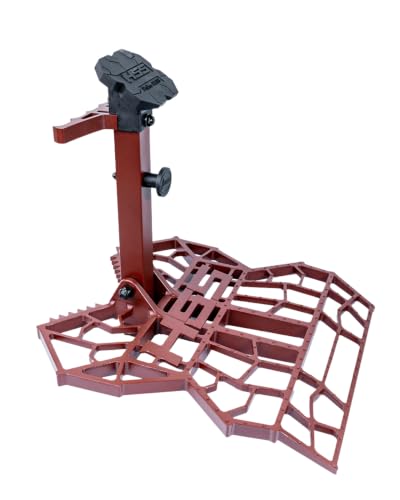
The Legend platform
A saddle platform is the small step you stand on. The maker's numbers for the Legend:
- Weight: 4 lb
- Rating: 300 lb
- Platform: 13½ x 13¼ inches, cast aluminum
- Packed: 3.5 inches deep
- Grip: raised "Micro-Cleat" inserts and a sloped front edge for leaning
The Legend shows up twice in the grid because it has two listings. Platforms from other brands are on the saddle platform page.
The SlapStrap Single
The SlapStrap is a strap that holds your lineman's rope or tether rope against the tree, so it doesn't slide around to the back side while you climb or hunt. The maker says it also reduces rope wear from rubbing on bark, carries MOLLE loops for gear, comes with a pouch for the rope and can work as a lineman's belt when you hang a lock-on stand.
How to choose within the HSS lineup
Size first, by weight and torso
HSS sizes its harnesses by body weight and a torso measurement taken around your belly button with the tape level. The maker's chart:
- Men's S/M: 100 to 175 lb
- Men's L/XL: 175 to 250 lb
- Men's 2X/3X: 250 to 300 lb
- Men's 4X/5X: 300 to 400 lb
- Women's S/M and M/L: 100 to 175 and 175 to 250 lb
- Youth: 50 to 100 lb
The maker says to size up if you're between sizes or wear heavy layers, and to adjust the straps after you're fully dressed. Then try it on the honest way. Put the harness on over the coat you actually wear in November, not over a T-shirt in the store aisle.
Then the season
A light, open harness suits early season and long walks. A vest with mesh and pockets suits all-day sits. In late season, the question is mostly whether the size still fits over your layers.
Then how you climb
If you hunt from one stand all season, a Lifeline on that tree covers the climb. If you move every few days with a saddle or a lock-on, you'll lean on lineman's loops, a lineman's rope and straps like the SlapStrap. The tree stand page covers stand types across brands.
My one opinion on this page: wear a harness every time your boots leave the ground. No exceptions, no "just a minute". The TMA guideline says the same thing, in more words.
Safety and care that apply to the whole lineup
These are from the TMA guidelines and the maker's own pages:
- Wear it up and down: harness on and connected from the ground to the stand and back
- No slack when sitting: TMA says the tether should have no slack when you sit, so you can get back into the stand after a fall
- Haul line: raise your bow and pack on a rope after you're up; never climb with gear in your hands or on your back
- Practice low: TMA says to practice hanging in your harness at ground level with a responsible adult present
- Suspension relief strap: HSS harnesses come with a strap meant to relieve pressure while you hang; read the harness instructions for how to use it
- Inspect before every hunt: check stitching, straps and buckles; if anything looks questionable, don't use it
- Replace on schedule: HSS recommends replacement every 3 to 5 years, and right away after a fall
TMA warns that hanging in a harness for a long time can be fatal. Carry a phone or radio, and tell someone where you're hunting.
Store the harness and rope dry, out of the sun and away from mice. That's a shop-teacher habit for any webbing or rope, and the inspection list above is how you find out if the habit worked.
Hunter Safety System facts
Here's what I could verify on the maker's own site:
- Founders: two brothers, John and Jerry; the about page says John had a near fall while hunting with Jerry in 2000
- First harness: designed in 2001, after months of trial and error, per the same page
- Based in: Danville, Alabama
- Warranty: HSS says its products carry a warranty against defects in materials and workmanship, with coverage that varies by product; the details are on its warranty form
The site doesn't say where the products are made or who owns the company, so I've left those out.
Buckle in on the ground, check the knot on the way up, and write the date you bought the harness in the logbook. In three to five years, you'll be glad you did.
Where Hunter Safety System shows up
Questions about Hunter Safety System
Is Hunter Safety System a good harness brand?
What can be checked is on the maker's pages. HSS says its harnesses surpass all industry safety standards, and its saddle platform and sticks pages name the Treestand Manufacturers Association standards. Each harness page lists the weight, pockets and what comes in the box. Whether one suits you depends on your size, your season and how you hunt, so start with the maker's sizing chart.
What size HSS harness do I need?
HSS sizes by body weight and a torso measurement taken around your belly button. Its chart runs from a youth size for 50 to 100 lb, through men's and women's sizes, up to a 4X/5X for 300 to 400 lb. The maker says to size up if you're between sizes or hunt in heavy layers, and to adjust the straps after you're dressed.
How does the HSS Lifeline work?
The Lifeline is a rope you strap to the tree above the stand and tie off at the base. Your harness tether clips to a carabiner on a Prusik knot, a friction knot that slides up and down the rope by hand. The maker says the knot stops you wherever you are in the climb if you misstep. Its pages say the Lifeline fits stands up to 30 feet.
How often should I replace an HSS harness?
HSS recommends replacing a harness every 3 to 5 years, or right away if it shows wear or damage or has been in a fall. The Treestand Manufacturers Association also says a harness must be discarded and replaced after a fall. Check stitching, straps and buckles before every hunt, and don't use a harness that looks questionable.
Who makes Hunter Safety System harnesses?
Hunter Safety System is based in Danville, Alabama, per its own about page. The company says two brothers, John and Jerry, designed the first harness in 2001 after John nearly fell while hunting in 2000. The maker's site doesn't say where its products are manufactured or who owns the company, so I've left that out.
Where can I buy Hunter Safety System gear?
The product grid on this page links to Hunter Safety System listings on Amazon US, filtered by type. The maker also sells its harnesses, Lifelines and saddle gear on its own site, huntersafetysystem.com. Match the size in the listing to the maker's sizing chart before you order.
Sources
- Hunter Safety System: About us — accessed 2026-10-23
- Hunter Safety System: Frequently asked questions — accessed 2026-10-23
- Hunter Safety System: Sizing — accessed 2026-10-23
- Hunter Safety System: Ultra-Lite harness — accessed 2026-10-23
- Hunter Safety System: X-1 harness — accessed 2026-10-23
- Hunter Safety System: Hybrid harness — accessed 2026-10-23
- Hunter Safety System: Lady Hybrid harness — accessed 2026-10-23
- Hunter Safety System: TreeStalker II harness — accessed 2026-10-23
- Hunter Safety System: 4X/5X harness — accessed 2026-10-23
- Hunter Safety System: Lil' Treestalker youth harness — accessed 2026-10-23
- Hunter Safety System: The Original Non-Reflective Lifeline — accessed 2026-10-23
- Hunter Safety System: Reflective Lifeline — accessed 2026-10-23
- Hunter Safety System: Defender saddle — accessed 2026-10-23
- Hunter Safety System: Legend platform — accessed 2026-10-23
- Hunter Safety System: SlapStrap Single — accessed 2026-10-23
- Hunter Safety System: Deer drag / suspension relief strap — accessed 2026-10-23
- Treestand Manufacturers Association: Treestand Safety Guidelines — accessed 2026-10-23