What Vortex makes for bowhunters
On this site, Vortex covers three product types: binoculars, laser rangefinders and binocular harnesses. Two of the binoculars have rangefinders built in. The grid above filters by type and changes as listings come and go, so I'll write about the lines and what separates them, not about how many are listed this week.
Vortex also makes riflescopes and other firearm optics. This site doesn't cover firearm gear, so those aren't in the grid or on this page. It also makes a crossbow scope, the Crossfire II 2-7x32, which isn't among the listings here right now (more below).
The specs in the grid come from Amazon listings, and the grid marks them that way. Where a listing doesn't say, you'll see a dash. (A dash isn't a zero. I've explained this to Walt twice.)
Lineup notes: Vortex binoculars
Vortex names binocular lines, and each line comes in several sizes. Quick math on the numbers: in 10x42, the 10 is magnification and the 42 is the front lens diameter in millimeters. Here's how the lines in the grid separate.
Compact and youth: Vanquish and Bantam HD
The Vanquish 8x26 is the small one. Its listing states a porro prism, and the title calls it a reverse porro with a compact build. A 26 mm front lens makes it pocket-sized.
The Bantam HD 6.5x32 is the youth binocular. Lower magnification means a steadier view in small hands, and the title names HD optics, XR lens coatings and a tripod mount.
The 42 mm workhorses: Copperhead, Triumph, Crossfire and Diamondback
This is where most deer hunters shop, so it's where most of the grid sits.
- Copperhead HD 10x42: HD optics, fully multi-coated lenses and rubber armor, per the title
- Triumph HD 10x42: tripod adaptable, with a GlassPak harness in the box, per the title
- Crossfire HD 8x42: roof prism, tripod adaptable, GlassPak included
- Diamondback 10x42: a roof prism Diamondback listing without "HD" in the name
- Diamondback HD 8x42: HD optics, tripod adaptable, GlassPak included
Vortex's own whitetail article points Midwest deer hunters to the Diamondback 8x42 or 10x42. The grid has an 8x42 HD and a 10x42 non-HD Diamondback right now. If you're searching for a Diamondback HD 10x42 or a Crossfire HD 10x42, they aren't among the listings here this week; the grid shows the 8x42 versions of both.
Viper HD and Razor HD: the upper lines
The Viper HD 10x42 listing states a roof prism. Its title names XR lens coatings, a locking diopter (the eyepiece focus adjustment that stays put once you set it), a tripod mount and a GlassPak.
The Razor HD 8x42 also lists a roof prism, and its title names a magnesium chassis and a GlassPak. The Razor UHD 18x56 is the big-glass member of the Razor family, sold with a GlassPak Pro harness per its title.
Big glass: Vulture HD and Kaibab HD
The Vulture HD 15x56 and Kaibab HD 18x56 are for glassing long distances, not for following a deer through the timber. The Kaibab's title says a tripod adapter is included. At 15x or 18x, every heartbeat shows up in the image, so these belong on a tripod. (I tried holding an 18x for a minute once. I saw my pulse in high definition.)
Rangefinding binoculars: Fury HD 5000 and Talon HD 10K
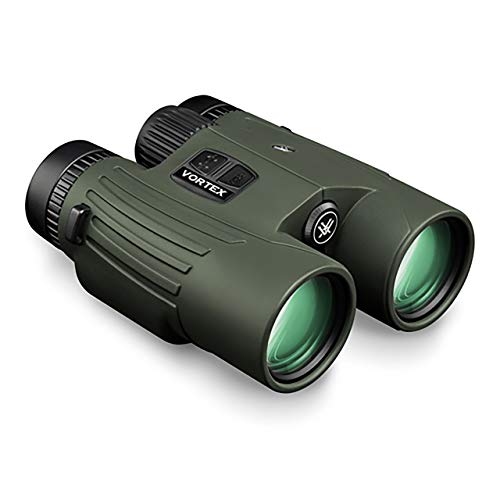
Two Vortex binoculars carry a laser rangefinder inside. The Fury HD 5000 10x42 listing states angle compensation, and its title names a red OLED display and a GlassPak. The Talon HD 10K 10x42 listing also states angle compensation; its other features are aimed at long-range shooting, which this site doesn't cover. More on the category is on the rangefinder binoculars page.
Lineup notes: Vortex rangefinders
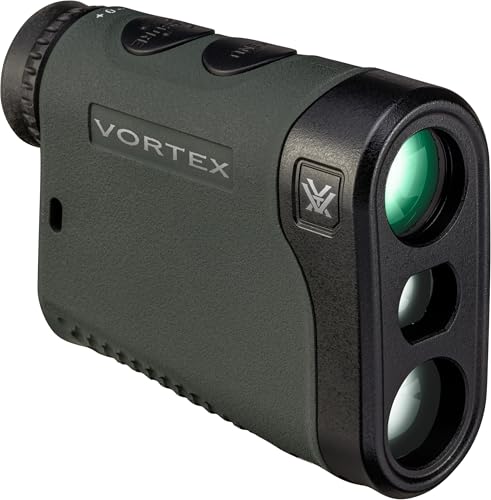
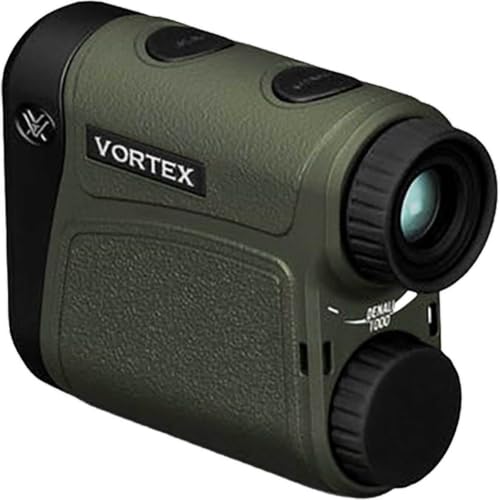
The rangefinder names carry the maximum reflective range in yards, so the name sorts them. For bowhunting, that ceiling matters far less than the features below it. A deer at 30 yards doesn't care that your rangefinder could reach a barn two miles away.
- Triumph HD 850: 5x, black LCD display, angle compensation
- Crossfire HD 1400: 5x, red OLED display, angle compensation, carry case per the title
- Sonora HD 1800: 6x, angle compensation, tripod adaptable per the title
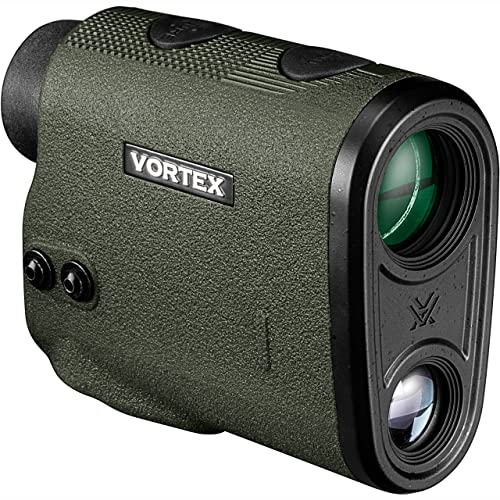
- Diamondback HD 2000: 7x, red OLED display, angle compensation
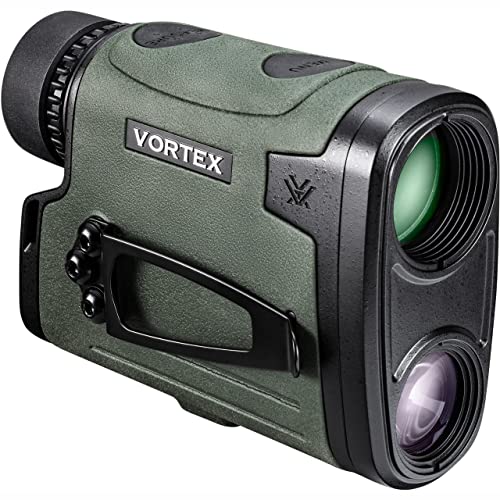
- Viper HD 3000: 7x, red OLED display, angle compensation
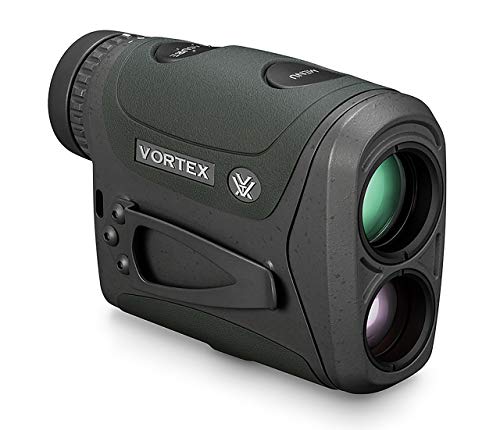
- Razor HD 4000: 7x, the highest range figure among the handheld rangefinders here
- Denali 1000: angle compensation; the title names a green color
Vortex's whitetail article adds two details: the Diamondback HD 2000 has a built-in clip to fasten it to a pocket while you draw, and the Viper HD 3000 has four target modes and two ranging modes. The cross-brand page is rangefinders for hunting.
Lineup notes: GlassPak harnesses and straps
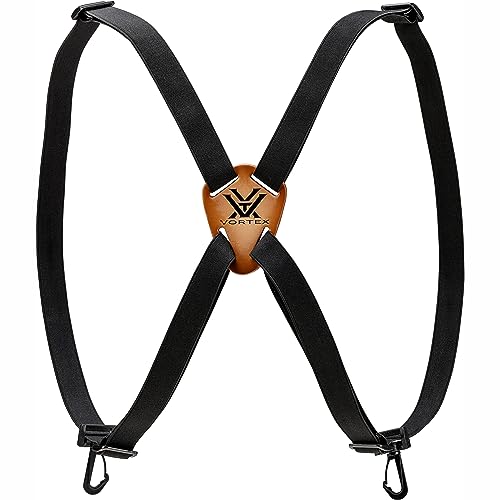
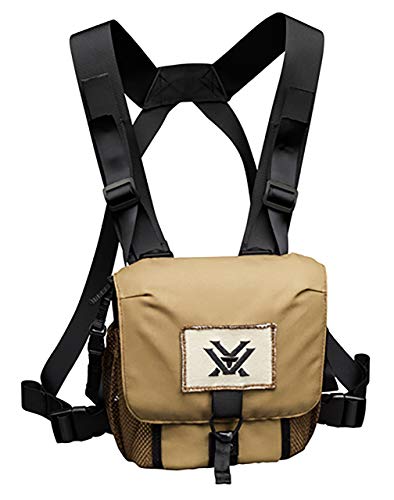
The harness side of the grid splits two ways:
- Strap-only harnesses: the Binocular Harness Strap (nylon and Lycra, per the listing) and the Archer's Binocular Strap
- GlassPak chest packs: the original GlassPak, the GlassPak Sport for most 42 mm and smaller binoculars (bungee closure) and the GlassPak Pro for most 50 and 56 mm binoculars
The original GlassPak listing names the binoculars it fits, including all Razor HD, Viper HD, Crossfire HD and Triumph HD models and several Diamondback HD sizes. Vortex's harness article gives the reasons for a chest harness: it spreads the weight across your shoulders instead of your neck, keeps the binoculars close for fast access with little movement, and stops them from swinging into trees. For a bowhunter, the last one matters at full draw. A binocular swinging on a neck strap and a bowstring are not friends. The cross-brand view is on the binocular harness page.
How to choose within the Vortex lineup
Binoculars: pick 8x or 10x by your light
My one opinion on this page: for whitetails in timber, I'd start with an 8x42 over a 10x42. The reason is exit pupil, the beam of light the binocular hands your eye. Celestron explains it as objective size divided by magnification, and a bigger exit pupil means a brighter image in low light. An 8x42 gives 5.25 mm; a 10x42 gives 4.2 mm. Deer move at first and last light. On open ground where you glass farther, the 10x earns its place.
Roof or porro prism
American Hunter explains the shapes: roof prisms have straight barrels and a more compact build, porros have the dog-leg barrels and are slightly bulkier. In the Vortex grid, the 42 mm models that state a prism type list roof, and the Vanquish lists porro. The general guide is on the hunting binoculars page.
Rangefinders: angle compensation first, then the display
Bowhunter explains why angle compensation matters from a stand: the straight-line distance to a deer below you is longer than the horizontal distance your arrow actually flies, and shooting for the longer number makes the arrow hit high. For most archery shots of about 40 yards and under, the article says to use horizontal distance. Vortex's own modes article calls this HCD mode and names archers in treestands as the users it's meant for.
After that, look at the display. The listings in the grid name either a red OLED display or a black LCD. Pick the one you can read in the light you actually hunt in, and practice the button in the yard before the season, not in the stand.
Harness size follows the binocular
Match the GlassPak to the objective size: Sport for 42 mm and smaller, Pro for 50 and 56 mm. If your binocular's title already says GlassPak included, you may not need one at all.
Care and the VIP warranty
Vortex's VIP warranty says that if a Vortex product becomes damaged or defective, Vortex will repair or replace it at no charge, regardless of how it happened, whose fault it was or where you bought it. It calls this an unlimited, unconditional lifetime warranty. It doesn't cover loss, theft, deliberate damage, or cosmetic damage that doesn't affect performance. You start a claim by phone or through the service request page on Vortex's site.
A warranty fixes a broken binocular; it doesn't fix the morning you lost waiting for it. Vortex's harness article makes the point that a fitted chest harness shields binoculars from rain, dust, scratches and drops, and keeps them from knocking against trees and rocks. (Binoculars can't file a complaint about a bouncing neck strap. I file it on their behalf.)
Vortex vs Leupold rangefinders
Both brands make laser rangefinders, rangefinding binoculars and binocular harnesses. On this site, the difference is in the listings' stated modes. Several Vortex rangefinders state angle compensation. The Leupold RX-FullDraw 5 and RX-1400i TBR/W listings state angle compensation and a bow mode.
Warranties differ too. Vortex's VIP warranty is unlimited and lifetime. Leupold's site says its electronics guarantee covers the electronic components of RX rangefinders and BX rangefinding binoculars for five years from purchase. The Leupold brand page has its lineup.
Vortex vs Sig Sauer rangefinders
Both sell laser rangefinders and rangefinding binoculars. The Vortex rangefinders here run from the Triumph HD 850 to the Razor HD 4000, most stating angle compensation. Sig Sauer's listings run from its Buckmasters models to the KILO line, and the KILO3K listing states a bow mode and a red OLED display. Display types differ by model on both brands. The Sig Sauer brand page has its lineup.
Who's behind Vortex
Vortex's about page says the Hamilton family founded the company and that the Vortex brand first hit the market in 2002. It describes Vortex as an employee-owned team headquartered in Barneveld, Wisconsin, where the company moved in 2018. This page doesn't cover where the binoculars and rangefinders are made.
8x or 10x, angle compensation, then the harness. Write all three on the inside of the box lid and you'll have the whole decision on one flap.