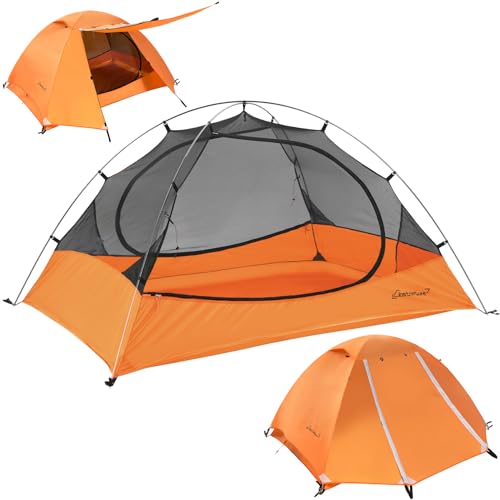



Clostnature 2 Person Backpacking Tent
Good for two people in a freestanding tent with polyester fabric and aluminum poles stated.
Skip it if you want to sit up and stand; the stated center height is 46 inches.
Camp Gear · Best-of list
The best camping tents for you are the ones sized for your crew, pitched the way you like to pitch, and tall enough that you aren't dressing on your knees. This list takes tents whose maker or Amazon listing states three things, capacity, setup type and center height, and spreads them across sizes from two people to twelve. Nothing here is ranked. Rule of thumb: count the people, add the gear, then read the height.
How this list is builtTents whose maker or Amazon listing states capacity, setup type and center height, spread across sizes.
We earn a commission if you buy through our links, at no cost to you. Disclosure
| Model | Center height | Sleeps | Amazon |
|---|---|---|---|
Clostnature 2 Person Backpacking TentTent More specs
| 46 inlisting | 2 personslisting | Check price |
Clostnature 2 Person Waterproof Camping TentTent More specs
| 46 inlisting | 2 personslisting | Check price |
East Oak Pop Up Bubble Tent 2-3 PersonTent More specs
| 82.7 inlisting | 3 personslisting | Check price |
Ayamaya 4-Person Pop Up Tent with SkylightTent More specs
| 49.2 inlisting | 4 personslisting | Check price |
EchoSmile Instant Pop Up Tent 4 PersonTent More specs
| 47.24 inlisting | 4 personslisting | Check price |
Ayamaya 6-Person Pop Up TentTent More specs
| 53.5 inlisting | 6 personslisting | Check price |
Core 6 Person Instant Cabin TentTent More specs
| 72 inlisting | 6 personslisting | Check price |
Core 9 Person Instant Cabin TentTent More specs
| 78 inlisting | 9 personslisting | Check price |
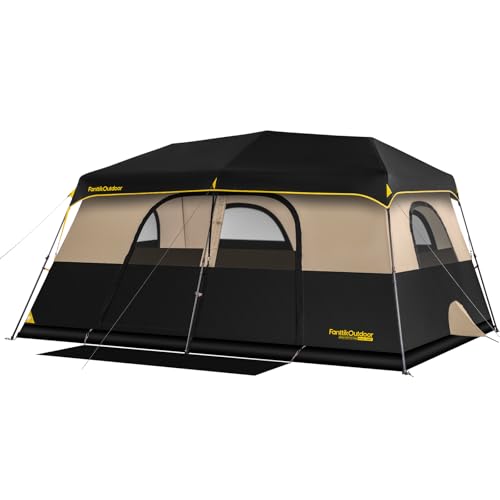
FanttikOutdoor Zeta C10 Pro Max 10 PersonTent More specs
| 80 inlisting | 10 personslisting | Check price |
FanttikOutdoor Zeta C12 Pro Max 12 PersonTent More specs
| 80 inlisting | 12 personslisting | Check price |
Good for two people in a freestanding tent with polyester fabric and aluminum poles stated.
Skip it if you want to sit up and stand; the stated center height is 46 inches.
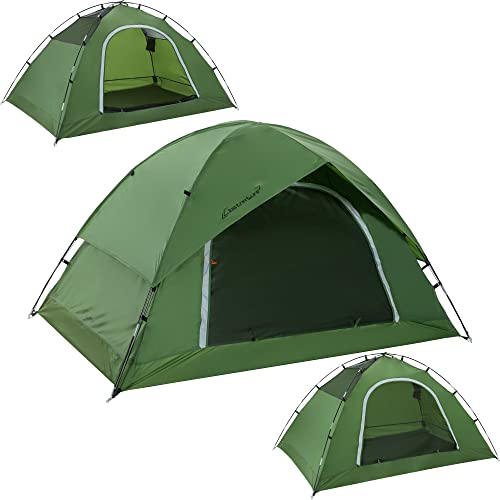
Good for two people who want a freestanding polyester dome with a 46-inch center height.
Skip it if you need pole material stated before you buy, or room to stand.
Good for three people who want a pop-up with the tallest stated center height here, 82.7 inches.
Skip it if you want a tent in a lower price tier; it shares the top tier with the Zeta C12.
Good for four people who want a pop-up frame and a 49.2-inch center height.
Skip it if you want to stand inside; for that, look at the instant cabin tents on this list.
Good for four people in a pop-up with a fiberglass frame and a 47.24-inch center height.
Skip it if you need standing room or want to fold a pop-up for the first time without practice.
Good for six people who want a pop-up frame with a 53.5-inch center height.
Skip it if six adults want to stand; the Core 6 on this list states 72 inches.
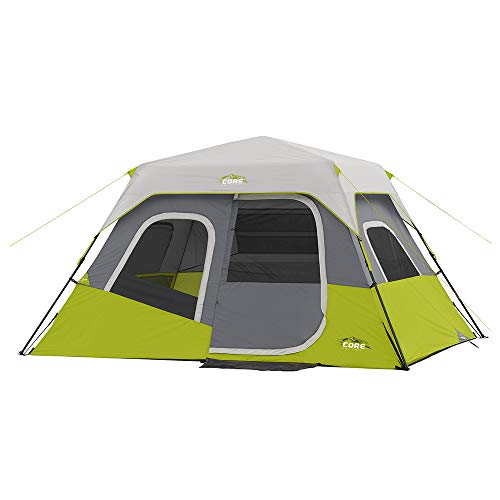
Good for six people in an instant cabin tent with pre-attached poles and a 72-inch center height.
Skip it if you carry your tent any distance from the car; this is a car-camping size.
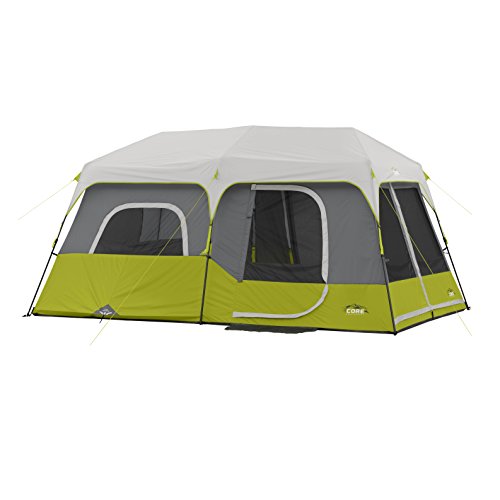
Good for nine people in an instant cabin with pre-attached poles and a 78-inch center height.
Skip it if you camp as a pair or a small family; a smaller tent is less to pitch and dry.
Good for ten people in an instant cabin with pre-attached poles and an 80-inch center height.
Skip it if your crew is under six; that much tent is a lot to pitch, stake and dry.
Good for the largest stated capacity here, twelve, in an instant cabin with pre-attached poles and an 80-inch center height.
Skip it if you want a lower price tier, or your crew fits in a smaller tent.
Every label here comes from a stated capacity, setup type or center height. A label says what a tent is, not that it's better. The list is re-checked every week, so the tent wearing a label can change.
This two-person freestanding tent states polyester fabric and aluminum poles, the only tent on this page whose spec data states its pole material as aluminum. The center height is 46 inches, which is sitting-up height for most adults. The listing title mentions two doors. If you and a partner both get up at night, two doors save a lot of crawling over each other.
The other Clostnature is the one tent here whose data names its style as a dome. It's freestanding, two-person, polyester, with the same 46-inch center height. A dome is tallest in the middle and slopes toward the edges, so the 46 inches is the peak, not the walls. The data doesn't state the pole material on this one.
At 82.7 inches, the East Oak states the tallest center height here, taller than any of the cabin tents. It's a pop-up with a stated capacity of three. The title calls it a bubble tent, which is a different shape from the domes and cabins on this list. It shares the top price tier on this list with the Zeta C12.
The smaller Ayamaya is a four-person pop-up with a 49.2-inch center height. The title mentions a skylight, a rainfly, porch poles and two doors. A pop-up frame springs open on its own, which is fast. Folding it back is the part that takes practice. More on that below.
The EchoSmile is a four-person pop-up with a 47.24-inch center height. Its data is the only one on this page to state a fiberglass frame. It's in the lower price tier with the Clostnature tents and the smaller Ayamaya.
The larger Ayamaya is the biggest pop-up on this list, rated for six, with a 53.5-inch center height. The title mentions a vestibule and porch poles. A vestibule is a covered space outside the inner tent for boots and packs. Six people at 53.5 inches means everyone dresses sitting down.
The Core 6 is a cabin tent with pre-attached poles: you unfold it, extend the legs and lock them. The center height is 72 inches. That's six feet at the peak, and cabin walls are straighter than dome walls, so more of the floor gets close to that height. The title mentions a hanging organizer for small gear.
The Core 9 states a capacity of nine. It's an instant cabin with pre-attached poles and a 78-inch center height. With nine sleeping spots and a tall peak, it's a car-camping tent for a family or a small crew. The title names a 2-minute setup. That figure comes from the listing, and like any setup time, it assumes flat ground and a person who has done it before.
The Zeta C10 states a capacity of ten. It's an instant cabin with pre-attached poles and an 80-inch center height, tied with the C12 for the tallest of the four cabins here. The title names a 60-second setup and a rainfly.
At twelve, the Zeta C12 states the biggest capacity on this page. It's an instant cabin with pre-attached poles and the same 80-inch center height as the C10. It sits in the top price tier on this list, alongside the East Oak.
Core's own sizing guide suggests that groups of ten or more look at several smaller tents instead of one big one. For a crew the size of either Zeta, weigh one tent against two before you buy.
The rule that builds this list uses three fields: capacity, setup type and center height. They're also the three that decide most tent choices.
Here's the thing about the number on the bag. Core's own sizing guide says capacity ratings are based on how many standard sleeping pads fit on the floor without overlapping. That's bodies in a row, not bodies plus duffels, boots and a dog. Core suggests a rule of two: number of campers times two. Two people, a four-person tent. A family of four, an eight. MSR's backpacking guide suggests a smaller step, sizing up by one, because every extra foot gets carried.
Core also notes that a queen air mattress takes up the space industry sizing assigns to two campers. If you bring cots or air beds, count them as people.
Three setup types show up on this list:
MSR's guide says freestanding tents need no guy lines to stand but still recommends staking them for room and wind stability. That goes double for anything that opens itself. Regatta's folding guide warns that a pop-up folded the wrong way may "fire back out again." Read the manual twice, then fold it once in the yard.
Every center height on this list is the tallest point inside. On a dome, the walls slope away from that point fast. On a cabin, the walls are closer to straight. Core's guide says peak height matters as much as floor size, and straight walls with a tall peak feel more spacious than sloped walls. Two tents with the same capacity label can feel very different.
On this list, the stated heights fall into three groups:
I'll take standing height. I spent enough of my working life crouched under shop tables, fixing other people's birdhouses. But tall tents are big tents, and somebody has to carry them, which is the other half of the decision.
Big cabin tents with tall walls make a lot of tent to haul. This list doesn't show tent weights. That's on purpose: weight is one of the fields this site takes only from the maker, and the maker figures aren't in the data yet. If you walk in from the truck, check the maker's packed weight before you buy. MSR's guide notes that packaged weight includes stakes, the stuff sack and instructions, and it's the number that matters on your back.
The National Park Service says to practice setting up your tent at home before the trip, so you're a pro when you get to the park. That's my one opinion on this page, and I'll stand on it: pitch a new tent in the yard before it ever sees a campsite. Do it once in daylight. Do it again with the porch light off.
It goes double for pop-ups. Back in the day, before any of us knew better, a pop-up ground blind at Hemlock Run went unstaked for one afternoon. We found it 40 yards downhill against a hemlock. Nobody was in it, thank goodness. A pop-up tent has the same frame idea and more fabric. Stake it before you unzip it, and stake it before you walk away from it.
The NPS guidance is plain: find a large, flat place and clear the sticks, rocks and pinecones. Stay out of low spots that collect water. Put your head on the uphill side. Keep the tent away from the fire ring and the cooking area, and away from dead trees.
If your tent came with a footprint or ground cloth, lay it down first. The NPS says to fold any extra under, or it will collect water instead of keeping it off. And keep stakes and guy lines out of the footpath. A guy line always catches the person carrying the coffee.
Never run a fuel-burning heater or lantern inside a closed tent. The CPSC warns against using them while sleeping in enclosed areas like tents, because of carbon monoxide.
If you hike more than a mile to camp, skip the cabin tents here, and skip any tent whose maker weight you can't find. If you camp in snow, this list doesn't sort by season ratings; MSR's guide says 4-season tents are built to keep snow and cold air out, so look for a maker's own 4-season claim. And if you already know you want a specific size, the 6 person tent page and the other size pages go deeper than a list spread across every size can.
MSR's tent care guide says mildew can start forming on a wet, crumpled tent in as few as 24 hours, and that moisture breaks down waterproof coatings over time. The fix is simple:
A tent packed wet in November will greet you in May. It won't be friendly about it.
The rule is in the box above, in full here. A tent goes on this list when its maker or its Amazon listing states three things: capacity, setup type and center height. Then the list is spread across sizes, so you see two-person through twelve-person tents instead of a page full of tents that all sleep six. Values come from the maker first; where the maker is silent, they come from the Amazon listing, and on this page all three fields do.
There are no ratings or review counts behind this list, and nobody at Hemlock Run has slept in these particular tents. Claimed properties like water ratings aren't used here unless the maker states them. The list is re-checked weekly. A tent can drop off when its listing changes, and another can come on when its data fills in. Missing specs aren't mentioned, and in the table they show as a dash.
Count the people, read the height, and pitch it once in the yard. Then put the coffee on, because somebody always asks how it went.
Capacity numbers count sleeping pads, not comfort. Core's sizing guide says ratings are based on how many standard pads fit on the floor without overlapping, and it suggests a rule of two: campers times two. For backpacking, MSR's guide suggests sizing up by one. A queen air mattress, Core notes, takes the space of two campers.
A pop-up tent's frame springs open on its own. An instant tent has poles already attached to the body, so you extend and lock them. A freestanding tent uses separate poles that hold its shape without guy lines. All three still need stakes. MSR recommends staking even freestanding tents for room and wind stability.
Compare the center height to your own height, and remember it's measured at the peak only. On this list, the instant cabin tents state 72 to 80 inches and one pop-up states 82.7 inches. The two-person tents state 46 inches, which is sitting-up height. Core's guide says straight walls with a tall peak feel roomier than sloped walls.
Not a fuel-burning one. The Consumer Product Safety Commission says never to use fuel-burning portable heaters or lanterns while sleeping in enclosed areas such as tents, campers and vehicles, because of carbon monoxide. Dress warmer, use a sleeping bag rated for the night, and keep stoves and lanterns outside.
Right now it's the FanttikOutdoor Zeta C12 Pro Max, at a stated capacity of twelve with an 80-inch center height. The Zeta C10 Pro Max is next at ten. The list is re-checked weekly, so the largest tent can change. For groups of ten or more, Core's own sizing guide suggests several smaller tents.