Camp Gear · Gear type
Small Cooler
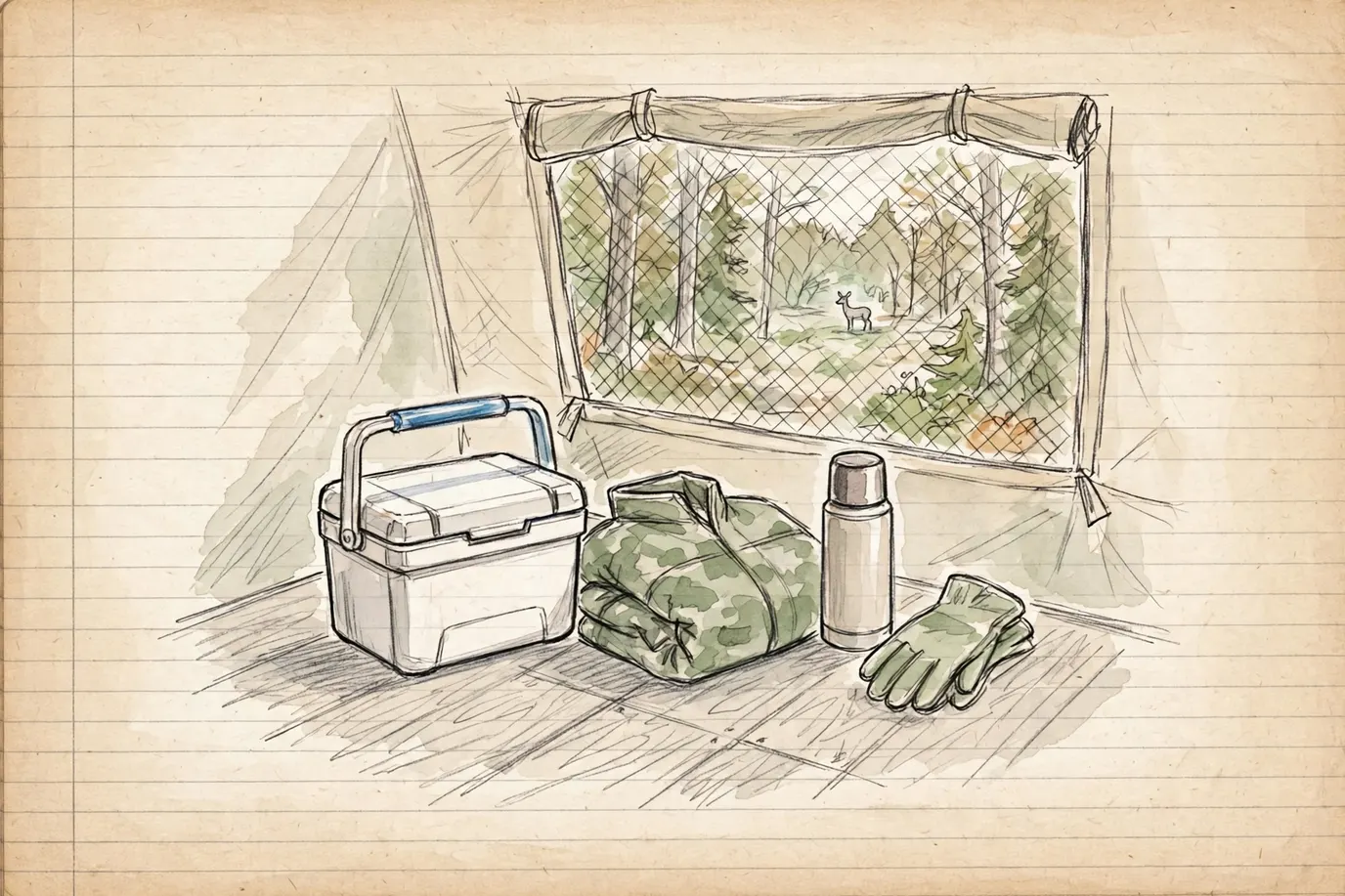
A small cooler is a hard cooler of 30 quarts or less: the lunch box for the blind, the drink cooler next to the big one, the box that rides in the truck cab. It's built for hours or a day or two, not a week, and it gets opened a lot. So the deciding specs are different from a camp chest: what actually fits inside, what it weighs in one hand, and how fast you can get in and out of it. (Walt says a small cooler is just a big cooler with self-control. I have never been accused of that.)
We earn a commission if you buy through our links, at no cost to you. Disclosure
| Model | Weight | Capacity | Construction | Ice retention (claimed) | Wheels | Drain plug | Amazon |
|---|---|---|---|---|---|---|---|
Naturehike 5.3 QT Hard CoolerHard cooler | — | 5.3 qtlisting | — | — | — | — | Check price |
Engel UC7 7.5 QtHard cooler | — | 7.5 qtlisting | — | — | — | — | Check price |
Pelican 8 Quart Personal CoolerHard cooler More specs
| — | 8 qtlisting | — | — | — | — | Check price |
RTIC Road Trip 8 QT Personal CoolerHard cooler More specs
| — | 8 qtlisting | — | — | — | — | Check price |
VEVOR 8.5 QT Hard CoolerHard cooler More specs
| — | 8.5 qtlisting | — | — | — | — | Check price |
Coleman Chiller 9 QtHard cooler More specs
| — | 9 qtlisting | — | — | — | — | Check price |
| — | 10 qtlisting | — | 3 dayslisting | — | — | Check price | |
Igloo Gripper CoolBox 10 QtHard cooler More specs
| — | 10 qtlisting | — | — | — | — | Check price |
Igloo Tag Along Too 11 QtHard cooler More specs
| — | 11 qtlisting | — | — | — | — | Check price |
| — | 12 qtlisting | — | — | — | — | Check price | |
EchoSmile 12 Qt Rotomolded CoolerHard cooler | — | 12 qtlisting | — | — | — | Yeslisting | Check price |
Mammoth Cruiser 15Hard cooler | — | 12 qtlisting | — | — | — | — | Check price |
Mammoth Cruiser 15Hard cooler | — | 12 qtlisting | — | — | — | — | Check price |
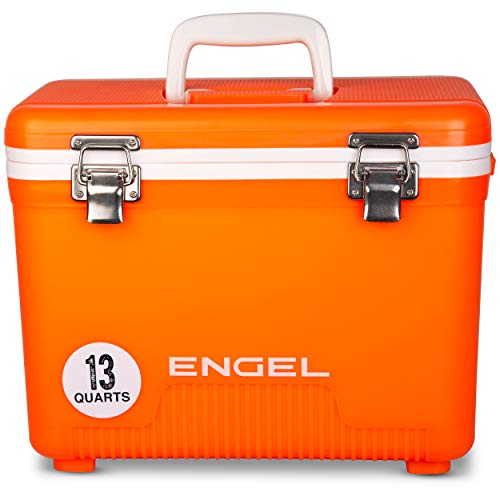
Engel UC13 13 QtHard cooler | — | 13 qtlisting | — | — | — | — | Check price |
Engel UC13 13 QtHard cooler | — | 13 qtlisting | — | — | — | — | Check price |
Engel UC13 13 QtHard cooler | — | 13 qtlisting | — | — | — | — | Check price |
Frosted Frog 14 Qt Hyper-Light CoolerHard cooler | — | 14 qtlisting | — | — | — | — | Check price |
Pelican 14 QT Personal CoolerHard cooler | — | 14 qtlisting | — | — | — | — | Check price |
Vingli 14 QT Retro Ice ChestHard cooler More specs
| — | 14 qtlisting | — | — | — | — | Check price |
Grizzly Coolers Grizzly 15Hard cooler More specs
| 12 lbmaker | 15 qtlisting | Rotomoldedmaker | — | — | — | Check price |
Grizzly Coolers Grizzly 15Hard cooler More specs
| 12 lbmaker | 15 qtlisting | Rotomoldedmaker | — | — | — | Check price |
Naturehike 15 QT Hard CoolerHard cooler | — | 15 qtlisting | — | 2.8 dayslisting | — | — | Check price |
Coleman Chiller 16 QtHard cooler More specs
| — | 16 qtlisting | — | — | — | — | Check price |
| — | 16 qtlisting | — | 5 dayslisting | — | — | Check price | |
Costway 16 Quart Camping CoolerHard cooler | — | 16 qtlisting | — | 5 dayslisting | — | — | Check price |
Goplus 16 Qt CoolerHard cooler More specs
| — | 16 qtlisting | — | 4 dayslisting | — | — | Check price |
Goplus 16 Qt Cooler with Cup HoldersHard cooler More specs
| — | 16 qtlisting | — | 5 dayslisting | — | — | Check price |
Goplus 16 Qt Cooler with Cup HoldersHard cooler More specs
| — | 16 qtlisting | — | 5 dayslisting | — | — | Check price |
Igloo Playmate 30-CanHard cooler More specs
| — | 16 qtlisting | — | — | — | — | Check price |
Igloo Profile II 16 Qt RollerHard cooler More specs
| — | 16 qtlisting | — | — | Yeslisting | — | Check price |
RTIC Road Trip 16 QTHard cooler More specs
| — | 16 qtlisting | — | — | — | — | Check price |
Stanley Outdoor Hard Cooler 16 qtHard cooler More specs
| — | 16 qtlisting | — | — | — | — | Check price |
Stanley Outdoor Hard Cooler 16 qtHard cooler More specs
| — | 16 qtlisting | — | — | — | — | Check price |
Dometic Recon Hardside 16LHard cooler | — | 16.9 qtlisting | Injection moldedlisting | — | — | — | Check price |
VEVOR 17QT Hard CoolerHard cooler More specs
| — | 17 qtlisting | — | — | — | — | Check price |
EchoSmile 18 Qt Rotomolded CoolerHard cooler | — | 18 qtlisting | — | — | — | Yeslisting | Check price |
Naturehike 18 QT Hard CoolerHard cooler More specs
| — | 18 qtlisting | — | 3.6 dayslisting | — | — | Check price |
Engel UC19 19 QtHard cooler | — | 19 qtlisting | — | — | — | — | Check price |
Engel 19 Qt Live Bait CoolerHard cooler | — | 19 qtlisting | — | — | — | — | Check price |
Engel UC19 19 QtHard cooler | — | 19 qtlisting | — | — | — | — | Check price |




Naturehike 19 QT Hard CoolerHard cooler | — | 19 qtlisting | — | — | — | — | Check price |
|---|---|---|---|---|---|---|---|
BrüMate BrüTank Wheeled Hard CoolerHard cooler | — | 20 qtlisting | — | — | Yeslisting | — | Check price |
Costway 20 Qt Insulated Hard CoolerHard cooler | — | 20 qtlisting | — | 6 dayslisting | — | Yeslisting | Check price |
| — | 20 qtlisting | — | — | — | — | Check price | |
EchoSmile 20 Qt Insulated CoolerHard cooler | — | 20 qtlisting | — | 3 dayslisting | — | — | Check price |
Frosted Frog 20 Qt Heavy Duty CoolerHard cooler | — | 20 qtlisting | — | — | — | Yeslisting | Check price |
Frosted Frog 20 Qt Camo CoolerHard cooler | — | 20 qtlisting | — | — | — | Yeslisting | Check price |
Frosted Frog 20 Qt Heavy Duty CoolerHard cooler | — | 20 qtlisting | — | — | — | Yeslisting | Check price |
Frosted Frog 20 Qt Heavy Duty CoolerHard cooler | — | 20 qtlisting | — | — | — | Yeslisting | Check price |
Frosted Frog 20 Qt Heavy Duty CoolerHard cooler | — | 20 qtlisting | — | — | — | Yeslisting | Check price |
Frosted Frog 20 Qt Camo CoolerHard cooler | — | 20 qtlisting | — | — | — | Yeslisting | Check price |
Grizzly Coolers Grizzly 20Hard cooler More specs
| 16 lbmaker | 20 qtlisting | Rotomoldedmaker | — | — | Yesmaker | Check price |
Grizzly Coolers Grizzly 20Hard cooler More specs
| 16 lbmaker | 20 qtlisting | Rotomoldedmaker | — | — | Yesmaker | Check price |
Igloo Tag Along 360 Spinner 20 QtHard cooler More specs
| — | 20 qtlisting | — | — | Yeslisting | — | Check price |
Pelican Elite 20 QTHard cooler More specs
| — | 20 qtlisting | — | — | — | — | Check price |
RTIC Ultra-Tough 20 QTHard cooler More specs
| — | 20 qtlisting | — | — | — | — | Check price |
Camp-Zero 21 Quart Rotomolded Hard CoolerHard cooler | — | 21 qtlisting | — | — | — | Yeslisting | Check price |
Costway 21 Qt Insulated Hard CoolerHard cooler | — | 21 qtlisting | — | 3 dayslisting | — | Yeslisting | Check price |
EchoSmile Ultra-Light Cooler 20LHard cooler | — | 21 qtlisting | — | — | — | Yeslisting | Check price |
Goplus Ultra-Light 21 Qt Hard CoolerHard cooler | — | 21 qtlisting | Injection moldedlisting | 5 dayslisting | — | — | Check price |
RTIC Ultra-Light 22 QTHard cooler More specs
| — | 22 qtlisting | — | 6 dayslisting | — | — | Check price |
RTIC Ultra-Light 22 QT WheeledHard cooler | — | 22 qtlisting | — | — | Yeslisting | — | Check price |
Stanley Outdoor Hard Cooler 24 qtHard cooler | — | 24 qtlisting | — | 4 dayslisting | — | Yeslisting | Check price |
VEVOR 24QT Hard CoolerHard cooler More specs
| — | 24 qtlisting | — | — | — | — | Check price |
Bison Coolers 25 Quart Hard CoolerHard cooler | — | 25 qtlisting | — | — | — | — | Check price |
Blue Coolers Cobalt 25Hard cooler | 14.3 lbmaker | 25 qtlisting | Rotomoldedmaker | 3 dayslisting | — | — | Check price |
Blue Coolers Cobalt 25Hard cooler | 14.3 lbmaker | 25 qtlisting | Rotomoldedmaker | 3 dayslisting | — | — | Check price |
Blue Coolers Cobalt 25Hard cooler | 14.3 lbmaker | 25 qtlisting | Rotomoldedmaker | 3 dayslisting | — | — | Check price |
Blue Coolers Cobalt 25Hard cooler | 14.3 lbmaker | 25 qtlisting | Rotomoldedmaker | 3 dayslisting | — | — | Check price |
| — | 25 qtlisting | — | — | — | Yeslisting | Check price | |
Goplus Hard Cooler 6-Day Ice RetentionHard cooler | — | 25 qtlisting | — | 6 dayslisting | — | — | Check price |
Goplus Rolling Hard CoolerHard cooler | — | 25 qtlisting | — | 6 dayslisting | Yeslisting | — | Check price |
Igloo Retro Picnic Basket 25 QtHard cooler More specs
| — | 25 qtlisting | — | — | — | — | Check price |
Igloo BMX 25 QtHard cooler More specs
| — | 25 qtlisting | Blow moldedlisting | — | — | — | Check price |
Igloo Trailmate 25 QtHard cooler More specs
| — | 25 qtlisting | — | — | — | — | Check price |
Igloo Trailmate 25 QtHard cooler More specs
| — | 25 qtlisting | — | — | — | — | Check price |
Igloo Trailmate 25 QtHard cooler More specs
| — | 25 qtlisting | — | — | — | — | Check price |
Naturehike 25 QT Hard CoolerHard cooler More specs
| — | 25 qtlisting | — | 6 dayslisting | — | — | Check price |
Koolatron Vintage Ice Chest 25LHard cooler More specs
| — | 26 qtlisting | — | — | — | — | Check price |
| — | 26 qtlisting | — | — | — | Yeslisting | Check price | |
Lifetime 28 QT High-PerformanceHard cooler | — | 28 qtlisting | — | — | — | — | Check price |
Lifetime 28 Quart High PerformanceHard cooler | — | 28 qtlisting | — | — | — | — | Check price |
Lifetime 28 Quart Patriotic EditionHard cooler | — | 28 qtlisting | — | 5 dayslisting | — | — | Check price |
Lifetime 28 Quart Patriotic EditionHard cooler | — | 28 qtlisting | — | 5 dayslisting | — | — | Check price |
| — | 30 qtlisting | — | — | — | — | Check price | |
Coleman Chiller 30 QtHard cooler | — | 30 qtlisting | — | — | — | — | Check price |
EchoSmile Rotomolded Cooler 25-75 QtHard cooler | — | 30 qtlisting | — | — | — | Yeslisting | Check price |
Engel UC30 30 QtHard cooler | — | 30 qtlisting | — | — | — | — | Check price |
Engel UC30 Fishing DryboxHard cooler | — | 30 qtlisting | — | — | — | — | Check price |
Engel 30 Qt Live Bait Cooler PROHard cooler | — | 30 qtlisting | — | — | — | — | Check price |
Igloo Profile II 30 QtHard cooler More specs
| — | 30 qtlisting | — | — | — | — | Check price |
Ninja FrostVault 30qt FB131Hard cooler More specs
| — | 30 qtlisting | — | — | — | — | Check price |
Ninja FrostVault 30qt WheeledHard cooler More specs
| — | 30 qtlisting | — | — | Yeslisting | — | Check price |
Pelican Elite 30 QTHard cooler | — | 30 qtlisting | — | — | — | — | Check price |








What’s in this listHard coolers of 30 quarts or less. “—” means neither the maker nor the Amazon listing states it.
What makes a small cooler its own thing
A small cooler isn't a shrunken camp chest. It does a different job. A big cooler gets packed once, shut, and opened a few times a day. A small one gets grabbed, carried, opened, set down, opened again, and stuffed in the cab between the seat and the door.
That changes what you should care about. Days of ice matter less. Weight in one hand, how fast the lid opens and what stands up inside matter more.
The shared hard-cooler basics (shell types, gaskets, ice claims, packing order) are on the coolers page. This page sticks to the small end: hard coolers of 30 quarts or less, which is the line this site uses for small. The table under this text lists them with capacity, can count, construction, latches, drain plug, weight and interior and exterior size as the maker lists them, or the Amazon listing where the maker is silent (marked as listing values; weight is the maker's alone). A dash means neither states it.
Where a small cooler fits at deer camp
Here's where small coolers earn a spot in the truck:
- Lunch in the blind or the truck: a day's food for one or two people
- The drink cooler: the one everybody opens, so the food cooler stays shut
- The cab cooler on the drive up: snacks within reach, not buried in the bed
- One-night trips: Igloo's size guide names a one-night camping trip as a small-cooler job
- The second cooler for a hunting partner who brings his own sandwiches (Walt, specifically)
The drink-cooler job is worth spelling out. The FDA suggests packing drinks in one cooler and perishable food in another, so the food isn't hit with warm air every time someone wants a soda. One maker's ice guide says the same thing from the other direction: a separate drink cooler keeps the main one closed. A small cooler is cheap insurance for the big one.
How to pick a small cooler, spec by spec
At this size every inch of inside space counts and every pound shows up in your forearm. Here's what to read in the table.
Capacity: picture the space in gallons
Quarts are hard to picture. Gallons are easier: four quarts to the gallon, so a 20-quart cooler holds roughly a 5-gallon bucket of space. That's a big bucket, not a bathtub.
At this size, shape matters as much as the number. Igloo's size guide notes that cans and juice boxes stack evenly, while packaged food and glass bottles are harder to arrange, and that ice takes its share of the room too. A small box has no slack to hide a bad fit.
Igloo's ranges, for scale:
- Mini personal coolers: 6 cans or less, 7 to 12 cans, or 15 quarts or less, for lunch, snacks or a small picnic
- Small hard coolers: up to 20 quarts, lunch and a few drinks
- Medium: starting at 21 quarts, which is where the rest of this site's small range sits
Real talk: buy for what you'll put in it, not for the bigger number. UMaine Extension points out that a large cooler with only a little food has extra air space, which makes it harder to keep cold. A half-empty cooler is mostly warm air with a lid.
Can capacity: check whether the ice is counted
Can counts are the most common size number on small coolers, and they're based on the 12-ounce can. The trouble is that makers count differently. One maker lists its 20-quart rotomolded cooler at 24 cans with 5 lb of ice. That's an honest number because it tells you the ice assumption.
A count with no ice in it describes a cooler you'll never actually pack. When the maker doesn't say, treat the can number as a hint and compare quarts instead.
Interior dimensions: what stands up under the lid
This is where small coolers trip people up. Wall thickness doesn't shrink with the cooler, so a thick-walled small box loses a bigger share of its outside size to walls.
One maker's 20-quart rotomolded cooler lists its exterior at 20.25 by 14.5 by 14.25 inches and its bottom interior at 14.25 by 9.25 by 10.25. The outside looks like a mid-size box. The inside is a 20-quart box.
So check interior height for the tallest thing you'll carry: a thermos, a wine bottle, a 2-liter, a stack of containers. If it doesn't stand up, it lies down and takes the room of three cans. (Ask me how I know. The answer is a thermos and a very wet sandwich.)
Weight: a small cooler you can't lift with one hand isn't small
The weight column is the maker's empty weight. On small coolers, it swings a lot with construction. One maker's 20-quart rotomolded cooler is listed at 16 lb empty, before ice, food or drinks. A thin-walled lunch-size box weighs far less.
Neither is wrong. The heavy one holds ice longer and doubles as a step or a seat. The light one is the one you'll actually carry from the truck to the blind. Decide how far it walks before you decide how thick it should be.
Construction: how long does it need to hold cold
The construction column says how the shell was made when the maker states it; rotomolded is a maker claim only. At this size you'll see the full range:
- Rotomolded: thick, one-piece shell; the heaviest and longest-holding small coolers
- Injection-molded or blow-molded: thinner walls, lighter, the everyday small cooler
- Steel exterior: one maker lists a steel outside on a 20-quart model; the classic look
- Lightweight dry-box style: thinner insulation, built light
How long each holds ice depends on wall thickness more than size. One maker puts its lightweight boxes with thinner insulation at 12 hours to 2 days in real-world use, and its thick rotomolded hard coolers at up to 10 days under ideal conditions. For a lunch cooler, the short number is often plenty. For a drink cooler that sits on a tailgate all weekend, it isn't.
Ice retention claims: useful for comparing, not planning
The ice retention column is a lab number. Igloo's published test fills the cooler to 90% with 10°F ice, keeps the lid shut, and holds it in a 90°F oven. A small drink cooler at camp gets opened dozens of times. No lab test opens the lid for Walt's fourth soda.
Use the claim to rank small coolers against each other. For a day trip, the frozen packs you put in matter more than the claim on the label. More on that below.
Latches and lid: you'll open this one a lot
On a small cooler, the lid is the part you touch most. The latches column lists the style. A push-button or simple snap lid opens with one hand, which is handy when the other hand holds a coffee. Rubber T-latches and other pull-down latches seal tighter against the gasket and hold better when the cooler bounces in the truck.
One maker's 20-quart cooler pairs latches that need no extra hardware with a rubber gasket and a stainless steel carry handle with a foam grip. That's the trade at small size: one good handle beats two molded-in side grips when you're carrying it alone.
Drain plug: nice to have, not always there
Many small coolers skip the drain. The table shows whether the maker or the listing lists one. On a small box you can tip it and pour, so a missing plug isn't a deal breaker. A plug helps most on the drink cooler, which ends every weekend full of meltwater.
Keeping a day's food safe in a small cooler
Food safety is the part of a small cooler that isn't optional. It isn't complicated either.
The FDA's line is 40°F or below for cold food. Perishables shouldn't sit out longer than 2 hours, or 1 hour when it's above 90°F outside. Clemson Cooperative Extension says bacteria multiply fast between 40°F and 140°F.
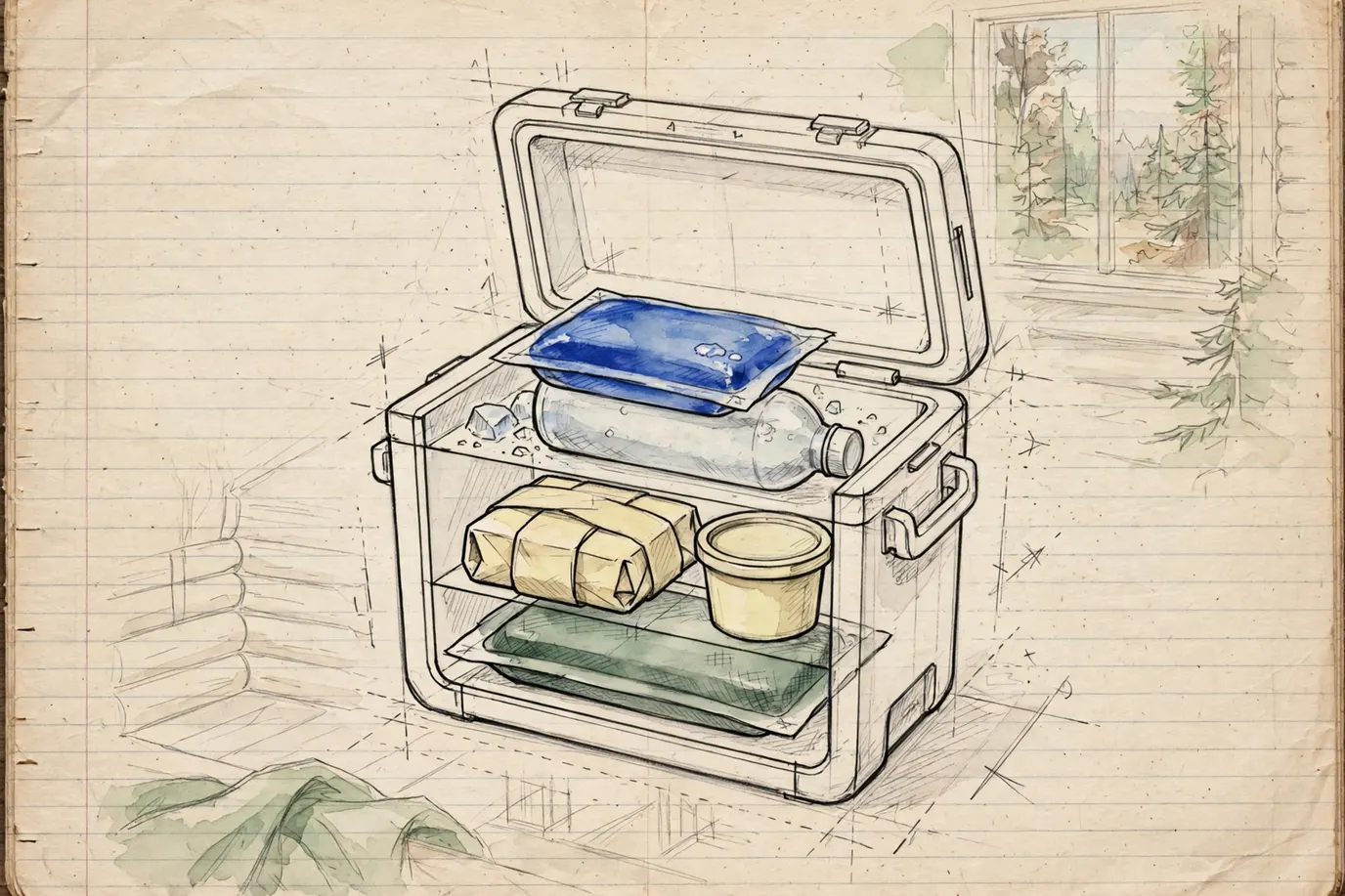
For a lunch-size cooler, Clemson's packing method works well:
- One cold source on the bottom: a gel pack or a frozen bottle of water
- Perishable food in the middle: sealed or wrapped
- A second cold source on top: at least two cold sources in all
- Close it and keep it shut until lunch
Clemson notes that gel packs keep food cold until lunchtime but generally won't last all day, so a full day's sit wants more than one pack each way, or a small cooler with real ice. A frozen water bottle pulls double duty: it's a cold pack in the morning and a drink by noon.
Keep raw meat wrapped and low, away from ready-to-eat food, which both the FDA and Mississippi State Extension recommend. And keep the cooler in the shade. In a blind, that's under the bench, not by the window.
Small cooler setups that work
The blind lunch box. Lunch-size, light, one handle, two cold packs. If you sit all day, add a frozen bottle. Pick from the bottom of the table's capacity range.
The drink cooler. Around 20 to 30 quarts, a drain plug and a lid that opens one-handed. This cooler gets opened more than anything else at camp, so the latch matters more than the claim.
The truck-cab cooler. Measure the floor of the back seat or the gap behind the console first. Exterior dimensions decide this one, not quarts.
The one-night trip. Toward the top of the range, thicker walls, real ice. This is the end of the small range where a 30-quart box earns its size.
Whichever job it gets, pack it in the order you'll eat it. Digging for the sandwich under the apple is how the cold gets out. (I dig. I've been told about the digging.)
Who should skip a small hard cooler
Skip it if you walk a long way in to your stand. A soft cooler or a backpack cooler carries better on your back and folds when it's empty. Skip it if you're feeding a camp for a weekend: food for several people and several days needs a medium or large cooler, and the cooler size guide walks through that. And if you want a week of cold with no ice at all, that's an electric cooler on truck power.
Caring for a small cooler
Small coolers get forgotten in the truck with half a sandwich inside. Don't let that be you. Mine was. In October. Found it in March.
UMaine Extension's routine:
- Wash with soap and warm water before and after each trip
- Sanitize with a bleach solution
- Store it dry, clean and out of direct sun, with the lid cracked
Pre-chill it the night before a long sit if you can. One maker notes that a warm cooler spends good ice cooling itself down, and on a small cooler that's a bigger share of the ice you brought.
That's the small cooler. Buy it for the job, pack cold on both sides of the food, and keep the lid shut until lunch. Then check the truck for sandwiches.
Brands in this list
Related
Questions people ask
What size is a small cooler?
There's no industry line. Igloo's hard-cooler range calls up to 20 quarts small and starts medium at 21. This site counts hard coolers of 30 quarts or less as small, because that's the range people carry in one hand. A quart is a quarter gallon, so a 20-quart cooler is roughly 5 gallons of space before ice.
How many cans fit in a 20 qt cooler?
It depends on the cooler and on whether the count includes ice. One maker lists its 20-quart rotomolded cooler at 24 standard 12-ounce cans with 5 lb of ice. Thick walls cut into the space, so another 20-quart box can hold more or fewer. Compare can counts only when both makers say how much ice they assume.
How long does ice last in a small cooler?
Less than in a big one, and less than the claim. Makers measure ice life in a closed cooler in a hot lab. One maker puts its thin-walled, lightweight boxes at 12 hours to 2 days in real-world use, while its thick-walled hard coolers claim far longer. For a day hunt, plan on frozen packs above and below the food.
Small hard cooler or soft cooler for a day hunt?
A soft cooler weighs less and folds flat when it's empty. A small hard cooler takes a beating in a truck bed, can double as a seat and usually holds ice longer. If you walk in to your stand, the soft cooler or a backpack cooler wins. If the cooler stays at the truck or in a blind, the hard one makes sense.
Is a 20 qt cooler big enough for one person for a day?
For lunch, snacks and drinks, usually yes. Igloo points its small sizes at a lunch and a few drinks, and its size guide suggests small coolers for a one-night camping trip. Remember that ice or frozen packs take part of that space. For a weekend of meals, step up to a medium cooler.
Sources
- Igloo: Cooler sizes, comparison and chart — accessed 2026-10-22
- Igloo: Hard coolers and ice chests — accessed 2026-10-22
- Igloo: How we test (ice retention testing) — accessed 2026-10-22
- Grizzly Coolers: Grizzly 20 cooler (product page) — accessed 2026-10-22
- Engel: Keep ice longer — accessed 2026-10-22
- U.S. Food and Drug Administration: Handling food safely while eating outdoors — accessed 2026-10-22
- Clemson Cooperative Extension (HGIC): Bag lunch safety — accessed 2026-10-22
- University of Maine Cooperative Extension: Tips for cooler food safety — accessed 2026-10-22
- Mississippi State University Extension: How to keep food safe in a cooler — accessed 2026-10-22