Brand · Fire & Lighting
Coast Flashlights, Headlamps and Lanterns
Coast is a Portland, Oregon, company that makes flashlights and headlamps, and on this site it covers three types: flashlights, headlamps and emergency area lanterns. The flashlights and headlamps both run from small AAA models to rechargeable ones in the thousands of lumens. The lanterns split into D-cell and rechargeable. The short version: pick the power source first, then the output. (Renee asked why a man with this many headlamps needs a page about more of them. Research, I said.)
We earn a commission if you buy through our links, at no cost to you. Disclosure
Coast on Amazon US
54 models- Headlamp
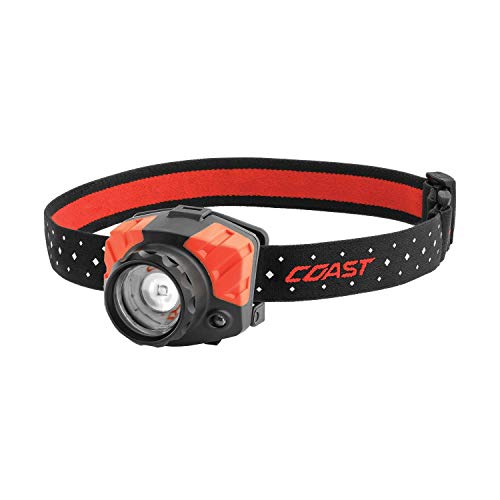
Coast HL7 Headlamp
- Max output
- 330 lumens
- Power
- AAA
- Headlamp
Coast FL85 Headlamp
- Max output
- 615 lumens
- Beam distance
- 600 ft
- Max runtime
- 13 hours
- Headlamp
Coast FL75 Headlamp
- Max output
- 700 lumens
- Headlamp
Coast XPH30R Headlamp
- Max output
- 1,200 lumens
- Max runtime
- 28 hours
- Power
- Rechargeable
- Headlamp
Coast XPH34R Headlamp
- Max output
- 2,700 lumens
- Power
- Rechargeable
- Headlamp
Coast XPH25R Headlamp
- Max output
- 410 lumens
- Power
- Rechargeable
- Headlamp
Coast WPH34R Headlamp
- Max output
- 2,000 lumens
- Power
- Rechargeable built-in
- Headlamp
Coast WPH30R Headlamp
- Max output
- 1,500 lumens
- Power
- Rechargeable built-in
- Headlamp
Coast WPH34R Headlamp
- Max output
- 2,000 lumens
- Power
- Rechargeable built-in
- Headlamp
Coast RL20R Headlamp
- Max output
- 1,000 lumens
- Power
- Rechargeable
- Headlamp
Coast RL10 Headlamp
- Max output
- 560 lumens
- Power
- AAA
- Headlamp
Coast RL35R Headlamp
- Max output
- 1,100 lumens
- Power
- Rechargeable
- Headlamp
Coast FL85R Headlamp
- Max output
- 1,000 lumens
- Max runtime
- 18 hours
- Power
- Rechargeable built-in
- Headlamp
Coast RL10R Headlamp
- Max output
- 750 lumens
- Power
- Rechargeable
- Headlamp
Coast FLX40R Headlamp
- Max output
- 800 lumens
- Power
- Rechargeable built-in
- Headlamp
Coast FL95R Headlamp
- Max output
- 1,250 lumens
- Power
- Rechargeable
- Headlamp
Coast FLX7 Headlamp
- Max output
- 700 lumens
- Power
- AAA
- Headlamp
Coast FL97R Headlamp
- Max output
- 1,200 lumens
- Power
- Rechargeable
- Headlamp
Coast WPH10R Headlamp
- Max output
- 1,000 lumens
- Power
- Rechargeable
- Headlamp
Coast TPH34R Headlamp
- Max output
- 2,700 lumens
- Power
- Rechargeable
- Headlamp
Coast FLX10R Headlamp
- Pack of
- 2
- Max output
- 1,000 lumens
- Power
- Rechargeable
- Headlamp
Coast WPH20R Headlamp
- Max output
- 2,000 lumens
- Power
- Rechargeable
- Headlamp
Coast WPH32R Headlamp
- Max output
- 2,000 lumens
- Beam distance
- 591 ft
- Power
- Rechargeable
- Headlamp
Coast XPH40R Headlamp
- Max output
- 3,000 lumens
- Max runtime
- 72 hours
- Power
- Rechargeable
- Headlamp
Coast CH1000R Headlamp 3-Pack
- Pack of
- 3
- Max output
- 1,200 lumens
- Beam distance
- 623 ft
- Flashlight
Coast G20
- Body
- Aluminum
- Max output
- 54 lumens
- Beam distance
- 72 ft
- Flashlight
Coast G26
- Max output
- 415 lumens
- Beam distance
- 440 ft
- Max runtime
- 16 hours
- Flashlight
Coast HX5
- Max output
- 410 lumens
- Beam distance
- 427 ft
- Max runtime
- 3 hours
- Flashlight
Coast HP3R
- Max output
- 500 lumens
- Flashlight
Coast PX1
- Beam distance
- 351 ft
- Max runtime
- 28 hours
- Flashlight
Coast G32
- Max output
- 465 lumens
- Beam distance
- 440 ft
- Max runtime
- 17 hours
- Flashlight
Coast PX1R
- Beam distance
- 508 ft
- Max runtime
- 24 hours
- Flashlight
Coast G22
- Max output
- 100 lumens
- Beam distance
- 180 ft
- Max runtime
- 5.5 hours
- Flashlight
Coast XP11R
- Max output
- 3,000 lumens
- Beam distance
- 919 ft
- Flashlight
Coast Slayer
- Max output
- 1,150 lumens
- Flashlight
Coast GX30
- Max output
- 2,300 lumens
- Flashlight
Coast GX20
- Max output
- 1,200 lumens
- Flashlight
Coast XP14R
- Max output
- 4,500 lumens
- Flashlight
Coast Slayer RED
- Max output
- 1,000 lumens
- Red light
- Yes
- Flashlight
Coast XP80R
- Max output
- 15,000 lumens
- Flashlight
Coast G60R
- Max output
- 1,000 lumens
- Flashlight
Coast KL35R
- Beam distance
- 420 ft
- Red light
- Yes
- Flashlight
Coast KL30R
- Max output
- 500 lumens
- Beam distance
- 420 ft
- Flashlight
Coast XT30R
- Max output
- 1,000 lumens
- Flashlight
Coast PX200R
- Max output
- 2,000 lumens
- Max runtime
- 150 hours
- Flashlight
Coast XT7R
- Max output
- 1,500 lumens
- Flashlight
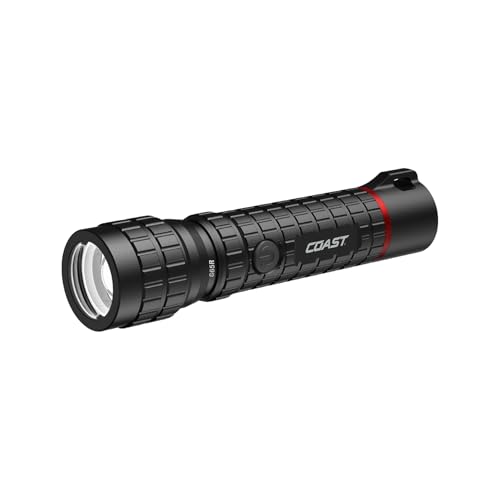
Coast G65R
- Max output
- 1,500 lumens
- Lantern
Coast EAL17 Emergency Area Light
- Max runtime
- 50 hours
- Power
- D batteries
- Lantern
Coast 20324 LED Emergency Lantern 3-Pack
- Pack of
- 3
- Max output
- 460 lumens
- Max runtime
- 50 hours
- Lantern
Coast EAL10R Emergency Lantern
- Max output
- 500 lumens
- Max runtime
- 72 hours
- Power
- Rechargeable removable cell
- Lantern
Coast EAL40R Emergency Lantern
- Max output
- 2,500 lumens
- Power
- Rechargeable
- Lantern
Coast EAL26 Emergency Lantern
- Max output
- 1,250 lumens
- Power
- D batteries
- Lantern
Coast EAL30R Emergency Lantern
- Max output
- 1,000 lumens
- Max runtime
- 15 hours
- Power
- Rechargeable built-in
- Lantern
Coast EAL35R Voice-Controlled Lantern
- Max output
- 1,000 lumens
- Max runtime
- 16 hours
- Power
- Rechargeable










What Coast makes for hunters and campers
Coast makes knives, multitools, headlamps and flashlights, according to a 2018 trade-press profile of the company. On this site, it covers three product types: flashlights, headlamps and lanterns.
Flashlights and headlamps are the bulk of it, in roughly equal measure. They range from small AAA models to big rechargeable ones that list output in the thousands of lumens (lumens are total light output). The lanterns are what Coast's listings call emergency area lights: battery lanterns meant to light a room, a tent or a power outage.
The grid above shows what's available on Amazon right now, filtered by type. It changes as models come and go, so I'll write about the families and what separates them, not about how many of each are listed this week.
Coast flashlight families in the grid
People search for "Coast flashlight" more than for anything else from this brand, and the flashlights now sit in the grid next to the headlamps. Coast names them by letter prefix, and an "R" at the end usually means rechargeable in these listings.
G-series: penlights and compact lights
The G models are the small, simple end. The G20 is an aluminum penlight and the G22 a penlight on AAA, per their listings, both low in output and fine for a glovebox or a shirt pocket. The G26 and G32 are compact flashlights a step up in output, and the G32 lists a zoomable head. The G60R is the rechargeable one of the family, with a built-in pack.
GX, HX and PX: zoom lights on standard batteries
These are the lights for anyone who wants a focusing beam without a charging cable. The GX20 runs on AAA and the GX30 and HX5 on AA, per their listings, and all three list a zoomable head. The GX30 reaches into the low thousands of lumens on AA cells, which is a lot of light from batteries you can buy anywhere. The PX1 and the rechargeable PX1R zoom too, and both list long runtimes.
A zoomable head slides between a wide flood and a tight spot, the same choice the Coast headlamps give you with two beams. Flood for camp chores, spot for the far side of the creek.
XP, KL, XT and Slayer: the rechargeables
The rechargeable side is where the big numbers live. The XP11R, XP14R and XP80R all list a zoomable head, and the XP80R lists the highest output of any Coast light in the grid. The XP11R and XP14R charge by USB-C, per their listings. The XT30R is a rechargeable zoom light at around a thousand lumens.
The KL30R and KL35R are smaller rechargeable lights, and the KL35R adds a red light. The Slayer and Slayer RED both charge by USB-C, and the RED, as the name says, lists a red light too. In this grid red light is common on the headlamps and rare on the flashlights, so if you want it in your pocket, those two are the ones to look at.
Real talk: at deer camp I still reach for a headlamp first, because both hands stay free for the tree stand rope, the zipper, the coffee and the dog. A flashlight is the second light, the one in the truck door or the coat pocket. Flashlights across brands are on the camping flashlight page, the rechargeable flashlight page and the brightest flashlight page.
Coast headlamp families in the grid
The headlamps follow the same letter-prefix naming, and the prefix does a decent job of sorting the lineup. Here's how the families look in the grid, from the listing data.
HL, FL and FLX: the everyday headlamps
These are the most common Coast names in the grid. Two run on AAA batteries: the HL7 and the FLX7. Others in the same families are rechargeable, like the FL85R, FL95R, FL97R and FLX40R.
What stands out in the listings: most FL and FLX models list both a spot and a flood beam. Spot is a tight beam for distance; flood is a wide one for close work. Many also list a red light, and several add a green one. Output runs from a few hundred lumens on the AAA models to over a thousand on the rechargeable ones.
There's also an FLX10R sold as a 2-pack, which is how I like to buy headlamps. One for me, one for whoever forgot theirs. (It's always Walt. He says it's always me. The logbook doesn't track it, which is suspicious.)
RL: the rechargeable line with an AAA option
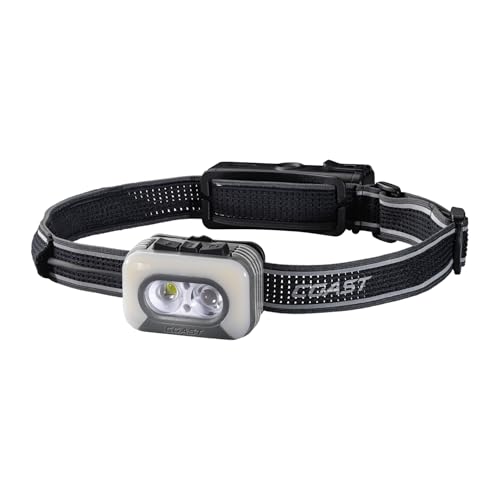
The RL models in the grid include the RL10, which runs on AAA, and the RL10R, RL20R and RL35R, which are rechargeable. All of them list a red light, and the RL20R adds green.
The RL family sits in the middle of the lineup on output, from the hundreds into the low thousands of lumens.
XPH, WPH and TPH: the high-output headlamps
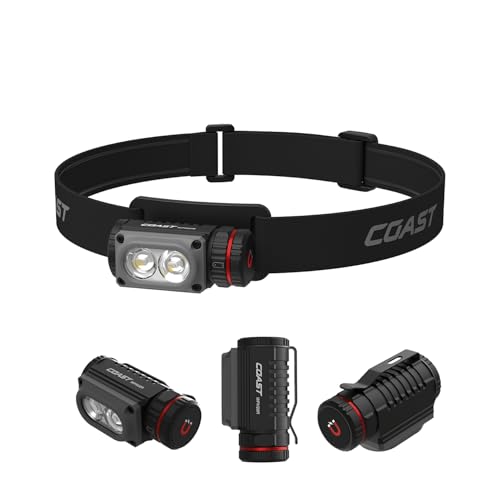
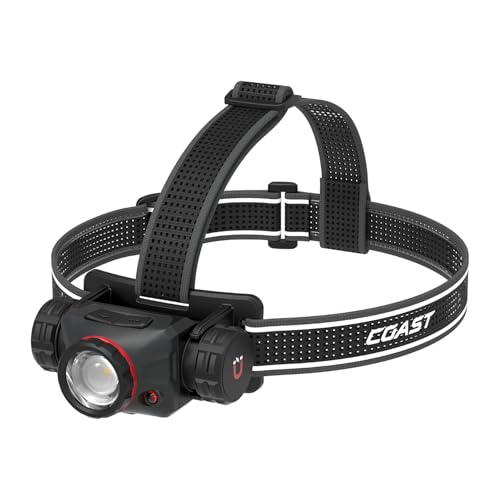
These three families hold the brightest Coast headlamps in the grid. All are rechargeable, and most list output from the high hundreds into the thousands of lumens. The XPH40R lists the highest output in the current grid, and its listing also gives the longest runtime among the headlamps here.
- XPH: from a few hundred lumens on the XPH25R up to the XPH40R at the top
- WPH: mostly in the low thousands of lumens; several list red light, and the WPH34R lists green too, plus a tilting head
- TPH: the TPH34R, listed in the same output range as the XPH34R
A few listings give beam distance in feet. The WPH32R and the CH1000R 3-pack, for example, list about 600 feet. The CH1000R is a multi-pack, like the FLX10R, which matters when you're outfitting a whole camp.
Here's what actually changes as you go up in output: a bigger battery, a heavier lamp, and a top setting you'll use for about four seconds before your eyes ask you to stop. I've lit up a whole fence line with one. The deer weren't impressed. Neither was Renee.
LP: the LP30R
The LP30R is a rechargeable headlamp in the grid that lists spot and flood beams plus red and green light, at a little over a thousand lumens. It sits near the RL20R and FL95R on paper.
Coast lanterns: emergency area lights
The lanterns are the other half of the lineup. The grid shows two power types, from the listings:
- D-cell lanterns: the EAL17 and EAL26
- Rechargeable lanterns: the EAL10R, EAL30R, EAL35R and EAL40R
The EAL10R's listing says its rechargeable cell is removable, which means you can swap a spare in. The EAL35R's listing calls it voice-controlled, so yes, you can talk to your lantern. (I already did. It didn't answer, which puts it ahead of Walt.) There's also a 3-pack of smaller LED emergency lanterns, which is the "one for every room of the cabin" option.
Output runs from a few hundred lumens up to a few thousand on the EAL40R. Runtime, where the listings give it, runs from the mid-teens of hours on some rechargeable models up to a few days on the D-cell EAL17 and the EAL10R.
Quick ice math, except it's battery math: an emergency lantern earns its keep on the night the power at the cabin goes out, and that's the night you won't have time to charge anything. D cells sit in a drawer for years. That's the whole case for them. Lanterns across brands are on the camping lantern page, the battery operated lantern page and the rechargeable lantern page.
How to choose within the Coast lineup
Pick the power source first
My one opinion on this page: a rechargeable headlamp is great until the night you forgot to charge it, so pack one that takes spare batteries too. The reason is in the grid itself. Coast sells both kinds in the same families, the AAA HL7, RL10 and FLX7 next to the rechargeable R models, so you don't have to change brands to carry one of each.
Rechargeables win on output and on the cost of feeding them. AAA models win on the fourth morning of a hunt with no outlet in sight. Spare AAAs are also easier to find in a gas station at 4:30 a.m.
One safety line for the rechargeables. The US Fire Administration says not to charge lithium-ion batteries below 32°F or above 105°F, and to keep them out of direct sun and hot cars. At a November camp, charge inside the warm cabin, not in the truck.
Then the output you'll actually use
Big lumen numbers are fun, but most of a hunt is spent on low. Walking in, tying a boot, reading a map or climbing into a stand doesn't take a thousand lumens. Look at the lowest setting and the runtime at the setting you'll use most, not just the top number. The headlamps page explains output and runtime across brands, and best headlamp has a ranked list.
Then the beam
Most Coast headlamps in the grid list both a spot and a flood beam. Flood is the one you'll live in at camp: wide and soft, good for cooking and gear. Spot is for picking out a trail marker or a tree down the hill. If a model lists only a spot, like the WPH10R, it's built for reach more than for camp chores.
Then the colors
Many Coast headlamps list a red light, and some add green. The National Park Service's Shenandoah night-sky page says red light lets your eyes adapt to darkness better than white light while still giving you light to see by, and that full adjustment takes about twenty minutes.
On a pre-dawn walk in, red keeps your night eyes and doesn't light up the whole hollow. Jess's take: "Twenty minutes of dark-adapted eyes is worth more than a thousand lumens you have to squint through." She timed it. Of course she timed it. Red-light models across brands are on the red light headlamp page.
Then tilt and fit
A tilting head lets you aim the beam down at your boots without craning your neck. Several WPH listings mention it. Strap comfort and weight aren't in the grid data, so if a heavy rechargeable lamp bothers you on a long walk, the lighter AAA models are worth a look.
Care and battery basics
The care rules for these lamps are mostly battery rules:
- Charge rechargeables before the trip, then top off at camp
- Keep spare AAAs or D cells in a dry bag, not loose in a pocket with keys
- Take batteries out of anything you'll store for months
- Don't charge lithium-ion cells in the cold or in a hot truck cab
That last line comes from the US Fire Administration's guidance, and it applies to every rechargeable headlamp and lantern, whoever makes it. Rechargeable headlamps across brands are on the rechargeable headlamp page, and the fire and lighting section has the rest of the lineup.
Who's behind Coast
Coast is a Portland, Oregon, company. SGB, a sporting goods trade publication, ran a Q&A with Coast Products CEO David Brands in October 2018. It says the company was founded in 1919 as Coast Cutlery by Henry Brands, who started out selling a fillet knife he designed for Oregon salmon fishermen. It describes Coast as family-owned, with David Brands, Henry's grandson, as CEO, and lists knives, multitools, headlamps and flashlights among its products, sold around the world through distribution centers in the US, Canada, Europe and Asia.
This page doesn't cover Coast's warranty terms or where the lights are made. Check the maker's site for the warranty on your model before you buy.
A hundred-year-old company that started with a fish knife now makes a lantern you can talk to. Renee says that makes two things in the house that don't talk back.
Where Coast shows up
Questions about Coast
Is Coast a good flashlight brand?
What can be checked is what the listings state. The Coast flashlights here run from penlights to rechargeable lights in the thousands of lumens, many with a zoomable head. The headlamps list spot and flood beams on most models, and red or green light on many. Whether one suits you depends on the power source, the output you'll actually use and the runtime at that setting. The grid on this page lists those values per model.
Who makes Coast headlamps and flashlights?
Coast Products of Portland, Oregon. A 2018 Q&A in SGB, a sporting goods trade publication, says the company was founded in 1919 as Coast Cutlery by Henry Brands, who began by selling a fillet knife for Oregon salmon fishermen. It describes Coast as family-owned, with Henry's grandson David Brands as CEO.
Which Coast flashlights are on this page?
The grid has the G-series penlights and compact lights, the GX, HX and PX zoom lights, the rechargeable XP, KL, XT and G60R models, and the Slayer and Slayer RED. Many list a zoomable head, and the XP80R lists the highest output. Flashlights across brands are compared on the camping, rechargeable and brightest flashlight pages here.
Should I get a rechargeable or AAA Coast headlamp?
Both are in the lineup. Rechargeable models reach the highest outputs in the grid; AAA models, like the HL7, RL10 and FLX7, take batteries you can buy at any gas station. For a multi-day hunt, many people carry one of each. Don't charge lithium-ion batteries below freezing, per the US Fire Administration.
Where can I buy Coast headlamps and lanterns?
The product grid on this page links to the Coast listings on Amazon US, filtered by type. Coast also sells its lights on its own site. Check that the listing names the exact model and pack count you want, since several Coast headlamps come as 2-packs and 3-packs.
Sources
- SGB Media: SGB Executive Q&A: Coast Products CEO David Brands (2018) — accessed 2026-10-23
- National Park Service, Shenandoah National Park: Night sky — accessed 2026-10-23
- US Fire Administration: Battery fire safety — accessed 2026-10-23