Brand · Fire & Lighting
Wurkkos Flashlights, Headlamps and Lanterns
Wurkkos is a flashlight maker, and on this site it covers three types: flashlights, headlamps and the CL01 camp lantern. The flashlights are most of the grid, from small HD lights to long-throw TS lights, and a few of the headlamps are right-angle lights that work as a flashlight off the strap. The short version: pick by battery first (AA-size, 18650 or 21700), then by beam (spot, flood, red), then by how you'll mount it. Renee says I read battery sizes the way other people read box scores. She's right, and I'm not stopping.
We earn a commission if you buy through our links, at no cost to you. Disclosure
Wurkkos on Amazon US
35 models- Flashlight
Wurkkos DL10R Dive Light
- Max output
- 4,500 lumens
- Beam distance
- 941 ft
- Max runtime
- 4.19 hours
- Flashlight
Wurkkos TD01
- Max output
- 2,200 lumens
- Beam distance
- 3,409 ft
- Flashlight
Wurkkos TD02
- Max output
- 2,000 lumens
- Beam distance
- 833 ft
- Flashlight
Wurkkos TD04
- Body
- Aluminum
- Max output
- 3,000 lumens
- Beam distance
- 968 ft
- Flashlight
Wurkkos TD01C
- Max output
- 1,800 lumens
- Beam distance
- 3,280 ft
- Max runtime
- 70 hours
- Flashlight
Wurkkos HD01
- Max output
- 1,200 lumens
- Flashlight
Wurkkos FC11C
- Max output
- 1,200 lumens
- Beam distance
- 509 ft
- Flashlight
Wurkkos HD01PRO
- Max output
- 1,200 lumens
- Flashlight
Wurkkos HD03
- Max output
- 680 lumens
- Beam distance
- 591 ft
- Flashlight
Wurkkos HD02
- Max output
- 3,200 lumens
- Flashlight
Wurkkos HD03
- Max output
- 680 lumens
- Beam distance
- 591 ft
- Max runtime
- 36 hours
- Flashlight
Wurkkos HD02
- Max output
- 3,200 lumens
- Beam distance
- 1,082 ft
- Flashlight
Wurkkos TD11
- Max output
- 3,000 lumens
- Beam distance
- 1,049 ft
- Flashlight
Wurkkos TS27
- Max output
- 3,200 lumens
- Beam distance
- 2,772 ft
- Flashlight
Wurkkos HD05
- Max output
- 3,100 lumens
- Beam distance
- 1,099 ft
- Red light
- Yes
- Flashlight
Wurkkos TS28
- Body
- Aluminum
- Max output
- 3,200 lumens
- Beam distance
- 1,659 ft
- Flashlight
Wurkkos HD04
- Max output
- 750 lumens
- Beam distance
- 394 ft
- Red light
- Yes
- Flashlight
Wurkkos DL46 Dive Light
- Body
- Aluminum
- Max output
- 20,000 lumens
- Beam distance
- 1,995 ft
- Flashlight
Wurkkos TS30S PRO
- Max output
- 6,000 lumens
- Beam distance
- 3,563 ft
- Flashlight
Wurkkos FC12C
- Max output
- 1,600 lumens
- Beam distance
- 1,089 ft
- Flashlight
Wurkkos TS28
- Max output
- 3,200 lumens
- Beam distance
- 1,659 ft
- Flashlight
Wurkkos TD01C
- Body
- Aluminum
- Max output
- 1,800 lumens
- Beam distance
- 3,281 ft
- Flashlight
Wurkkos HD01PRO
- Max output
- 1,200 lumens
- Flashlight
Wurkkos HD02 Mini
- Max output
- 1,300 lumens
- Beam distance
- 669 ft
- Red light
- Yes
- Flashlight
Wurkkos HD02 PRO
- Body
- Aluminum
- Max output
- 3,200 lumens
- Beam distance
- 1,083 ft
- Flashlight
Wurkkos K1
- Max output
- 1,850 lumens
- Beam distance
- 1,312 ft
- Flashlight
Wurkkos 95 CRI EDC Flashlight
- Max output
- 3,100 lumens
- Headlamp
Wurkkos HD20
- Max output
- 2,000 lumens
- Power
- Rechargeable
- Headlamp
Wurkkos HD12
- Max output
- 850 lumens
- Beam distance
- 344 ft
- Headlamp
Wurkkos HD17
- Max output
- 2,500 lumens
- Beam distance
- 721 ft
- Power
- Rechargeable
- Headlamp
Wurkkos HD10
- Max output
- 1,200 lumens
- Beam distance
- 423 ft
- Power
- Rechargeable
- Headlamp
Wurkkos HD50
- Max output
- 4,000 lumens
- Beam distance
- 785 ft
- Power
- Rechargeable
- Lantern
Wurkkos CL01
- Max output
- 550 lumens
- Max runtime
- 300 hours
- Power
- Rechargeable
- Lantern
Wurkkos CL01 with Tripod
- Max output
- 550 lumens
- Lantern
Wurkkos CL01 with Tripod
- Max output
- 550 lumens





What Wurkkos makes for hunters and campers
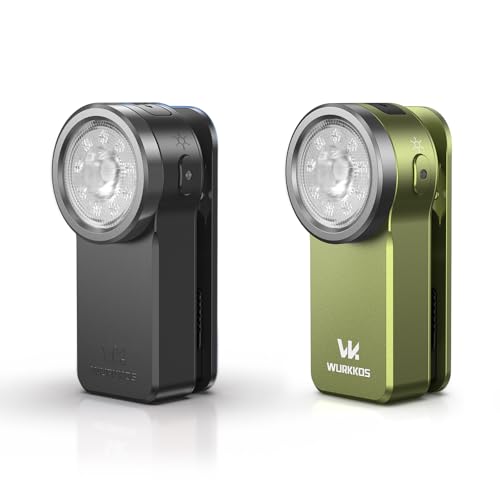
Wurkkos makes lights, and only lights. The maker's own site sorts them into EDC flashlights, tactical flashlights, high-output torches, diving lights, headlamps and camping lights. On this site, three types are covered, and the grid above filters by each:
- Flashlights: the TD, TS, FC and HD lines, plus two dive lights
- Headlamps: right-angle lights that clip to a headband, and full-size spot-and-flood headlamps
- Lanterns: the CL01 camping light, sold alone or with a small tripod
Real talk: the line between a Wurkkos headlamp and a Wurkkos flashlight is thin. Several of the headlamps are flashlight bodies that ride in a strap, and the maker says so.
Most of the specs in the grid come from Amazon listings, and the grid marks those values. Where the maker's own page says something different, I've noted it below. Where nobody says, the grid shows a dash. More on the type across brands is on the headlamps page.
Lineup notes: Wurkkos flashlights
Flashlights are the bulk of the Wurkkos grid. Every one that states its power is rechargeable, and the ones that name a charging port list USB-C. These values come from Amazon listings, and the grid marks them.
TD and FC: the tail-switch lights
The TD01, TD01C, TD02, TD04 and TD11 list a few thousand lumens or less, and their listings call them tactical. Most have a tail switch, and several add a strobe. The TD01 and TD01C are the throwers of the group, with beams past half a mile. The FC12C lists a built-in battery pack, a tail switch, a strobe and the tactical label too; the FC11C is the plainer sibling. The tactical flashlight guide explains what the label covers.
TS: the long-throw lights
The TS27, TS28 and TS30S PRO list a few thousand lumens up to several thousand on the TS30S PRO, and long beams: about half a mile on the TS27 and two-thirds of a mile on the TS30S PRO. The TS28 lists an aluminum body and a strobe. These are for looking across a field, not for the cooler latch.
HD01 to HD05: the HD flashlights
Don't confuse these with the HD headlamps below; single-digit HD numbers are flashlights in this grid. The HD01, HD01PRO and HD02 list a green light, and the HD02 Mini, HD02 PRO, HD04 and HD05 list a red one. Output runs from several hundred lumens on the HD03 and HD04 to a few thousand on the HD02 and HD05. Red is the one I'd want on the walk in. (Walt asked why a flashlight needs a traffic light. I said green means go to the stand. He said red means go back to bed.)
K1, the 95 CRI light and the dive lights
The K1 lists a beam of about a quarter mile and USB-C charging. The 95 CRI EDC Flashlight is named for its color rendering; CRI is how true colors look, 100 being daylight. The DL10R and DL46 are what Wurkkos calls dive lights. The DL46 is the brightest Wurkkos in the grid, at tens of thousands of lumens, and the DL10R lists a runtime of only a few hours at most.
Flashlights from every brand are on the handheld spotlight page, and the best tactical flashlight and brightest flashlight lists rank them by stated rules.
Lineup notes: the Wurkkos flashlight-style headlamps
Right-angle mini lights: HD10 and HD12
These are the small ones. A right-angle light is a short tube with the LED on the side instead of the end, so it can sit in a headband and point forward, or come out and stand on a table as a flashlight.
The maker describes the HD12 in detail:
- Battery: one 14500 lithium-ion cell or one AA
- LEDs: two white LEDs (90 CRI, meaning colors look closer to daylight) plus two red LEDs
- Beam: spot and flood angles from the same head
- Body: 6061 aluminum, IP68 water and dust rating per the maker
- Weight: 48 g (about 1.7 oz) without battery
- Extras: magnetic tail cap, detachable reflective headband, a lock to stop it turning on in a pocket
The HD10 is the other right-angle light in the grid. The maker's headlamp page doesn't show it, so its values in the grid come from the Amazon listing, and I've left its weight out.
That AA option on the HD12 is the part I'd circle. On the night your rechargeable cell is flat, the gas station on Route 44 sells AAs and does not sell 14500s.
Full-size spot-and-flood headlamps: HD17, HD20 and HD50
These three are bigger lights with bigger batteries and two kinds of beam. A spot beam reaches down a trail; a flood beam spreads wide for camp chores. The grid's beam field shows which ones list both.
Per the maker:
- HD17: spotlight, floodlight and a separate red light, a 180-degree adjustable head, a magnetic rotary switch, a detachable 18650 battery, and an IPX6 water rating
- HD20: two LEDs (a high-CRI flood LED and a spot LED), a 21700 or 18650 cell, USB-C charging, a power-bank feature for charging a phone, a magnetic tail, an IP68 rating to 2 m, and 130 g (about 4.6 oz) without battery
- HD50: spot, flood and red light, a 21700 cell, USB-C charging, a magnetic tailcap, two side switches, a lock mode, an IP67 rating, and 100 g (about 3.5 oz) without battery
The HD50 is the brightest of the Wurkkos headlamps in the grid, and the HD20 and HD17 sit between it and the right-angle lights. The maker's HD50 page also mentions a headband with a heat baffle on the back. (Renee asked why a headlamp needs a heat shield. I said "for the brain." She said that explained a lot.)
Heat and brightness: what the fine print says
Several Wurkkos pages mention Advanced Temperature Regulation. The maker says it lowers brightness when the driver reaches 60°C (140°F), and the HD12 page says Turbo steps down to High to prevent overheating. In plain words: the top number on the box is a burst, not a setting you'll hold all night. For walking in before dawn, the middle modes are what you'll actually use. The rechargeable headlamp page explains output and runtime across brands.
Lineup notes: the CL01 camp lantern
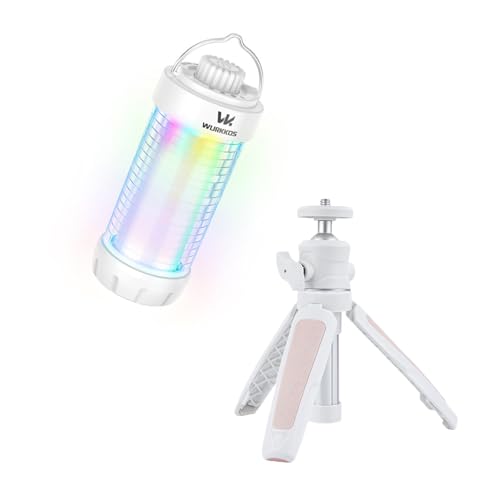
The CL01 is the one Wurkkos lantern in the grid, and it comes three ways in the listings: alone, or with an extendable tripod in two colors.
The maker calls it a camping light and lists:
- Color temperature: adjustable from 3000K (warm, yellowish) to 6000K (cool, bluish)
- Color modes: RGB light modes in addition to white
- Battery: one replaceable 21700 cell, with a USB-C output so it can work as a power bank
- Mounting: magnetic base, hanging hook and a 1/4-inch thread for a tripod
- Rating: IP66 per the maker
- Weight: 110 g (about 3.9 oz) without battery
On runtime, the maker's page says up to 30 hours on low. The Amazon listing gives a different, much longer figure, and the grid shows the listing's value. I'd plan around the maker's number. Plan around the smaller number on any battery light and the weekend only gets nicer from there.
Warm white is the setting for inside a tent or a cabin at night; cool white is for finding the one spoon you dropped under the table. More on lanterns is on the rechargeable lantern page, and the camping lantern page covers fuel and battery types side by side.
How to choose within the Wurkkos lineup
Pick the battery first
The battery decides size, weight and what you can buy at a gas station. The Wurkkos lineup here uses three sizes, per the maker:
- AA or 14500: the HD12 takes either
- 18650: the HD17, and the HD20 as an option
- 21700: the HD20, the HD50 and the CL01
A 21700 is a larger cell than an 18650, and both are lithium-ion cells you charge, not grocery-store batteries. If you want one spare cell to fit both your headlamp and your lantern, the HD20 or HD50 plus the CL01 share the 21700 size.
My one opinion on this page: with a removable-cell headlamp, a charged spare cell is the backup light. The reason is on the maker's pages: the HD12, HD17, HD20 and HD50 take a cell you can swap. Swapping takes a minute in the dark. Waiting for USB-C to charge a flat cell takes a lot longer than a minute, and the deer don't wait for the charging light to turn green.
Then the beam
Spot for walking in, flood for camp, red for everything near other people's eyes. The National Park Service explains that your eyes need roughly 20 to 40 minutes to adapt fully to the dark, that a few seconds of bright white light undoes it, and that dim deep-red light doesn't. The HD12, HD17 and HD50 list red light; the red light headlamp page covers the type across brands.
Then weight and mounting
A heavier cell on your forehead is a heavier cell on your forehead for three hours. The maker lists weights without battery, so add the cell when you compare. The magnetic tails on several models let the light stick to a truck fender or a tailgate, which is handy for changing a tire or loading gear in the dark.
Then the lock
A headlamp that turns itself on in a pack is a headlamp with a dead battery at 5 a.m. The maker names a lock function on the HD12 and a lock mode on the HD50. Learn the lock at the kitchen table.
Which Wurkkos light for which camp job
Here's how the lineup sorts out against a deer-camp weekend, using only what the maker and the listings say each light does:
- Walking in before dawn: a spot-and-flood headlamp with red light, like the HD17 or HD50. Spot for the trail, red once you're close to the stand so you aren't lighting up the woods.
- Camp chores after dark: flood mode on any of the full-size headlamps. Wide light beats far light when you're cooking or finding a tent stake.
- Inside the cabin or the tent: the CL01 on warm white, hung from the hook or set on its magnetic base.
- Under the truck or at the tailgate: anything with a magnetic tail, stuck to the steel so both hands are free.
- The pocket backup: the HD12, because it also runs on an AA.
- Across the field or down the fence line: a TS or TD light.
Renee says this list is just me justifying six lights. The point is that one light rarely does every job well, and the Wurkkos lineup splits the jobs fairly cleanly by size and beam.
If you only buy one, buy the one for the job you do in the dark most often. For most hunters that's the walk in.
Charging safety
These lights, flashlights included, use lithium-ion cells. New York State's consumer safety guide on lithium-ion batteries says to charge and store devices following the maker's instructions, use the charger that came with the device or one the maker approves, not leave a device charging unattended or overnight, and avoid charging on a bed or a couch. Unplug the light once it's full.
Who's behind Wurkkos
Here's what the maker's own site says:
- Founded: 2019
- Based in: Shenzhen, China, with an in-house team for R&D, manufacturing and sales
- Company name: the site's copyright names WOKESIDA LIMITED, with a contact address in London
- Warehouses: USA, EU, Brazil
The maker's return and refund page describes a 30-day return policy and warranty repairs where you pay the shipping but not the repair fee, with exclusions for normal wear, modifications, misuse and outside repairs. It doesn't state a warranty length. Some product pages name their own terms, so read the one for the light you're buying.
Other headlamp brands with pages here include Olight and Fenix, and a ranked list across brands is on best headlamp.
Charge it at home, put the spare cell in the same pocket every time, and leave the turbo button for the night you drop your keys in the leaves.
Where Wurkkos shows up
Questions about Wurkkos
Does Wurkkos make flashlights?
Yes, and flashlights are most of the Wurkkos grid here. The maker's site sorts its lights into EDC flashlights, tactical flashlights, high-output torches, diving lights, headlamps and camping lights. The grid has TD, TS, FC and HD flashlights plus two dive lights, and the HD10 and HD12 headlamps also work as handheld lights off the strap.
Are Wurkkos headlamps good?
What the maker states is checkable: its pages list the LEDs, the battery each light takes, USB-C charging, the water-resistance rating and the weight without battery. Whether one suits you depends on the battery size you want to carry, the beam you need and how much weight you'll wear on your head. The grid shows those fields per model.
Where is Wurkkos from?
The maker's about page says Wurkkos was founded in 2019 and is based in Shenzhen, China, with an in-house team for R&D, manufacturing and sales. The site's copyright names WOKESIDA LIMITED and lists a contact address in London, and it lists warehouses in the USA, the EU and Brazil.
What warranty does Wurkkos offer?
The maker's return and refund page describes a 30-day return policy and warranty repairs where you pay the shipping but not the repair fee. It excludes normal wear and tear, modifications, misuse, negligence and repairs by anyone other than Wurkkos or an authorized retailer. It doesn't state a warranty length, so check the page for your light.
What battery does a Wurkkos headlamp use?
It depends on the model, per the maker: the HD12 takes a 14500 or an AA, the HD17 a detachable 18650, the HD20 a 21700 or 18650, and the HD50 and the CL01 lantern a 21700. All of them charge over USB-C, and the HD20 and CL01 can also charge a phone as a power bank.
Is the Wurkkos HD12 a headlamp or a flashlight?
Both, per the maker. It's a right-angle light: the LEDs sit on the side of a short tube, so it can ride in its detachable headband pointing forward or come out and work as a handheld light. It has a magnetic tail cap for sticking to metal, and it runs on a 14500 cell or a plain AA.
Sources
- Wurkkos: Home page and product categories — accessed 2026-10-28
- Wurkkos: About Wurkkos — accessed 2026-10-28
- Wurkkos: Headlamps — accessed 2026-10-28
- Wurkkos: HD12 mini angle headlamp — accessed 2026-10-28
- Wurkkos: HD17 headlamp — accessed 2026-10-28
- Wurkkos: HD20 rechargeable headlamp — accessed 2026-10-28
- Wurkkos: HD50 headlamp — accessed 2026-10-28
- Wurkkos: CL01 camping light — accessed 2026-10-28
- Wurkkos: Return and refund policy — accessed 2026-10-28
- National Park Service: Dark adaptation of the human eye and the value of red flashlights — accessed 2026-10-28
- New York State DHSES: Lithium-ion battery consumer safety guide — accessed 2026-10-28